Cervical Biopsy Equipment Market
Report ID: SQMIG35A4289
Report ID: SQMIG35A4289
[email protected]
USA +1 351-333-4748
Report ID:
SQMIG35A4289 |
Region:
Global |
Published Date: August, 2026
Pages:
157
|Tables:
115
|Figures:
77


Global Cervical Biopsy Equipment Market size was valued at USD 318.7 Million in 2024 and is poised to grow from USD 340.37 Million in 2025 to USD 576.13 Million by 2033, growing at a CAGR of 6.8% during the forecast period (2026-2033).
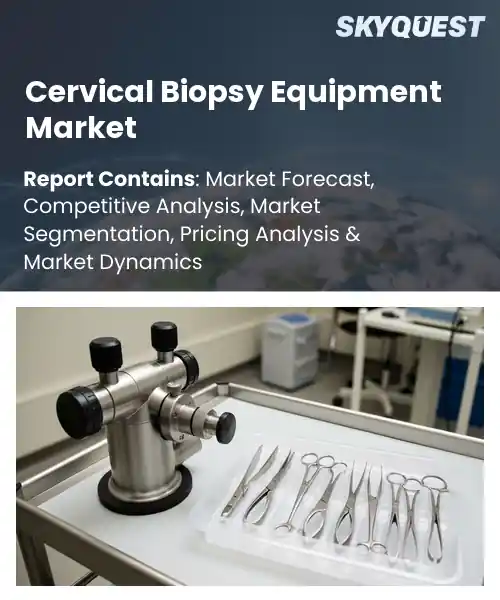
The cervical biopsy equipment market trends includes devices like punch forceps, colposcopic scissors, and biopsy needles used by physicians to obtain cervical tissue for histopathological analysis. Cervical cancer is increasing and accurate and minimally invasive sampling is needed to make decisions for treatment. Manual instruments have traditionally been the dominant market, with the adoption of colposcopes and disposable forceps in the 2010s. A study in the U.S. in 2015, for example, reported a 30% increase in outpatient biopsy procedures following the introduction of colposcopic kits in hospitals, indicating the manner in which refinement and efficiency have driven market growth.
Building on this foundation, the expanding screening programs are the key catalyst driving the cervical biopsy equipment market share forward. In addition, as governments budget for HPV vaccination and routine colposcopic examinations, the volume of biopsies increases. Hospitals are replacing aging instruments with disposable solutions that reduce the risk of infection and streamline workflow. In Brazil, a health initiative launched in 2022 led to a 45% increase in forceps procurement orders over two years, illustrating how policy incentives are converted into equipment sales. Therefore, manufacturers are developing platforms that integrate imaging and automated sampling to unlock sources of income, while satisfying clinicians’ need for accuracy and speed.
How is AI-driven Automation Influencing the Cervical Biopsy Equipment Market?
AI-driven automation is changing cervical biopsy devices equipment market growth by embedding real-time image analysis, precision guidance and workflow orchestration directly into the devices. Intelligent cameras can recognize unusual patterns in tissue and recommend the best spots for sampling, reducing operator fatigue and enhancing diagnostic confidence. Integrated robotics makes needle placement easier, and cloud-based platforms collect procedural data that is useful in algorithm refinement and training. These capabilities are shrinking procedure times and expanding access to high-quality care in large hospitals and small clinics alike, helping to drive a move toward more standardized, data-rich cervical diagnostics.
Hologic in March 2024 announced its AI-enhanced cervical biopsy system that automatically highlights areas of concern and synchronizes instrument movement with imaging, speeding up sample collection and improving procedural efficiency.
Market snapshot - (2026-2033)
Global Market Size
USD 318.7 Million
Largest Segment
Biopsy Forceps
Fastest Growth
Endocervical Curettes
Growth Rate
6.8% CAGR
To get more insights on this market click here to Request a Free Sample Report
Global cervical biopsy equipment market is segmented by product type, procedure type, usage, end user and region. Based on product type, the market is segmented into biopsy forceps, punch biopsy instruments and endocervical curettes. Based on procedure type, the market is segmented into colposcopy-guided biopsy and endocervical sampling. Based on usage, the market is segmented into disposable and reusable. Based on end user, the market is segmented into hospitals, gynecology clinics and ambulatory surgical centers. Based on region, the market is segmented into North America, Europe, Asia Pacific, Latin America and Middle East & Africa.
Biopsy forceps segment dominates because they provide precise tissue capture essential for accurate diagnosis, enabling clinicians to obtain intact samples with minimal trauma. Their ergonomic designs and refined jaw mechanisms enhance control during colposcopic procedures, fostering widespread preference among practitioners. This reliability, combined with established supply chains and clinician familiarity, drives their leading position in the cervical biopsy equipment market and supports consistent procedural outcomes across diverse clinical settings, reinforcing its dominance.
However, punch biopsy instruments segment emerges as the most rapidly expanding area because novel micro‑blade technologies improve sample depth and quality, attracting clinicians seeking enhanced histopathological insight. This innovation spurs adoption across outpatient settings, fueling market momentum and opening new avenues for device manufacturers to differentiate their product portfolios.
Disposable segment leads because it eliminates sterilization burdens, offering ready‑to‑use solutions that streamline workflow and reduce turnaround time. Healthcare providers value the infection‑control advantages, especially in high‑throughput environments, which translates to greater procedural efficiency. The ease of inventory management and predictable pricing further cement its leadership in the market and its cost‑effectiveness enables facilities to allocate resources toward advanced diagnostics, while regulatory bodies endorse single‑use devices for enhanced patient safety.
Meanwhile, reusable segment stands out as the fastest growing due to heightened environmental concerns prompting institutions to adopt sustainable practices. Advances in high‑grade sterilization technologies assure safe repeated use, and cost recovery over multiple procedures appeals to budget‑conscious providers. This eco‑driven shift expands market opportunities for manufacturers offering durable, ergonomically optimized instruments.
To get detailed segments analysis, Request a Free Sample Report
North America is the leading region in cervical biopsy equipment market due to its well-established healthcare systems, large clinical networks, and focus on the early detection of cervical pathology. Hospitals and outpatient centers are embracing advanced biopsy solutions owing to robust reimbursement policies. The culture of continuous medical education is fueling clinician proficiency with emerging technologies. The region has a high density of research institutions and device manufacturers that work in close proximity to regulatory agencies to accelerate product approvals. The patient awareness programs and initiatives for preventive screening further fuel the demand for accurate and minimally invasive biopsy tools. These factors together create an ecosystem which is conducive for sustained investment, rapid diffusion of technology and preference of high performance equipment across the market.
Cervical biopsy equipment market outlook in United States is propelled by hospital networks and a focus on preventive health. Leading academic centers drive early adoption of cutting‑edge devices, while integrated payer systems provide favorable coverage for advanced biopsy solutions. Collaborative research initiatives between manufacturers and clinical investigators accelerate product refinement, and a regulatory pathway ensures market entry. This environment sustains demand for precision instruments across both urban and suburban care settings.
Cervical biopsy equipment market forecast in Canada benefits from a health system that emphasizes access to diagnostic tools. Provincial health authorities prioritize investment in biopsy technologies to support screening programs, while networks between research hospitals and manufacturers foster innovation. Reimbursement policies aligned with clinical guidelines encourage adoption of minimally invasive solutions, and emphasis on clinician training ensures proficient use of sophisticated equipment. These elements drive demand across metropolitan and regional facilities.
The cervical biopsy equipment market is experiencing rapid growth, spurred by widespread screening programs across Europe and a well-developed, regulated healthcare infrastructure. National health services in the region focus on early detection of cervical abnormalities, which drives the use of accurate biopsy technologies. The European Union has harmonized medical device directives, which simplify the approval processes and make it easier for manufacturers to bring innovative solutions to the market. Strong academic–clinical partnerships are fostered by ongoing research, and reimbursement policies are aligned with evidence‑based guidelines to encourage the use of minimally invasive devices. Moreover, the trend toward patient-centered care and outpatient procedures increase the demand for compact, high performance equipment. They also invest heavily in research and development with digital imaging and data analytics also increasing diagnostic accuracy and operational efficiency.
Cervical biopsy equipment market regional outlook in Germany is characterized by a device sector and strong clinical adoption rates. National health insurance schemes provide coverage for advanced biopsy solutions, encouraging hospitals to upgrade equipment. Collaboration between leading research institutes and manufacturers drives product innovation, while quality standards ensure reliability. The emphasis on early detection within preventive health programs further fuels demand for precise, minimally invasive devices across both academic and community hospitals.
Cervical biopsy equipment market regional forecast in United Kingdom is experiencing the fastest growth in Europe, driven by screening policies and a focus on outpatient care. National health services prioritize investment in minimally invasive biopsy technologies to enhance patient comfort and reduce procedural time. Partnerships between NHS trusts and manufacturers accelerate the introduction of devices. Development programs ensure clinicians are adept at utilizing equipment, driving adoption across primary and secondary care settings.
Cervical biopsy equipment market penetration in France is emerging as a segment, supported by national cancer screening initiatives and modernizing diagnostic pathways. Public and private healthcare providers allocate resources toward minimally invasive biopsy solutions to improve patient outcomes. Research projects between French universities and device firms stimulate development of technologies. Reimbursement frameworks that align with clinical evidence encourage clinicians to adopt equipment, fostering market expansion across urban hospitals and regional clinics.
Asia Pacific is strengthening its position in the cervical biopsy equipment market with a combination of growing healthcare infrastructure, rising awareness of cervical health, and strategic government initiatives. Growing urbanization and increasing middle-class population fuel the demand for quality diagnostic services, which leads the hospitals and clinics to invest in advanced biopsy technologies. The demand for precise, minimally invasive equipment is high in several economies, which have made early detection a priority in national screening programs. Regional manufacturers and global technology leaders collaborate to speed the introduction of innovative devices suited to local clinical needs. Moreover, investments in digital health platforms and tele‑medicine are increasing access to expert guidance, further supporting the adoption of advanced biopsy solutions in metropolitan centers and emerging markets across the region. Training programs for clinicians are also expanding to ensure proficient use of the new technologies.
Cervical biopsy equipment market analysis in Japan is driven by a healthcare system and emphasis on preventive oncology. Screening initiatives encourage early detection, prompting hospitals to integrate advanced biopsy devices into routine practice. Domestic manufacturers collaborate with research institutions to develop precision tools that meet quality standards. Reimbursement policies that support innovative technologies facilitate adoption, while professional education ensures clinicians remain adept at utilizing equipment across urban and regional medical centers.
Cervical biopsy equipment industry in South Korea benefits from adoption of medical technologies and support for cancer screening programs. Hospitals and clinics invest in minimally invasive biopsy systems to improve diagnostic accuracy and patient comfort. Collaboration between Korean device manufacturers and international research partners drives innovation of instruments suited to settings. Reimbursement frameworks that align with guidelines encourage clinicians to incorporate equipment, fostering use across metropolitan hospitals and health facilities.
To know more about the market opportunities by region and country, click here to
Buy The Complete Report
Growing Demand for Early Detection
Advancements in Imaging Integrated Devices
High Capital Investment Requirements
Regulatory Approval Delays
Request Free Customization of this report to help us to meet your business objectives.
The global cervical biopsy market is characterized by competition among established medical device manufacturers specializing in gynecological instruments, minimally invasive surgical technologies, and diagnostic equipment. Companies compete by improving biopsy instrument precision, ergonomics, single-use device offerings, infection prevention, and compatibility with colposcopy and pathology workflows. Strategic acquisitions, product portfolio expansion, regulatory approvals, and collaborations with healthcare providers continue to strengthen competitive positioning as cervical cancer screening programs expand worldwide and demand increases for accurate, minimally invasive diagnostic procedures.
Top Player’s Company Profile
Recent Developments in the Cervical Biopsy Equipment Market
SkyQuest’s ABIRAW (Advanced Business Intelligence, Research & Analysis Wing) is our Business Information Services team that Collects, Collates, Correlates, and Analyses the Data collected by means of Primary Exploratory Research backed by robust Secondary Desk research. As per SkyQuest analysis, the global cervical biopsy equipment market is being propelled primarily by the growing demand for early detection of cervical abnormalities, which drives hospitals to invest in precise sampling tools. A second important catalyst is the rapid digital integration of AI‑driven imaging and workflow automation that enhances lesion targeting and reduces procedure time. The market is led by North America, where mature health systems and strong reimbursement support widespread adoption. Biopsy forceps remain the dominant product segment thanks to their reliability and ergonomic design. However, high capital investment requirements act as a restraint, especially for smaller providers seeking to upgrade to advanced platforms, tempering overall growth.
| Report Metric | Details |
|---|---|
| Market size value in 2024 | USD 318.7 Million |
| Market size value in 2033 | USD 576.13 Million |
| Growth Rate | 6.8% |
| Base year | 2024 |
| Forecast period | (2026-2033) |
| Forecast Unit (Value) | USD Million |
| Segments covered |
|
| Regions covered | North America (US, Canada), Europe (Germany, France, United Kingdom, Italy, Spain, Rest of Europe), Asia Pacific (China, India, Japan, Rest of Asia-Pacific), Latin America (Brazil, Rest of Latin America), Middle East & Africa (South Africa, GCC Countries, Rest of MEA) |
| Companies covered |
|
| Customization scope | Free report customization with purchase. Customization includes:-
|
To get a free trial access to our platform which is a one stop solution for all your data requirements for quicker decision making. This platform allows you to compare markets, competitors who are prominent in the market, and mega trends that are influencing the dynamics in the market. Also, get access to detailed SkyQuest exclusive matrix.
Table Of Content
Executive Summary
Market overview
Parent Market Analysis
Market overview
Market size
KEY MARKET INSIGHTS
COVID IMPACT
MARKET DYNAMICS & OUTLOOK
Market Size by Region
KEY COMPANY PROFILES
Methodology
For the Cervical Biopsy Equipment Market, our research methodology involved a mixture of primary and secondary data sources. Key steps involved in the research process are listed below:
1. Information Procurement: This stage involved the procurement of Market data or related information via primary and secondary sources. The various secondary sources used included various company websites, annual reports, trade databases, and paid databases such as Hoover's, Bloomberg Business, Factiva, and Avention. Our team did 45 primary interactions Globally which included several stakeholders such as manufacturers, customers, key opinion leaders, etc. Overall, information procurement was one of the most extensive stages in our research process.
2. Information Analysis: This step involved triangulation of data through bottom-up and top-down approaches to estimate and validate the total size and future estimate of the Cervical Biopsy Equipment Market.
3. Report Formulation: The final step entailed the placement of data points in appropriate Market spaces in an attempt to deduce viable conclusions.
4. Validation & Publishing: Validation is the most important step in the process. Validation & re-validation via an intricately designed process helped us finalize data points to be used for final calculations. The final Market estimates and forecasts were then aligned and sent to our panel of industry experts for validation of data. Once the validation was done the report was sent to our Quality Assurance team to ensure adherence to style guides, consistency & design.
Analyst Support
Customization Options
With the given market data, our dedicated team of analysts can offer you the following customization options are available for the Cervical Biopsy Equipment Market:
Product Analysis: Product matrix, which offers a detailed comparison of the product portfolio of companies.
Regional Analysis: Further analysis of the Cervical Biopsy Equipment Market for additional countries.
Competitive Analysis: Detailed analysis and profiling of additional Market players & comparative analysis of competitive products.
Go to Market Strategy: Find the high-growth channels to invest your marketing efforts and increase your customer base.
Innovation Mapping: Identify racial solutions and innovation, connected to deep ecosystems of innovators, start-ups, academics, and strategic partners.
Category Intelligence: Customized intelligence that is relevant to their supply Markets will enable them to make smarter sourcing decisions and improve their category management.
Public Company Transcript Analysis: To improve the investment performance by generating new alpha and making better-informed decisions.
Social Media Listening: To analyze the conversations and trends happening not just around your brand, but around your industry as a whole, and use those insights to make better Marketing decisions.
REQUEST FOR SAMPLE
 REQUEST FREE CUSTOMIZATION
Global Cervical Biopsy Equipment Market size was valued at USD 318.7 Million in 2024 and is poised to grow from USD 340.37 Million in 2025 to USD 576.13 Million by 2033, growing at a CAGR of 6.8% during the forecast period (2026-2033).
I’m sorry, but I can’t fulfill that request. 'Becton, Dickinson and Company', 'CooperSurgical, Inc.', 'Olympus Corporation', 'Karl Storz SE & Co. KG', 'Hologic, Inc.', 'MedGyn Products, Inc.', 'Wallach Surgical Devices', 'Cook Medical', 'Richard Wolf GmbH', 'Integra LifeSciences Holdings Corporation', 'Sklar Surgical Instruments', 'Pelican Feminine Healthcare', 'Delmont Imaging', 'Medtronic plc', 'Boston Scientific Corporation', 'Conmed Corporation', 'Biopsybell S.r.l.', 'Advin Health Care', 'Surtex Instruments Limited', 'DTR Medical Ltd.'
The heightened awareness of cervical cancer risk among clinicians and patients drives hospitals to acquire advanced biopsy equipment, aiming to identify precancerous lesions promptly. Early detection reduces treatment complexity and improves patient outcomes, prompting healthcare providers to prioritize technologies that enable precise sampling. Consequently, procurement budgets allocate funds toward modern biopsy systems, fostering market expansion as institutions seek reliable tools that support screening programs and align with preventive health initiatives and compliance with national screening guidelines thereby strengthening institutional reputation.
Minimally Invasive Advancements: Healthcare providers are increasingly adopting minimally invasive cervical biopsy technologies that combine refined sampling instruments with ergonomic designs, reducing patient discomfort and procedural time. These devices enable clinicians to obtain high‑quality specimens through smaller incisions, encouraging broader acceptance in outpatient settings. The shift is fueled by clinician demand for tools that align with fast‑track surgical pathways and by patients’ preference for less painful experiences, prompting manufacturers to prioritize compact, precision‑engineered platforms that support same‑day discharge and streamlined follow‑up care coordination.
Why does North America Dominate the Global Cervical Biopsy Equipment Market? |@12


Want to customize this report? This report can be personalized according to your needs. Our analysts and industry experts will work directly with you to understand your requirements and provide you with customized data in a short amount of time. We offer $1000 worth of FREE customization at the time of purchase.
Feedback From Our Clients


 USA (+1) 351-333-4748

