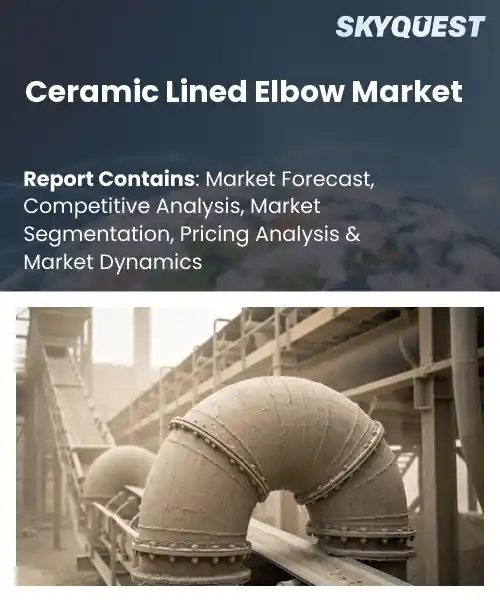
Ceramic Lined Elbow Market
Report ID: SQMIG20I2762
Report ID: SQMIG20I2762
[email protected]
USA +1 351-333-4748
Report ID:
SQMIG20I2762 |
Region:
Global |
Published Date: March, 2026
Pages:
157
|Tables:
144
|Figures:
78


Global Ceramic Lined Elbow Market size was valued at USD 2.50 Billion in 2024 and is poised to grow from USD 2.64 Billion in 2025 to USD 4.05 Billion by 2033, growing at a CAGR of 5.5% during the forecast period (2026-2033).
Key Takeaways: Market Trends & Insights
Increasing requirement for wear resistant elbows, adoption by the mining and power generation sectors, growing requirement for transporting abrasive substances, innovations in ceramic elbow technology, and emphasis on minimizing maintenance expenses are some factors boosting the demand for ceramic lined elbows.
The increased use of vitrified ceramics quite popular because of the reduced need for maintenance and replacement despite the high initial costs involved. Such use of vitrified ceramics has become more popular in various industrial segments, such as slurry pipes made of copper, ash handling equipment, and dredges. New developments in chemical bonding technology and modular ceramic tiles also help increase installation convenience. Growing requirement for durable and high-performance piping solutions in industries handling slurry and particulate-laden fluids coupled with a shift toward reducing downtime and operational costs is expected to primarily drive ceramic lined elbow market growth. Ceramic lined elbows combine steel strength with ceramic wear resistance to extend service life and improve reliability in high-abrasion environments.
On the contrary, high initial costs, complexity in installation and replacement, limited awareness in certain regions, potential issues with bonding failure under extreme conditions, and availability of alternative wear-resistant materials are anticipated to slow down ceramic lined elbow market penetration over the coming years.
How is AI Enhancing Manufacturing Quality Control in the Ceramic-lined Elbow Market?
Quality assurance within the ceramic lined elbow industry is benefiting from the use of AI technology to detect defects using computer vision, anomaly detection, and process analytics. Incorporating AI in the quality control processes enables manufacturers to stabilize manufacturing, minimize the number of reworks, and cut down qualification time. The incorporation of AI will be particularly crucial for parts that are applied in applications such as abrasive slurry and flue gases where the need for reliability is highly required.
Market snapshot - 2026-2033
Global Market Size
USD 2.5 Billion
Largest Segment
Alumina Ceramic
Fastest Growth
Silicon Carbide
Growth Rate
5.5% CAGR
To get more insights on this market click here to Request a Free Sample Report
The ceramic lined elbow market is segmented by lining material, outer pipe material, manufacturing/bonding method, bending angle, end-use application, and region. Based on lining material, the market is segmented into alumina ceramic, silicon carbide, and basalt lining. Based on outer pipe material, the market is segmented into carbon steel, stainless steel, and alloy steel. Based on manufacturing/bonding method, the market is segmented into centrifugal casting, tile bonding, and mechanical interference fit.
Based on bending angle, the market is segmented into 45-degree elbows, 90-degree elbows, and custom large radius bends. Based on end-use application, the market is segmented into thermal power plants, mining & mineral processing, and cement & steel plants. Based on region, the market is segmented into North America, Europe, Asia Pacific, Latin America, and Middle East & Africa.
The alumina ceramic segment is projected to spearhead the global ceramic lined elbow market revenue generation in the future. High hardness and exceptional abrasion resistance directly reduce wall wear in erosive slurry and gas streams, which helps bolster the dominance of this segment. This also translates into longer component life and lower unplanned downtime. The chemical stability and under mechanical stress, leading to increased use by both original equipment manufacturers (OEMs) and end-users.
However, silicon carbide is witnessing the strongest growth momentum as per this ceramic lined elbow industry analysis. Operators seek materials that combine wear and corrosion resistance with improved thermal shock performance to create new business scope. Manufacturing innovations and increased tolerance for aggression and heat have resulted in new installations and retrofit opportunities through which special services can be offered to create new revenue channels.
The centrifugal casting segment is estimated to account for the highest global ceramic lined elbow market share going forward. Ability of this process to create uniform ceramic distribution and strong metallurgical bonding that minimize defects and ensure consistent elbow geometry, helps this segment hold sway over others. The capacity for mass production makes the product less variable in its manufacture and thus with critical flow lines that influence costs through their reliability.
In contrast, tile bonding emerges as the fastest growing technique because of the customizability of its design, as well as the ability to repair fields and install in stages to minimize downtime. Recent developments in adhesive and mechanical bonding systems make tile installation possible even on challenging bends and retrofits.
To get detailed segments analysis, Request a Free Sample Report
Heavy industry activity, extensive infrastructure development, strong manufacturing base, and close integration of supply chains help this region lead sales of ceramic lined elbow in the long run. Established industrial clusters within key economies will provide stimulus toward continued demand for these products and the use of materials to develop specific products via custom fabrication will allow local manufacturers to utilize extensive technical knowledge. There is an increasing emphasis placed on resource processing and chemical production processes that relate to strategic implementation of plant reliability and maintenance through preferred products such as ceramic-lined elbows.
Through collaboration efforts between end-users and fabricators, combined with continually developing standards and aftermarket networks of support, companies are establishing their leadership being able to sustain their use across all types of industries globally. Additionally, having flexible manufacturing capabilities and being near raw materials will continue to allow manufacturers within the Asia Pacific region to reduce lead times, which will further enhance their ability to compete on a global level.
High-quality engineering standards, strict quality controls, and the requirements of advanced manufacturing industries define the market for ceramic lined elbows in Japan. The partnership between producers and consumers during industrial production guarantees the popularity of ceramic lined elbows due to their efficacy and adherence to standards. The importance of precise manufacturing and material authentication in Japan promotes the use of ceramic lined elbows in unique applications that require abrasion resistance.
Rising industrial modernization, along with shipbuilding and petrochemical production, as well as increased attention to the longevity of the process system, drive ceramic lined elbow demand in the nation. National producers focus on rapid customization and the ability of the material to work effectively with anti-corrosive techniques. Consumers seek a solution that reduces the need for maintenance services and avoids production disruptions.
Expanding infrastructure refurbishment needs, emphasis on plant reliability, and adoption of advanced materials are supporting steady ceramic lined elbow demand in North America. Because the advanced supplier network has been established in North America, the benefits of localized procurement, engineering services, and customized manufacturing are essential in addressing demanding specifications. As there is increasing focus on lowering maintenance costs and improving equipment utilization in production cycles, it is necessary for companies to possess durable elbow liners.
Availability of extensive service networks after the sale of such products, along with proper training programs and adherence to industry standards, will play an important role in wider adoption of this technology. The investment in domestic fabrication capacity also increases the ability to respond more quickly to changing project schedules. High demand for durable components in energy, mining, and industrial processing sectors also creates new business scope.
Rise in industrial refurbishment coupled with strong energy and bulk handling demand are forecasted to influence ceramic lined elbow adoption in the United States. Coordination between end-users and manufacturers helps install the appropriate ceramic lined elbows, considering different process environments and regulations. Fabricators and OEMs offer customized solutions and technical assistance to fulfill tough operating requirements. The preference for proven abrasion-resistant ceramic lining and preventive maintenance philosophy influences purchase decisions.
Resource processing sectors, durable materials selection, and serviceable solutions for remote operations help amplify ceramic lined elbow adoption in Canada. Manufacturers ensure that their lining technologies are well-tested and that installation procedures minimize maintenance requirements. Strong collaboration between manufacturers and facility operators as well as engineers ensures that custom-made products are provided which can withstand harsh conditions.
The emergence of advanced technology, stringent material needs, and safety standards, along with the quest for modernizing industry, has generated new prospects for the producers of ceramic lined elbows in this region. Local producers are making use of their engineering expertise to offer their customers quality liner products along with module manufacturing facilities. The demand for robust pipeline construction has been proved because of the emphasis on efficient processes and lifecycle management. Thereby setting a trend where ceramic lined elbows can be used in industries where abrasion wear occurs.
Joint ventures within industries and international supply chain operations give way for knowledge transfer and development of best practices applicable elsewhere. End users will prioritize long-term performance and fewer replacement cycles of pipes due to the growing importance of sustainability and increasing operational resilience. Thus, enhancing the regional competitive advantage provided by developing and supplying tailored, high-quality abrasion resistant piping components. Significant investment in applied research, cross-sector partnerships, and establishing certification pathways will continue to enhance supplier capabilities and buyer confidence.
Ceramic lined elbows producers are slated to be attracted to Germany due to its need for highly precise and high standards in manufacturing along with a high demand for heavy processing industries. The cooperation of the industrial, research institutions, and professionals will ensure that innovations continue to happen in the ceramic market's products. Manufacturers focus on certification, material monitoring, and testing of the performance to satisfy customers' requirements.
Robust technology adoption across process industries, emphasis on asset integrity, and strong fabrication capabilities ensure steady ceramic lined elbow demand in the country. Cooperation between sectors, accreditation processes, and performance considerations during lifecycle have increased adoption of ceramic lined elbows. Vendors provide customized linings along with installation services to suit their needs. Users prefer products that minimize wear-induced downtime and facilitate maintenance scheduling across the United Kingdom.
Engineering services, focus on industrial safety, and application driven specification processes are helping govern the demand for ceramic lined elbow in France. Regional coordination among manufacturers, engineering organizations, and regulatory agencies aids customized product design and compliance with stringent criteria. Supply chain players focus on material testing, proper installation, and after-sales services to address operator requirements. Processors and materials-handling professionals prefer products that increase asset longevity and minimize maintenance downtimes.
To know more about the market opportunities by region and country, click here to
Buy The Complete Report
Rising Industrial Wear Resistance Demand
Growth In Chemical Processing Applications
High Manufacturing and Material Costs
Technical Integration and Installation Challenges
Request Free Customization of this report to help us to meet your business objectives.
Established wear ceramic suppliers and fabricators are expected to lead sales potential in the long run. Companies are competing by focusing on product innovation, targeted acquisitions, and technical partnerships. Targeting countries with high industrial activity is also projected to create new opportunities as per this ceramic lined elbow market trends.
Sustainability Driven Demand
Service Integration and Digitalization
SkyQuest’s ABIRAW (Advanced Business Intelligence, Research & Analysis Wing) is our Business Information Services team that Collects, Collates, Correlates, and Analyses the Data collected by means of Primary Exploratory Research backed by robust Secondary Desk research.
As per SkyQuest analysis, rising demand for wear-resistant pipeline components and growing need to handle abrasive materials are anticipated to drive the demand for ceramic lined elbows going forward. However, high initial costs and availability of alternative materials are slated to slow down the adoption of ceramic lined elbows in the future. Asia Pacific is slated to spearhead the demand for ceramic lined elbows owing to strong presence of mining activities increasing investments in power and energy sectors. Integration of AI-enabled quality control systems, advancements in ceramic bonding technologies, and development of modular and retrofit-friendly solutions are anticipated to be key trends driving the ceramic lined elbow across the forecast period.
| Report Metric | Details |
|---|---|
| Market size value in 2024 | USD 2.50 Billion |
| Market size value in 2033 | USD 4.05 Billion |
| Growth Rate | 5.5% |
| Base year | 2024 |
| Forecast period | 2026-2033 |
| Forecast Unit (Value) | USD Billion |
| Segments covered |
|
| Regions covered | North America (US, Canada), Europe (Germany, France, United Kingdom, Italy, Spain, Rest of Europe), Asia Pacific (China, India, Japan, Rest of Asia-Pacific), Latin America (Brazil, Rest of Latin America), Middle East & Africa (South Africa, GCC Countries, Rest of MEA) |
| Companies covered |
|
| Customization scope | Free report customization with purchase. Customization includes:-
|
To get a free trial access to our platform which is a one stop solution for all your data requirements for quicker decision making. This platform allows you to compare markets, competitors who are prominent in the market, and mega trends that are influencing the dynamics in the market. Also, get access to detailed SkyQuest exclusive matrix.
Table Of Content
Executive Summary
Market overview
Parent Market Analysis
Market overview
Market size
KEY MARKET INSIGHTS
COVID IMPACT
MARKET DYNAMICS & OUTLOOK
Market Size by Region
KEY COMPANY PROFILES
Methodology
For the Ceramic Lined Elbow Market, our research methodology involved a mixture of primary and secondary data sources. Key steps involved in the research process are listed below:
1. Information Procurement: This stage involved the procurement of Market data or related information via primary and secondary sources. The various secondary sources used included various company websites, annual reports, trade databases, and paid databases such as Hoover's, Bloomberg Business, Factiva, and Avention. Our team did 45 primary interactions Globally which included several stakeholders such as manufacturers, customers, key opinion leaders, etc. Overall, information procurement was one of the most extensive stages in our research process.
2. Information Analysis: This step involved triangulation of data through bottom-up and top-down approaches to estimate and validate the total size and future estimate of the Ceramic Lined Elbow Market.
3. Report Formulation: The final step entailed the placement of data points in appropriate Market spaces in an attempt to deduce viable conclusions.
4. Validation & Publishing: Validation is the most important step in the process. Validation & re-validation via an intricately designed process helped us finalize data points to be used for final calculations. The final Market estimates and forecasts were then aligned and sent to our panel of industry experts for validation of data. Once the validation was done the report was sent to our Quality Assurance team to ensure adherence to style guides, consistency & design.
Analyst Support
Customization Options
With the given market data, our dedicated team of analysts can offer you the following customization options are available for the Ceramic Lined Elbow Market:
Product Analysis: Product matrix, which offers a detailed comparison of the product portfolio of companies.
Regional Analysis: Further analysis of the Ceramic Lined Elbow Market for additional countries.
Competitive Analysis: Detailed analysis and profiling of additional Market players & comparative analysis of competitive products.
Go to Market Strategy: Find the high-growth channels to invest your marketing efforts and increase your customer base.
Innovation Mapping: Identify racial solutions and innovation, connected to deep ecosystems of innovators, start-ups, academics, and strategic partners.
Category Intelligence: Customized intelligence that is relevant to their supply Markets will enable them to make smarter sourcing decisions and improve their category management.
Public Company Transcript Analysis: To improve the investment performance by generating new alpha and making better-informed decisions.
Social Media Listening: To analyze the conversations and trends happening not just around your brand, but around your industry as a whole, and use those insights to make better Marketing decisions.
REQUEST FOR SAMPLE
 REQUEST FREE CUSTOMIZATION
Global Ceramic Lined Elbow Market size was valued at USD 2.5 Billion in 2024 and is poised to grow from USD 2.64 Billion in 2025 to USD 4.05 Billion by 2033, growing at a CAGR of 5.5% during the forecast period (2026-2033).
Key vendors in the Ceramic Lined Elbow Market include leading advanced materials and industrial component manufacturers such as Saint-Gobain, CoorsTek Inc., CeramTec GmbH, Morgan Advanced Materials, Blasch Precision Ceramics, Ceresist Inc., Kalenborn Abresist Corporation, Multotec Group, Carborundum Universal Limited, and Kingcera Wear Resistant Material Co. Ltd..
The key driver of the Ceramic Lined Elbow Market is the rising demand for wear-resistant and corrosion-resistant piping solutions in industries like mining, power and chemicals. These components reduce maintenance costs, improve durability, and enhance operational efficiency in harsh working environments.
A key market trend in the Ceramic Lined Elbow Market is the growing adoption of advanced ceramic materials and manufacturing technologies, enhancing durability and performance. There is also increasing demand for customized, application-specific solutions and sustainable, long-lasting components to reduce maintenance and improve operational efficiency.
Asia-Pacific accounted for the largest share in the Ceramic Lined Elbow Market, driven by strong growth in mining, power generation, and heavy industries, along with increasing demand for durable and wear-resistant piping solutions in countries such as China and India.


Want to customize this report? This report can be personalized according to your needs. Our analysts and industry experts will work directly with you to understand your requirements and provide you with customized data in a short amount of time. We offer $1000 worth of FREE customization at the time of purchase.
Feedback From Our Clients


 USA (+1) 351-333-4748

