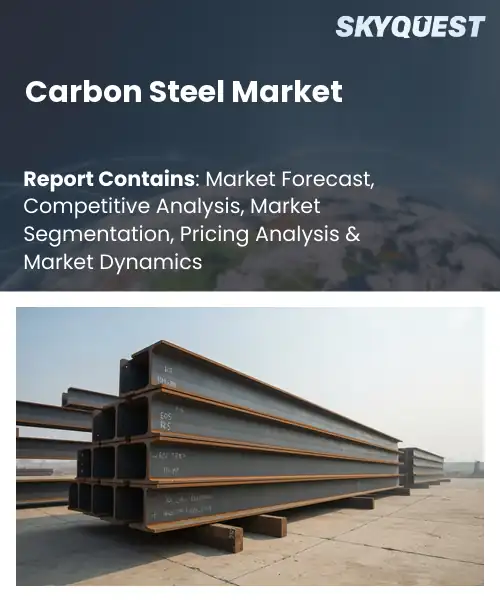
Carbon Steel Market
Report ID: SQMIG15O2046
Report ID: SQMIG15O2046
[email protected]
USA +1 351-333-4748
Report ID:
SQMIG15O2046 |
Region:
Global |
Published Date: February, 2026
Pages:
157
|Tables:
151
|Figures:
78


Global Carbon Steel Market size was valued at USD 1.02 Trillion in 2024 and is poised to grow from USD 1.07 Trillion in 2025 to USD 1.56 Trillion by 2033, growing at a CAGR of 4.8% during the forecast period (2026-2033).
Global carbon steel market continue to grow due to rising infrastructure development, rapid industrialization, and manufacturing across different regions. Carbon steel's excellent mechanical properties, cost-effectiveness and recyclability are key reasons it is a commonly used material in critical applications such as construction frameworks, automotive components, industrial machinery and energy infrastructure where strength and durability are important. Infrastructure projects like roads, bridges, railways, and urban development projects in developing countries are greatly contributing to carbon steel product demand. In addition, government stimulus packages and growing public and private sector investments in transportation and housing projects will help to further expand the market.
Additionally, as present manufacturers (automotive) increase demand for advanced high-strength carbon steels for the purposes of improving safety and fuel efficiency in vehicles due to the increasing growth of electrification in the automotive industry, advancements in technology have increased efficiency in production through the use of automation and smart manufacturing, all of which contribute to greater competitiveness.
How is AI improving production efficiency in the carbon steel market?
In the carbon steel industry, production efficiency, driven by the latest sensors, machine learning, and simulation technologies, has greatly improved to AI. This includes methods of predictive maintenance to predict when equipment will break down; process optimization to create stable conditions in the furnace; and using computer vision to perform automated quality inspections on the finished product. Currently, many of the producers in the carbon steel market are utilizing digital twins and real-time analytics to smooth out variations in scrap feed and rolling schedules. Additionally, producers are under continuous pressure from the market to reduce costs and meet increasing sustainability targets.
All three of these tools provide a significant benefit to producers by allowing them to reduce waste and maintain consistent output quality, improve plant responsiveness to operating changes, and assist in tuning the input parameters (for example, temperature) of the furnace by flagging surface defects early in the production process. POSCO, for example, converted a furnace at its Pohang works into an AI-driven furnace utilizing deep learning and digital twin technology in March 2025. The new processes utilized by the furnace have allowed it to experience improved process stability and energy efficiency, allowing increased throughput of carbon steel and decreased scrap rates for the entire carbon steel market.
Market snapshot - 2026-2033
Global Market Size
USD 1.02 Trillion
Largest Segment
Low Carbon Steel
Fastest Growth
Medium Carbon Steel
Growth Rate
4.8% CAGR
To get more insights on this market click here to Request a Free Sample Report
The carbon steel market is segmented into carbon steel type, product type, application, form, end use and region. Based on carbon steel type, the market is segmented into low carbon steel, medium carbon steel and high carbon steel. Based on product type, the market is segmented into carbon steel plate, carbon steel pipe, carbon steel bar and others. Based on application, the market is segmented into building & construction, shipbuilding, consumer goods, aerospace and others. Based on form, the market is segmented into hot rolled, cold rolled, galvanized and coated. Based on end use, the market is segmented into infrastructure, transportation, oil & gas, industrial equipment, consumer appliances and others. Based on region, the market is segmented into North America, Europe, Asia Pacific, Latin America and Middle East & Africa.
What role do carbon steel pipe play in addressing oil and gas infrastructure needs?
As per global carbon steel market analysis, the low carbon steel segment dominates the market due to its many uses, low price and easy to reproduce. Low carbon steels are very ductile, and have good weldability, fabricability, and machinability. Therefore, they are well-suited for the construction of almost all types of construction structures, automotive body panels, pipelines, as well as general engineering applications. They continue to be used heavily within industries that work on high volume projects such as infrastructure and manufacturing; thus, low carbon steels continue to lead globally because low carbon steels are cheaper than medium and high carbon steels.
As per global carbon steel market outlook, the high carbon steel segment is growing by far the fastest because of increasing demand for high strength and wear resistant materials. High carbon steels are most used in tools and cutting tools, springs and performance industrial components. In particular, the expanding markets for heavy machinery, mining, defense, and specialized automotive components are increasing the demand for stronger and more durable steels. In addition, improvements in heat treatment technologies are expected to improve other performance characteristics and drive continued growth of the high carbon steel segment.
How Is Infrastructure Development Driving Demand for Carbon Steel Plates?
Carbon steel plate accounts for the largest global carbon steel market share. Among all carbon-steel products, plate represents the largest share in the overall carbon steel market and dominates due to its widespread use in construction, shipbuilding, oil/gas infrastructure projects, bridge-building, and manufacturing of heavy equipment. Plates are important for providing structural integrity and load-carrying capacity, and their use is critical in implementing infrastructure and industrial projects on a large scale. Demand for carbon-steel plates is further supported by rapid urbanization and government initiatives aimed at developing infrastructure, particularly in Asia-Pacific.
As per global carbon steel market forecast, carbon steel pipe is the fastest-growing product segment, driven largely by growth in the oil and gas sector, as well as through new water transport projects and industrial pipelines. Increased demand for energy and growth in cross-border pipelines continue to drive consumption of pipes, as well as through investments to manage wastewater and build desalination facilities. Additionally, increased demand for seamless and high-pressure pipes from industries such as petrochemicals and power generation will create opportunities for continued growth.
To get detailed segments analysis, Request a Free Sample Report
The Asia-Pacific is the key region in the global carbon steel market as it has a multitude of manufacturing facilities combined with an integrated supply chain and constant demand from heavy industrial users such as construction, automotive, shipbuilding, and machinery. These manufacturing companies enjoy an advantage because they are near the largest users of steel around the world, thus reducing logistics issues and improving responsiveness.
Japan Carbon Steel Market
The Japan carbon steel market is driven by advanced manufacturing capabilities, strong linkages with its precision engineering sector, and a focus on producing high quality/specialty grades of steel. The domestic demand created by the automotive and machinery sectors continues to create a need to improve their performance and process efficiency within the respective industries. The relationship between steel mill operators and component manufacturers has enabled just-in-time supply and customization of parts for the respective industries. Research and development (R&D) investments have continued to support incremental innovation and improvements in efficiency levels/increased reliability across the supply chain and at the product level through use of science-based principles.
South Korea Carbon Steel Market
The carbon steel market in South Korea benefits from the presence of large, integrated steel mills that can produce high volumes of carbon steel products with close alignment to the shipbuilding and heavy machinery industry. Additionally, the ability to produce efficiently and to have a diversified supply chain that is oriented towards export helps the carbon steel market in South Korea respond quickly to complex customer requests. Work between industries has resulted in technical adaptation of products to meet more stringent customer requirements, while investment in process automation and worker training contributes to a strong, consistent level of quality. This synergy among producers of carbon steel enhances their global competitiveness in both specialty and commodity products across all regional markets.
The unprecedented carbon steel market growth within Europe can be attributed to a myriad of variables, including new industrial activity, high regulatory standards for product consistency, and investing in the latest technologies to upgrade production facilities in the most populated markets. Initiatives aimed at reinvigorating capital projects will continue to promote demand creation, as will the ongoing growth of the automotive industry and other manufacturing sectors, and the need for customized grades within specialized applications. Companies are pursuing process improvement, quality assurance, and supply chain management activities to position themselves for evolving specifications.
Established producers are realigning their business strategies through the adoption of advanced technologies and developing cross-border supply chains to increase capacity utilization, thereby creating a competitive edge by developing premium custom products. Collaboration between public and private sectors to create a sustainable and circular economy will help produce efficiencies and generate new product categories. Therefore, a skilled engineering workforce coupled with the growth of specialized end market demand will push producers towards premium and custom/application-specific steel, while intra-regional transportation logistics and trade agreements will create quicker and less costly distributions options for manufacturers moving to accommodate the complexity of final use.
Germany Carbon Steel Market
The consumption of carbon steel in Germany is sustained through close cooperation between manufacturers of heavy industry, auto and industrial equipment with an emphasis on delivering reliable and accurate products. These manufacturers have stress laid on the need for constant quality assurance, ensured long life of products through utilization of the same material, and development of customized solutions through partnerships with end users. Reliable and high-quality performance able to meet these expectations is driven by manufacturers utilizing advanced process controls, developing trustworthy suppliers’ networks, and employing highly trained staff to accommodate this demand.
U.K. Carbon Steel Market
The carbon steel market in the United Kingdom has seen an increase in demand largely attributed to niche manufacturers, offshore energy projects, and infrastructure renewal, driving suppliers to diversify into specialty grades and value-added service areas. Suppliers are working to accommodate complex project timelines through collaboration with appropriate engineering and logistics partners.
France Carbon Steel Market
As per global carbon steel industry analysis, the market in France has recently seen growth or potentially will see growth due to renewed investments in land-based industrial facilities; heavy reliance on the latest technologies in developing advanced manufacturing businesses; and increased usage of specialty carbon steels in automotive and infrastructure applications. To differentiate themselves from their competitors, suppliers have begun to offer substantially differentiated products while offering a variety of technical services and working closely with their engineering partners to ensure precise specifications of each part, system, or assembly.
As per global carbon steel market regional outlook, the North American industry has been strengthened through deliberate facility modernization, alignment with large industrial consumers, and a growing emphasis on supply chain reliability. Manufacturers have adopted new production processes, automation, and quality control systems to improve their competitiveness and meet the many different specifications of their customers. Cooperation with manufacturers in energy, construction, and automotive sectors has resulted in increased demand for customized carbon steel products. In addition to policies to support growth of domestic production and logistics infrastructure, the industry’s emphasis on workforce development and technology partnerships will improve its ability to respond rapidly and provide a wider variety of carbon steel products throughout North America.
United States Carbon Steel Market
The US carbon steel industry is linked to the construction, energy, and heavy equipment industries; all of which require the use of both commodity and specialty grades of carbon steel. The industry has concentrated on manufacturing flexibility, product quality assurance, and supply chain reliability to meet complex project requirements.
Canada Carbon Steel Market
As per global carbon steel market regional forecast, the Canada industry has strong ties to the construction and energy infrastructure industries, as well as to resource-based industries that require durable and application-specific products. Suppliers to these industries have made it a priority to deliver reliable products, coordinate logistics over a broad geographical area, and provide custom products to meet project-specific requirements. Investments in improving process flexibility and quality control testing allow the Canadian industry to comply with stringent customer specifications.
To know more about the market opportunities by region and country, click here to
Buy The Complete Report
Infrastructure Development and Urbanization
Automotive and Construction Demand Growth
Volatile Raw Material Supply Chains
Increased Costs Associated with Stringent Environmental Compliance
Request Free Customization of this report to help us to meet your business objectives.
The global carbon steel industry competitive landscape has moved towards competition driven primarily by an increased focus on decarbonized steelmaking efforts with established companies leveraging existing corporate venture capital and strategic investments combined with new entrants leveraging large project financing and supply partnerships to rapidly scale their respective green production activities.
Circular Steel Recycling
High Strength Steel Use
SkyQuest’s ABIRAW (Advanced Business Intelligence, Research & Analysis Wing) is our Business Information Services team that Collects, Collates, Correlates, and Analyses the Data collected by means of Primary Exploratory Research backed by robust Secondary Desk research.
As per SkyQuest analysis, the global carbon steel market is anticipated to experience continued growth mainly from urbanization and infrastructure development; however, fluctuating raw materials supply chains are a potential limiting factor for output and pricing. Asia Pacific is currently the leader of the carbon steel market largely due to its significant amounts of manufacturing facilities, integrated supply chain systems, and closeness of steel-dependent end users. Carbon steel pipe represents the largest segment of the carbon steel market due to its critical application in both liquid and gas delivery for energy and infrastructure projects, and ongoing upgrades in technology associated with the use of low-cost energy sources will result in greater levels of value-added products and efficiency improvements throughout the industry.
| Report Metric | Details |
|---|---|
| Market size value in 2024 | USD 1.02 Trillion |
| Market size value in 2033 | USD 1.56 Trillion |
| Growth Rate | 4.8% |
| Base year | 2024 |
| Forecast period | 2026-2033 |
| Forecast Unit (Value) | USD Trillion |
| Segments covered |
|
| Regions covered | North America (US, Canada), Europe (Germany, France, United Kingdom, Italy, Spain, Rest of Europe), Asia Pacific (China, India, Japan, Rest of Asia-Pacific), Latin America (Brazil, Rest of Latin America), Middle East & Africa (South Africa, GCC Countries, Rest of MEA) |
| Companies covered |
|
| Customization scope | Free report customization with purchase. Customization includes:-
|
To get a free trial access to our platform which is a one stop solution for all your data requirements for quicker decision making. This platform allows you to compare markets, competitors who are prominent in the market, and mega trends that are influencing the dynamics in the market. Also, get access to detailed SkyQuest exclusive matrix.
Table Of Content
Executive Summary
Market overview
Parent Market Analysis
Market overview
Market size
KEY MARKET INSIGHTS
COVID IMPACT
MARKET DYNAMICS & OUTLOOK
Market Size by Region
KEY COMPANY PROFILES
Methodology
For the Carbon Steel Market, our research methodology involved a mixture of primary and secondary data sources. Key steps involved in the research process are listed below:
1. Information Procurement: This stage involved the procurement of Market data or related information via primary and secondary sources. The various secondary sources used included various company websites, annual reports, trade databases, and paid databases such as Hoover's, Bloomberg Business, Factiva, and Avention. Our team did 45 primary interactions Globally which included several stakeholders such as manufacturers, customers, key opinion leaders, etc. Overall, information procurement was one of the most extensive stages in our research process.
2. Information Analysis: This step involved triangulation of data through bottom-up and top-down approaches to estimate and validate the total size and future estimate of the Carbon Steel Market.
3. Report Formulation: The final step entailed the placement of data points in appropriate Market spaces in an attempt to deduce viable conclusions.
4. Validation & Publishing: Validation is the most important step in the process. Validation & re-validation via an intricately designed process helped us finalize data points to be used for final calculations. The final Market estimates and forecasts were then aligned and sent to our panel of industry experts for validation of data. Once the validation was done the report was sent to our Quality Assurance team to ensure adherence to style guides, consistency & design.
Analyst Support
Customization Options
With the given market data, our dedicated team of analysts can offer you the following customization options are available for the Carbon Steel Market:
Product Analysis: Product matrix, which offers a detailed comparison of the product portfolio of companies.
Regional Analysis: Further analysis of the Carbon Steel Market for additional countries.
Competitive Analysis: Detailed analysis and profiling of additional Market players & comparative analysis of competitive products.
Go to Market Strategy: Find the high-growth channels to invest your marketing efforts and increase your customer base.
Innovation Mapping: Identify racial solutions and innovation, connected to deep ecosystems of innovators, start-ups, academics, and strategic partners.
Category Intelligence: Customized intelligence that is relevant to their supply Markets will enable them to make smarter sourcing decisions and improve their category management.
Public Company Transcript Analysis: To improve the investment performance by generating new alpha and making better-informed decisions.
Social Media Listening: To analyze the conversations and trends happening not just around your brand, but around your industry as a whole, and use those insights to make better Marketing decisions.
REQUEST FOR SAMPLE
 REQUEST FREE CUSTOMIZATION
Global Carbon Steel Market size was valued at USD 1.02 Trillion in 2024 and is poised to grow from USD 1.07 Trillion in 2025 to USD 1.56 Trillion by 2033, growing at a CAGR of 4.8% during the forecast period (2026-2033).
ArcelorMittal, NIPPON STEEL CORPORATION, POSCO, Baosteel Group Corporation, JFE Steel Corporation, Tata Steel Limited, United States Steel Corporation, ThyssenKrupp AG, HBIS Group, JSW Steel Corporation, Nucor Corporation, Steel Authority of India Limited, China Baowu Steel Group, Hyundai Steel Company, Ansteel Group, Jiangsu Shagang, Evraz plc, Tenaris S.A., Vallourec S.A., Salzgitter AG
The key driver of the Carbon Steel Market is the growing demand from construction, automotive, and industrial sectors. Rapid urbanization, infrastructure development, and increasing production of vehicles and machinery are boosting the need for durable and cost-effective carbon steel globally.
Key trends in the Carbon Steel Market include increased demand for high‑strength and low‑alloy steels, greater adoption of advanced manufacturing technologies (like automation and AI), rising focus on sustainable production, and growth in recycling and circular steel practices to reduce environmental impact.
Asia-Pacific accounted for the largest share in the Carbon Steel Market, driven by rapid industrialization, robust construction and automotive sectors, high steel consumption, and the presence of major steel-producing countries such as China and India.


Want to customize this report? This report can be personalized according to your needs. Our analysts and industry experts will work directly with you to understand your requirements and provide you with customized data in a short amount of time. We offer $1000 worth of FREE customization at the time of purchase.
Feedback From Our Clients


 USA (+1) 351-333-4748

