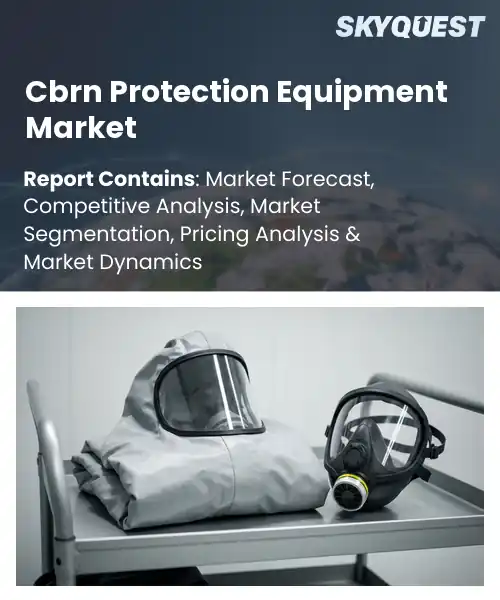
Cbrn Protection Equipment Market
Report ID: SQMIG20A2729
Report ID: SQMIG20A2729
[email protected]
USA +1 351-333-4748
Report ID:
SQMIG20A2729 |
Region:
Global |
Published Date: July, 2026
Pages:
157
|Tables:
173
|Figures:
79


Global Cbrn Protection Equipment Market size was valued at USD 14.87 Billion in 2024 and is poised to grow from USD 15.88 Billion in 2025 to USD 26.89 Billion by 2033, growing at a CAGR of 6.8% during the forecast period (2026-2033).
CBRN Protection Equipment Market is responsible for manufacturing systems and garments to protect personnel from chemical, biological, radiological and nuclear hazards. This sector has become vital to the defense, emergency response and industrial safety. Its importance grew after the 1995 sarin attack on the Tokyo subway, which exposed holes in civilian preparedness and caused governments to start putting money into respirators, decontamination units and protective suits. Procurement programs in the US, NATO allies, and Southeast Asian countries have expanded in recent decades as geopolitical tensions have increased and chemical programs have been revived. This led to increased demand as manufacturers ramped up production to meet the changing threat landscape.
On the basis of this growing demand, power of sensor technology integration are the main catalysts shaping the global CBRN protection equipment market. Modern respirators are equipped with detection modules that alert users to the concentration of contaminants, leading to suit upgrades and decontamination, helping to lower casualty rates in events like the 2022 industrial chlorine leak in Gujarat. This ability facilitates collaboration whereby governments fund research and manufacturers make fabrics available, creating a cycle that accelerates product innovation. This results in countries with safety standards such as European Union offering lucrative opportunities for companies that can provide compliant data solutions, increasing revenue growth and diversification of markets.
How is AI Improving Detection and Response Capabilities in the Cbrn Protection Equipment Market?
AI is revolutionizing detection and response, transforming raw sensor data into actionable insight. Modern devices incorporate machine learning models that identify chemical signatures, flag biological signatures, and monitor radiological levels in real time. Edge processors also enable analysis to be done on the device, reducing latency and enabling autonomous alerts. Common situational picture will be developed by integrated platforms that will merge data from respirators, wearable badges and unmanned aerial systems. This connectivity helps speed up decisions on decontamination and coordinated protective actions, improving the reliability of equipment and the confidence of the operator in hazardous environments.
In March 2024 Honeywell launched an AI enabled sensor suite that continuously scans air for toxic agents and instantly relays threat levels to command centers. The system’s predictive algorithms guide the deployment of protective gear and help with decontamination, decreasing response times and bolstering the market’s confidence in advanced CBRN solutions.
Market snapshot - (2026-2033)
Global Market Size
USD 14.87 Billion
Largest Segment
Protective Clothing
Fastest Growth
Detection Equipment
Growth Rate
6.8% CAGR
To get more insights on this market click here to Request a Free Sample Report
Global cbrn protection equipment market is segmented by equipment type, threat type, end user, protection level, application, procurement type and region. Based on equipment type, the market is segmented into Respiratory Protection Equipment, Protective Clothing, Detection Equipment and Others. Based on threat type, the market is segmented into Chemical Threats, Biological Threats, Radiological & Nuclear Threats and Others. Based on end user, the market is segmented into Military, Law Enforcement, Emergency Response Organizations and Others. Based on protection level, the market is segmented into Personal Protection and Collective Protection. Based on application, the market is segmented into Defense Operations, Homeland Security, Industrial Safety and Others. Based on procurement type, the market is segmented into New Procurement and Replacement Procurement. Based on region, the market is segmented into North America, Europe, Asia Pacific, Latin America and Middle East & Africa.
The Respiratory Protection Equipment segment leads the market, as it directly protects the user from inhalation hazards, the most immediate threat in CBRN incidents. This essential task drives procurement priorities, with agencies prioritizing lifesaving gear that ensures survivability in contaminated environments. The constant development of filter technology and ergonomics also confirm its position as a core, if not fundamental, element of protection. These qualities maintain its demand in various operational scenarios and training regimes.
However, the Protective Clothing segment is growing at the fastest pace driven by the development of new lightweight fabrics and integrated sensor layers that improve comfort and situational awareness. Rapid decontamination, and an increased focus on multiple hazard resistance, are leading to adoption and forcing manufacturers to innovate. This momentum provides more market opportunities and fortifies the protective ecosystem at large.
The Chemical Threats segment is dominating due to chemical agents being the most common and diverse threats in CBRN scenarios, prompting organizations to allocate considerable resources towards mitigation. Persistence and potential for mass impact increase risk assessments, leading to stringent standards for detection, filtration and decontamination. The ongoing development of new toxicants and evolving industrial uses sustain a forward-leaning defense stance, undergirding market dominance and operational preparedness in global theaters.
The Biological Threats segment is the fastest growing segment in the market. The market is driven by the increasing awareness of pandemic driven risks and bioterrorism potential. Advances in rapid pathogen detection and vaccine compatible protective gear are driving market demand, while regulatory focus on biosecurity is accelerating market uptake. This growth drives additional investment in integrated CBRN solutions.
To get detailed segments analysis, Request a Free Sample Report
With a strong industrial base, world-class research institutions and mature defense infrastructure, North America offers fertile ground for sophisticated development and rapid deployment of CBRN protection solutions. The region’s broad regulatory regime encourages ongoing innovation, while ensuring high safety standards for both civilian and military applications. The resulting supply chain is both robust and capable of supporting complex operational demands through effective collaboration between government agencies, leading manufacturers and specialized service providers. Readiness is also increased and capabilities can be scaled up quickly due to the presence of major training facilities and a well-established logistics network. These strengths combined are the basis of North America’s leading role and its ability to continue influencing global market dynamics.
United States Cbrn Protection Equipment market is characterized by high investment in research and development, resulting in cutting edge technologies that set global standards. Strong collaboration between federal defense organizations and private sector innovators speeds product lifecycle development and supports rapid adoption of next generation solutions. A full training ecosystem ensures end-users are skilled in the operation and maintenance of the equipment and instills confidence in the reliability of the system. The level of industrial expertise, together with the sheer scale of procurement activities, cement the United States as a stronghold of market leadership.
The collaborative approach between the government safety programs and domestic manufacturers and academic research centers bolsters the Cbrn Protection Equipment market in Canada. The emphasis on interoperability and adherence to international standards leads to the development of adaptable solutions for civil protection and military use. Strategic investment in testing facilities and specialized training increases operational readiness across provinces. It’s this integrated ecosystem that fuels a robust pipeline of new products, cementing Canada’s place as a significant player in the wider North American market.
Europe’s expansion is propelled by stringent regulatory mandates, heightened security awareness, and a consolidated network of specialized manufacturers that prioritize quality and compliance. Collaborative research initiatives across the continent foster cross‑border innovation, resulting in advanced materials and modular system designs that address evolving threat landscapes. Strong public‑private partnerships encourage the adoption of standardized solutions across civil defense, industrial, and military sectors. Moreover, the region’s commitment to sustainability influences the development of environmentally conscious protective equipment, aligning with broader policy objectives. These factors collectively accelerate market growth and reinforce Europe’s strategic relevance in the global Cbrn protection landscape.
Cbrn Protection Equipment Market in Germany is anchored by a legacy of engineering excellence and a dense cluster of precision manufacturers. Integrated testing facilities and rigorous certification processes ensure that products meet the highest performance criteria. Collaborative ventures between defense agencies and industrial partners drive continuous refinement of protective technologies. A strong emphasis on modularity and scalability enables German solutions to serve a wide array of applications, reinforcing the country’s dominant market position.
Cbrn Protection Equipment Market in the United Kingdom experiences accelerated growth through aggressive adoption of innovative designs and rapid integration of digital monitoring capabilities. Government initiatives focusing on resilience and emergency preparedness stimulate demand across public safety and defense sectors. Partnerships with technology firms foster the development of smart protective systems that enhance situational awareness. This dynamic environment positions the United Kingdom as a leading catalyst for market expansion across the region.
Cbrn Protection Equipment Market in France is emerging as a vibrant segment driven by targeted investments in niche product development and strong alignment with European safety directives. Collaborative research programs link academic expertise with industrial production, encouraging the creation of lightweight and ergonomic protective gear. Growing awareness of Cbrn threats among civil authorities fuels demand for versatile solutions, supporting France’s rising influence within the European market.
Asia Pacific advances its market stature through a combination of escalating security concerns, expanding industrial activity, and burgeoning expertise in materials science. Nations in the region prioritize self‑reliance, prompting substantial investment in indigenous design and manufacturing capabilities. Robust collaboration between government research institutes and private enterprises accelerates technology transfer and drives the creation of cost‑effective yet high‑performance protective solutions. Increasing participation in multinational standard‑setting bodies ensures alignment with global best practices, while regional trade agreements facilitate cross‑border distribution. Together, these dynamics reinforce Asia Pacific’s growing relevance and underscore its commitment to shaping the future of Cbrn protection.
Cbrn Protection Equipment Market in Japan leverages a strong tradition of precision engineering and a deep pool of technical talent. Integration of advanced sensor technology and compact design principles yields equipment that balances protection with operational agility. Close coordination between governmental safety agencies and leading manufacturers streamlines the certification process, promoting swift market entry. Emphasis on continuous improvement and reliability solidifies Japan’s reputation as a trusted source of high‑quality protective solutions.
Cbrn Protection Equipment Market in South Korea benefits from rapid industrial growth and proactive government safety initiatives. Strong investment in research institutions fuels innovation in lightweight composite materials and smart filtration systems. Collaborative frameworks between defense ministries and domestic producers accelerate the development of customized solutions for both military and civilian use. This focus on technology integration and responsive manufacturing enhances South Korea’s competitive edge within the regional landscape.
To know more about the market opportunities by region and country, click here to
Buy The Complete Report
Increasing Threat Perception Drives Investment
Technological Advancements Enhance Protective Capabilities
High Cost Limits Adoption
Stringent Certification Processes Delay Launch
Request Free Customization of this report to help us to meet your business objectives.
The competitive landscape of the global CBRN protection equipment market is shaped by intense rivalry among manufacturers seeking to differentiate through advanced material technologies, strategic acquisitions, and cross‑industry partnerships. Recent M&A activity has consolidated expertise in lightweight multi‑threat gear, while collaborations with sensor and AI firms accelerate product innovation, enabling faster response capabilities and broader market reach.
SkyQuest’s ABIRAW (Advanced Business Intelligence, Research & Analysis Wing) is our Business Information Services team that Collects, Collates, Correlates, and Analyses the Data collected by means of Primary Exploratory Research backed by robust Secondary Desk research.
As per SkyQuest analysis, the market is being propelled primarily by rising threat perception that pushes governments and industry to invest heavily in advanced CBRN gear, while high cost remains a restraint limiting adoption in emerging economies. North America dominates the landscape, benefiting from strong defence budgets and robust R&D ecosystems. The respiratory protection equipment segment leads the market due to its critical role in safeguarding against inhalation hazards. A second driver is rapid technological advancement, especially the integration of AI‑enabled sensors and lightweight smart fabrics, which enhances wearer safety and creates new revenue models.
| Report Metric | Details |
|---|---|
| Market size value in 2024 | USD 14.87 Billion |
| Market size value in 2033 | USD 26.89 Billion |
| Growth Rate | 6.8% |
| Base year | 2024 |
| Forecast period | (2026-2033) |
| Forecast Unit (Value) | USD Billion |
| Segments covered |
|
| Regions covered | North America (US, Canada), Europe (Germany, France, United Kingdom, Italy, Spain, Rest of Europe), Asia Pacific (China, India, Japan, Rest of Asia-Pacific), Latin America (Brazil, Rest of Latin America), Middle East & Africa (South Africa, GCC Countries, Rest of MEA) |
| Companies covered |
|
| Customization scope | Free report customization with purchase. Customization includes:-
|
To get a free trial access to our platform which is a one stop solution for all your data requirements for quicker decision making. This platform allows you to compare markets, competitors who are prominent in the market, and mega trends that are influencing the dynamics in the market. Also, get access to detailed SkyQuest exclusive matrix.
Table Of Content
Executive Summary
Market overview
Parent Market Analysis
Market overview
Market size
KEY MARKET INSIGHTS
COVID IMPACT
MARKET DYNAMICS & OUTLOOK
Market Size by Region
KEY COMPANY PROFILES
Methodology
For the Cbrn Protection Equipment Market, our research methodology involved a mixture of primary and secondary data sources. Key steps involved in the research process are listed below:
1. Information Procurement: This stage involved the procurement of Market data or related information via primary and secondary sources. The various secondary sources used included various company websites, annual reports, trade databases, and paid databases such as Hoover's, Bloomberg Business, Factiva, and Avention. Our team did 45 primary interactions Globally which included several stakeholders such as manufacturers, customers, key opinion leaders, etc. Overall, information procurement was one of the most extensive stages in our research process.
2. Information Analysis: This step involved triangulation of data through bottom-up and top-down approaches to estimate and validate the total size and future estimate of the Cbrn Protection Equipment Market.
3. Report Formulation: The final step entailed the placement of data points in appropriate Market spaces in an attempt to deduce viable conclusions.
4. Validation & Publishing: Validation is the most important step in the process. Validation & re-validation via an intricately designed process helped us finalize data points to be used for final calculations. The final Market estimates and forecasts were then aligned and sent to our panel of industry experts for validation of data. Once the validation was done the report was sent to our Quality Assurance team to ensure adherence to style guides, consistency & design.
Analyst Support
Customization Options
With the given market data, our dedicated team of analysts can offer you the following customization options are available for the Cbrn Protection Equipment Market:
Product Analysis: Product matrix, which offers a detailed comparison of the product portfolio of companies.
Regional Analysis: Further analysis of the Cbrn Protection Equipment Market for additional countries.
Competitive Analysis: Detailed analysis and profiling of additional Market players & comparative analysis of competitive products.
Go to Market Strategy: Find the high-growth channels to invest your marketing efforts and increase your customer base.
Innovation Mapping: Identify racial solutions and innovation, connected to deep ecosystems of innovators, start-ups, academics, and strategic partners.
Category Intelligence: Customized intelligence that is relevant to their supply Markets will enable them to make smarter sourcing decisions and improve their category management.
Public Company Transcript Analysis: To improve the investment performance by generating new alpha and making better-informed decisions.
Social Media Listening: To analyze the conversations and trends happening not just around your brand, but around your industry as a whole, and use those insights to make better Marketing decisions.
REQUEST FOR SAMPLE
 REQUEST FREE CUSTOMIZATION
Global Cbrn Protection Equipment Market size was valued at USD 14.87 Billion in 2024 and is poised to grow from USD 15.88 Billion in 2025 to USD 26.89 Billion by 2033, growing at a CAGR of 6.8% during the forecast period (2026-2033).
The competitive landscape of the global CBRN protection equipment market is shaped by intense rivalry among manufacturers seeking to differentiate through advanced material technologies, strategic acquisitions, and cross‑industry partnerships. Recent M&A activity has consolidated expertise in lightweight multi‑threat gear, while collaborations with sensor and AI firms accelerate product innovation, enabling faster response capabilities and broader market reach. 'MSA Safety Incorporated', 'Avon Technologies plc', 'Drägerwerk AG & Co. KGaA', 'Honeywell International Inc.', '3M Company', 'Respirex International Ltd.', 'Lakeland Industries, Inc.', 'Kappler, Inc.', 'Blücher GmbH', 'Ansell Limited', 'DuPont de Nemours, Inc.', 'Teijin Limited', 'Paul Boyé Technologies', 'Survitec Group Limited', 'OPEC CBRNe Ltd.', 'Lion Protects', 'Sioen Industries NV', 'TST Sweden AB', 'NP Aerospace Ltd.', 'MIRA Safety LLC'
The heightened awareness of chemical, biological, radiological and nuclear hazards across governmental and industrial sectors fuels a proactive approach that prioritizes acquisition of advanced protection equipment, prompting organizations to allocate larger budgetary resources toward modern detection, decontamination and personal protective solutions, thereby expanding market demand and encouraging manufacturers to accelerate product development cycles and diversify portfolio offerings to meet evolving safety standards and operational requirements. In addition, international regulatory frameworks increasingly mandate stringent compliance, which further compels entities to adopt comprehensive CBRN protection strategies and sustain long‑term investment cycles.
Integrated Sensor Networks: The market is witnessing rapid convergence of Internet‑of‑Things technologies with protective gear, enabling continuous chemical, biological, radiological and nuclear hazard detection directly on the user’s platform. Embedded micro‑sensors communicate with centralized command centers, providing real‑time situational awareness and automated decontamination triggers. This connectivity reduces response times, enhances wearer safety, and allows manufacturers to offer subscription‑based analytics services, driving longer equipment lifecycles and creating new revenue streams beyond one‑time sales, and fostering collaborative ecosystems among government agencies, OEMs, and technology partners.
Why does North America Dominate the Global Cbrn Protection Equipment Market? |@12


Want to customize this report? This report can be personalized according to your needs. Our analysts and industry experts will work directly with you to understand your requirements and provide you with customized data in a short amount of time. We offer $1000 worth of FREE customization at the time of purchase.
Feedback From Our Clients


 USA (+1) 351-333-4748

