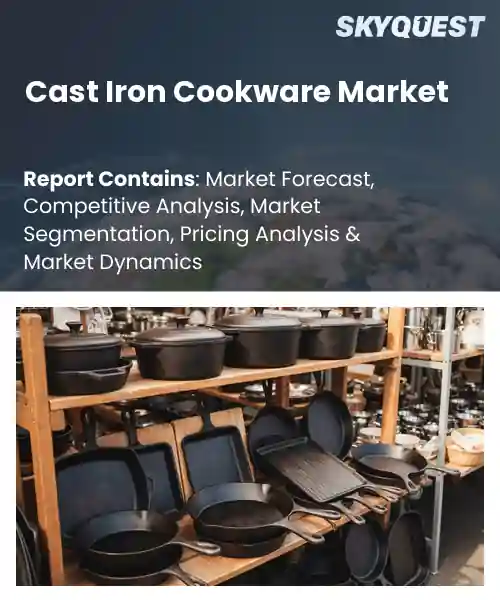
Cast Iron Cookware Market
Report ID: SQMIG25I2100
Report ID: SQMIG25I2100
[email protected]
USA +1 351-333-4748
Report ID:
SQMIG25I2100 |
Region:
Global |
Published Date: July, 2026
Pages:
157
|Tables:
174
|Figures:
79


Global Cast Iron Cookware Market size was valued at USD 2.5 Billion in 2024 and is poised to grow from USD 2.57 Billion in 2025 to USD 3.18 Billion by 2033, growing at a CAGR of 2.7% during the forecast period (2026-2033).
Global cast iron cookware represents a niche yet expanding segment of the cookware industry, encompassing traditional skillets, Dutch ovens, and specialty pieces sold by brands such as Lodge, Le Creuset, and emerging online manufacturers. The market is significant because cast iron delivers unmatched heat retention, natural non‑stick properties, and longevity that align with sustainability trends. Its primary driver today is the growing consumer preference for durable, health‑conscious kitchen tools that reduce reliance on disposable non‑stick coatings.
Historically, the sector evolved from small‑scale foundries in the early twentieth century to a worldwide distribution network facilitated by e‑commerce platforms, boosting accessibility and awareness globally. The second pivotal factor shaping global cast iron demand is the convergence of rising outdoor‑cooking culture and expanding middle‑class purchasing power in emerging economies. As consumers increasingly seek versatile cookware that can transition from stovetop to fire pit, manufacturers introduce pre‑seasoned, lightweight models that cater to camping and backyard grilling, prompting retailers to stock broader assortments. This shift drives higher volume orders, incentivizing foundries to adopt automated casting techniques that lower unit costs while preserving quality. Consequently, price‑sensitive markets such as India and Brazil experience accelerated adoption, creating opportunities for regional brands to partner with international distributors and capture share.
How is IoT-enabled temperature monitoring impacting the cast iron cookware market?
IoT‑enabled temperature monitoring is reshaping the cast iron cookware market by adding precision and convenience to a traditionally simple product. Sensors embedded in pans relay real‑time heat data to smartphones, helping cooks avoid overheating and preserve seasoning. This technology also supports manufacturers in gathering usage insights, which can guide product improvements and new feature development. As consumers seek smarter kitchen tools, brands are integrating connectivity without compromising the durability and cooking performance that define cast iron. The result is a more engaging cooking experience that aligns with broader trends toward connected home appliances.
Market snapshot - (2026-2033)
Global Market Size
USD 2.5 Billion
Largest Segment
Skillets & Frying Pans
Fastest Growth
Woks
Growth Rate
2.7% CAGR
To get more insights on this market click here to Request a Free Sample Report
Global cast iron cookware market is segmented by product type, seasoning type, material type, application, distribution channel, price range and region. Based on product type, the market is segmented into Skillets & Frying Pans, Dutch Ovens, Grill Pans & Griddles, Woks, Casseroles & Pots, Bakeware and Others. Based on seasoning type, the market is segmented into Pre-Seasoned Cast Iron Cookware and Unseasoned Cast Iron Cookware. Based on material type, the market is segmented into Bare Cast Iron and Enameled Cast Iron. Based on application, the market is segmented into Residential and Commercial. Based on distribution channel, the market is segmented into Online Retail, Supermarkets & Hypermarkets, Specialty Stores, Department Stores and Others. Based on price range, the market is segmented into Economy, Mid-Range and Premium. Based on region, the market is segmented into North America, Europe, Asia Pacific, Latin America and Middle East & Africa.
Skillets & frying pans segment dominates with large cast iron cookware market share because they are the most versatile tools in home cooking, offering rapid heat distribution and searing capability that suit a wide range of recipes. Their familiar shape and ease of use encourage both novice and experienced cooks to adopt cast iron, reinforcing brand loyalty and driving repeat purchases. This broad appeal fuels sustained demand across diverse consumer groups throughout the year globally and beyond.
As per cast iron cookware market outlook, woks segment emerges as the most rapidly expanding area in the cast iron cookware market due to rising Asian cuisine popularity and demand for high‑temperature stir‑fry. Manufacturers innovate deeper bowls and ergonomic handles, attracting health‑conscious consumers seeking quick, oil‑efficient cooking. This momentum opens new distribution opportunities and fuels broader market growth.
As per cast iron cookware market analysis, bare cast iron segment leads because its natural, uncoated surface develops a patina that enhances flavor and creates a non‑stick cooking plane over time. Enthusiasts value the traditional craftsmanship and heat retention properties, which support diverse cooking techniques from searing to slow braising. These authentic attributes strengthen brand heritage and encourage loyal user communities, sustaining a robust demand base across both amateur kitchens and professional establishments, reinforcing its market relevance.
Conversely, enameled cast iron segment is witnessing the strongest growth momentum as consumers seek low‑maintenance cookware that eliminates seasoning concerns while preserving heat retention. Colorful finishes and smooth interiors attract buyers and hospitality operators seeking easy cleaning and aesthetic appeal. This trend expands product lines and opens premium retail shelves, accelerating market expansion.
To get detailed segments analysis, Request a Free Sample Report
The North American market benefits from a deep‑rooted culinary culture that values timeless, durable cookware for both everyday meals and specialty dishes. Consumers prioritize high‑quality, long‑lasting products that can transition from stovetop to oven, reinforcing demand for cast iron. A well‑established retail infrastructure, encompassing big‑box chains, specialty kitchen stores, and robust e‑commerce platforms, ensures broad product accessibility. Strong brand heritage and continuous innovation in seasoning technologies enhance consumer confidence. Additionally, health‑focused cooking trends that emphasize natural materials and even heat distribution align closely with the attributes of cast iron. High disposable income levels and an enthusiastic community of cooking enthusiasts further accelerate market traction, positioning the region as a clear leader in adoption and product development.
As per cast iron cookware market regional outlook, United States thrives on a combination of traditional cooking practices and modern lifestyle preferences. Enthusiasts appreciate the versatility of cast iron for grilling, searing, and baking, while retailers capitalize on a well‑developed distribution network that spans physical stores and online channels. Culinary influencers and cooking shows amplify brand visibility, driving steady consumer interest. Innovation in pre‑seasoned finishes and ergonomic designs caters to both seasoned chefs and novice home cooks, reinforcing market strength across diverse demographic segments.
As per cast iron cookware market regional forecast, Canada reflects a strong appreciation for durable, performance‑driven kitchen tools. Seasonal cooking habits and a preference for cookware that retains heat align well with cast iron’s characteristics. Retail environments spanning large department stores to niche culinary boutiques ensure product availability in both urban and rural areas. Consumer awareness of the health benefits associated with iron enrichment and even cooking fosters continued demand. Collaborative efforts between manufacturers and culinary schools further embed cast iron usage within the national cooking culture.
Europe’s expansion is propelled by an increasing fascination with heritage cooking techniques that celebrate the authenticity of cast iron. Consumers are drawn to the tactile experience and the ability of cast iron to impart unique flavor nuances, bolstering its appeal across gourmet and everyday kitchens. A growing emphasis on sustainable, long‑lasting products aligns with environmental considerations, positioning cast iron as an eco‑friendly alternative to disposable cookware. Culinary tourism and the influence of food media spotlight traditional recipes, encouraging adoption. Strong distribution channels, from historic kitchenware shops to modern e‑commerce platforms, facilitate market penetration, while ongoing product refinements such as smoother finishes and lighter designs broaden consumer acceptance.
As per cast iron cookware industry analysis, Germany benefits from a robust tradition of precision engineering and a consumer base that values high‑performance kitchen equipment. Retail landscapes feature both longstanding specialty stores and contemporary online retailers, ensuring widespread product reach. Environmental consciousness drives preference for durable, recyclable cookware, reinforcing demand for cast iron’s longevity. Culinary education programs and cooking festivals further integrate cast iron into modern German gastronomy, supporting sustained market growth.
United Kingdom experiences accelerated interest through a resurgence of traditional British recipes and a vibrant home‑cooking culture. Influential food bloggers and television chefs showcase cast iron’s versatility, stimulating consumer curiosity. Retail offerings span heritage kitchenware boutiques to agile digital marketplaces, enhancing accessibility. A growing emphasis on health‑oriented cooking and the desire for cookware that retains heat evenly reinforce market expansion, positioning the United Kingdom as a dynamic growth hub within Europe.
France merges classic culinary heritage with contemporary culinary experimentation. Food enthusiasts appreciate cast iron’s ability to deliver consistent heat for both rustic stews and refined sauces. High‑end department stores and curated culinary shops provide channels for premium offerings, while artisanal producers emphasize handcrafted quality. An increasing focus on sustainable kitchen solutions supports consumer migration toward long‑lasting cast iron pieces, fostering gradual but steady market development.
Asia Pacific advances its market position through a blend of cultural reverence for traditional cooking methods and a rising middle class seeking premium kitchen tools. The health advantages associated with iron enrichment and even heat distribution resonate strongly with consumers prioritizing nutritious home meals. Rapid expansion of modern retail formats, including large‑scale department stores and dynamic online platforms, enhances product visibility. Local manufacturers innovate by integrating sleek aesthetics with traditional durability, catering to urban lifestyles. Culinary education initiatives and growing interest in global cuisines further amplify appreciation for cast iron’s versatility, reinforcing the region’s emerging significance in the global landscape.
Japan melds longstanding respect for meticulous cooking with a contemporary appetite for high‑quality kitchenware. Consumers value the precise temperature control that cast iron offers for both delicate Japanese dishes and Western-style preparations. Retail channels ranging from specialized culinary boutiques to expansive e‑commerce sites ensure market penetration. Emphasis on healthful cooking and the desire for cookware that endures generations drive sustained interest, positioning Japan as a key contributor to regional market momentum.
South Korea reflects a growing enthusiasm for versatile cookware that supports diverse culinary traditions. Modern households appreciate cast iron’s ability to retain heat for barbeque‑style grilling and simmered stews alike. Retail ecosystems combine traditional department stores with rapidly expanding online marketplaces, enhancing product accessibility. A heightened awareness of the nutritional benefits associated with iron infusion and a trend toward cooking at home bolster demand, solidifying South Korea’s role in strengthening the Asia Pacific market presence.
To know more about the market opportunities by region and country, click here to
Buy The Complete Report
Increasing Health Consciousness
Rising Interest In Traditional Cooking
High Initial Cost Barrier
Limited Awareness Of Seasoning Benefits
Request Free Customization of this report to help us to meet your business objectives.
The global cast iron cookware industry is intensifying as brands leverage funding to outpace rivals through product differentiation and digital channels. Recent examples include The Indus Valley’s $17 million Series B to broaden toxin‑free cast iron lines, Cumin Co’s $5 million pre‑Series A fueling new enamel‑coated launches, and Castiron’s seed‑stage investment driving an AI‑enabled e‑commerce platform for artisan chefs.
SkyQuest’s ABIRAW (Advanced Business Intelligence, Research & Analysis Wing) is our Business Information Services team that Collects, Collates, Correlates, and Analyses the Data collected by means of Primary Exploratory Research backed by robust Secondary Desk research.
As per SkyQuest analysis the global cast iron cookware market growth is being propelled primarily by growing health consciousness as consumers seek durable iron‑rich pans that promote nutritious cooking while a revived interest in traditional cooking methods further fuels demand by celebrating authentic flavors and season‑building techniques. The market is led by North America where strong brand heritage and extensive retail networks support widespread adoption and the skillets & frying pans segment dominates because of its versatility across home and professional kitchens. However the relatively high upfront price of cast iron remains a restraint deterring cost‑sensitive shoppers and slowing penetration in price‑focused segments. The global cast iron cookware market trend driven by increasing consumer preference for durable, long-lasting, and chemical-free cookware.
| Report Metric | Details |
|---|---|
| Market size value in 2024 | USD 2.5 Billion |
| Market size value in 2033 | USD 3.18 Billion |
| Growth Rate | 2.7% |
| Base year | 2024 |
| Forecast period | (2026-2033) |
| Forecast Unit (Value) | USD Billion |
| Segments covered |
|
| Regions covered | North America (US, Canada), Europe (Germany, France, United Kingdom, Italy, Spain, Rest of Europe), Asia Pacific (China, India, Japan, Rest of Asia-Pacific), Latin America (Brazil, Rest of Latin America), Middle East & Africa (South Africa, GCC Countries, Rest of MEA) |
| Companies covered |
|
| Customization scope | Free report customization with purchase. Customization includes:-
|
To get a free trial access to our platform which is a one stop solution for all your data requirements for quicker decision making. This platform allows you to compare markets, competitors who are prominent in the market, and mega trends that are influencing the dynamics in the market. Also, get access to detailed SkyQuest exclusive matrix.
Table Of Content
Executive Summary
Market overview
Parent Market Analysis
Market overview
Market size
KEY MARKET INSIGHTS
COVID IMPACT
MARKET DYNAMICS & OUTLOOK
Market Size by Region
KEY COMPANY PROFILES
Methodology
For the Cast Iron Cookware Market, our research methodology involved a mixture of primary and secondary data sources. Key steps involved in the research process are listed below:
1. Information Procurement: This stage involved the procurement of Market data or related information via primary and secondary sources. The various secondary sources used included various company websites, annual reports, trade databases, and paid databases such as Hoover's, Bloomberg Business, Factiva, and Avention. Our team did 45 primary interactions Globally which included several stakeholders such as manufacturers, customers, key opinion leaders, etc. Overall, information procurement was one of the most extensive stages in our research process.
2. Information Analysis: This step involved triangulation of data through bottom-up and top-down approaches to estimate and validate the total size and future estimate of the Cast Iron Cookware Market.
3. Report Formulation: The final step entailed the placement of data points in appropriate Market spaces in an attempt to deduce viable conclusions.
4. Validation & Publishing: Validation is the most important step in the process. Validation & re-validation via an intricately designed process helped us finalize data points to be used for final calculations. The final Market estimates and forecasts were then aligned and sent to our panel of industry experts for validation of data. Once the validation was done the report was sent to our Quality Assurance team to ensure adherence to style guides, consistency & design.
Analyst Support
Customization Options
With the given market data, our dedicated team of analysts can offer you the following customization options are available for the Cast Iron Cookware Market:
Product Analysis: Product matrix, which offers a detailed comparison of the product portfolio of companies.
Regional Analysis: Further analysis of the Cast Iron Cookware Market for additional countries.
Competitive Analysis: Detailed analysis and profiling of additional Market players & comparative analysis of competitive products.
Go to Market Strategy: Find the high-growth channels to invest your marketing efforts and increase your customer base.
Innovation Mapping: Identify racial solutions and innovation, connected to deep ecosystems of innovators, start-ups, academics, and strategic partners.
Category Intelligence: Customized intelligence that is relevant to their supply Markets will enable them to make smarter sourcing decisions and improve their category management.
Public Company Transcript Analysis: To improve the investment performance by generating new alpha and making better-informed decisions.
Social Media Listening: To analyze the conversations and trends happening not just around your brand, but around your industry as a whole, and use those insights to make better Marketing decisions.
REQUEST FOR SAMPLE
 REQUEST FREE CUSTOMIZATION
Global Cast Iron Cookware Market size was valued at USD 2.5 Billion in 2024 and is poised to grow from USD 2.57 Billion in 2025 to USD 3.18 Billion by 2033, growing at a CAGR of 2.7% during the forecast period (2026-2033).
The global cast iron cookware market is intensifying as brands leverage funding to outpace rivals through product differentiation and digital channels. Recent examples include The Indus Valley’s $17 million Series B to broaden toxin‑free cast iron lines, Cumin Co’s $5 million pre‑Series A fueling new enamel‑coated launches, and Castiron’s seed‑stage investment driving an AI‑enabled e‑commerce platform for artisan chefs. 'Lodge Manufacturing Company', 'The Coleman Company, Inc.', 'Le Creuset SAS', 'Staub Fonderie SAS', 'Tramontina S.A.', 'Meyer Corporation', 'Victoria Cookware RGP S.A.S.', 'The Indus Valley', 'Skeppshult Gjuteri AB', 'Camp Chef', 'FINEX Cast Iron Cookware Co.', 'Smithey Ironware Company', 'Field Company', 'Vermicular Inc.', 'Petromax GmbH', 'Denby Pottery Company Ltd.', 'Netherton Foundry Ltd.', 'BergHOFF Worldwide NV', 'Crucible Cookware', 'Marquette Castings Inc.'
Consumers are increasingly seeking cooking tools that enhance nutritional value, and cast iron pans are valued for their ability to retain iron and promote even heating, which aligns with health‑focused cooking practices. This perception encourages home chefs to replace non‑stick alternatives with cast iron, fostering greater product adoption across demographic groups. Consequently, retailers experience heightened demand, and manufacturers expand distribution channels to satisfy the growing preference for cookware that supports wholesome meal preparation while also contributing to improved overall dietary outcomes.
Sustainable Lifestyle Driving Adoption: Consumers increasingly prioritize health‑focused and environmentally responsible cooking, prompting a shift toward durable, non‑reactive cookware that can be used for decades without replacement. Cast iron’s natural non‑stick surface, when properly seasoned, aligns with the desire for chemical‑free cooking surfaces, while its longevity reduces waste compared to disposable alternatives. Brands are capitalizing on this sentiment by highlighting eco‑friendly narratives, offering recycled‑steel handles, and promoting the cookware’s ability to transition seamlessly from stovetop to oven, reinforcing its appeal in sustainable kitchen ecosystems.
Why does North America Dominate the Global Cast Iron Cookware Market? |@12


Want to customize this report? This report can be personalized according to your needs. Our analysts and industry experts will work directly with you to understand your requirements and provide you with customized data in a short amount of time. We offer $1000 worth of FREE customization at the time of purchase.
Feedback From Our Clients


 USA (+1) 351-333-4748

