Cardiology Pacemaker Programmer Market
Report ID: SQMIG35A4427
Report ID: SQMIG35A4427
[email protected]
USA +1 351-333-4748
Report ID:
SQMIG35A4427 |
Region:
Global |
Published Date: August, 2026
Pages:
157
|Tables:
115
|Figures:
77


Global Cardiology Pacemaker Programmer Market size was valued at USD 1.08 Billion in 2024 and is poised to grow from USD 1.16 Billion in 2025 to USD 2.13 Billion by 2033, growing at a CAGR of 7.8% during the forecast period (2026-2033).
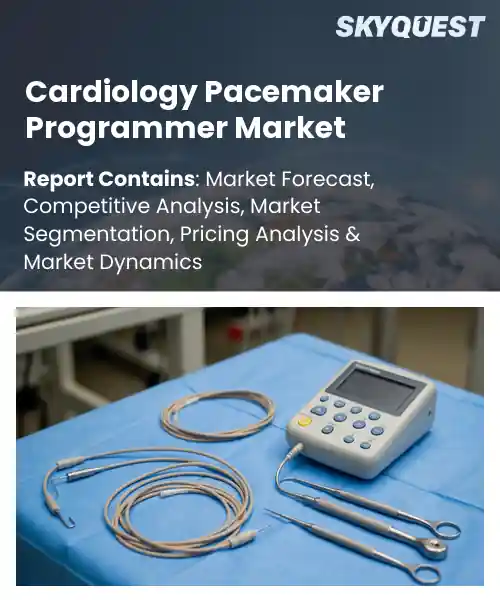
The cardiology pacemaker programmer market comprises hardware and software platforms that enable clinicians to configure, interrogate, and monitor cardiac devices. Its importance stems from the need for adjustments that improve patient outcomes and reduce hospital readmissions. Historically, the market emerged in the 1990s when analog programmers gave way to consoles, followed by wireless telemetry systems in the 2000s that shortened procedure times. Companies such as Medtronic and Boston Scientific accelerated adoption by bundling programmers with their devices, creating an ecosystem where device sales drove programmer demand. Consequently, the sector has expanded from niche hospital units to a network of labs.
Regulatory alignment and reimbursement incentives constitute the catalyst propelling the Cardiology Pacemaker Programmer Market, because clear standards reduce entry barriers while insurers reward efficient remote programming. When the FDA endorsed wireless telemetry protocols in 2018, manufacturers accelerated cloud consoles, allowing physicians to adjust pacing parameters during outpatient visits and cut in‑hospital stays by up to 30 percent, as shown in a Mayo Clinic trial. This cost reduction, coupled with bundled payment schemes that reimburse telemetry sessions, drives hospitals to replace legacy units with platforms. Consequently, vendors see rising order volumes and emerging markets gain scalable solutions for growing implant rates.
How is AI-driven Automation Reshaping The Cardiology Pacemaker Programmer Market?
AI-driven automation is transforming the cardiology pacemaker programmer market by embedding intelligent algorithms into device interrogation and configuration tools. Modern programmers now analyze rhythm data in real time, suggest optimal pacing settings, and enable clinicians to personalize therapy without manual trial and error. Remote connectivity allows adjustments to be made over secure networks, reducing the need for in person visits and shortening hospital stays. The technology also streamlines workflow by automating routine checks, freeing clinicians to focus on complex cases and improving overall patient safety. As hospitals adopt these smart systems, demand for integrated solutions that combine AI, cloud data and secure hardware is rising.
Medtronic announced an AI driven remote programming platform in June 2023, enabling clinicians to update pacemaker settings from a secure cloud interface. This innovation shortens procedure times, expands access to advanced therapy and illustrates how automation fuels market growth and improves patient care.
Market snapshot - (2026-2033)
Global Market Size
USD 1.08 Billion
Largest Segment
Desktop Programmers
Fastest Growth
Portable Programmers
Growth Rate
7.8% CAGR
To get more insights on this market click here to Request a Free Sample Report
Global cardiology pacemaker programmer market is segmented by product type, connectivity, application, end user and region. Based on product type, the market is segmented into Desktop Programmers and Portable Programmers. Based on connectivity, the market is segmented into Wired and Wireless. Based on application, the market is segmented into Pacemaker Programming, Device Diagnostics and Follow-Up Monitoring. Based on end user, the market is segmented into Hospitals, Cardiac Specialty Clinics and Ambulatory Surgical Centers. Based on region, the market is segmented into North America, Europe, Asia Pacific, Latin America and Middle East & Africa.
Desktop programmers segment dominates because clinicians value the robust processing power, larger display, and integrated hardware interfaces that support complex programming and comprehensive diagnostics. The stability of a fixed workstation reduces downtime, aligns with hospital IT infrastructure, and meets stringent regulatory validation processes, encouraging healthcare providers to consistently select desktop solutions for primary implantation procedures and delivering reliable performance over long service cycles.
However, portable programmers segment is witnessing the strongest growth momentum because its lightweight design and battery‑operated flexibility enable bedside and ambulatory use. Clinicians are embracing point‑of‑care programming, and manufacturers are integrating wireless data exchange, which accelerates adoption across outpatient settings and drives new revenue streams for the market.
Wired connectivity segment leads because it offers deterministic data transfer, minimal latency, and established cybersecurity protocols that satisfy stringent hospital network policies. The physical link ensures uninterrupted power supply and reduces electromagnetic interference, which is critical during high‑risk programming sessions. Healthcare institutions thus prioritize wired solutions for core implantation suites, reinforcing their preeminence in the cardiology pacemaker programmer market by delivering consistent performance and simplifying IT integration across legacy systems.
Meanwhile, wireless connectivity segment is emerging as the key high‑growth area because its freedom from cables supports mobile programming and remote monitoring, aligning with telehealth trends. Advances in encrypted Bluetooth and Wi‑Fi protocols boost clinician confidence, while care models demand on‑the‑go access, propelling rapid market expansion and opening new service opportunities.
To get detailed segments analysis, Request a Free Sample Report
North America leads the global Cardiology Pacemaker Programmer market through a combination of advanced clinical infrastructure, strong reimbursement frameworks, and a high concentration of innovative device manufacturers. The United States benefits from a mature healthcare ecosystem that encourages rapid adoption of cutting‑edge programming technologies, while regulatory pathways support swift product introductions. Canada complements this leadership with a publicly funded system that emphasizes evidence‑based practice and facilitates broad access to sophisticated programming solutions across its provinces. Collaborative research networks and academic medical centers in both countries drive continuous improvement in device programming techniques, reinforcing market dominance. Additionally, robust training programs for electrophysiology specialists ensure a skilled workforce capable of leveraging the full capabilities of modern pacemaker programmers, further cementing the region’s preeminence.
Cardiology Pacemaker Programmer Market in the United States is driven by integration of digital health platforms within major cardiac centers, enabling seamless data exchange and remote programming. Academic institutions work closely with device firms to refine user interfaces and improve safety. Reimbursement policies reward adoption of advanced programming solutions, prompting hospitals to replace legacy systems. This environment accelerates diffusion of next‑generation programmers across a broad network of electrophysiology practices.
Cardiology Pacemaker Programmer Market in Canada benefits from a unified public health system that prioritizes equitable access to cutting‑edge cardiac technologies. Provincial health authorities actively support the procurement of modern programmers, emphasizing interoperability and patient safety. Collaborative research initiatives between Canadian universities and industry accelerate the validation of new programming algorithms. Clinicians receive comprehensive training through national societies, ensuring consistent expertise across the country and fostering steady adoption of advanced pacemaker programming solutions.
Europe’s Cardiology Pacemaker Programmer market is experiencing rapid expansion driven by strong regulatory harmonization, robust clinical research networks, and a growing emphasis on personalized cardiac care. The European Union’s coordinated approval processes streamline market entry for innovative programming devices, encouraging manufacturers to focus on the region. Leading hospitals across the continent invest heavily in integrated electrophysiology suites that combine diagnostic imaging with advanced programmer interfaces. National health systems increasingly recognize the clinical and economic benefits of precise device programming, leading to supportive reimbursement policies. Collaborative initiatives between academic centers and industry accelerate the development of next‑generation algorithms, positioning Europe as a hub for cutting‑edge pacemaker programming solutions. Furthermore, the emphasis on data‑driven outcomes encourages hospitals to adopt programmable platforms that enable real‑time monitoring and remote adjustments, further enhancing patient management. This confluence of regulatory support, clinical investment, and technological innovation fuels the swift growth of the European market.
Cardiology Pacemaker Programmer Market in Germany is anchored by a strong network of university hospitals that serve as centers of excellence for electrophysiology. These institutions collaborate closely with device manufacturers to co‑develop user‑friendly interfaces and validate programming protocols. Health insurers provide reimbursement pathways that reward the use of advanced programmers, encouraging widespread adoption. Continuous professional development programs ensure that clinicians remain proficient with the latest programming features, sustaining Germany’s leadership in the European market.
Cardiology Pacemaker Programmer Market in the United Kingdom is propelled by a proactive regulatory environment that encourages rapid clinical evaluation of new programming technologies. National health services prioritize the integration of programmable devices within cardiac pathways, supporting hospitals to upgrade legacy systems. Strong collaboration between leading research universities and industry accelerates the introduction of innovative algorithms tailored to patient-specific needs. Ongoing training initiatives delivered by professional societies ensure that electrophysiologists maintain high competency levels, driving swift market uptake.
Cardiology Pacemaker Programmer Market in France is emerging as a focal point for collaborative clinical trials that assess the efficacy of next‑generation programming solutions. French hospitals benefit from a health system that supports reimbursement for advanced cardiac technologies, encouraging early adoption. Partnerships between academic cardiology centers and device firms foster co‑creation of customized programming interfaces that address local clinical workflows. Continuous education programs organized by national societies equip physicians with the skills needed to leverage sophisticated programmer functionalities.
Asia Pacific is steadily strengthening its role in the Cardiology Pacemaker Programmer market by leveraging rapid technological adoption, expanding healthcare infrastructure, and increasing focus on chronic cardiac disease management. Nations in the region invest heavily in modern electrophysiology labs that incorporate sophisticated programming platforms, enabling clinicians to fine‑tune device therapy with greater precision. Collaborative frameworks between regional academic institutions and global device manufacturers accelerate the localization of programming software, ensuring compatibility with diverse clinical practices. Government health initiatives promote the integration of remote monitoring and tele‑programming capabilities, enhancing patient access in both urban and rural settings. This combination of investment, innovation, and policy support drives a rising trajectory for the Asia Pacific market. Furthermore, the growing pool of specialized electrophysiologists, supported by regional training programs, ensures expertise keeps pace with the introduction of complex programming functionalities. As patient awareness rises, demand for pacing solutions intensifies, reinforcing market expansion across the region.
Cardiology Pacemaker Programmer Market in Japan is characterized by early adoption of high‑precision programming technologies within a well‑established network of cardiac centers. Japanese hospitals prioritize integration of advanced programmer interfaces that support real‑time data analytics, enabling clinicians to optimize device settings promptly. Strong collaboration between leading medical universities and device manufacturers drives the development of algorithms tailored to the specific electrophysiological profiles of the Japanese patient population. Continuous professional education ensures that practitioners remain adept at utilizing sophisticated programming features.
Cardiology Pacemaker Programmer Market in South Korea benefits from a dynamic healthcare ecosystem that encourages rapid integration of cutting‑edge programming solutions. Major hospitals invest in state‑of‑the‑art electrophysiology suites equipped with programmable platforms that facilitate precise device tuning. Partnerships between Korean research institutes and global device firms accelerate the localization of software, ensuring alignment with regional clinical protocols. Ongoing training initiatives by professional societies keep clinicians proficient in the latest programmer functionalities, supporting sustained market growth.
To know more about the market opportunities by region and country, click here to
Buy The Complete Report
Increasing Demand for Remote Monitoring
Advancements in Programmable Software
High Initial Capital Investment
Regulatory Approval Complexity
Request Free Customization of this report to help us to meet your business objectives.
The competitive landscape is shaped by major OEMs leveraging strategic M&A, cross‑industry partnerships, and rapid tech innovation to defend and expand market share; Medtronic’s integration of Bluetooth‑enabled remote programmers after its acquisition of St. Jude’s rhythm management portfolio, Abbott’s collaboration with Apple to embed device data into iOS health apps, and Boston Scientific’s joint venture with IBM Watson to embed AI analytics into its Precision Programmer platform illustrate how firms are using concrete actions to differentiate and capture emerging demand for connected, data‑rich pacemaker programming solutions.
SkyQuest’s ABIRAW (Advanced Business Intelligence, Research & Analysis Wing) is our Business Information Services team that Collects, Collates, Correlates, and Analyses the Data collected by means of Primary Exploratory Research backed by robust Secondary Desk research.
As per SkyQuest analysis, the global cardiology pacemaker programmer market is being propelled primarily by the rising demand for remote monitoring, which lets clinicians adjust settings without invasive visits and cuts hospital stays. A second driver is the rapid advancement of programmable software and AI‑enabled analytics that simplify programming and personalize therapy, further encouraging upgrades. The market’s growth is tempered by the high initial capital investment required for advanced hardware and software, which can deter smaller facilities. North America remains the dominant region due to its mature healthcare infrastructure and strong reimbursement models, while desktop programmers continue to dominate the segment landscape due to their robust performance and integration ease.
| Report Metric | Details |
|---|---|
| Market size value in 2024 | USD 1.08 Billion |
| Market size value in 2033 | USD 2.13 Billion |
| Growth Rate | 7.8% |
| Base year | 2024 |
| Forecast period | (2026-2033) |
| Forecast Unit (Value) | USD Billion |
| Segments covered |
|
| Regions covered | North America (US, Canada), Europe (Germany, France, United Kingdom, Italy, Spain, Rest of Europe), Asia Pacific (China, India, Japan, Rest of Asia-Pacific), Latin America (Brazil, Rest of Latin America), Middle East & Africa (South Africa, GCC Countries, Rest of MEA) |
| Companies covered |
|
| Customization scope | Free report customization with purchase. Customization includes:-
|
To get a free trial access to our platform which is a one stop solution for all your data requirements for quicker decision making. This platform allows you to compare markets, competitors who are prominent in the market, and mega trends that are influencing the dynamics in the market. Also, get access to detailed SkyQuest exclusive matrix.
Table Of Content
Executive Summary
Market overview
Parent Market Analysis
Market overview
Market size
KEY MARKET INSIGHTS
COVID IMPACT
MARKET DYNAMICS & OUTLOOK
Market Size by Region
KEY COMPANY PROFILES
Methodology
For the Cardiology Pacemaker Programmer Market, our research methodology involved a mixture of primary and secondary data sources. Key steps involved in the research process are listed below:
1. Information Procurement: This stage involved the procurement of Market data or related information via primary and secondary sources. The various secondary sources used included various company websites, annual reports, trade databases, and paid databases such as Hoover's, Bloomberg Business, Factiva, and Avention. Our team did 45 primary interactions Globally which included several stakeholders such as manufacturers, customers, key opinion leaders, etc. Overall, information procurement was one of the most extensive stages in our research process.
2. Information Analysis: This step involved triangulation of data through bottom-up and top-down approaches to estimate and validate the total size and future estimate of the Cardiology Pacemaker Programmer Market.
3. Report Formulation: The final step entailed the placement of data points in appropriate Market spaces in an attempt to deduce viable conclusions.
4. Validation & Publishing: Validation is the most important step in the process. Validation & re-validation via an intricately designed process helped us finalize data points to be used for final calculations. The final Market estimates and forecasts were then aligned and sent to our panel of industry experts for validation of data. Once the validation was done the report was sent to our Quality Assurance team to ensure adherence to style guides, consistency & design.
Analyst Support
Customization Options
With the given market data, our dedicated team of analysts can offer you the following customization options are available for the Cardiology Pacemaker Programmer Market:
Product Analysis: Product matrix, which offers a detailed comparison of the product portfolio of companies.
Regional Analysis: Further analysis of the Cardiology Pacemaker Programmer Market for additional countries.
Competitive Analysis: Detailed analysis and profiling of additional Market players & comparative analysis of competitive products.
Go to Market Strategy: Find the high-growth channels to invest your marketing efforts and increase your customer base.
Innovation Mapping: Identify racial solutions and innovation, connected to deep ecosystems of innovators, start-ups, academics, and strategic partners.
Category Intelligence: Customized intelligence that is relevant to their supply Markets will enable them to make smarter sourcing decisions and improve their category management.
Public Company Transcript Analysis: To improve the investment performance by generating new alpha and making better-informed decisions.
Social Media Listening: To analyze the conversations and trends happening not just around your brand, but around your industry as a whole, and use those insights to make better Marketing decisions.
REQUEST FOR SAMPLE
 REQUEST FREE CUSTOMIZATION
Global Cardiology Pacemaker Programmer Market size was valued at USD 1.08 Billion in 2024 and is poised to grow from USD 1.16 Billion in 2025 to USD 2.13 Billion by 2033, growing at a CAGR of 7.8% during the forecast period (2026-2033).
The competitive landscape is shaped by major OEMs leveraging strategic M&A, cross‑industry partnerships, and rapid tech innovation to defend and expand market share; Medtronic’s integration of Bluetooth‑enabled remote programmers after its acquisition of St. Jude’s rhythm management portfolio, Abbott’s collaboration with Apple to embed device data into iOS health apps, and Boston Scientific’s joint venture with IBM Watson to embed AI analytics into its Precision Programmer platform illustrate how firms are using concrete actions to differentiate and capture emerging demand for connected, data‑rich pacemaker programming solutions. 'Medtronic plc', 'Abbott Laboratories', 'Boston Scientific Corporation', 'Biotronik SE & Co. KG', 'MicroPort Scientific Corporation', 'LivaNova PLC', 'Shenzhen Mindray Bio-Medical Electronics Co., Ltd.', 'Nihon Kohden Corporation', 'GE HealthCare Technologies Inc.', 'Koninklijke Philips N.V.', 'Siemens Healthineers AG', 'Fukuda Denshi Co., Ltd.', 'OSI Systems, Inc.', 'BPL Medical Technologies Private Limited', 'SCHILLER AG', 'EDAN Instruments, Inc.', 'Lepu Medical Technology (Beijing) Co., Ltd.', 'Cardiac Science Corporation', 'AliveCor, Inc.', 'iRhythm Technologies, Inc.'
Remote monitoring capabilities enable clinicians to adjust pacemaker settings without invasive procedures, reducing patient discomfort and hospital visits. This convenience enhances patient adherence to follow‑up schedules and encourages physicians to adopt programmable devices. As healthcare systems prioritize cost‑effective care, the ability to manage devices remotely aligns with broader efficiency goals, fostering greater acceptance of advanced programmers. Consequently, manufacturers experience heightened demand, driving market expansion through increased adoption across diverse clinical settings, including both urban hospitals and rural clinics, which broadens the overall market reach.
Telemedicine Integration: Healthcare providers are increasingly embedding pacemaker programmers into remote monitoring ecosystems, enabling clinicians to adjust device settings and review diagnostics without in‑person visits. This seamless connectivity reduces patient travel burdens, accelerates response to arrhythmic events, and supports continuous data streams for proactive care decisions. Vendors are prioritizing secure, interoperable platforms that align with electronic health records, fostering a holistic digital health workflow that enhances patient adherence and clinical outcomes across diverse care settings, and drives long‑term cost efficiency for hospitals.
Why does North America Dominate the Global Cardiology Pacemaker Programmer Market? |@12


Want to customize this report? This report can be personalized according to your needs. Our analysts and industry experts will work directly with you to understand your requirements and provide you with customized data in a short amount of time. We offer $1000 worth of FREE customization at the time of purchase.
Feedback From Our Clients


 USA (+1) 351-333-4748

