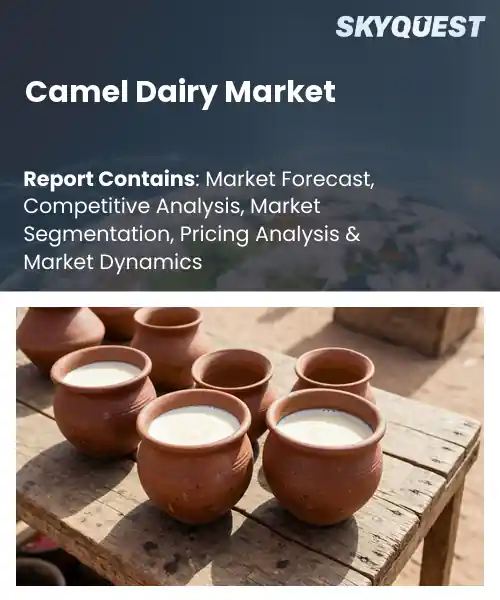
Camel Dairy Market
Report ID: SQMIG30I3001
Report ID: SQMIG30I3001
[email protected]
USA +1 351-333-4748
Report ID:
SQMIG30I3001 |
Region:
Global |
Published Date: July, 2026
Pages:
157
|Tables:
120
|Figures:
77


Global Camel Dairy Market size was valued at USD 17.11 Billion in 2024 and is poised to grow from USD 18.72 Billion in 2025 to USD 38.41 Billion by 2033, growing at a CAGR of 9.4% during the forecast period (2026-2033).
A global camel dairy market includes the production, processing, and sale of milk from dromedary and Bactrian camels, evolving from pastoral niche to a commercial sector. Its importance lies in camel milk’s unique nutritional profile, such as higher vitamin C and lower lactose, attracting health‑conscious consumers in arid regions and beyond. The primary driver is growing awareness of functional foods, which prompts Middle Eastern and African governments to subsidize herd growth and invest in cold‑chain logistics. Historically, herders supplied local markets, but since the early 2000s multinational firms introduced standardized packaging, allowing the product to widely reach urban supermarkets today. A second pivotal factor shaping the camel dairy market is the expansion of export corridors driven by rising demand in Europe and Asia for lactose‑intolerant‑friendly alternatives. When producers secure certifications such as ISO‑22000, they unlock access to retail channels, which in turn stimulates investment in breeding programs that increase milk yield per animal. For example, a Dutch distributor recently introduced pasteurized camel cheese to specialty stores, demonstrating that value‑added products can command margins and attract gourmet consumers. Consequently, the profitability of camel dairy farms improves, encouraging herd diversification and the integration of herd‑management platforms that optimize feed efficiency and traceability.
How is AI improving quality control in the camel dairy market?
AI is reshaping quality control in the camel dairy sector by automating detection of contaminants, monitoring temperature, and analyzing milk composition in real time. Machine learning models trained on many samples can flag deviations before they reach consumers, while computer vision cameras inspect udder health and milking hygiene. Integrated sensors feed data to cloud platforms that generate alerts for farm operators, enabling swift corrective action. This proactive approach reduces waste, builds consumer confidence, and aligns with the expanding market that seeks consistent premium camel milk products.In May 2026 Camelicious introduced an AI driven milk quality monitoring system that continuously scans each batch for microbial load and compositional variance, instantly notifying producers of any issue. This technology speeds up verification, cuts spoilage and reinforces the market’s reputation for safe high grade camel dairy.
Market snapshot - (2026-2033)
Global Market Size
USD 17.11 Billion
Largest Segment
Liquid Camel Milk
Fastest Growth
Camel Milk Ice Cream
Growth Rate
9.4% CAGR
To get more insights on this market click here to Request a Free Sample Report
Global camel dairy market is segmented by product type, nature type, packaging format, distribution channel and region. Based on product type, the market is segmented into Liquid Camel Milk, Camel Milk Powder, Camel Milk Cheese, Camel Milk Yogurt, Camel Milk Ice Cream and Others. Based on nature type, the market is segmented into Conventional Dairy Products and Organic Dairy Products. Based on packaging format, the market is segmented into Bottles, Cartons, Pouches, Cans and Tins. Based on distribution channel, the market is segmented into Offline Retail and Online Retail. Based on region, the market is segmented into North America, Europe, Asia Pacific, Latin America and Middle East & Africa.
Liquid camel milk segment dominates because consumers prioritize fresh, nutritionally rich dairy alternatives that retain the natural bioactive compounds of camel milk. The product’s liquid form aligns with daily drinking habits, facilitates immediate consumption, and requires minimal processing which preserves taste and health benefits. This convenience, coupled with cultural familiarity and growing health awareness, drives sustained overall consumer preference and reinforces its leading marketwide visibility.
Meanwhile, camel milk powder segment emerges as the most rapidly expanding area because the shelf stable format meets logistics constraints, enables bulk distribution, and supports value added product development. Its convenience for storage and transport fuels demand among retailers and consumers, accelerating market expansion and opening new application opportunities globally significantly today.
Pouch packaging segment leads because its flexible, lightweight design offers ease of handling, resealable convenience, and reduced environmental footprint compared with rigid containers. Consumers appreciate the portability for on the go consumption and the ability to preserve freshness without additional preservatives. Retailers benefit from lower shipping costs and shelf space efficiency, reinforcing pouch’s prominence as the preferred format within the Camel Dairy Market and supports sustainable branding narratives that resonate with eco conscious shoppers.
On the other hand, carton packaging segment emerges as the fastest growing because its recyclable structure aligns with increasing consumer demand for eco friendly solutions and provides superior barrier protection for sensitive dairy products. The visual premium feel and compatibility with cold chain logistics stimulate retailer adoption, propelling rapid market expansion.
To get detailed segments analysis, Request a Free Sample Report
The Asia Pacific region leverages a confluence of rising consumer interest in natural and functional foods, strong culinary traditions that value dairy alternatives, and proactive governmental support for agricultural diversification. Robust supply chain infrastructures and advanced cold‑chain logistics enable the distribution of niche camel milk products across metropolitan markets. Collaborative research initiatives between local universities and international firms enhance product innovation, focusing on nutrition and sensory appeal. Growing urban middle classes seek premium health‑focused beverages, positioning camel dairy as a differentiated offering. Combined with favorable trade policies and increasing awareness of camel milk’s unique nutritional profile, these factors reinforce Asia Pacific’s leadership in market presence and brand development.
Camel Dairy Market in Japan benefits from a sophisticated consumer base that embraces specialty health beverages and values traceability. Partnerships between Japanese food manufacturers and camel dairy exporters foster product adaptation to local taste preferences. Retail channels emphasize premium positioning, while culinary innovators experiment with camel milk in both traditional and modern applications. The market gains visibility through wellness campaigns that highlight camel milk’s purported benefits, encouraging trial among health‑conscious shoppers.
Camel Dairy Market in South Korea is propelled by a strong culture of functional food consumption and a keen interest in novel dairy alternatives. Local distributors integrate camel milk into specialty health stores and upscale supermarket aisles, emphasizing its natural attributes. Collaborative marketing with wellness influencers amplifies consumer curiosity. Research collaborations with Korean institutions explore fortified camel milk formulations, aligning with national trends toward fortified beverages and personalized nutrition.
Europe’s expansion is underpinned by heightened consumer scrutiny of ingredient provenance, a growing appetite for ethically sourced products, and strategic positioning of camel dairy as a sustainable alternative to conventional milk. Regulatory environments encourage innovation in functional foods, while food‑service sectors experiment with camel milk in specialty coffee and bakery offerings. Collaborative ventures between European dairy processors and camel herders facilitate supply chain integration, enhancing market confidence. Cultural shifts toward plant‑based and animal‑friendly diets intersect with camel milk’s niche appeal, fostering a receptive landscape for premium and health‑oriented product lines across the continent.
Camel Dairy Market in Germany is emerging through a blend of sustainability consciousness and gourmet experimentation. German food retailers introduce camel milk alongside artisanal dairy selections, emphasizing its low environmental footprint. Partnerships with specialty cafés and health food chains create visibility among eco‑aware consumers. Collaborative research with German nutrition institutes investigates functional properties, supporting market differentiation. Consumer education initiatives highlight camel milk’s unique nutritional composition, fostering gradual acceptance within the broader dairy alternative segment.
Camel Dairy Market in United Kingdom experiences rapid growth driven by proactive health trends and a vibrant specialty food scene. Premium retailers and boutique grocers feature camel milk as a boutique offering, often paired with storytelling around heritage and wellness. Influencer campaigns and wellness workshops amplify consumer curiosity. Collaborative product development with UK dairy innovators yields fortified camel milk beverages tailored to local taste profiles. Regulatory support for novel foods accelerates market entry, reinforcing the United Kingdom’s reputation as a fastest_growing hub for camel dairy.
Camel Dairy Market in France emerges alongside a discerning culinary culture that values niche dairy experiences. French gourmet establishments experiment with camel milk in haute cuisine, highlighting its subtle flavor and creamy texture. Retail distribution focuses on specialty organic stores, aligning with consumer preferences for natural and ethically sourced foods. Research collaborations with French food science institutes explore culinary applications and fortification possibilities. Educational outreach emphasizes camel milk’s nutritional benefits, nurturing gradual consumer acceptance within France’s evolving dairy alternative landscape.
North America advances its role through strategic investments in supply chain resilience, innovative product development, and targeted consumer education. Health‑focused retailers and e‑commerce platforms prioritize camel milk as part of clean‑label and functional beverage portfolios. Partnerships with agricultural technology firms improve herd management and milk quality, ensuring consistent supply. Culinary innovators incorporate camel milk into craft beverages and probiotic products, expanding usage occasions. Market players leverage storytelling around sustainability and exotic origins to differentiate offerings, while regulatory frameworks facilitate the introduction of novel dairy alternatives, collectively enhancing the region’s market footprint.
Camel Dairy Market in United States benefits from a dynamic health and wellness sector that embraces alternative dairy options. Major natural food chains and specialty grocers allocate shelf space to camel milk, emphasizing its clean‑label attributes. Collaborative product development with U.S. beverage innovators yields flavored and fortified camel milk drinks that cater to diverse consumer tastes. Marketing narratives focus on sustainability and exotic appeal, resonating with eco‑conscious millennials. Ongoing consumer education campaigns reinforce perceived health benefits, fostering broader market penetration.
Camel Dairy Market in Canada aligns with a growing preference for niche, ethically sourced dairy alternatives among health‑oriented consumers. Canadian specialty retailers feature camel milk within organic and natural product sections, highlighting its low‑fat profile. Partnerships with local dairy processors explore blending camel milk with traditional dairy to create hybrid offerings. Collaborative research with Canadian nutrition institutes examines functional benefits, supporting evidence‑based marketing. Consumer outreach emphasizes the product’s sustainable production, appealing to environmentally aware shoppers and supporting steady market growth.
To know more about the market opportunities by region and country, click here to
Buy The Complete Report
Increasing Consumer Interest In Camel Milk
Sustainable Livestock Practices Boost Adoption
Limited Cold Chain Infrastructure
Cultural Preference For Traditional Dairy
Request Free Customization of this report to help us to meet your business objectives.
Competition in the global camel dairy market is intensifying as firms leverage proprietary milking technology, strategic partnerships, and cross‑border expansion. Good Earth Dairy is closing a new investment round to scale its award‑winning product line, while Camel Milk Co secured state and private capital to broaden distribution. Recent M&A activity and collaborations with technology providers are accelerating product innovation and market entry.
Top Player’s Company Profile
Recent Developments
SkyQuest’s ABIRAW (Advanced Business Intelligence, Research & Analysis Wing) is our Business Information Services team that Collects, Collates, Correlates, and Analyses the Data collected by means of Primary Exploratory Research backed by robust Secondary Desk research. As per SkyQuest analysis the global camel dairy market is expanding fast with a projected value of $38.4 billion by 2033. A key driver is the rising consumer interest in health‑focused dairy alternatives that perceive camel milk as nutrient rich and low in lactose, while a second driver is the sustainability advantage of camels that need little water and feed, appealing to eco‑conscious buyers. The liquid camel milk segment leads the market because it matches daily drinking habits and preserves bioactive compounds. Asia Pacific dominates the landscape thanks to strong demand for functional foods and advanced cold‑chain logistics. However limited cold‑chain infrastructure in many regions restrains wider adoption and slows growth.
| Report Metric | Details |
|---|---|
| Market size value in 2024 | USD 17.11 Billion |
| Market size value in 2033 | USD 38.41 Billion |
| Growth Rate | 9.4% |
| Base year | 2024 |
| Forecast period | (2026-2033) |
| Forecast Unit (Value) | USD Billion |
| Segments covered |
|
| Regions covered | North America (US, Canada), Europe (Germany, France, United Kingdom, Italy, Spain, Rest of Europe), Asia Pacific (China, India, Japan, Rest of Asia-Pacific), Latin America (Brazil, Rest of Latin America), Middle East & Africa (South Africa, GCC Countries, Rest of MEA) |
| Companies covered |
|
| Customization scope | Free report customization with purchase. Customization includes:-
|
To get a free trial access to our platform which is a one stop solution for all your data requirements for quicker decision making. This platform allows you to compare markets, competitors who are prominent in the market, and mega trends that are influencing the dynamics in the market. Also, get access to detailed SkyQuest exclusive matrix.
Table Of Content
Executive Summary
Market overview
Parent Market Analysis
Market overview
Market size
KEY MARKET INSIGHTS
COVID IMPACT
MARKET DYNAMICS & OUTLOOK
Market Size by Region
KEY COMPANY PROFILES
Methodology
For the Camel Dairy Market, our research methodology involved a mixture of primary and secondary data sources. Key steps involved in the research process are listed below:
1. Information Procurement: This stage involved the procurement of Market data or related information via primary and secondary sources. The various secondary sources used included various company websites, annual reports, trade databases, and paid databases such as Hoover's, Bloomberg Business, Factiva, and Avention. Our team did 45 primary interactions Globally which included several stakeholders such as manufacturers, customers, key opinion leaders, etc. Overall, information procurement was one of the most extensive stages in our research process.
2. Information Analysis: This step involved triangulation of data through bottom-up and top-down approaches to estimate and validate the total size and future estimate of the Camel Dairy Market.
3. Report Formulation: The final step entailed the placement of data points in appropriate Market spaces in an attempt to deduce viable conclusions.
4. Validation & Publishing: Validation is the most important step in the process. Validation & re-validation via an intricately designed process helped us finalize data points to be used for final calculations. The final Market estimates and forecasts were then aligned and sent to our panel of industry experts for validation of data. Once the validation was done the report was sent to our Quality Assurance team to ensure adherence to style guides, consistency & design.
Analyst Support
Customization Options
With the given market data, our dedicated team of analysts can offer you the following customization options are available for the Camel Dairy Market:
Product Analysis: Product matrix, which offers a detailed comparison of the product portfolio of companies.
Regional Analysis: Further analysis of the Camel Dairy Market for additional countries.
Competitive Analysis: Detailed analysis and profiling of additional Market players & comparative analysis of competitive products.
Go to Market Strategy: Find the high-growth channels to invest your marketing efforts and increase your customer base.
Innovation Mapping: Identify racial solutions and innovation, connected to deep ecosystems of innovators, start-ups, academics, and strategic partners.
Category Intelligence: Customized intelligence that is relevant to their supply Markets will enable them to make smarter sourcing decisions and improve their category management.
Public Company Transcript Analysis: To improve the investment performance by generating new alpha and making better-informed decisions.
Social Media Listening: To analyze the conversations and trends happening not just around your brand, but around your industry as a whole, and use those insights to make better Marketing decisions.
REQUEST FOR SAMPLE
 REQUEST FREE CUSTOMIZATION


Want to customize this report? This report can be personalized according to your needs. Our analysts and industry experts will work directly with you to understand your requirements and provide you with customized data in a short amount of time. We offer $1000 worth of FREE customization at the time of purchase.
Feedback From Our Clients


 USA (+1) 351-333-4748

