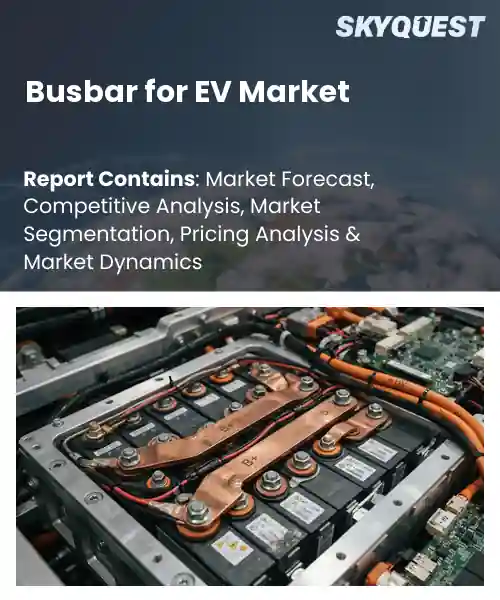
Busbar for EV Market
Report ID: SQMIG45K2432
Report ID: SQMIG45K2432
[email protected]
USA +1 351-333-4748
Report ID:
SQMIG45K2432 |
Region:
Global |
Published Date: August, 2026
Pages:
157
|Tables:
116
|Figures:
77


Global Busbar For Ev Market size was valued at USD 2.87 Billion in 2024 and is poised to grow from USD 3.03 Billion in 2025 to USD 4.69 Billion by 2033, growing at a CAGR of 5.6% during the forecast period (2026-2033).
The global busbar market for electric vehicles has emerged as a enabler of distribution within charging stations and vehicle platforms. Its primary driver stems from the rapid electrification of transport, which demands compact, low‑loss conductors capable of handling megawatt‑scale currents. Early adopters such as Tesla’s Megapack and European fast‑charging networks illustrated how busbars replaced bulky cable bundles, reducing weight and improving thermal management. Over the past decade, standards like IEC 61851 and government incentives have accelerated deployment, while advances in copper‑alloy and aluminum‑composite materials have lowered cost. Consequently, busbars have transitioned from niche components to foundational infrastructure in the EV ecosystem. Reliability of power flow under extreme load conditions drives the global busbar market for EVs because failures in high‑current paths impair charging speed and safety. Manufacturers embed intelligent monitoring that detects temperature rise and predicts degradation, enabling predictive maintenance and reducing downtime for public chargers in cities such as Shanghai and Oslo. This confidence encourages utilities and OEMs to invest in ultra‑fast stations exceeding 350 kW, where busbars act as the backbone for modular architectures that scale without redesign. Consequently, every successful deployment validates the technology, attracts capital, and expands the addressable base of fast‑charging infrastructure worldwide for sustainable mobility globally.
How is IoT enhancing busbar performance in the electric vehicle market?
IoT sensors are being embedded directly into busbars, allowing continuous monitoring of temperature, current flow and vibration. This real‑time data lets manufacturers detect hotspots before they cause degradation, schedule predictive maintenance and optimize power distribution across the vehicle’s high‑voltage system. By linking busbars to cloud analytics, engineers can fine‑tune designs based on fleet‑wide performance trends, improving reliability and reducing downtime. The approach also supports modular vehicle architectures, where interchangeable busbar modules can be quickly validated through remote diagnostics, accelerating development cycles and enhancing overall vehicle efficiency.Longbow, July 2026, introduced an IoT‑enabled busbar module for its lightweight electric sports cars, demonstrating how connected busbars can streamline power management and boost vehicle performance.
Market snapshot - (2026-2033)
Global Market Size
USD 2.87 Billion
Largest Segment
Non-Pharmacological Management
Fastest Growth
Pharmacological Treatment
Growth Rate
5.6% CAGR
To get more insights on this market click here to Request a Free Sample Report
Global busbar for ev market is segmented by material type, busbar type, application, vehicle type and region. Based on material type, the market is segmented into Copper and Aluminum. Based on busbar type, the market is segmented into Rigid Busbars, Flexible Busbars and Laminated Busbars. Based on application, the market is segmented into Battery Packs, Charging Systems and Power Distribution Systems. Based on vehicle type, the market is segmented into Passenger Electric Vehicles, Commercial Electric Vehicles and Electric Two- and Three-Wheelers. Based on region, the market is segmented into North America, Europe, Asia Pacific, Latin America and Middle East & Africa.
Copper segment dominates because its superior electrical conductivity enables lower resistance losses, which is critical for high power ev applications. The material’s thermal stability allows busbars to handle intense current surges without excessive heating, enhancing safety and longevity. Designers favor copper for its proven reliability in battery packs and power distribution, leading manufacturers to standardize copper busbars across most ev platforms and to meet stringent efficiency targets demanded by modern electric drivetrains.
However, aluminum segment experiences the fastest growth because its lighter weight reduces vehicle mass, supporting extended range. Advances in alloy processing have improved conductivity and mechanical strength, making aluminum busbars viable for high volume applications such as charging stations and flexible distribution networks, thereby unlocking design possibilities and cost efficiencies.
Rigid busbars segment dominates because its solid construction provides unmatched mechanical robustness, essential for the high current pathways in ev power distribution. The monolithic design minimizes connection points, reducing resistance and potential failure sites, which boosts reliability in harsh automotive environments. Engineering teams prioritize rigid solutions for critical battery pack interconnects, leading oems to adopt them as the default choice for ensuring long term performance and safety.
Meanwhile, laminated busbars segment is witnessing the strongest growth because its layered architecture enables lightweight yet high conductivity solutions, appealing to manufacturers seeking compact designs. Improved adhesive technologies enhance thermal management, allowing laminated busbars to fit into spaces of charging modules and distribution panels, thereby expanding application breadth and creating market opportunities.
To get detailed segments analysis, Request a Free Sample Report
North America benefits from a mature automotive ecosystem that integrates advanced manufacturing capabilities with a strong emphasis on innovation. The region’s extensive supply chain networks enable rapid prototyping and scaling of busbar solutions, while leading research institutions drive continuous material and design improvements. Robust collaboration between original equipment manufacturers, tier‑one suppliers, and energy infrastructure providers creates a seamless pathway from concept to deployment. Additionally, a regulatory environment that encourages clean‑energy adoption and supports high‑performance electric vehicle components reinforces market confidence. The convergence of technical expertise, strategic partnerships, and supportive policy frameworks positions North America as the benchmark for busbar technology, fostering a competitive edge that attracts global investment and talent.
Busbar for EV Market in the United States is shaped by a deep pool of engineering talent and a culture of rapid commercialization. Leading automotive firms and specialized component manufacturers collaborate closely to refine busbar designs for higher efficiency and durability. The presence of extensive testing facilities and certification bodies accelerates product validation, while a proactive approach to standards ensures interoperability across diverse vehicle platforms. Investment in advanced materials research further enhances performance, positioning the United States as a hub for cutting‑edge busbar solutions that meet demanding electric vehicle requirements.
Busbar for EV Market in Canada leverages a strong focus on sustainable manufacturing and a supportive innovation ecosystem. Collaborative initiatives between government agencies, research centers, and industry players drive the development of environmentally friendly busbar technologies. Emphasis on renewable energy integration and low‑carbon production processes aligns with national climate objectives, attracting firms seeking green credentials. The country’s expertise in metallurgy and precision engineering contributes to high‑quality busbar components, while strategic partnerships with North American automotive networks facilitate market access and knowledge exchange.
Europe’s rapid expansion is propelled by a cohesive policy landscape that prioritizes zero‑emission mobility and mandates stringent performance standards for electric vehicles. Strong governmental incentives encourage manufacturers to adopt advanced busbar designs that improve power delivery and reduce weight. A dense network of automotive clusters fosters close collaboration among original equipment manufacturers, component specialists, and research institutions, accelerating innovation cycles. Emphasis on circular economy principles drives the use of recyclable materials and sustainable production methods, enhancing the environmental appeal of busbar solutions. Together, these factors create a fertile environment for continuous improvement and market growth across the continent.
Busbar for EV Market in Germany is anchored by world‑class engineering expertise and a tradition of precision manufacturing. Leading automotive firms partner with specialized suppliers to develop busbars that meet high efficiency and safety criteria. The country’s robust research infrastructure supports ongoing material science advancements, enabling lighter and more conductive solutions. Close alignment with European regulatory standards ensures that German busbar products are readily accepted across the region, reinforcing the nation’s reputation as a benchmark for quality and reliability.
Busbar for EV Market in the United Kingdom benefits from a dynamic innovation ecosystem and strong ties between academia and industry. Collaborative research programs focus on next‑generation conductive materials and modular busbar architectures that simplify integration into electric vehicles. The UK’s emphasis on rapid prototyping and flexible manufacturing allows firms to respond swiftly to evolving market demands. Supportive government initiatives aimed at decarbonizing transport further stimulate investment in busbar technologies, positioning the United Kingdom as a leading hub for accelerated growth.
Busbar for EV Market in France is emerging through a blend of governmental support and a growing network of specialized component manufacturers. Initiatives that promote sustainable mobility encourage the adoption of efficient busbar designs in electric vehicle platforms. French research institutions contribute to advances in material durability and thermal management, enhancing overall performance. Collaborative clusters linking automotive OEMs with innovative suppliers foster knowledge sharing, accelerating the development of busbar solutions that align with the country’s broader environmental objectives.
Asia Pacific is strengthening its position by capitalizing on a rapidly expanding electric vehicle production base and a culture of cost‑effective engineering. The region’s manufacturers emphasize scalable busbar designs that balance performance with manufacturing efficiency, catering to high‑volume demand. Strong government commitments to electrified transport infrastructure create a supportive backdrop for component development. Investment in advanced material research, particularly in lightweight alloys and conductive composites, drives continuous improvement. Cross‑border collaborations among regional automotive hubs facilitate technology transfer and standardization, enabling the Asia Pacific market to deliver competitive busbar solutions that meet global expectations.
Busbar for EV Market in Japan is driven by a legacy of meticulous craftsmanship and a focus on high‑precision component production. Japanese firms integrate cutting‑edge material science with rigorous quality control to produce busbars that excel in conductivity and reliability. Collaborative efforts between automotive manufacturers and research institutes accelerate the introduction of innovative designs that address thermal and electrical challenges. The nation’s commitment to sustainable manufacturing practices further enhances the appeal of its busbar offerings in the global electric vehicle arena.
Busbar for EV Market in South Korea thrives on a synergy between rapid technology adoption and strong industrial capacity. Korean manufacturers prioritize the development of compact, high‑performance busbars that align with the country’s emphasis on advanced electric vehicle platforms. Close cooperation between major automotive groups and specialized component suppliers accelerates product refinement and market readiness. Government support for electric mobility initiatives reinforces investment in research and development, positioning South Korea as a key contributor to the evolving busbar landscape.
To know more about the market opportunities by region and country, click here to
Buy The Complete Report
Rising Electric Vehicle Production
Stringent Safety Standards Adoption
High Material Cost Challenges
Complex Integration Design Requirements
Request Free Customization of this report to help us to meet your business objectives.
The competitive landscape of the global EV busbar market is shaped by aggressive M&A activity, strategic partnerships between component manufacturers and automakers, and rapid technology innovation such as high‑conductivity copper alloys and modular busbar designs. Leading firms are securing supply chain resilience through joint ventures with raw‑material suppliers, while newcomers leverage advanced simulation tools to shorten product development cycles.
Top Player’s Company Profile
Recent Developments
SkyQuest’s ABIRAW (Advanced Business Intelligence, Research & Analysis Wing) is our Business Information Services team that Collects, Collates, Correlates, and Analyses the Data collected by means of Primary Exploratory Research backed by robust Secondary Desk research. As per SkyQuest analysis, the surge in electric‑vehicle production is the primary catalyst powering demand for busbars as manufacturers seek compact, high‑current pathways, while tightening safety standards act as a second accelerator by mandating reliable, low‑loss conductors. High material costs, especially for copper and aluminum, pose a notable restraint that can curb adoption in price‑sensitive markets. North America remains the dominant region, benefiting from mature supply chains, strong OEM collaboration and supportive policies. Within the market, copper‑based busbars dominate thanks to superior conductivity and thermal stability, reinforcing their status as the preferred choice across most vehicle platforms overall today in global EV architectures.
| Report Metric | Details |
|---|---|
| Market size value in 2024 | USD 2.87 Billion |
| Market size value in 2033 | USD 4.69 Billion |
| Growth Rate | 5.6% |
| Base year | 2024 |
| Forecast period | (2026-2033) |
| Forecast Unit (Value) | USD Billion |
| Segments covered |
|
| Regions covered | North America (US, Canada), Europe (Germany, France, United Kingdom, Italy, Spain, Rest of Europe), Asia Pacific (China, India, Japan, Rest of Asia-Pacific), Latin America (Brazil, Rest of Latin America), Middle East & Africa (South Africa, GCC Countries, Rest of MEA) |
| Companies covered |
|
| Customization scope | Free report customization with purchase. Customization includes:-
|
To get a free trial access to our platform which is a one stop solution for all your data requirements for quicker decision making. This platform allows you to compare markets, competitors who are prominent in the market, and mega trends that are influencing the dynamics in the market. Also, get access to detailed SkyQuest exclusive matrix.
Table Of Content
Executive Summary
Market overview
Parent Market Analysis
Market overview
Market size
KEY MARKET INSIGHTS
COVID IMPACT
MARKET DYNAMICS & OUTLOOK
Market Size by Region
KEY COMPANY PROFILES
Methodology
For the Busbar for EV Market, our research methodology involved a mixture of primary and secondary data sources. Key steps involved in the research process are listed below:
1. Information Procurement: This stage involved the procurement of Market data or related information via primary and secondary sources. The various secondary sources used included various company websites, annual reports, trade databases, and paid databases such as Hoover's, Bloomberg Business, Factiva, and Avention. Our team did 45 primary interactions Globally which included several stakeholders such as manufacturers, customers, key opinion leaders, etc. Overall, information procurement was one of the most extensive stages in our research process.
2. Information Analysis: This step involved triangulation of data through bottom-up and top-down approaches to estimate and validate the total size and future estimate of the Busbar for EV Market.
3. Report Formulation: The final step entailed the placement of data points in appropriate Market spaces in an attempt to deduce viable conclusions.
4. Validation & Publishing: Validation is the most important step in the process. Validation & re-validation via an intricately designed process helped us finalize data points to be used for final calculations. The final Market estimates and forecasts were then aligned and sent to our panel of industry experts for validation of data. Once the validation was done the report was sent to our Quality Assurance team to ensure adherence to style guides, consistency & design.
Analyst Support
Customization Options
With the given market data, our dedicated team of analysts can offer you the following customization options are available for the Busbar for EV Market:
Product Analysis: Product matrix, which offers a detailed comparison of the product portfolio of companies.
Regional Analysis: Further analysis of the Busbar for EV Market for additional countries.
Competitive Analysis: Detailed analysis and profiling of additional Market players & comparative analysis of competitive products.
Go to Market Strategy: Find the high-growth channels to invest your marketing efforts and increase your customer base.
Innovation Mapping: Identify racial solutions and innovation, connected to deep ecosystems of innovators, start-ups, academics, and strategic partners.
Category Intelligence: Customized intelligence that is relevant to their supply Markets will enable them to make smarter sourcing decisions and improve their category management.
Public Company Transcript Analysis: To improve the investment performance by generating new alpha and making better-informed decisions.
Social Media Listening: To analyze the conversations and trends happening not just around your brand, but around your industry as a whole, and use those insights to make better Marketing decisions.
REQUEST FOR SAMPLE
 REQUEST FREE CUSTOMIZATION


Want to customize this report? This report can be personalized according to your needs. Our analysts and industry experts will work directly with you to understand your requirements and provide you with customized data in a short amount of time. We offer $1000 worth of FREE customization at the time of purchase.
Feedback From Our Clients


 USA (+1) 351-333-4748

