Bronchiolitis Obliterans Syndrome Market
Report ID: SQMIG35H2457
Report ID: SQMIG35H2457
[email protected]
USA +1 351-333-4748
Report ID:
SQMIG35H2457 |
Region:
Global |
Published Date: March, 2026
Pages:
157
|Tables:
116
|Figures:
77


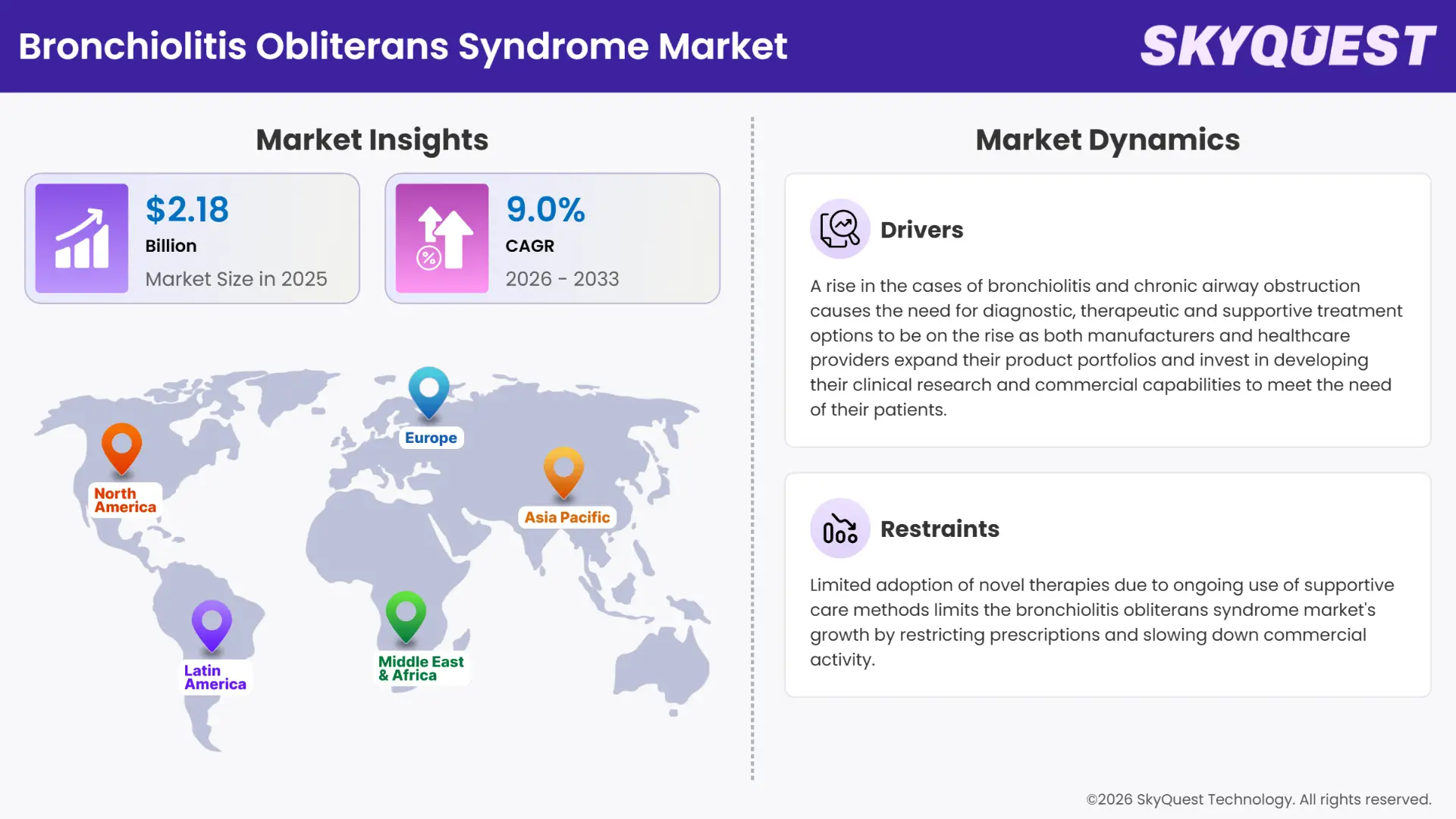
Global Bronchiolitis Obliterans Syndrome Market size was valued at USD 2.00 Billion in 2024 and is poised to grow from USD 2.18 Billion in 2025 to USD 4.34 Billion by 2033, growing at a CAGR of 9.0% during the forecast period (2026-2033).
Key Takeaways: Market Trends & Insights
There is an increasing number of transplant patient survivors who have problems due to the damage caused by their transplant surgery. As a result, there is a continual need for diagnostic tools and treatment; the bronchiolitis obliterans syndrome market fulfills a need related to airway-restrictive disease which is a common occurrence after lung and hematopoietic stem cell transplants and occasionally due to inhalation of toxic substances or infections.
Bronchiolitis obliterans syndrome (BOS) may progress to permanent lung failure if it is not treated properly. Improvements in care surrounding transplantation have led to an increase in survival rates over the last 20 years, resulting in the identification of gaps in the management of BOS. Traditionally, clinicians treated patients using macrolides, azathioprine, and transplantation.
The primary factor in the global bronchiolitis obliterans syndrome market growth is the growth of diagnostics and monitoring technologies that allow for the detection of the disease earlier and provide for better target treatment. As bronchiolitis obliterans syndrome patients continue to be treated, the implementation of routine surveillance spirometry, home-based monitoring, and electrophysiological biomarkers to detect disease at an earlier stage will allow clinicians to intervene prior to fibrosis becoming irreversible. Thereby increasing the demand for immunomodulatory agents, antifibrotics, and supportive devices.
How is AI Enhancing Diagnostics and Market Growth in the Bronchiolitis Obliterans Syndrome Market?
Bronchiolitis obliterans syndrome (BOS) is a small fibrotic airway disease that sometimes occurs after patients undergo lung or hematopoietic transplant surgery. The disease is diagnosed through clinical assessment of declining pulmonary function over time. Artificial Intelligence can enhance the diagnostic process to identify subtle imaging patterns on chest CT scans and by combining long term clinical data to identify early signs of dysfunction.
Research is currently showing that deep learning models can identify certain imaging features associated with BOS. As a result, the identification process for diagnosis becomes much more objective and allows for improved risk stratification and enhanced ability to develop surveillance protocols. Furthermore, the progress made to date is occurring in an environment that has an increased awareness of complications related to post transplantation, coupled with an increased demand for validated, non-invasive diagnostic tests.
CareDx recently launched AlloSure Plus in August 2025, which is an AI based, diagnostic platform that incorporates donor derived cell free DNA in a clinical background, to enhance prediction of rejection. The real-world development demonstrated that AI-based linkage of diagnostic tests accelerates the speed at which detection and decision making can occur, thus supporting adoption and growth of a market.
To get more insights on this market click here to Request a Free Sample Report
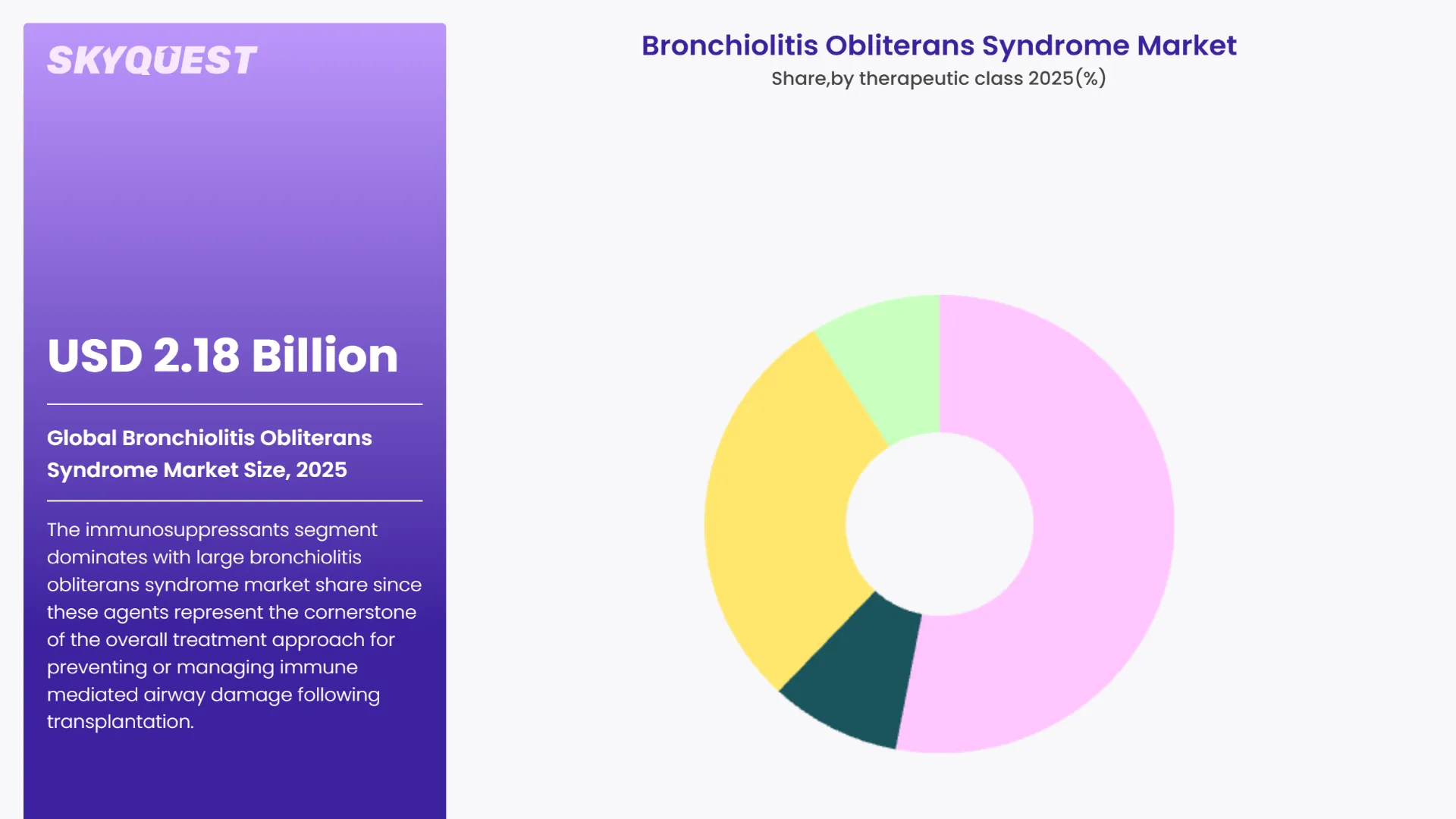
Global bronchiolitis obliterans syndrome market is segmented into therapeutic class, patient profile, diagnosis & monitoring, end-user and region. Based on therapeutic class, the market is segmented into immunosuppressants, inhaled corticosteroids, antifibrotic agents, and specialized inhaled cyclosporine. Based on patient profile, the market is segmented into post-lung transplant recipients and allogeneic hematopoietic stem cell transplant (HSCT). Based on diagnosis and monitoring, the market is segmented into spirometry and high-resolution CT (HRCT) imaging. Based on end-user, the market is segmented into transplant centers, pulmonology specialty hospitals and clinical research organizations. Based on region, the market is segmented into North America, Europe, Asia Pacific, Latin America and Middle East & Africa.
The immunosuppressants segment dominates with large bronchiolitis obliterans syndrome market share since these agents represent the cornerstone of the overall treatment approach for preventing or managing immune mediated airway damage following transplantation. Thereby addressing the underlying pathophysiology of bronchiolitis obliterans syndrome. Moreover, the previous use of immunosuppressants in established clinical pathways and clinician experience leads to routine usage, which maintains demand for existing formulations and informs treatment algorithms. As such, the continued use of immunosuppressants as the primary therapy for lung transplant recipients provides stability for graft function and influences treatment decisions regarding adjunct therapies that further support the market dominance of immunosuppressants.
As per the bronchiolitis obliterans syndrome market outlook, antifibrotic agents represent one of the fastest growing therapeutic areas of the bronchiolitis obliterans syndrome market. This growth is a result of continued focused innovation to develop therapies specifically to treat airway fibrosis, increased trial activity, and the lack of effective therapies for the treatment of chronic progression of pulmonary fibrosis. These developments create increased investment into antifibrotics as well as additional treatment options going forward.
As per bronchiolitis obliterans syndrome market analysis, the spirometry segment leads the way as it is the main functional metric for measuring small airway obstruction and therefore serves as a direct measure of disease progress within bronchiolitis obliterans syndrome, allowing physicians to routinely monitor patients at their bedside and provide longitudinal assessment. Physicians tend to depend on routine serial measurements taken using spirometry to prompt clinical interventions due to the low barrier of entry of using spirometry and its integration within follow-up protocols. The operational centrality of spirometry leads to a significant reliance on spirometry for clinical decision-making, resulting in substantial ongoing demand within the monitoring pathways established for patients.
As per bronchiolitis obliterans syndrome market forecast, the HRCT imaging segment is experiencing the greatest amount of growth as increased resolution, increased use of structure-aware algorithms and quantitative analyses are enabling earlier detection of structural airway abnormalities than have functional tests. Moreover, HRCT imaging is growing in clinician use for condition-specific care and is becoming more rapidly integrated into the monitoring of patients as phenotypically based care continues to gain acceptance among the clinician community. Thus providing new opportunities for more targeted therapies and improved monitoring of patients.
To get detailed segments analysis, Request a Free Sample Report
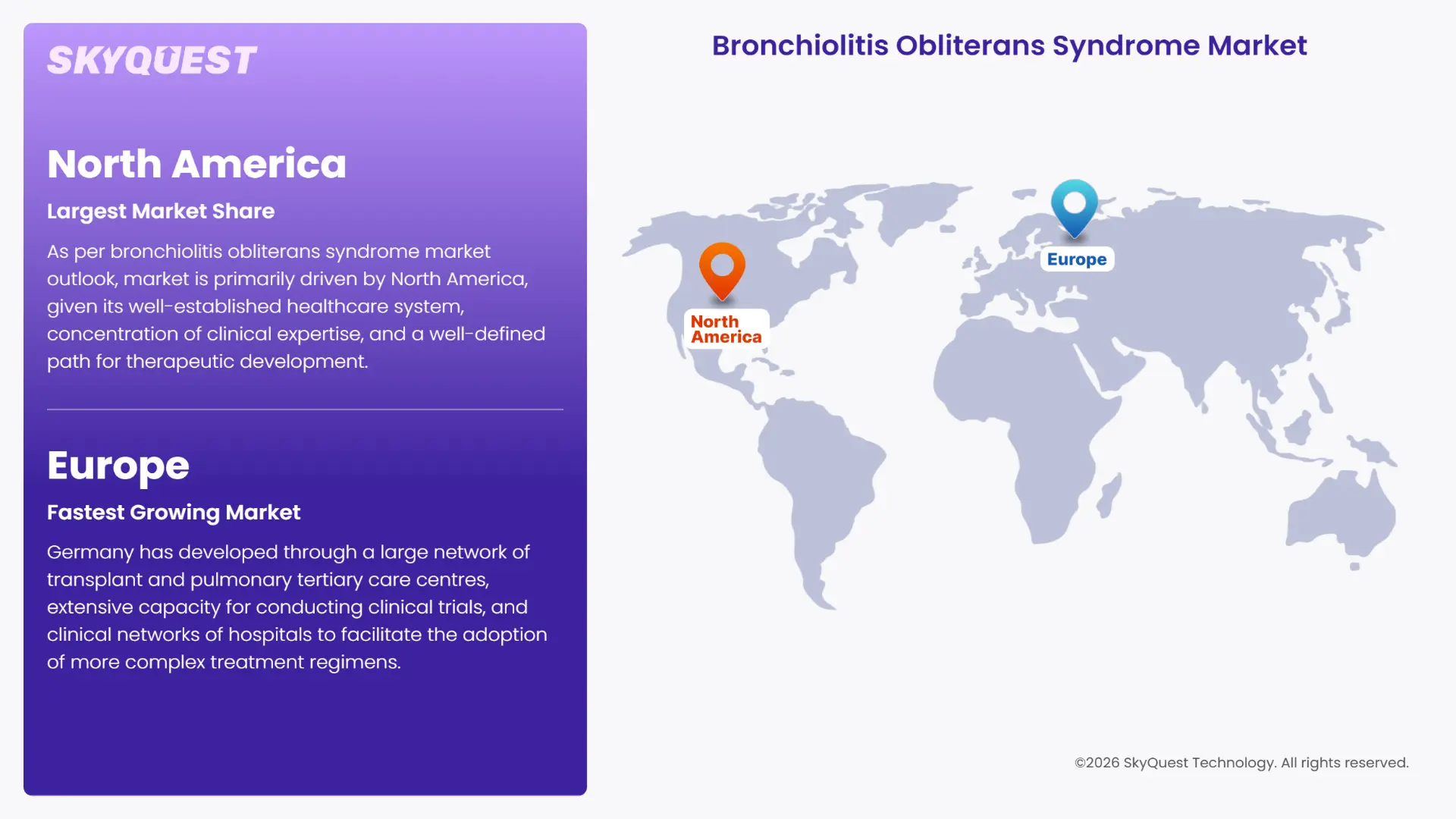
As per bronchiolitis obliterans syndrome market outlook, market is primarily driven by North America, given its well-established healthcare system, concentration of clinical expertise, and a well-defined path for therapeutic development. The existence of diagnostic facilities, in conjunction with numerous pulmonary and transplant care centers, ensures there is a conducive environment for the research and use of novel therapies.
The bronchiolitis obliterans syndrome market in the U.S. has a high concentration of the best transplant centers in the world, many of which are involved in leading the way in clinical research and having a robust industry in the country. Resources include access to a multidisciplinary team of professionals from transplant and pulmonary medicine, diagnostic technology that allows for the early identification of candidates for complex care paths, and clear pathways to participate in clinical trials and commercialize innovative therapies. There is also a strong collaborative network among clinicians, industry partners, and patient organizations to continuously facilitate the use of effective treatments and the ongoing generation of clinical data.
As per bronchiolitis obliterans syndrome market outlook, Canada is distinguished from other countries by having comprehensive pulmonary and transplant service lines concentrated in large urban centers. Additionally, the coordinated nature of care pathways and the nature of the Canadian national healthcare system create multiple streamlined avenues of access for patients. Clinical networks facilitate knowledge transfer and the use of real-world data collected by clinicians regarding effective methods and evidence-based practices.
As per bronchiolitis obliterans syndrome industry analysis, recent developments in the market are characterized by international networking opportunities, an increased emphasis on creating a regulatory framework for rare diseases, and a growing body of clinical expertise at academic institutions within Europe’s leading countries. Cross-border collaborative research, investment from specialty biopharmaceutical companies to support translational research and therapeutic diversification, and targeted funding initiatives to support translational research, are contributing factors to the growing relevance of the market. Furthermore, the increasing knowledge of clinical researchers, the direct involvement of patients in advocacy efforts, and centralizing referral patterns will enable better diagnoses and ultimately better access to healthcare.
Germany has developed through a large network of transplant and pulmonary tertiary care centres, extensive capacity for conducting clinical trials, and clinical networks of hospitals to facilitate the adoption of more complex treatment regimens. This is due to the collaborative network that exists among German university hospitals, research centres and specialty clinics, establishing an environment conducive to conducting research and establishing patient registries. Additionally, having well defined specialty care pathways within the German healthcare system, as well as the presence of reimbursement structures currently in place, will improve the commercial viability of developing new treatment therapies in the market.
In the United Kingdom, many new clinical developments are being pursued for the bronchiolitis obliterans syndrome market, along with public/private sector partnerships as well as rapid development of innovative treatments. Increasing the integration of established specialty respiratory centers and clinical research networks is a primary driver for progressing through the start of clinical trials as well as increasing clinician involvement. On-going development via increased focus on translational medicine has resulted in a growing opportunity for therapy implementation. Increased awareness of patient advocacy and establishment of centralized referral networks creates an increased awareness and ability to integrate clinical services across specialty centers.
In France the bronchiolitis obliterans syndrome market has been facilitated by the establishment of improved academic partnerships, regional centers of excellence and a better use of industry partnerships to support translational research. Multidisciplinary care and integration of specialty pulmonary services provide improved access to diagnostic algorithms and referral opportunities. Private programs and initiatives targeting clinician education and awareness for new therapies will support improved access to new treatment modalities in specialty care settings. Coordinating through multiple registries will provide the evidence needed to support better clinical outcomes and demonstrate value for patients.
The bronchiolitis obliterans syndrome market in Asia Pacific is evolving by investing strategically in clinical studies, building specialized care capacities, and utilizing advanced diagnostic resources. Clinical program advancement and knowledge transfer between local academic institutions and international partners has expedited this restructuring. Growing biopharma activity and increased governmental support for translationally focused initiatives is resulting in localized R&D and trial capability.
Japan bronchiolitis obliterans syndrome market has a solid foundation due to Japan's advanced pulmonary infrastructure, highly skilled clinicians with extensive transplant management experience, and long-standing academic research tradition. The collaboration between hospitals and pharmaceutical developers enables localized trials and technology initiatives. The national health systems emphasize providing specialized patient care and encourage integrating complex treatments within the national referral networks.
The South Korean bronchiolitis obliterans syndrome market has developed through a concentration of specialized care centers, clinical trials and research, as well as collaboration between hospitals and the industry. There is an emphasis on adopting new techniques and conducting clinical studies to assess offering innovative products. The emphasis placed on specialist referral patterns within the health system and expanding clinician expertise supports incorporating complex intervention into practice. As the systems continue to collect enhanced data and provide more regional cooperation, the evidence generated will support preparing the eventual market acceptance of these products.
To know more about the market opportunities by region and country, click here to
Buy The Complete Report
Increasing Prevalence of Bronchiolitis
Targeted Therapy Innovations
Slow Adoption of New Therapies
High Treatment Costs and Reimbursement Issues
Request Free Customization of this report to help us to meet your business objectives.
The competitive landscape continues to be driven by M&A (mergers & acquisitions) activity although most of the activity recently has come from targeted M&A within the development of late-stage inhalation therapies. The majority of current M&A activity has been focused around acquisition of small niche inhalation companies by larger companies and also the progressive development of novel differentiation delivery platforms by mid-sized biotechs looking to assure first-in-market advantage. The most recent examples of this trend to support this strategy are the acquisition of Breath Therapeutics by Zambon for its inhalation form of ciclosporin and the rapid advancement of Renovion towards fast-track development of a nebulized mucolytic product. Both illustrate the utilization of merger/acquisition strategies, strategic alliances and collaboration between device manufacturers.
SkyQuest’s ABIRAW (Advanced Business Intelligence, Research & Analysis Wing) is our Business Information Services team that Collects, Collates, Correlates, and Analyses the Data collected by means of Primary Exploratory Research backed by robust Secondary Desk research.
As per SkyQuest analysis, the global bronchiolitis obliterans syndrome industry is driven primarily by a growing population of transplant survivors who develop chronic airway fibrosis, which sustains demand for diagnostics and therapeutics while high treatment costs and reimbursement uncertainty remain a key restraint limiting rapid access and uptake. North America leads the market due to mature healthcare infrastructure and concentrated transplant centers, and immunosuppressants remain the dominant therapeutic segment because of established clinical pathways. A second growth driver is the maturation of diagnostics and monitoring technologies, including home spirometry, HRCT analytics and AI-enabled tools that enable earlier detection and stratified treatment, expanding opportunities for antifibrotics and targeted therapies.
| Report Metric | Details |
|---|---|
| Market size value in 2024 | USD 2.00 Billion |
| Market size value in 2033 | USD 4.34 Billion |
| Growth Rate | 9.0% |
| Base year | 2024 |
| Forecast period | 2026-2033 |
| Forecast Unit (Value) | USD Billion |
| Segments covered |
|
| Regions covered | North America (US, Canada), Europe (Germany, France, United Kingdom, Italy, Spain, Rest of Europe), Asia Pacific (China, India, Japan, Rest of Asia-Pacific), Latin America (Brazil, Rest of Latin America), Middle East & Africa (South Africa, GCC Countries, Rest of MEA) |
| Companies covered |
|
| Customization scope | Free report customization with purchase. Customization includes:-
|
To get a free trial access to our platform which is a one stop solution for all your data requirements for quicker decision making. This platform allows you to compare markets, competitors who are prominent in the market, and mega trends that are influencing the dynamics in the market. Also, get access to detailed SkyQuest exclusive matrix.
Table Of Content
Executive Summary
Market overview
Parent Market Analysis
Market overview
Market size
KEY MARKET INSIGHTS
COVID IMPACT
MARKET DYNAMICS & OUTLOOK
Market Size by Region
KEY COMPANY PROFILES
Methodology
For the Bronchiolitis Obliterans Syndrome Market, our research methodology involved a mixture of primary and secondary data sources. Key steps involved in the research process are listed below:
1. Information Procurement: This stage involved the procurement of Market data or related information via primary and secondary sources. The various secondary sources used included various company websites, annual reports, trade databases, and paid databases such as Hoover's, Bloomberg Business, Factiva, and Avention. Our team did 45 primary interactions Globally which included several stakeholders such as manufacturers, customers, key opinion leaders, etc. Overall, information procurement was one of the most extensive stages in our research process.
2. Information Analysis: This step involved triangulation of data through bottom-up and top-down approaches to estimate and validate the total size and future estimate of the Bronchiolitis Obliterans Syndrome Market.
3. Report Formulation: The final step entailed the placement of data points in appropriate Market spaces in an attempt to deduce viable conclusions.
4. Validation & Publishing: Validation is the most important step in the process. Validation & re-validation via an intricately designed process helped us finalize data points to be used for final calculations. The final Market estimates and forecasts were then aligned and sent to our panel of industry experts for validation of data. Once the validation was done the report was sent to our Quality Assurance team to ensure adherence to style guides, consistency & design.
Analyst Support
Customization Options
With the given market data, our dedicated team of analysts can offer you the following customization options are available for the Bronchiolitis Obliterans Syndrome Market:
Product Analysis: Product matrix, which offers a detailed comparison of the product portfolio of companies.
Regional Analysis: Further analysis of the Bronchiolitis Obliterans Syndrome Market for additional countries.
Competitive Analysis: Detailed analysis and profiling of additional Market players & comparative analysis of competitive products.
Go to Market Strategy: Find the high-growth channels to invest your marketing efforts and increase your customer base.
Innovation Mapping: Identify racial solutions and innovation, connected to deep ecosystems of innovators, start-ups, academics, and strategic partners.
Category Intelligence: Customized intelligence that is relevant to their supply Markets will enable them to make smarter sourcing decisions and improve their category management.
Public Company Transcript Analysis: To improve the investment performance by generating new alpha and making better-informed decisions.
Social Media Listening: To analyze the conversations and trends happening not just around your brand, but around your industry as a whole, and use those insights to make better Marketing decisions.
REQUEST FOR SAMPLE
 REQUEST FREE CUSTOMIZATION
Global Bronchiolitis Obliterans Syndrome Market size was valued at USD 2.0 Billion in 2024 and is poised to grow from USD 2.18 Billion in 2025 to USD 4.34 Billion by 2033, growing at a CAGR of 9.0% during the forecast period (2026-2033).
Competitive landscape is driven by targeted M&A and late stage inhaled therapy development, with incumbents acquiring niche inhalation pioneers and mid sized biotechs advancing differentiated delivery platforms to secure first mover advantage. Recent concrete moves include Zambon acquiring Breath Therapeutics for its inhaled ciclosporin asset and Renovion advancing a nebulized mucolytic into fast track development, illustrating merger, partnership and device collaboration strategies. 'Novartis AG', 'Roche', 'GlaxoSmithKline (GSK)', 'AstraZeneca', 'Sanofi', 'Johnson & Johnson', 'AbbVie Inc.', 'Bristol-Myers Squibb', 'Merck & Co.', 'Takeda Pharma', 'Amgen Inc.', 'Teva Pharmaceuticals', 'Cipla Limited', 'Sun Pharma', 'Lupin Limited', 'Chiesi Farmaceutici', 'Vertex Pharmaceuticals', 'United Therapeutics', 'Insmed Inc.', 'Viatris'
The rising incidence of bronchiolitis and related chronic airway obstruction increases demand for effective diagnostic, therapeutic, and supportive interventions, prompting healthcare providers and manufacturers to expand product portfolios and invest in clinical research and commercial capabilities. As clinicians encounter more patients with severe or persistent symptoms, there is greater adoption of advanced diagnostic protocols and treatment regimens, which stimulates development of specialized pharmaceuticals, devices, and care pathways. This growing clinical need encourages market entry and strategic partnerships aimed at addressing unmet therapeutic gaps and improving patient outcomes.
Personalized Therapy Development: Stakeholders are increasingly prioritizing individualized treatment strategies that account for patient heterogeneity, immune profiles, and disease phenotypes. Advances in molecular profiling and translational research enable development of targeted immunomodulatory therapies and tailored care pathways. This trend emphasizes stratified clinical approaches, collaboration between clinicians and researchers, and integration of diagnostic insights to optimize therapeutic selection. Market activity focuses on platforms that support precision medicine implementation, fostering stronger partnerships, differentiated product positioning, and improved alignment of treatments to patient-specific clinical needs effectively.
North America Dominate the Global Bronchiolitis Obliterans Syndrome Market.
Immunosuppressants hold a significant market share because they are widely used to prevent immune-mediated damage and slow disease progression in transplant recipients diagnosed with BOS.
Post-lung transplant recipients represent the largest patient segment due to the high incidence of chronic lung rejection and the need for continuous monitoring and long-term treatment strategies.


Want to customize this report? This report can be personalized according to your needs. Our analysts and industry experts will work directly with you to understand your requirements and provide you with customized data in a short amount of time. We offer $1000 worth of FREE customization at the time of purchase.
Feedback From Our Clients


 USA (+1) 351-333-4748

