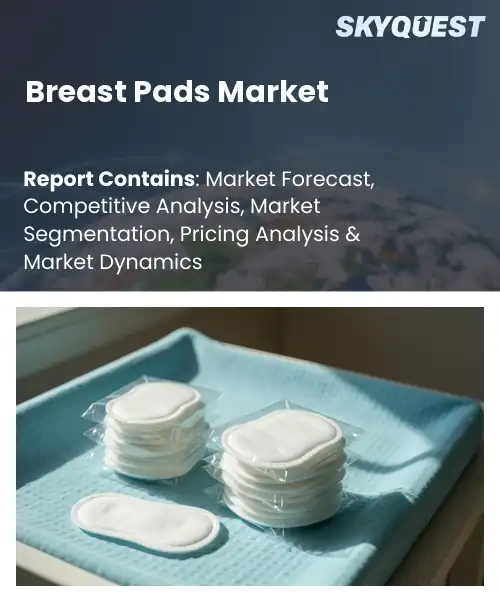
Breast Pads Market
Report ID: SQMIG35A3417
Report ID: SQMIG35A3417
[email protected]
USA +1 351-333-4748
Report ID:
SQMIG35A3417 |
Region:
Global |
Published Date: May, 2026
Pages:
157
|Tables:
151
|Figures:
78


Global Breast Pads Market size was valued at USD 98.6 Million in 2024 and is poised to grow from USD 103.72 Million in 2025 to USD 155.47 Million by 2033, growing at a CAGR of 5.19% during the forecast period (2026-2033).
Increasing attention on maternal and infant health has influenced how many women are choosing to breastfeed, as well as how many of them will be interested in using products that are convenient and comfortable while they are breastfeeding. The breast pads industry includes disposable and reusable breast pads made from conventional and organic material types, they may be foam or silicone shaped or have adhesive backing. Improved leakage control and skin care features are especially important to women who breastfeed, as they want to breastfeed as long as possible and to feel confident they are using quality products. In the past, women who breastfed tended to use homemade cloth breast pads, however, over the last two decades, more women have shifted to using manufactured disposable or high-quality reusable breast pads.
For example, Lansinoh and Medela produce breast pads with super-absorbent cores and fabrics made of skin-friendly materials; this demonstrates how breast pad producers have developed innovative solutions to meet the needs of caregivers. As more women return to work after having children, the global breast pad market will also be driven by changing consumer preferences for convenience and sustainability, as well as validation of the quality of products purchased through direct-to-consumer sales channels and other distribution methods. The high demand for high-abosorbing, discreet, disposable breast pads despite the economic downturn has forced breast pad manufacturers to increase production levels and invest more in adhesive breasts. At the same time, increasing concern about the environment has created opportunities for reusable organic breast pads, as well as opportunities for subscription services to assist women in purchasing products directly from manufacturers. Meanwhile, public health efforts that promote breastfeeding through hospital purchases of products that help women breastfeed and postpartum kits, as well as requirements for compliance with safety regulations and clinical claims, will further increase demand for breast pads.
How is AI enhancing product innovation in the breast pads market?
The breast pads industry is being helped develop new products through the use of AI and combining the science of material development with utilizing user information to help create better designs and products. Areas of focus to aid in this improvement of product innovation consist of; machine learning to create the materials used to form the hydrogel layer and the absorbent layer of the breast pad. Creating prototypes of these pads that utilize smart testing to measure temperature and moisture are also included in these efforts, as well as utilizing machine learning to help deliver a personalized experience to users through adapting sizing from their individual body shapes. Another breast pads market trend that is happening in this marketplace right now is that of moving toward premium products that will benefit the users' skin and provide greater usability. AI is also assisting with the speed at which companies are developing new products by simulating usage of these products and determining what materials will work best for that product. In addition, using consumer feedback on products to develop prototypes have shortened product development cycles so that there are more usable and comfortable breast pads on the market sooner.
Market snapshot - (2026-2033)
Global Market Size
USD 98.6 Million
Largest Segment
Disposable Breast Pads
Fastest Growth
Re-usable Breast Pads
Growth Rate
5.19% CAGR
To get more insights on this market click here to Request a Free Sample Report
Global breast pads market is segmented by product type, material, distribution channel, absorbency level, price range and region. Based on product type, the market is segmented into Disposable Breast Pads, Re-usable Breast Pads, Hydrogel Breast Pads, Silicone Breast Pads, Leak Collection Pads and Others. Based on material, the market is segmented into Cotton, Bamboo Fiber, Polymer-Based, Silicone, Gel-Based Materials and Others. Based on distribution channel, the market is segmented into Supermarkets & Hypermarkets, Pharmacies & Drug Stores, Specialty Baby Care Stores and Others. Based on absorbency level, the market is segmented into Light Absorbency, Medium Absorbency and Heavy Absorbency. Based on price range, the market is segmented into Economy, Mid-Range and Premium. Based on region, the market is segmented into North America, Europe, Asia Pacific, Latin America and Middle East & Africa.
Re-usable breast pads segment leads with large breast pads market share because it fits with consumer demands for waste reduction and long-term value, which means that they prefer to use washable and durable options. The ability of these pads to last over time means that there will be less need for disposal and there will be an opportunity for continued brand loyalty through regular purchases of additional products associated with this category. Retailers and manufacturers like these types of products due to the higher lifetime value of customers and the fact that there is a clear point of differentiation involved with sustainability, comfort, and product innovation, which will continue to drive consumer demand.
As per breast pads market outlook, disposable breast pads segment is one of the fastest-growing segments of the overall market due to the fact that they offer convenience and single-use hygiene solutions to consumers who have busy lifestyles as well as those who are receiving postnatal care. The introduction of ultra thin product designs along with improved adhesives and soft absorbent cores is enabling consumers to adopt easily to the everyday use of these products. As convenience becomes a driving factor for the consumer, the distribution of these types of products across all retail channels will continue to grow, providing an opportunity for differentiated formulas and the introduction of new products.
As per breast pads market forecast, the hydrogel breast pads segment is unique in that they have a unique gel formulation with soothing and cooling properties that relieve both soreness and engorgement by providing therapeutic relief that goes beyond simple absorption. Their association with medical professionals and their gentle touch on sensitive skin are encouraging mothers to look for comfort, as well as healing, from these products. Manufacturers use hydrogel formulations to differentiate their product lines and focus on their marketing benefits associated with comfort, healing, and premium care.
As per breast pads market analysis, silicone breast pads are experiencing the highest growth rate because they are discreet in profile and provide a skin-like feel while meeting both cosmetic and comfort requirements. The advances made in the reusable silicone breast pad designs, including their adhesive technology, have improved their fit and ability to prevent leakage. These improvements contribute to easier cleaning, which has helped to broaden the acceptance of silicone breast pads by mothers. The increase in silicone breast pad sales will allow for greater opportunities for retailers to enhance their brand and create innovative crossover products.
To get detailed segments analysis, Request a Free Sample Report
The popularity of the breast pads market is primarily due to the combination of demographic trends, changing priorities on maternal health and a high level of investment within the industry across the Asia Pacific region. Demand for breast pads has increased significantly as awareness concerning breastfeeding improves, and through the development of new products that prioritize comfort and concealment. The effective retail infrastructure that exists in the region allows for significant product availability through both online and physical stores.
As per breast pads market regional forecast, Japan prioritizes high-quality products and focuses on proper product design and the use of materials based on research to meet consumer expectations for comfort and concealment. Many local manufacturers partner with health care professionals and retailers to ensure that their products meet the unique demands of mothers. The broad range of convenience stores and online stores in Japan yields many opportunities for consumers to purchase breast pads conveniently and discreetly. Marketing tactics focus on the cleanliness and sustainable manufacturing processes of breast pads, as well as the comfort and safety of the products in order to attract and retain loyal customers.
As per breast pads market regional outlook, South Korea displays a strong emphasis on the use of advanced materials, as well as dermatologically-safe formulations and compact designs for urban lifestyles. Many domestic brands employ expertise from the beauty industry to develop their products for improved comfort and user experience, while technologically-advanced online shopping platforms create opportunities for targeted marketing and interaction with consumers. Products are available through both traditional specialty retail formats as well as digital platforms to facilitate trial among consumers.
As per breast pads industry analysis, the rapid growth of the North America market is driven by a combination of increased emphasis on breastfeeding, better knowledge of maternal health issues, and a well-developed retail infrastructure that provides moms with both convenience and choice. Increasingly, moms are placing a greater value on performance factors such as absorbency, skin-friendly materials, and discreetness of use, which leads to the development of a broader range of products within disposable and reusable breast pads. Healthcare providers and lactation consultants are often consulted in making breast pad purchasing decisions; thus, adding credibility to the breast pad products.
Breast pad products in the United States are strongly influenced by health care participation, with lactation support affecting the selection and acceptance of products. Manufacturers of breast pads are now producing products that strongly emphasize clinical credibility, have ingredients that are clearly stated on the label, and provide credible performance claims to meet consumer needs and increase the likelihood that informed consumers will purchase breast pads. Distribution channels consist of many outlets, including pharmacies and online retailing, which provides consumers with a wide variety of choices.
Breast pad products in Canada emphasize the use of gentle formulations, skin sensitivity testing for all materials used in the production of breast pads, and following health and safety guidelines as implemented by healthcare professionals. Consumers value the use of sustainable materials and the use of clear labeling of breast pads which has resulted in manufacturers producing breast pads made with certified materials and clearly stated sources. The distribution network for these products includes pharmacies, maternity boutiques, and various on-line retailers to reach the diverse breast pad consumer. The marketing for breast pad products emphasizes that these products provide a high level of comfort, discreetness of use, and environmental responsibility, while working with breast feeding professionals and retailers to create a sense of trust and support informed product selection.
The European breast pads market strengthens its position with a strong commitment to product safety, sustainability and informed choices by consumers. Manufacturers are investing in eco-friendly materials and reusable options while also complying with governmental regulatory standards and certification systems that appeal to quality-conscious shoppers. Retail channels include specialty baby stores, major grocery stores and e-commerce platforms so that breast pads are readily available.
The breast pads market in Germany will continue to be guided by strong regulations and consumer expectations for quality/safety, environmental performance, and certifications from independent testing laboratories. In addition to being certified, manufacturers will offer products with biodegradable materials and will be able to provide consumers with rigorous test data on the safety of their products. Retail distribution outlets where consumers can purchase breast pads in Germany include drugstores, baby supply stores, and online stores that allow for informed decisions about purchasing.
The breast pads market in the UK will continue to be shaped by active maternal support networks and clinical guidance as to what to expect when purchasing a new product. Retail channels for breast pads in the UK are drugstores, supermarkets, specialist baby retailers, and online purchasing options. All consumers will continue to look for products made with gentle ingredients, that are discreet when worn, and whose properties are in harmony with sustainability.
Breast pads market in France reflects skincare heritage and consumer preference for refined materials and discreet design. They will highlight the heritage of skincare in France and the consumer trend towards high-quality materials and discreet design in order to promote discovery of products. Consumers prefer hypoallergenic and eco-certified products and look for products that align with their value systems. Breast pad manufacturers have placed an emphasis on aesthetic packaging, engineered comfort and transparency of the supply chain. Breast pad manufacturers have partnered with healthcare professionals and maternal support organizations to increase credibility of breast pads as well as increase consumer confidence when purchasing and utilizing postpartum products.
To know more about the market opportunities by region and country, click here to
Buy The Complete Report
Rising Awareness of Maternal Hygiene
Innovations In Pad Design
High Competition From Generic Alternatives
Regulatory and Safety Compliance
Request Free Customization of this report to help us to meet your business objectives.
The global breast pads industry is characterized by competitive dynamics as global incumbents continue pushing forward through new product development, retail and hospital partnerships along with targeted acquisition strategies whereas femtech start-up companies continue pushing the use of sustainable materials, direct-to-consumer business models, and wearable lactation support devices.
SkyQuest’s ABIRAW (Advanced Business Intelligence, Research & Analysis Wing) is our Business Information Services team that Collects, Collates, Correlates, and Analyses the Data collected by means of Primary Exploratory Research backed by robust Secondary Desk research.
As per SkyQuest analysis, increasing emphasis on maternal and infant health is a key driver boosting breast pad adoption globally, supported by product innovation and shifting consumer preference toward convenience and sustainability as a second driver. The market is dominated by Asia Pacific where demographic momentum, strong retail channels and local manufacturing capacity accelerate uptake. Reusable breast pads lead the category due to waste reduction and lifetime value appeal. However growth is restrained by the intense competition from low cost generic alternatives that pressure pricing and margins and limit investment in R&D. Manufacturers that balance clinical credibility, sustainable materials and omnichannel distribution are best positioned to capture rising demand.
| Report Metric | Details |
|---|---|
| Market size value in 2024 | USD 98.6 Million |
| Market size value in 2033 | USD 155.47 Million |
| Growth Rate | 5.19% |
| Base year | 2024 |
| Forecast period | (2026-2033) |
| Forecast Unit (Value) | USD Million |
| Segments covered |
|
| Regions covered | North America (US, Canada), Europe (Germany, France, United Kingdom, Italy, Spain, Rest of Europe), Asia Pacific (China, India, Japan, Rest of Asia-Pacific), Latin America (Brazil, Rest of Latin America), Middle East & Africa (South Africa, GCC Countries, Rest of MEA) |
| Companies covered |
|
| Customization scope | Free report customization with purchase. Customization includes:-
|
To get a free trial access to our platform which is a one stop solution for all your data requirements for quicker decision making. This platform allows you to compare markets, competitors who are prominent in the market, and mega trends that are influencing the dynamics in the market. Also, get access to detailed SkyQuest exclusive matrix.
Table Of Content
Executive Summary
Market overview
Parent Market Analysis
Market overview
Market size
KEY MARKET INSIGHTS
COVID IMPACT
MARKET DYNAMICS & OUTLOOK
Market Size by Region
KEY COMPANY PROFILES
Methodology
For the Breast Pads Market, our research methodology involved a mixture of primary and secondary data sources. Key steps involved in the research process are listed below:
1. Information Procurement: This stage involved the procurement of Market data or related information via primary and secondary sources. The various secondary sources used included various company websites, annual reports, trade databases, and paid databases such as Hoover's, Bloomberg Business, Factiva, and Avention. Our team did 45 primary interactions Globally which included several stakeholders such as manufacturers, customers, key opinion leaders, etc. Overall, information procurement was one of the most extensive stages in our research process.
2. Information Analysis: This step involved triangulation of data through bottom-up and top-down approaches to estimate and validate the total size and future estimate of the Breast Pads Market.
3. Report Formulation: The final step entailed the placement of data points in appropriate Market spaces in an attempt to deduce viable conclusions.
4. Validation & Publishing: Validation is the most important step in the process. Validation & re-validation via an intricately designed process helped us finalize data points to be used for final calculations. The final Market estimates and forecasts were then aligned and sent to our panel of industry experts for validation of data. Once the validation was done the report was sent to our Quality Assurance team to ensure adherence to style guides, consistency & design.
Analyst Support
Customization Options
With the given market data, our dedicated team of analysts can offer you the following customization options are available for the Breast Pads Market:
Product Analysis: Product matrix, which offers a detailed comparison of the product portfolio of companies.
Regional Analysis: Further analysis of the Breast Pads Market for additional countries.
Competitive Analysis: Detailed analysis and profiling of additional Market players & comparative analysis of competitive products.
Go to Market Strategy: Find the high-growth channels to invest your marketing efforts and increase your customer base.
Innovation Mapping: Identify racial solutions and innovation, connected to deep ecosystems of innovators, start-ups, academics, and strategic partners.
Category Intelligence: Customized intelligence that is relevant to their supply Markets will enable them to make smarter sourcing decisions and improve their category management.
Public Company Transcript Analysis: To improve the investment performance by generating new alpha and making better-informed decisions.
Social Media Listening: To analyze the conversations and trends happening not just around your brand, but around your industry as a whole, and use those insights to make better Marketing decisions.
REQUEST FOR SAMPLE
 REQUEST FREE CUSTOMIZATION
Global Breast Pads Market size was valued at USD 98.6 Million in 2024 and is poised to grow from USD 103.72 Million in 2025 to USD 155.47 Million by 2033, growing at a CAGR of 5.19% during the forecast period (2026-2033).
Competitive dynamics in the global breast pads market are driven by incumbents pursuing product innovation, retail and hospital partnerships, and targeted acquisitions, while femtech startups push sustainable materials, direct to consumer models, and wearable lactation technology. Notable moves include Medela's smart pad prototype, Lansinoh's reusable and wearable product launches, and Philips Avent's collaborations with lactation associations to embed products into clinical pathways. 'Medela AG', 'Lansinoh Laboratories, Inc.', 'Philips Avent', 'Pigeon Corporation', 'Tommee Tippee', 'NUK', 'Chicco', 'Ameda, Inc.', 'Dr. Brown’s', 'Canpol Babies', 'Momcozy', 'Kindred Bravely', 'Bamboobies', 'Milkies', 'Carriwell', 'Babyono', 'MAM Baby', 'Nuby', 'Spectra Baby USA', 'Johnson & Johnson'
Increased awareness of maternal hygiene has encouraged postpartum and nursing mothers to prioritize skin health and leak protection, prompting wider acceptance of disposable and reusable breast pads as essential care items. Healthcare professionals and maternal support groups recommend reliable products for comfort and to reduce irritation, which stimulates demand and motivates manufacturers to expand distribution and communication efforts. As consumer education improves, purchase consideration shifts from niche to routine, creating sustained market expansion through broader adoption and higher replacement cycles across varied consumer segments.
Sustainability And Eco Innovation: Consumers increasingly prioritize environmentally responsible materials and circular design in maternal care products, prompting manufacturers to reformulate items with biodegradable fibers, compostable packaging, and reduced chemical processing. Brands leveraging transparent sourcing and eco certifications enhance perceived value and differentiate in crowded markets. Retailers and private labels respond by promoting green product lines, cultivating supplier partnerships that emphasize traceability and lifecycle impact. This shift encourages innovation across product development, supply chain practices, and marketing strategies focused on sustainability as brand promise.
Why does Asia Pacific Dominate the Global Breast Pads Market? |@12


Want to customize this report? This report can be personalized according to your needs. Our analysts and industry experts will work directly with you to understand your requirements and provide you with customized data in a short amount of time. We offer $1000 worth of FREE customization at the time of purchase.
Feedback From Our Clients


 USA (+1) 351-333-4748

