Breakfast Bars Market
Report ID: SQMIG30I2895
Report ID: SQMIG30I2895
[email protected]
USA +1 351-333-4748
Report ID:
SQMIG30I2895 |
Region:
Global |
Published Date: March, 2026
Pages:
157
|Tables:
175
|Figures:
79


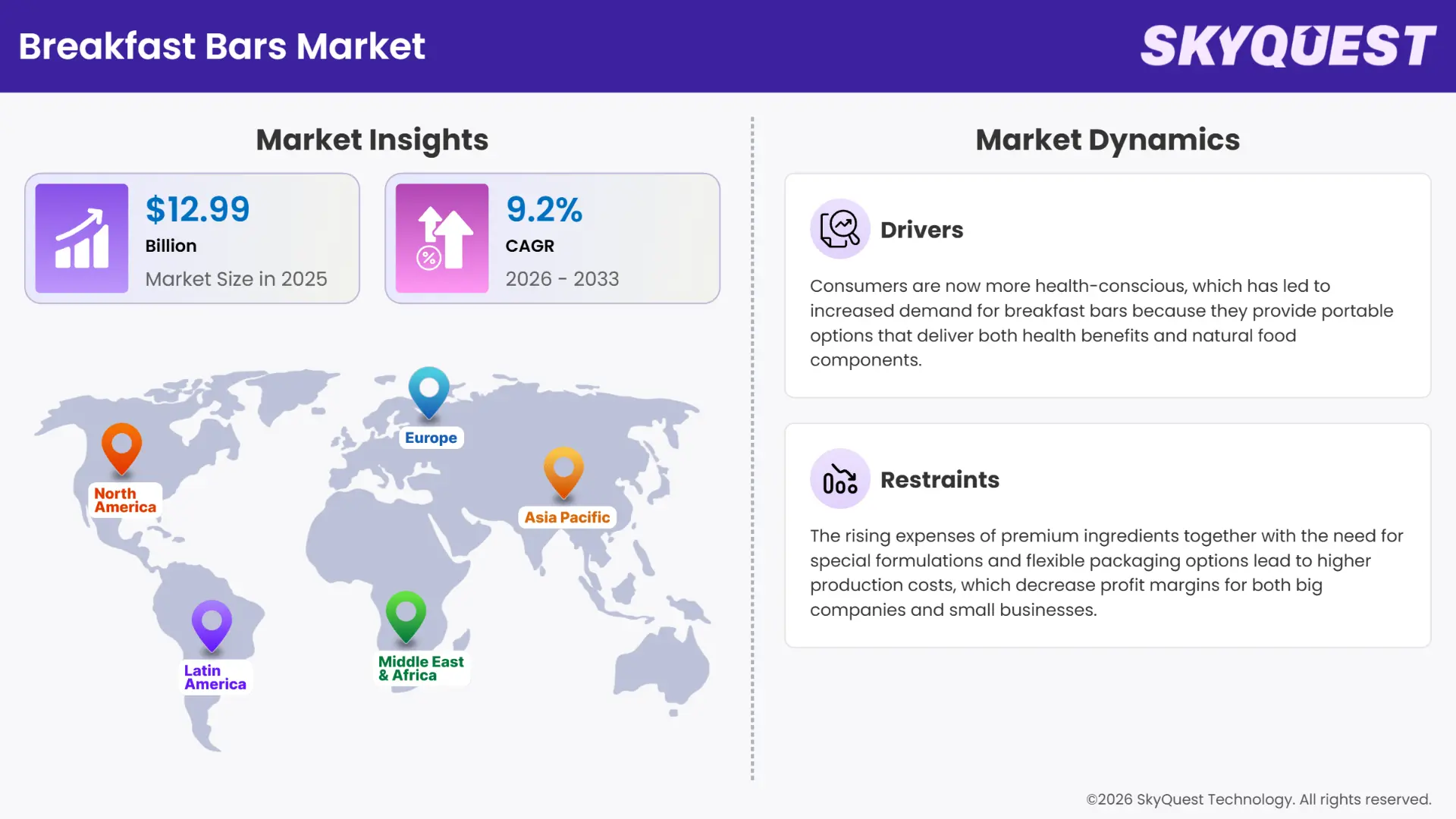
Global Breakfast Bars Market size was valued at USD 11.90 Billion in 2024 and is poised to grow from USD 12.99 Billion in 2025 to USD 26.28 Billion by 2033, growing at a CAGR of 9.2% during the forecast period (2026-2033).
Key Takeaways: Market Trends & Insights
The global breakfast bars market growth is driven because consumers value both comfort and their evolving nutritional needs. The market includes ready-to-eat bars that people use as quick breakfast options or snack items or meal replacement products which need establishment because they create a connection between food producers and busy customers who want food that requires no cooking. The category evolved from its initial granola products to include various new products which include protein bars and high-fiber bars and low-sugar bars that Kellogg’s and KIND and CLIF introduced into their product lines to reach customers who lead active lifestyles. Urbanization and longer commutes and higher female workforce participation rates have created persistent demand which holds up during economic downturns.
The upcoming breakfast bars market penetration depends on convenience-based development while functional nutrition combines with digital distribution systems to create market benefits which manufacturers and retailers can use to their advantage. The demand for protein-rich low-sugar plant-based products leads formulators to create more fortified products which retailers use to create unique store offerings based on premium pricing. E-commerce and subscription services decrease the need for physical product displays because they allow niche companies to grow quickly through product testing partnerships with health apps and gyms which turn first-time users into repeat customers.
How is AI Optimizing Product Development in the Global Breakfast Bars Market?
AI technology improves product development in the global breakfast bars industry by accelerating formulation processes and enhancing sensory prediction accuracy and linking consumer preferences to R&D activities. The procedure uses data to create recipes which predictive models determine both the flavor and texture results while virtual prototypes streamline testing procedures. The market environment supports cleaner labels and specific nutritional products which compel brands to rapidly test new ingredient combinations and product designs. AI technology enables manufacturers to create shelf-life predictions and optimize their ingredient sourcing process while they adjust their recipes based on actual raw material availability. The innovation process becomes more effective through generative models which create new blends and digital twins that transform pilot recipes into production scale recipes.
Barry Callebaut, in November 2025, announced a partnership with NotCo AI to enable AI technologies to enhance their recipe development processes through automatic recipe creation. The process demonstrates that AI-driven formulation technology shortens product development periods while providing manufacturers with flexible ingredient replacement solutions which help breakfast bar producers achieve their cleaner label and customized product development goals while maximizing their production efficiency.
To get more insights on this market click here to Request a Free Sample Report
The global breakfast bars market is segmented by product type, formulation type, ingredient type, demography, application, distribution channel, and region. Based on product type, the market is categorized into cereal bars, granola bars, protein bars, energy bars, fruit-based bars, and others. In terms of formulation type, it is divided into organic bars and conventional bars. By ingredient type, the market includes oats-based, nuts and seeds-based, fruit-based, chocolate-based, and other variants. Based on demography, the segmentation covers adults, kids, and athletes and fitness enthusiasts. In terms of application, the market is segmented into on-the-go breakfast, meal replacement, snacking, and sports nutrition. By distribution channel, it is categorized into online retail and offline retail. Geographically, the market is segmented into North America, Europe, Asia Pacific, Latin America, and the Middle East & Africa.
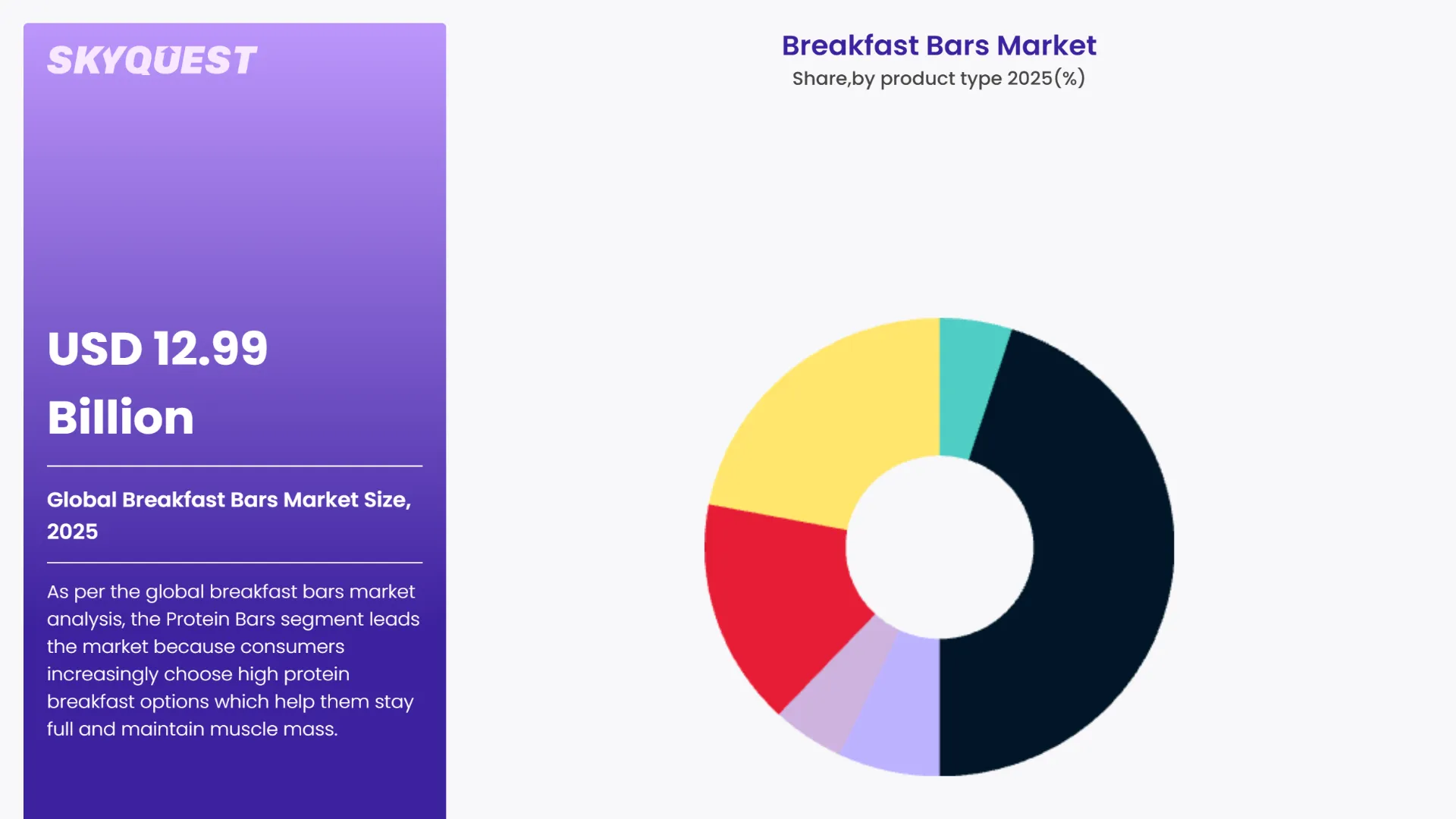
As per the global breakfast bars market analysis, the Protein Bars segment leads the market because consumers increasingly choose high protein breakfast options which help them stay full and maintain muscle mass. The demand for protein sources and texture technologies drives ongoing product development while businesses use premium positioning to distribute their products through both convenience channels and sports channels and to establish partnerships with fitness organizations.
However, the clean label trend and consumer demand for healthy products are driving growth in the granola bars market because these products match customer preferences for natural ingredients. Their ability to serve both breakfast and snack needs through multiple flavor options helps them to enter new markets while their private label products create additional business opportunities.
According to the global breakfast bars market forecast, online retail enable breakfast bar brands to showcase their full product range through online retail which provides unlimited access to customers who want to buy their products. Personalized experiences combined with subscription services and specific promotional campaigns will boost customer chances to try new products while platform data will help distributors streamline product development and expedite their market entry from online marketplaces which have become vital to business growth in the category.
Whereas the offline retail category is predicted to have the highest breakfast bars market share because retailers establish dedicated breakfast bar sections and conduct product demonstrations and store product displays that lead to unplanned purchases and product testing. The private label product launch initiative together with premium product placement on store shelves and combined marketing campaigns with convenience food items will increase product visibility to people who shop regularly which will lead to higher product sales and opportunities for breakfast bar product range expansion.
To get detailed segments analysis, Request a Free Sample Report
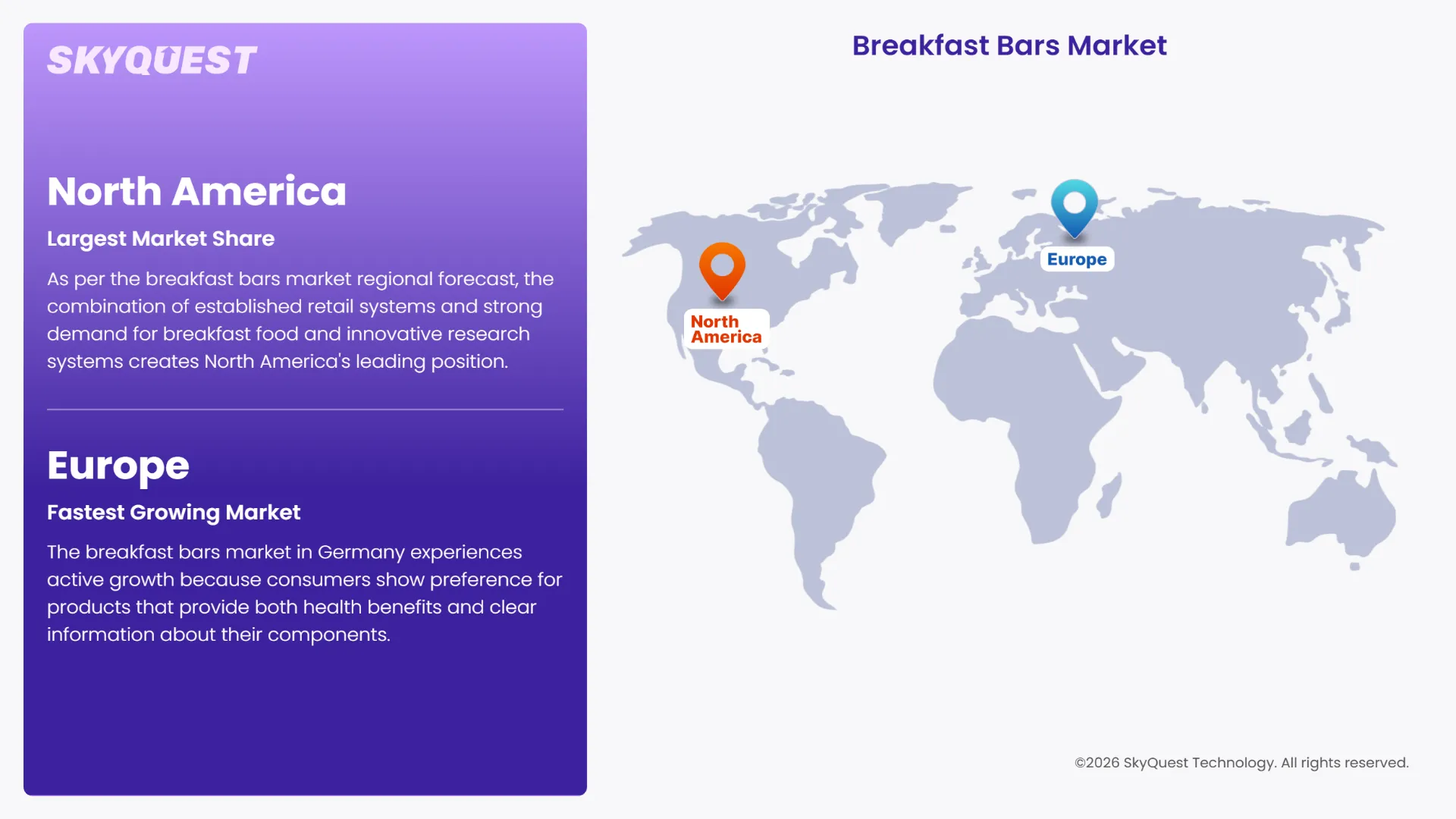
As per the breakfast bars market regional forecast, the combination of established retail systems and strong demand for breakfast food and innovative research systems creates North America's leading position. National and regional brands dedicate significant resources to create products that combine tasty flavors with health advantages while their private label products strengthen value across all marketing channels. Companies use advanced supply chain systems together with adaptable manufacturing methods to create fast product changes that satisfy different customer lifestyles. The distribution system enables access to various markets through multiple outlets which include convenience stores and supermarkets, and online platforms. The combination of marketing and brand partnerships with fitness and wellness programs helps develop the pattern of regular product consumption among customers. The region develops into a breakfast bar manufacturing center because players use regulatory transparency together with easy ingredient access to achieve fast growth while maintaining product quality.
The breakfast bars sector in the United States shows how consumers prefer convenient products that provide them with nutritional advantages. Retail and e-commerce channels provide broad reach, while brand innovation targets specific lifestyle segments such as active consumers and on-the-go professionals. Manufacturers focus on developing products that provide clean labels while offering various flavors and controlled serving sizes to match different dietary needs. Private label products create pricing competition which affects product selection between standard and luxury categories of products while strategic marketing partnerships and in-store promotion drive products trial and repeat purchases.
Canadian consumers adopt breakfast bars which contain healthful and ethically sourced ingredients at a consistent pace throughout the market. Manufacturers need to demonstrate their products' natural origins because consumers prefer natural components together with eco-friendly packaging. The natural foods industry provides both regional distribution networks and active trade operations that help niche and premium brands plus mainstream brands to thrive. The brand sends out its message which highlights the need for both delicious food and healthy eating and approved products which retailers use to build breakfast and all-day snack display ranges.
The European market grows because of changing consumer habits which now prioritize portable nutrient-rich foods and because people increasingly prefer clean label products with health benefits. Retailers across markets are broadening snack assortments to include breakfast bars that address morning time scarcity and active lifestyles. The combination of private label product development and effective supermarket category management systems results in increased product testing, which leads to greater shelf space visibility. Local and international brands modify their recipes to meet regional taste demands because consumers want to experience different ingredient combinations that include whole grains and plant proteins and reduced sugar options. The requirement for recyclable packaging materials together with sustainable product attributes drives customer purchase behavior while coffee and convenience product partnerships strengthen the perception of bars as products that function as complete meals or snacks.
The breakfast bars market in Germany experiences active growth because consumers show preference for products that provide both health benefits and clear information about their components. Brands develop health-focused products which use exceptional cereal bases and nutrient-dense ingredients to attract health-focused consumers. The two companies use their private label products to create market expansion through dedicated promotional activities which demonstrate their product origins and production methods. Companies develop products which appeal to various consumer preferences through their combination of different textures with sweet and savory flavors while their products remain accessible for morning commuters and active consumers.
The breakfast bars market in the United Kingdom shows high brand penetration because consumers widely accept bars as their regular morning meal option. The market players use distinctive product features to create unique products which lead to new flavor developments and special nutritional endorsements that appeal to busy professionals and active consumers. The convenience store network gives multiple customer touchpoints which enable products to reach customers throughout the market. The marketing department connects bars with current lifestyle trends and fitness habits while their partnership with coffee shops and food service businesses improves productivity in both urban and suburban communities.
The breakfast bars market in France develops to meet customer needs for traditional breakfast foods together with portable artisanal products which they can consume anywhere. The local market responds positively to innovative products which use premium ingredients together with bakery-style flavors. The market operators and specialized retail stores are increasing their display area for bars which focus on natural composition and exceptional cooking standards. The marketing campaign presents the bars as sophisticated breakfast options which attract customers who want both easy access and high dining standards.
The market position of Asia Pacific countries is growing stronger through their quick product format changes which match local cooking customs and their development of modern retail and online shopping systems and their specific new product development work with functional food components. Local manufacturers create bar products by combining traditional flavors with regional ingredients to improve product acceptance while international brands use partnerships to speed up their market entry process. The growing trend of urbanization combined with time-limited urban residents who prefer quick breakfast options leads to higher demand for convenient breakfast products while different consumer groups quickly adopt new texture and flavor innovations. The combination of packaging materials which maintain product freshness and enable portion management together with active digital marketing efforts and influencer campaigns helps increase category recognition and product testing in multiple regional markets.
The Japanese breakfast bars market provides high quality products with detailed packaging which uses local flavors to create products that appeal to Japanese customers. The main distribution system of convenience store ecosystems enables retailers to deliver products which customers want to buy on a regular basis. Product development work establishes functional advantages which include continuous energy and digestive relief while portioning systems match cultural beliefs about eating only moderate amounts. Brand storytelling emphasizes craftsmanship together with ingredient authenticity to create unique product identities which attract market segments.
The South Korean breakfast bars market trends shows high product turnover rates because social media and influencer culture drive immediate trend changes. Consumers choose modern flavors which include functional additives and stylish packaging that match their active urban lifestyles. Customers mainly use e-commerce websites and convenience stores to find products which they want to buy. Food brands team up with lifestyle platforms to boost their brand visibility while special edition products and co-branded campaigns help businesses connect with customers and make them return.
To know more about the market opportunities by region and country, click here to
Buy The Complete Report
Rising Health Consciousness and Demand
Demand For Ready To Eat
High Ingredient and Production Costs
Regulatory Labeling and Health Claims
Request Free Customization of this report to help us to meet your business objectives.
The global breakfast bars market faces increasing competition because multinational CPGs acquire companies and form strategic alliances while specialist startups expand their operations through direct-to-consumer sales and product development. Major M&A transactions demonstrate market consolidation through Mondelez's acquisition of Grenade and Mars's partnership with KIND. Magic Spoon demonstrates its product development process through its use of technology to create new products while using direct-to-consumer sales for its products across the United States.
SkyQuest’s ABIRAW (Advanced Business Intelligence, Research & Analysis Wing) is our Business Information Services team that Collects, Collates, Correlates, and Analyses the Data collected by means of Primary Exploratory Research backed by robust Secondary Desk research.
As per SkyQuest analysis, the global breakfast bars market exists because consumers want quick, healthy breakfast options which match their active daily routines. The second driver emerges from the combination of functional nutrition with digital channels which allow businesses to create specific products that can quickly reach customers through online shopping and subscription services. The increase in ingredient and production expenses acts as a primary obstacle which reduces profit margins while making some products too expensive for specific customer groups. North America maintains its leadership position because established retail systems and innovative product development and brand promotion activities drive market growth. The protein bars category dominates the market because people seek products which help them feel full and maintain their muscle mass while facing resistance from premium placement between convenience and sports sectors.
| Report Metric | Details |
|---|---|
| Market size value in 2024 | USD 11.90 Billion |
| Market size value in 2033 | USD 26.28 Billion |
| Growth Rate | 9.2% |
| Base year | 2024 |
| Forecast period | 2026-2033 |
| Forecast Unit (Value) | USD Billion |
| Segments covered |
|
| Regions covered | North America (US, Canada), Europe (Germany, France, United Kingdom, Italy, Spain, Rest of Europe), Asia Pacific (China, India, Japan, Rest of Asia-Pacific), Latin America (Brazil, Rest of Latin America), Middle East & Africa (South Africa, GCC Countries, Rest of MEA) |
| Companies covered |
|
| Customization scope | Free report customization with purchase. Customization includes:-
|
To get a free trial access to our platform which is a one stop solution for all your data requirements for quicker decision making. This platform allows you to compare markets, competitors who are prominent in the market, and mega trends that are influencing the dynamics in the market. Also, get access to detailed SkyQuest exclusive matrix.
Table Of Content
Executive Summary
Market overview
Parent Market Analysis
Market overview
Market size
KEY MARKET INSIGHTS
COVID IMPACT
MARKET DYNAMICS & OUTLOOK
Market Size by Region
KEY COMPANY PROFILES
Methodology
For the Breakfast Bars Market, our research methodology involved a mixture of primary and secondary data sources. Key steps involved in the research process are listed below:
1. Information Procurement: This stage involved the procurement of Market data or related information via primary and secondary sources. The various secondary sources used included various company websites, annual reports, trade databases, and paid databases such as Hoover's, Bloomberg Business, Factiva, and Avention. Our team did 45 primary interactions Globally which included several stakeholders such as manufacturers, customers, key opinion leaders, etc. Overall, information procurement was one of the most extensive stages in our research process.
2. Information Analysis: This step involved triangulation of data through bottom-up and top-down approaches to estimate and validate the total size and future estimate of the Breakfast Bars Market.
3. Report Formulation: The final step entailed the placement of data points in appropriate Market spaces in an attempt to deduce viable conclusions.
4. Validation & Publishing: Validation is the most important step in the process. Validation & re-validation via an intricately designed process helped us finalize data points to be used for final calculations. The final Market estimates and forecasts were then aligned and sent to our panel of industry experts for validation of data. Once the validation was done the report was sent to our Quality Assurance team to ensure adherence to style guides, consistency & design.
Analyst Support
Customization Options
With the given market data, our dedicated team of analysts can offer you the following customization options are available for the Breakfast Bars Market:
Product Analysis: Product matrix, which offers a detailed comparison of the product portfolio of companies.
Regional Analysis: Further analysis of the Breakfast Bars Market for additional countries.
Competitive Analysis: Detailed analysis and profiling of additional Market players & comparative analysis of competitive products.
Go to Market Strategy: Find the high-growth channels to invest your marketing efforts and increase your customer base.
Innovation Mapping: Identify racial solutions and innovation, connected to deep ecosystems of innovators, start-ups, academics, and strategic partners.
Category Intelligence: Customized intelligence that is relevant to their supply Markets will enable them to make smarter sourcing decisions and improve their category management.
Public Company Transcript Analysis: To improve the investment performance by generating new alpha and making better-informed decisions.
Social Media Listening: To analyze the conversations and trends happening not just around your brand, but around your industry as a whole, and use those insights to make better Marketing decisions.
REQUEST FOR SAMPLE
 REQUEST FREE CUSTOMIZATION
Global Breakfast Bars Market size was valued at USD 11.9 Billion in 2024 and is poised to grow from USD 12.99 Billion in 2025 to USD 26.28 Billion by 2033, growing at a CAGR of 9.2% during the forecast period (2026-2033).
Competitive pressure in the global breakfast bars market is intensifying as multinational CPGs pursue acquisitions and strategic partnerships while specialist startups scale via direct-to-consumer systems and product innovation. Major M&A such as Mondelez's purchase of Grenade and Mars's deal with KIND illustrate consolidation. Brands also deploy tech-enabled marketing and data-driven SKU expansion, exemplified by Magic Spoon's shift from DTC to national retail. 'Kellogg Company', 'General Mills, Inc.', 'Nestlé S.A.', 'Mars, Incorporated', 'The Hershey Company', 'PepsiCo, Inc.', 'Danone S.A.', 'Mondelez International, Inc.', 'Clif Bar & Company', 'KIND LLC', 'Nature’s Path Foods', 'Atkins Nutritionals, Inc.', 'McKee Foods Corporation', 'Bagrry’s India Ltd.', 'Alara Wholefoods Ltd.', 'Hearthside Food Solutions LLC', 'Sunny Crunch Foods Ltd.', 'Standard Functional Foods Group, Inc.', 'Olympia Granola, Inc.', 'Bakery Barn, Inc.'
Breakfast bars have benefited from growing consumer emphasis on health and wellness, which favors convenient options that also convey nutritional value and natural ingredients. Manufacturers have reformulated recipes to highlight whole grains, protein, fiber, and reduced sugar, positioning products as acceptable breakfast replacements or nutritious snacks. Clear labeling and clean ingredient lists support trust among health-focused shoppers, prompting retailers to allocate more shelf space and brands to increase product variety. This alignment between health priorities and product attributes directly supports category expansion and encourages investment in new offerings.
Plant-Forward Product Innovation: Manufacturers are increasingly reformulating breakfast bars to emphasize plant-based proteins, whole grains and novel botanical ingredients that deliver satiety and perceived health benefits. This shift supports cleaner label narratives and appeals to ethically minded consumers seeking sustainable choices without sacrificing taste. Research and development focuses on textural improvement, natural preservatives and versatile base recipes that accommodate fortification. Retailers respond with expanded shelf space and trade marketing that highlights provenance and ingredient stories to strengthen brand differentiation and long-term loyalty drivers.
North America Dominate the Global Breakfast Bars Market.
The Breakfast Bars Market comprises ready-to-eat snack products designed to provide convenient and nutritious breakfast options. The market includes cereal bars, granola bars, protein bars, energy bars, fruit-based bars, and other breakfast bar varieties.
The market is segmented into Cereal Bars, Granola Bars, Protein Bars, Energy Bars, Fruit-Based Bars, and Others, catering to diverse consumer nutritional and taste preferences.
Key challenges include intense market competition, fluctuating raw material prices, consumer concerns regarding sugar content and artificial ingredients, and the need for continuous product innovation to meet changing consumer preferences.


Want to customize this report? This report can be personalized according to your needs. Our analysts and industry experts will work directly with you to understand your requirements and provide you with customized data in a short amount of time. We offer $1000 worth of FREE customization at the time of purchase.
Feedback From Our Clients


 USA (+1) 351-333-4748

