Botanical CO2 Extracts Market
Report ID: SQMIG20I2780
Report ID: SQMIG20I2780
[email protected]
USA +1 351-333-4748
Report ID:
SQMIG20I2780 |
Region:
Global |
Published Date: April, 2026
Pages:
157
|Tables:
119
|Figures:
77


Global Botanical Co2 Extracts Market size was valued at USD 1.12 Billion in 2024 and is poised to grow from USD 1.2 Billion in 2025 to USD 1.1 Billion by 2033, growing at a CAGR of 7.3% during the forecast period (2026-2033).
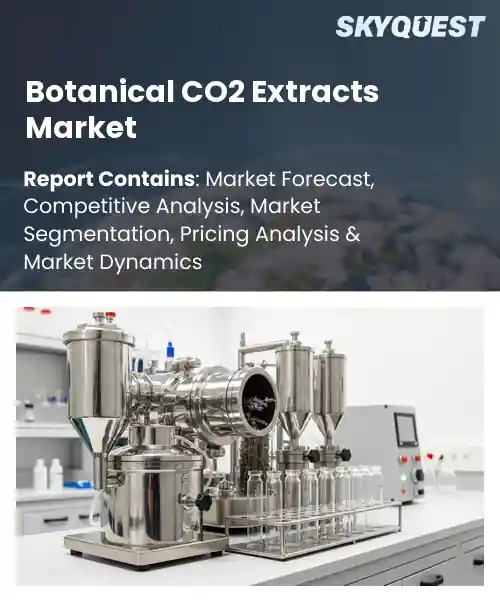
The primary driver of the botanical CO2 extracts market is the growing demand for high-purity, solvent-free natural ingredients driven by consumer health awareness and stricter regulatory standards. Botanical CO2 extracts are concentrated plant compounds produced using carbon dioxide under controlled conditions to selectively isolate flavor, fragrance, and bioactive molecules while preserving constituents. This market matters because CO2 methods deliver greater safety, consistent potency, and cleaner labels for food, cosmetics, and pharmaceutical formulations. Over three decades the industry evolved from niche perfumery applications to adoption across nutraceuticals and cannabis processing, as brands shifted from solvent-based to CO2-derived vanilla and lavender extracts.Building on brands' migration to CO2-derived extracts, the pivotal factor shaping global market expansion is continuous improvement in CO2 extraction technology and process scalability, which lowers per-unit costs and expands usable botanical feedstocks. As extraction rigs become more efficient and modular, processors can preserve heat-sensitive terpenes and cannabinoids, producing full-spectrum oils that meet clean-label and regulatory thresholds, so food formulators and pharmaceutical manufacturers adopt CO2 extracts to reduce solvent liabilities. This cause-and-effect dynamic creates opportunities for vertical integration by growers, contract-manufacturing services, and new product formats such as ready-to-drink botanically flavored beverages and clinically standardized nutraceuticals that command premium pricing.
How is AI improving quality control in the botanical CO2 extracts market?
Quality control in botanical CO2 extracts focuses on identity, potency and contaminant screening. AI improves these areas by combining machine learning with spectral and chromatographic inputs to recognize extract fingerprints and flag adulteration or batch drift early. Suppliers now use real time process monitoring, optical inspection of incoming plant material and predictive models that stabilize yields and reduce rework. Market demand for transparency and consistent high purity in flavor, fragrance and nutraceutical supply chains is pushing wider adoption. Practical instances include AI paired with near infrared spectroscopy for chemical profiling and cloud analytics that link harvest metadata to final quality outcomes.Indena July 2025, Indena integrated Hyris bCUBE field DNA testing into its botanical authentication protocol creating digital genetic passports. This development speeds rejection of suspect raw material, improves traceability and uses cloud analytics with AI assisted interpretation to support faster batch release decisions and greater operational efficiency.
Market snapshot - (2026-2033)
Global Market Size
USD 1.12 Billion
Largest Segment
Spices & Herbs Extracts
Fastest Growth
Flowers & Floral Concentrates
Growth Rate
7.3% CAGR
To get more insights on this market click here to Request a Free Sample Report
Global botanical co2 extracts market is segmented by source type, product form, application vertical, extraction technology and region. Based on source type, the market is segmented into Spices & Herbs Extracts, Flowers & Floral Concentrates, Leaves, Bark & Root Extracts and Seed & Fruit CO2 Extracts. Based on product form, the market is segmented into Liquid CO2 Extracts, Semi-Solid/Concrete Extracts and Powdered Botanical Forms. Based on application vertical, the market is segmented into Food & Beverage (Flavors/Natural Preservatives), Pharmaceutical & Nutraceutical (Active Ingredients), Cosmetics & Personal Care (Fragrances/Anti-aging) and Aromatherapy & Wellness. Based on extraction technology, the market is segmented into Supercritical CO2 Extraction and Subcritical CO2 Extraction. Based on region, the market is segmented into North America, Europe, Asia Pacific, Latin America and Middle East & Africa.
Flowers & Floral Concentrates segment dominates because floral CO2 extracts deliver layered aromatic profiles that are highly valued by perfumers and premium personal care brands, driving concentrated demand for these botanicals. Their ability to capture delicate volatile compounds with solvent free credentials increases formulation appeal, prompting investment in selective harvesting and tailored extraction practices, which in turn sustains premium pricing and prioritizes supply chain development.
However, Seed & Fruit CO2 Extracts are emerging as the most rapidly expanding area as formulators seek fruit derived flavor and functional ingredients that align with clean label trends. Innovations in stabilization and integration into beverage and nutraceutical matrices expand their applicability, enabling new product concepts and commercial partnerships that accelerate adoption across food and wellness applications.
Liquid CO2 Extracts segment dominates because liquid forms provide straightforward handling, consistent concentration, and seamless integration into existing liquid based manufacturing processes across food, cosmetics, and aromatherapy. Their solubility and ease of metering simplify formulation workstreams and support scale up from lab to production, encouraging buyer preference and enabling suppliers to standardize quality controls and distribution models.
However, Powdered Botanical Forms are emerging as the most rapidly expanding area because they enable precise dosing, improved shelf stability, and incorporation into dry formats like supplements, instant beverages, and bars. Advances in carrier technologies and microencapsulation broaden compatibility with diverse matrices, unlocking new use cases and accelerating interest from formulators seeking convenience, longer shelf life, and novel consumption formats.
To get detailed segments analysis, Request a Free Sample Report
North America commands the global botanical CO2 extracts market because of a well developed value chain spanning advanced extraction technology, strong ingredient sourcing networks, and sophisticated application development across personal care and food industries. Regulatory frameworks that emphasize purity and traceability support premium positioning, while robust private investment fuels innovation in scalable, environmentally conscious extraction processes. High consumer demand for natural and clean label formulations drives product diversification, and established partnerships between ingredient suppliers and multinational formulators accelerate market penetration. The presence of specialized research institutions and contract manufacturing capabilities further enhances speed to market, enabling rapid commercialization of novel botanical extracts and reinforcing regional leadership. Collaborative industry consortia and growing focus on sustainable sourcing and certification elevate credibility, while resilient logistics and transparent supply chains reduce disruption risks and support consistent availability for global customers.
Botanical CO2 Extracts Market development in United States is driven by a concentration of extraction technology innovators, ingredient formulators, and large consumer brands seeking clean and natural solutions. Emphasis on quality control, traceability, and sustainability is strong, supported by private research and contract manufacturing. The commercial ecosystem favors rapid piloting and scale up, with dense industry networks facilitating partnerships and cross sector adoption in personal care, nutraceutical, food ingredient applications.
Botanical CO2 Extracts Market in Canada benefits from strong agricultural linkages, access to diverse botanical feedstocks, and a collaborative research community focused on green extraction methods. Industry stakeholders prioritize sustainability certifications and supply chain transparency, enabling premium positioning. Emerging contract processing hubs and partnerships with international formulators support product development, while policy frameworks and consumer awareness encourage adoption of high purity extracts across skincare, wellness formulations, and food ingredient segments.
Europe is experiencing rapid expansion in botanical CO2 extracts driven by a blend of stringent regulatory emphasis on ingredient safety, sophisticated consumer demand for natural and ethically sourced products, and deep formulation expertise within cosmetics and food industries. Regional harmonization of standards and strong certification bodies reinforce trust, while a dense network of artisanal botanical suppliers complements industrial scale extractors. Innovation hubs in several countries facilitate product differentiation through niche botanicals and clean label positioning. Collaboration between research institutes and private enterprises accelerates method development for high purity extracts, and growing interest in sustainable sourcing strengthens supply chain integrity and market appeal across diverse European markets. Established brand ecosystems and a mature retail landscape support premiumization, while skilled SMEs driving artisanal extract production create a complementary value tier that appeals to niche consumers and export markets seeking provenance and specialty botanicals.
Botanical CO2 Extracts Market Germany is characterized by a strong industrial base, rigorous quality standards, and a concentration of technical expertise in extraction and formulation. Established ingredient suppliers and contract manufacturers support large scale production while research institutions pioneer process optimization. A robust regulatory environment and discerning consumer preferences drive demand for traceable, high purity extracts, positioning Germany as a dominant sourcing and development hub for regional and international formulators.
Botanical CO2 Extracts Market United Kingdom is marked by dynamic innovation, strong entrepreneurial activity, and rapid adoption of novel botanicals by specialty brands. Emphasis on sustainability credentials and novel application development fuels diversified product offerings. A vibrant start up ecosystem and ingredient incubators accelerate commercialization of unique extracts, while close links to research centers and design led brands create avenues for premium positioning and collaboration in cosmetics and wellness sectors.
Botanical CO2 Extracts Market France is emerging through a strong tradition of botanical knowledge, artisan producers, and a culinary culture that values provenance. Focus on high quality, specialty botanicals and terroir expression enables niche differentiation. Collaboration between small scale extractors and boutique brands cultivates product narratives. Supportive regional initiatives and growing certification awareness help integrate French extracts into premium skincare and gourmet ingredient segments domestically and in global export channels.
Asia Pacific is strengthening its role in botanical CO2 extracts through investments in extraction capacity, rising expertise in botanical sourcing, and increased integration of traditional botanical knowledge with modern processing techniques. Manufacturers are enhancing process efficiencies and exploring regional botanicals with unique organoleptic and bioactive profiles, attracting formulators seeking differentiation. Growing collaboration between research institutions and private companies supports method validation and quality assurance. Strategic partnerships with global ingredient buyers and a focus on sustainable sourcing practices improve credibility and market access, while expanding consumer interest in natural wellness and skincare ingredients underpins broader regional engagement. Policies encouraging technology transfer, capacity building, and standards alignment enable producers to meet stringent quality expectations. Competitive production ecosystems and proximity to diverse botanical sources offer advantage for developing novel extracts. Increased participation in global trade networks and higher visibility of regional botanical identity further elevate Asia Pacific role in global supply chains.
Botanical CO2 Extracts Market Japan combines advanced processing technology with strong emphasis on product quality and formulation precision. Manufacturers prioritize high purity extract profiles for premium skincare and functional food uses. Close collaboration between research and development teams and ingredient specialists yields refined sensory and efficacy characteristics. Domestic preference for subtle plant based actives sustains demand for sophisticated extracts, and export oriented producers carefully tailor offerings for international brand partners.
Botanical CO2 Extracts Market South Korea features strong synergy between cosmetics innovators and ingredient developers, driving rapid product integration and formulation. Emphasis on efficacy and texture, along with novel botanical actives, supports demand for refined high purity extracts. Local manufacturers invest in advanced extraction capabilities and collaborate with academic centers to validate functional claims. Trend driven consumer markets and influential regional brands provide testing ground for new extracts with appeal.
To know more about the market opportunities by region and country, click here to
Buy The Complete Report
Rising Demand For Natural Extracts
Expansion Of Industrial Extraction Capacity
High Production and Capital Costs
Supply Chain and Seasonal Variability
Request Free Customization of this report to help us to meet your business objectives.
Competitive landscape is concentrated and dynamic, driven by consolidation and technology partnerships that shift supply and differentiation toward solvent free botanicals. Recent activity shows major ingredient houses forming strategic partnerships and divesting adjacent units while investing in supercritical CO2 capability to secure proprietary botanicals and faster route to finished applications, for example dsm-firmenich with Indena, Robertet expanding CO2 capacity, and Linde’s industrial partnerships on scalable CO2 systems.
Top Player’s Company Profile
Recent Developments
SkyQuest’s ABIRAW (Advanced Business Intelligence, Research & Analysis Wing) is our Business Information Services team that Collects, Collates, Correlates, and Analyses the Data collected by means of Primary Exploratory Research backed by robust Secondary Desk research. As per SkyQuest analysis, the botanical CO2 extracts market is being driven by rising demand for high-purity, solvent-free natural ingredients and continued improvements in CO2 extraction technology that lower costs and expand applications. A significant restraint remains high production and capital costs associated with specialized extraction equipment, which limits smaller entrants. North America dominates the market thanks to advanced extraction capabilities, strong ingredient networks and regulatory emphasis on traceability. Flowers & floral concentrates represent the dominating segment given their value in perfumery and premium personal care. The second major driver is growing consumer preference for clean-label formulations, which accelerates adoption across food, cosmetics and nutraceuticals.
| Report Metric | Details |
|---|---|
| Market size value in 2024 | USD 1.12 Billion |
| Market size value in 2033 | USD 1.1 Billion |
| Growth Rate | 7.3% |
| Base year | 2024 |
| Forecast period | (2026-2033) |
| Forecast Unit (Value) | USD Billion |
| Segments covered |
|
| Regions covered | North America (US, Canada), Europe (Germany, France, United Kingdom, Italy, Spain, Rest of Europe), Asia Pacific (China, India, Japan, Rest of Asia-Pacific), Latin America (Brazil, Rest of Latin America), Middle East & Africa (South Africa, GCC Countries, Rest of MEA) |
| Companies covered |
|
| Customization scope | Free report customization with purchase. Customization includes:-
|
To get a free trial access to our platform which is a one stop solution for all your data requirements for quicker decision making. This platform allows you to compare markets, competitors who are prominent in the market, and mega trends that are influencing the dynamics in the market. Also, get access to detailed SkyQuest exclusive matrix.
Table Of Content
Executive Summary
Market overview
Parent Market Analysis
Market overview
Market size
KEY MARKET INSIGHTS
COVID IMPACT
MARKET DYNAMICS & OUTLOOK
Market Size by Region
KEY COMPANY PROFILES
Methodology
For the Botanical CO2 Extracts Market, our research methodology involved a mixture of primary and secondary data sources. Key steps involved in the research process are listed below:
1. Information Procurement: This stage involved the procurement of Market data or related information via primary and secondary sources. The various secondary sources used included various company websites, annual reports, trade databases, and paid databases such as Hoover's, Bloomberg Business, Factiva, and Avention. Our team did 45 primary interactions Globally which included several stakeholders such as manufacturers, customers, key opinion leaders, etc. Overall, information procurement was one of the most extensive stages in our research process.
2. Information Analysis: This step involved triangulation of data through bottom-up and top-down approaches to estimate and validate the total size and future estimate of the Botanical CO2 Extracts Market.
3. Report Formulation: The final step entailed the placement of data points in appropriate Market spaces in an attempt to deduce viable conclusions.
4. Validation & Publishing: Validation is the most important step in the process. Validation & re-validation via an intricately designed process helped us finalize data points to be used for final calculations. The final Market estimates and forecasts were then aligned and sent to our panel of industry experts for validation of data. Once the validation was done the report was sent to our Quality Assurance team to ensure adherence to style guides, consistency & design.
Analyst Support
Customization Options
With the given market data, our dedicated team of analysts can offer you the following customization options are available for the Botanical CO2 Extracts Market:
Product Analysis: Product matrix, which offers a detailed comparison of the product portfolio of companies.
Regional Analysis: Further analysis of the Botanical CO2 Extracts Market for additional countries.
Competitive Analysis: Detailed analysis and profiling of additional Market players & comparative analysis of competitive products.
Go to Market Strategy: Find the high-growth channels to invest your marketing efforts and increase your customer base.
Innovation Mapping: Identify racial solutions and innovation, connected to deep ecosystems of innovators, start-ups, academics, and strategic partners.
Category Intelligence: Customized intelligence that is relevant to their supply Markets will enable them to make smarter sourcing decisions and improve their category management.
Public Company Transcript Analysis: To improve the investment performance by generating new alpha and making better-informed decisions.
Social Media Listening: To analyze the conversations and trends happening not just around your brand, but around your industry as a whole, and use those insights to make better Marketing decisions.
REQUEST FOR SAMPLE
 REQUEST FREE CUSTOMIZATION


Want to customize this report? This report can be personalized according to your needs. Our analysts and industry experts will work directly with you to understand your requirements and provide you with customized data in a short amount of time. We offer $1000 worth of FREE customization at the time of purchase.
Feedback From Our Clients


 USA (+1) 351-333-4748

