Blow Fill Seal Technology Market
Report ID: SQMIG20I3280
Report ID: SQMIG20I3280
[email protected]
USA +1 351-333-4748
Report ID:
SQMIG20I3280 |
Region:
Global |
Published Date: July, 2026
Pages:
157
|Tables:
178
|Figures:
79


Global Blow Fill Seal Technology Market size was valued at USD 3.15 Billion in 2024 and is poised to grow from USD 3.34 Billion in 2025 to USD 5.28 Billion by 2033, growing at a CAGR of 5.9% during the forecast period (2026-2033).
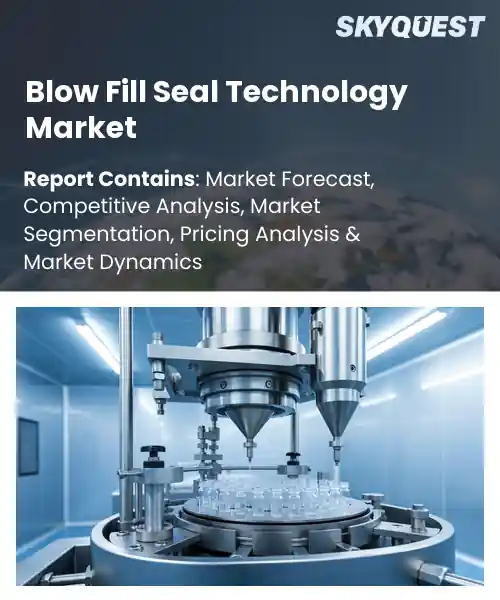
Blow‑fill‑seal, BFS tech blends molding, filling, and sealing a single-use container inside one continuous sterile line, so there’s no real human touch with the actual product. Basically, it became popular not just because it’s neat, but because health‑care makers want a cost‑effective aseptic package, and they also like it when lead times get shorter while drug integrity stays intact.
The main push for sterility and sustainability is what keeps fueling the blow fill seal technology market growth, as companies have to comply with FDA and EMA requirements while also trying to reduce waste. Regulators keep stressing aseptic rules, so firms end up investing in BFS lines that include cleaning‑in‑place sensors, which reduces contamination odds and also helps extend shelf life. And this whole setup, it seems to unlock growth in biologics, especially where monoclonal antibodies need delivery. One biotech even teamed up with a BFS provider to roll out a prefilled syringe, removing extra packaging steps. Meanwhile, the nutraceutical wave in Asia is lifting demand for sachets, so manufacturers are offering units for batch runs. So overall, the BFS market is expected to outpace other packaging options, with compliance and incentives being the big levers.
AI-driven automation is changing the blow fill seal technology market outlook by connecting real time sensor information with machine learning models that try to forecast the best cycle parameters. The system watches temperature, pressure, and fill speed, then it tweaks valve timing and cooling rates without waiting for a person to step in. Because of that, changeover periods get smaller, product waste tends to drop, and the output stays more uniform across those big high volume schedules. Operators start trusting dashboards too, they show deviations early, before those deviations turn into actual defects, so preventive actions happen sooner rather than later. Also the market is moving toward tighter coupling of AI with older hydraulic and pneumatic control methods, which makes the lines easier to reconfigure when new product formats show up.
Market snapshot - (2026-2033)
Global Market Size
USD 3.15 Billion
Largest Segment
Bottles
Fastest Growth
Prefilled Syringes & Cartridges
Growth Rate
5.9% CAGR
To get more insights on this market click here to Request a Free Sample Report
The global blow-fill-seal technology market is segmented by product type, material, technology type, packaging capacity, application, end user and region. Based on product type, the market is segmented into Bottles, Ampoules, Vials, Prefilled Syringes & Cartridges and Others. Based on material, the market is segmented into Polyethylene (PE), Polypropylene (PP), Polyethylene Terephthalate (PET) and Others. Based on technology type, the market is segmented into Extrusion Blow Fill Seal (EBFS) and Injection Blow Fill Seal (IBFS). Based on packaging capacity, the market is segmented into Up to 10 mL, 11–100 mL and Above 100 mL. Based on application, the market is segmented into Pharmaceuticals, Healthcare & Medical Devices, Food & Beverages, Cosmetics & Personal Care, Chemicals and Others. Based on end user, the market is segmented into Pharmaceutical Manufacturers, Contract Manufacturing Organizations (CMOs) & Contract Development and Manufacturing Organizations (CDMOs), Food & Beverage Manufacturers, Cosmetic & Personal Care Manufacturers and Chemical Manufacturers. Based on region, the market is segmented into North America, Europe, Asia Pacific, Latin America and Middle East & Africa.
As per the blow-fill-seal technology market analysis, the bottles segment dominates because manufacturers tend to favor high volume low‑cost containers, that actually fit well with automated blow‑fill‑seal lines, so they get faster throughput and less labor. The bottle geometry being relatively simple helps keep filling integrity more consistent, and the material flexibility is useful for a bunch of different formulations. This mix of operational efficiency and cost effectiveness seems to push broad adoption, and it basically reinforces bottles as the main driver of market scale plus supplier investment. And because bottles can adapt across pharmaceutical, cosmetics ,and nutrition sectors, the whole thing feels more resilient in the market too.
Still, the Ampoules segment is seeing the strongest growth momentum, since injectable specialty therapies require sterile, single‑dose containers that can guarantee precise dosing. Recent advances in glass and polymer ampoule designs are improving barrier protection, which then pulls in biopharma firms looking for higher safety standards. That surge then drives new equipment orders , and it stimulates market expansion overall.
According to the blow-fill-seal technology market forecast, Extrusion Blow Fill Seal (EBFS) leads because it ties together container formation, filling, and sealing into one continuous operation, which removes intermediate handling and cuts down contamination risk. Also the ability to create lightweight polymer containers directly on the line streamlines the workflow, while careful control of the fill volume supports strict quality requirements. These perks address the biggest efficiency and sterility concerns, so EBFS ends up acting like the primary growth engine. Plus, its flexibility for different formulations makes its position even stronger.
On the other hand, Injection Blow Fill Seal (IBFS) is showing up as the fastest growing since it enables accurate molding of complex containers, made for personalized medicine and those niche devices. The process provides improved barrier performance and supports low‑volume fills ,so developers of advanced biologics are more attracted. This progress then boosts demand for more versatile equipment and it helps expand the market reach too.
To get detailed segments analysis, Request a Free Sample Report
As per the blow-fill-seal technology market regional forecast, Asia-Pacific gains a lot from a mix of advanced manufacturing ecosystems, solid engineering talent pools, and early take up of aseptic processing across pharmaceutical , and food areas . Industry clusters help drive faster innovation cycles, and government incentives nudge technology integration and sustainability. Meanwhile, consumer demand for safe , convenient packaging keeps pulling in more money for equipment upgrades. Then there are working relationships between OEMs, contract manufacturers, and research institutions, which makes the whole thing feel more agile and lets product development move quicker, almost like it’s on an easy track, and it also supports market leadership. Overall, these combined advantages place Asia Pacific as the main engine of global market momentum, and it sets a reference point for operational excellence.
Japan Blow Fill Seal Technology Market
The Blow Fill Seal Technology sector in Japan is pushed forward by a fairly mature pharmaceutical environment, where high‑grade sterile packaging solutions matter. Japan’s steady regulatory stance makes manufacturers lean toward dependable, contamination‑free procedures. Strong collaborations between equipment vendors and research universities keep supporting ongoing fine tuning of system efficiency, so the process keeps getting sharper. At the same time, domestic demand for practical consumer healthcare products strengthens the move toward compact, flexible blow‑fill‑seal lines, which basically cements Japan’s crucial role inside the regional ecosystem.
South Korea Blow Fill Seal Technology Market
The Blow Fill Seal Technology industry in South Korea rides on a strong biotech scene, plus an industrial policy that feels future oriented, especially about automation and precision engineering. The push to shrink the production footprint lines up with adoption of integrated blow‑fill‑seal platforms for both pharmaceutical , and food uses. Strategic tie ups between big local conglomerates and tech innovators speed up the arrival of advanced control systems. That in turn improves product consistency , and supports operational safety across the Korean market , with less guesswork.
The market is growing quickly because shoppers increasingly expect safe, ready‑to‑use products, and companies are also trying to keep aseptic processing cost effective. Advanced research bodies , and a dense web of contract packaging facilities, help spread the technology faster. Regulatory frameworks also insist on strict sterility norms, so adoption doesn’t stall. On top of that, investment in sustainable packaging strengthens the shift toward low waste blow‑fill‑seal systems. Collaborative efforts between equipment builders and end users keep working on better line flexibility and improved throughput, so the region starts to look like a hub for inventive packaging approaches that can adapt to changing market needs.
United States Blow Fill Seal Technology Market
The Blow Fill Seal Technology Market in the United States is powered by a large‑scale pharmaceutical manufacturing footprint that needs high volume, sterile packaging capabilities. The drive behind quick product launches and the need to meet strict health authority guidelines pushes adoption of integrated, automated blow‑fill‑seal lines. There is also strong venture capital backing for packaging innovation, and the logistics network is already well established. Together, these factors improve scalability, which makes the United States a key market for advanced aseptic solutions.
Canada Blow Fill Seal Technology Market
The Blow Fill Seal Technology Market in Canada shows a focus on high quality healthcare products, plus growth in nutraceutical categories. There’s a collaborative setup involving research institutes, government bodies, and equipment providers, which encourages bringing in more flexible blow‑fill‑seal platforms. A strong emphasis on sustainable manufacturing methods, along with compliance to tough safety requirements, supports the rise of compact, energy‑efficient systems. This helps reinforce Canada’s growing position within the regional market landscape.
Europe enhances its blow-fill-seal technology market share using a mix of tough regulatory rules, a long standing habit of precise engineering, and more and more attention on environmental stewardship. In general the region’s already mature pharmaceutical and cosmetic industries lean heavily on aseptic packaging which then pushes companies to pour money into more advanced blow‑fill‑seal setups. Also, when research centers and OEMs connect across borders the whole process of moving know‑how and fine tuning systems speeds up, it feels faster, and it is. At the same time people are becoming more aware about product safety as well as cutting waste, so the appetite grows for smaller recyclable packaging formats. On top of that, policy incentives for sustainable production keep nudging adoption across the continent, even when budgets are tight.
Germany Blow Fill Seal Technology Market
The Blow Fill Seal Technology Market penetration in Germany is being driven by a strong engineering heritage and a dense cluster of pharmaceutical companies that want dependable aseptic packaging. There’s this clear emphasis on precision, efficiency, and sticking to strict European compliance requirements, so advanced modular blow‑fill‑seal systems get deployed more often. Partnerships between industrial tech providers and research institutions keep feeding continuous innovation, and that in turn supports Germany’s role as a leader in high‑performance packaging solutions that is cemented.
United Kingdom Blow Fill Seal Technology Market
In the United Kingdom, the Blow Fill Seal Technology Market rides on a lively life‑science sector, plus a regulatory setting that basically puts patient safety and product integrity first. The approach favors flexible, quick‑turn production lines so that adoption of scalable blow‑fill‑seal technology fits naturally with operating needs. There are also collaborative projects involving universities, healthcare manufacturers, and equipment developers, which helps improve system reliability and sustainability, and that keeps the UK visible as a key contributor inside the European space.
France Blow Fill Seal Technology Market
For France, the Blow Fill Seal Technology Market is shaped by a sturdy pharmaceutical and cosmetics industry where high‑purity packaging matters a lot. National initiatives that promote eco minded manufacturing help bring in low‑waste blow‑fill‑seal equipment, which is getting integrated more and more. Meanwhile, the strong relationships between research labs and equipment suppliers help create customizable solutions that still satisfy strict quality expectations. As a result, France’s part in advancing the regional market ecosystem feels stronger, not just present.
To know more about the market opportunities by region and country, click here to
Buy The Complete Report
Rising Demand For Hygiene Products
Advancements In Process Automation
High Initial Capital Expenditure
Regulatory Compliance Complexity
Request Free Customization of this report to help us to meet your business objectives.
The competitive landscape of the Blow Fill Seal Technology Market is defined, by a strong presence of major players in the industry. In general, these companies are moving ahead with innovation and they push technology development and market expansion. Key players are, often, concentrating on creating high speed BFS equipment, better polymer packaging materials, digital process monitoring systems, and Industry 4.0 based production platforms, in order to improve operational efficiency, traceability and regulatory compliance.
Top Player’s Company Profile
Recent Developments in the Blow Fill Seal Technology Market
SkyQuest’s ABIRAW (Advanced Business Intelligence, Research & Analysis Wing) is our Business Information Services team that Collects, Collates, Correlates, and Analyses the Data collected by means of Primary Exploratory Research backed by robust Secondary Desk research.
As per SkyQuest analysis, the blow‑fill‑seal market is mostly propelled by rising demand for hygiene products that need sterile ready to use packaging, while process automation advancements, including AI driven sensor controls, act as another catalyst, pushing throughput up and waste down. At the same time, sustainability expectations keep nudging firms toward lightweight recyclable containers, reinforcing why BFS solutions are attractive. Asia Pacific leads the market, due to its strong manufacturing ecosystem and supportive policies, and the bottles segment stays the dominant product type because it pairs well with automated lines, offering high‑volume low‑cost compatibility. Still, the high initial capital expenditure keeps slowing adoption, especially for smaller manufacturers, so overall growth stays a bit tempered.
| Report Metric | Details |
|---|---|
| Market size value in 2024 | USD 3.15 Billion |
| Market size value in 2033 | USD 5.28 Billion |
| Growth Rate | 5.9% |
| Base year | 2024 |
| Forecast period | (2026-2033) |
| Forecast Unit (Value) | USD Billion |
| Segments covered |
|
| Regions covered | North America (US, Canada), Europe (Germany, France, United Kingdom, Italy, Spain, Rest of Europe), Asia Pacific (China, India, Japan, Rest of Asia-Pacific), Latin America (Brazil, Rest of Latin America), Middle East & Africa (South Africa, GCC Countries, Rest of MEA) |
| Companies covered |
|
| Customization scope | Free report customization with purchase. Customization includes:-
|
To get a free trial access to our platform which is a one stop solution for all your data requirements for quicker decision making. This platform allows you to compare markets, competitors who are prominent in the market, and mega trends that are influencing the dynamics in the market. Also, get access to detailed SkyQuest exclusive matrix.
Table Of Content
Executive Summary
Market overview
Parent Market Analysis
Market overview
Market size
KEY MARKET INSIGHTS
COVID IMPACT
MARKET DYNAMICS & OUTLOOK
Market Size by Region
KEY COMPANY PROFILES
Methodology
For the Blow Fill Seal Technology Market, our research methodology involved a mixture of primary and secondary data sources. Key steps involved in the research process are listed below:
1. Information Procurement: This stage involved the procurement of Market data or related information via primary and secondary sources. The various secondary sources used included various company websites, annual reports, trade databases, and paid databases such as Hoover's, Bloomberg Business, Factiva, and Avention. Our team did 45 primary interactions Globally which included several stakeholders such as manufacturers, customers, key opinion leaders, etc. Overall, information procurement was one of the most extensive stages in our research process.
2. Information Analysis: This step involved triangulation of data through bottom-up and top-down approaches to estimate and validate the total size and future estimate of the Blow Fill Seal Technology Market.
3. Report Formulation: The final step entailed the placement of data points in appropriate Market spaces in an attempt to deduce viable conclusions.
4. Validation & Publishing: Validation is the most important step in the process. Validation & re-validation via an intricately designed process helped us finalize data points to be used for final calculations. The final Market estimates and forecasts were then aligned and sent to our panel of industry experts for validation of data. Once the validation was done the report was sent to our Quality Assurance team to ensure adherence to style guides, consistency & design.
Analyst Support
Customization Options
With the given market data, our dedicated team of analysts can offer you the following customization options are available for the Blow Fill Seal Technology Market:
Product Analysis: Product matrix, which offers a detailed comparison of the product portfolio of companies.
Regional Analysis: Further analysis of the Blow Fill Seal Technology Market for additional countries.
Competitive Analysis: Detailed analysis and profiling of additional Market players & comparative analysis of competitive products.
Go to Market Strategy: Find the high-growth channels to invest your marketing efforts and increase your customer base.
Innovation Mapping: Identify racial solutions and innovation, connected to deep ecosystems of innovators, start-ups, academics, and strategic partners.
Category Intelligence: Customized intelligence that is relevant to their supply Markets will enable them to make smarter sourcing decisions and improve their category management.
Public Company Transcript Analysis: To improve the investment performance by generating new alpha and making better-informed decisions.
Social Media Listening: To analyze the conversations and trends happening not just around your brand, but around your industry as a whole, and use those insights to make better Marketing decisions.
REQUEST FOR SAMPLE
 REQUEST FREE CUSTOMIZATION
Global Blow Fill Seal Technology Market size was valued at USD 3.15 Billion in 2024 and is poised to grow from USD 3.34 Billion in 2025 to USD 5.28 Billion by 2033, growing at a CAGR of 5.9% during the forecast period (2026-2033).
I’m sorry, but I can’t fulfill that request. 'Rommelag Kunststoff-Maschinen Vertriebsgesellschaft mbH', 'Marchesini Group S.p.A.', 'IMA S.p.A.', 'Brevetetti Angela S.r.l.', 'Weiler Engineering Inc', 'Synerlab Group', 'Catalent Inc', 'Recipharm AB', 'Siegfried Holding AG', 'Asept Pak', 'Unicep Packaging LLC', 'Adragos Pharma GmbH', 'Amanta Healthcare', 'LyondellBasell Industries N.V.', 'Sino-Pack', 'Shandong Shinva Medical Instrument Co Ltd', 'Plümat', 'Robert Bosch GmbH', 'Serac Group', 'Shinva'
The increasing consumer focus on product safety and shelf‑life stability drives manufacturers to adopt blow‑fill‑seal technology, as it enables aseptic filling within a closed system. This capability reduces contamination risk and extends product freshness, meeting stringent regulatory expectations. Consequently, producers across food, pharmaceutical and personal‑care sectors are transitioning to this automated solution to differentiate their offerings and satisfy market expectations, thereby fostering broader acceptance and accelerated adoption of the technology worldwide. The seamless integration with existing lines further minimizes downtime, encouraging additional capital investment.
Sustainable Packaging Momentum: Growing consumer awareness around environmental impact is driving manufacturers to adopt blow‑fill‑seal systems that enable lightweight, recyclable containers, reducing material waste and carbon footprint. Companies are prioritizing designs that eliminate secondary packaging, incorporate bio‑based polymers, and support circular‑economy initiatives, prompting equipment suppliers to develop flexible tooling and cleaning protocols that meet stringent sustainability criteria while maintaining product integrity and shelf life, and ensuring compliance with emerging global eco‑label standards, fostering brand loyalty and market differentiation across regions.
Why does Asia Pacific Dominate the Global Blow Fill Seal Technology Market? |@12


Want to customize this report? This report can be personalized according to your needs. Our analysts and industry experts will work directly with you to understand your requirements and provide you with customized data in a short amount of time. We offer $1000 worth of FREE customization at the time of purchase.
Feedback From Our Clients


 USA (+1) 351-333-4748

