Black Mass Recycling Market
Report ID: SQMIG20I2787
Report ID: SQMIG20I2787
[email protected]
USA +1 351-333-4748
Report ID:
SQMIG20I2787 |
Region:
Global |
Published Date: April, 2026
Pages:
157
|Tables:
118
|Figures:
77


Global Black Mass Recycling Market size was valued at USD 12.42 Billion in 2024 and is poised to grow from USD 15.2 Billion in 2025 to USD 12.6 Billion by 2033, growing at a CAGR of 22.4% during the forecast period (2026-2033).
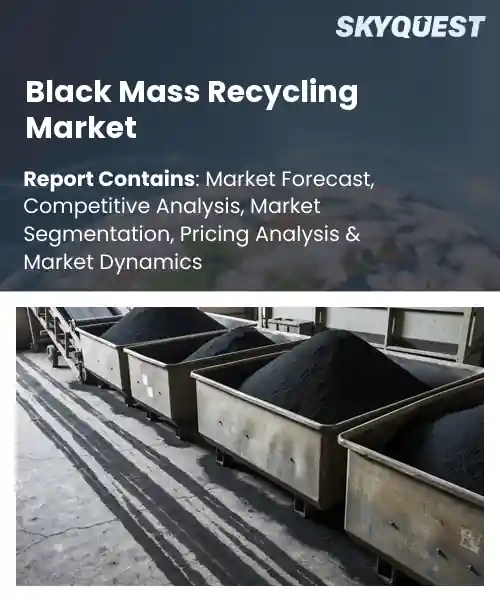
The primary driver of the black mass recycling market is the rapid electrification of mobility and resulting surge in demand for battery materials, coupled with geopolitical pressures that make recovery attractive. Black mass refers to mixed powder produced by processing spent lithium-ion batteries that contains valuable metals such as lithium, cobalt, nickel and manganese. This market matters because recycling reduces dependency on mined inputs, lowers embodied emissions and secures supply chains for automakers and electronics manufacturers. Historically the sector evolved from inefficient pyrometallurgical smelting toward hydrometallurgical and direct recycling techniques, exemplified by firms like Umicore, Redwood Materials and Li-Cycle.Building on technological advances, recovery methods determine how quickly the black mass recycling market scales because improved extraction yields and lower processing costs convert spent batteries into viable cost-competitive feedstock. When hydrometallurgical and direct recycling routes exceed 90 percent metal recovery, recyclers can produce battery-grade materials at margins that convince OEMs to secure contracts and adopt closed-loop sourcing. Real-world pilots from Li-Cycle and Redwood Materials show learning curves reducing unit costs as volumes grow, while direct cathode regeneration avoids intensive refining. Consequently higher efficiency depresses demand for newly mined ore and prompts stronger policy and industry support and private investment.
How can AI optimize black mass recycling processes for lithium-ion battery recovery?
Black mass recycling recovers the mixed powder left after shredding lithium ion cells and then separates valuable metals for reuse. AI can streamline this flow by classifying feedstock with computer vision, tuning hydrometallurgical steps through predictive models, and forecasting equipment issues to avoid unplanned downtime. The market is shifting to larger commercial plants and closer recycling to cell manufacturing as demand for battery materials grows. Practical instances include AI enabled sensor sorting and digital twin simulations that let operators test process changes virtually and ramp new facilities with fewer delays and lower operational risk.BASF June 2025, the company opened a commercial black mass plant and such scale benefits from AI because machine learning can adjust processing recipes in real time, reduce maintenance interruptions, and improve recovered material quality, which supports faster commercialization and stronger circular supply chains.
Market snapshot - (2026-2033)
Global Market Size
USD 12.42 Billion
Largest Segment
Lithium-Ion (NMC - Nickel Manganese Cobalt)
Fastest Growth
Lithium-Ion (LFP - Iron Phosphate)
Growth Rate
22.4% CAGR
To get more insights on this market click here to Request a Free Sample Report
Global black mass recycling market is segmented by battery chemistry source, material extraction focus, recycling methodology, end-use vertical and region. Based on battery chemistry source, the market is segmented into Lithium-Ion (LFP - Iron Phosphate), Lithium-Ion (NMC - Nickel Manganese Cobalt) and Lithium-Ion (NCA). Based on material extraction focus, the market is segmented into Lithium Carbonate/Hydroxide Recovery, Cobalt & Nickel Sulfate Extraction, Graphite & Manganese Recovery and Copper & Aluminum Foil Separation. Based on recycling methodology, the market is segmented into Hydrometallurgical Processing (High Purity), Pyrometallurgical Processing (Smelting) and Direct Recycling/Physical Separation. Based on end-use vertical, the market is segmented into Battery Gigafactories (Closed-loop), Consumer Electronics Manufacturing and Energy Storage Systems (ESS). Based on region, the market is segmented into North America, Europe, Asia Pacific, Latin America and Middle East & Africa.
Lithium-Ion (NMC - Nickel Manganese Cobalt) segment dominates because recyclers prioritize recovery of high-value nickel and cobalt, which drive economics and investment choices across the value chain. The chemistry lends itself to established hydrometallurgical flows and direct cathode recovery approaches, attracting OEM partnerships and structured collection programs. Demand for remanufactured precursors and premium pricing for NMC-derived materials concentrates processing capacity and spurs technology development focused on NMC feedstocks.
However, Lithium-Ion (LFP - Iron Phosphate) is the most rapidly expanding area due to growing adoption in cost-sensitive applications and simpler chemistry that reduces processing barriers. Advances in lithium and graphite recovery, alongside policy support for low critical material chemistries, make scalable recycling economically viable and catalyze new infrastructure investments.
Direct Recycling/Physical Separation segment leads because it preserves cathode active material structure and composition, enabling relithiation and reuse with minimal chemical conversion. That retention of intrinsic material value reduces energy and reagent intensity relative to more destructive routes, shortens timelines for reintegration into manufacturing, and encourages collaboration with battery producers seeking closed-loop feedstocks while driving investment in sorting and binder removal technologies.
Meanwhile, Hydrometallurgical Processing (High Purity) is witnessing the strongest growth momentum because it delivers battery-grade lithium, cobalt and nickel outputs that meet cathode manufacturing needs. Advances in selective leaching and solvent extraction improve product purity, regulatory emphasis on recovery quality supports adoption, and industrial investment accelerates capacity scaling and downstream integration.
To get detailed segments analysis, Request a Free Sample Report
Asia Pacific commands a leading position due to a convergence of manufacturing scale, integrated supply chains, and concentrated end of life battery flows that create a steady feedstock for black mass recovery. Strong industrial ecosystems support close collaboration between battery producers and recycling specialists, enabling rapid implementation of advanced separation and hydrometallurgical techniques. Policy frameworks and corporate commitments to resource circularity further incentivize investment in collection networks and pilot facilities. Market actors benefit from proximity to battery cell production clusters and established logistics for used batteries, which reduce transport complexity and cost. Technology adoption is accelerated by local engineering talent and a high rate of deployment of electrified transport and energy storage, creating consistent volumes and a virtuous cycle of investment, innovation, and scale that underpin regional dominance.
Black Mass Recycling Market in Japan benefits from a mature industrial research base and close alignment between battery manufacturers, recyclers, and government agencies. Specialized technical capabilities support sophisticated processing methods and material recovery pathways tailored to local chemistry mixes. Collection programs and reverse logistics are coordinated with automotive and electronics sectors to streamline feedstock availability. Emphasis on product stewardship and resource security motivates long term strategies that favor local recycling capacity and technology refinement over simple export of end of life materials.
Black Mass Recycling Market in South Korea is shaped by strong integration with domestic battery and electronics manufacturing clusters and a focus on advanced process development. Industrial scale advantages and collaboration across supply chain tiers enable efficient conversion of end of life batteries into high value intermediate streams. Corporate strategies emphasize closed loop material management and vertical integration that link cell production with recycling capabilities. Active engagement between industry, research institutions, and logistics providers supports pilot deployments and incremental scaling of sophisticated chemical and mechanical recovery technologies.
Europe is expanding rapidly due to a combination of regulatory momentum toward circular economy principles, proactive extended producer responsibility models, and rising industrial interest in securing secondary raw materials. Policymakers and industry stakeholders are aligning incentives to improve collection rates and to standardize feedstock quality, enabling more predictable processing and higher recovery yields. Investment focus on localized recycling capacity is supported by cross border collaboration among recyclers, automotive OEMs, and material processors, which accelerates technology transfer and market formation. Urban mining initiatives and public procurement priorities create demand signals for domestically recovered materials, while research clusters provide continuous innovation in hydrometallurgy and direct recycling approaches that enhance economic viability and environmental credentials across the region.
Black Mass Recycling Market in Germany is anchored by advanced engineering capabilities and close ties between automotive manufacturers and recycling technology providers. Industrial scale operations and a regulatory environment that favors circularity support systematic collection and processing programs. Emphasis on quality control and integration with manufacturing supply chains enables recovered intermediates to reenter production streams with confidence. Collaboration between research centers and industry facilitates continuous process improvement and positions Germany as a center for demonstration projects and technology validation within the regional ecosystem.
Black Mass Recycling Market in United Kingdom is emerging through targeted investments in pilot facilities and partnerships that link recyclers with vehicle manufacturers and battery developers. Policy initiatives and industry commitments are fostering improved collection networks and experimentation with diverse recycling techniques. The market is characterized by agile innovation, a focus on commercializing niche processing routes, and a willingness to form consortiums that address feedstock variability. This dynamic environment supports early stage capacity building and positions the market for broader integration with European supply chains.
Black Mass Recycling Market in France is experiencing rapid growth driven by coordinated efforts between public authorities, industrial players, and research institutions to scale recycling capacity and close material loops. National strategies emphasize recovery of strategic materials and support development of advanced hydrometallurgical and mechanical solutions optimized for regional feedstocks. Strong domestic automotive and energy storage ecosystems provide reliable streams of end of life batteries, while collaborative pilot projects and industrial partnerships accelerate commercialization of efficient recycling routes and downstream integration with local manufacturing.
North America is strengthening its position through a mix of strategic investments, partnerships between OEMs and recyclers, and the establishment of regional processing hubs that reduce reliance on distant recovery facilities. Industry emphasis on supply chain resilience and domestic sourcing of critical battery materials has stimulated capital deployment into collection networks and modern recycling technologies. Cross sector collaboration among automotive, electronics, and waste management players supports a pragmatic approach to feedstock aggregation and quality control. Research and demonstration initiatives focus on scalable, environmentally sound processes that align with corporate sustainability goals, while logistical optimization and policy signals are encouraging consolidation of capacity and vertical integration to capture more value within regional markets.
Black Mass Recycling Market in United States is evolving through strategic alliances among recyclers, OEMs, and technology developers that aim to establish domestic processing capacity and shorten recovery supply chains. Focus areas include development of robust collection infrastructure, pilot scale demonstrations, and integration of recovered intermediates into local manufacturing networks. Investment appetite is guided by goals of resource security and corporate sustainability, driving deployments of both mechanical and chemical recovery approaches suited to varied battery chemistries common in regional streams.
Black Mass Recycling Market in Canada leverages strengths in raw material supply chains and a collaborative research environment to build specialized recycling capabilities that complement broader North American efforts. Emphasis on environmentally responsible processing and partnerships with industrial stakeholders supports the development of regional hubs for battery collection and intermediate processing. Policy frameworks and alignment with domestic resource strategies encourage pilot projects and cross border cooperation that enhance feedstock movement and foster integrated recovery solutions.
To know more about the market opportunities by region and country, click here to
Buy The Complete Report
Rising Demand For Electric Vehicles
Stringent Environmental Regulations Globally
High Operational And Capital Costs
Feedstock Quality And Variability
Request Free Customization of this report to help us to meet your business objectives.
Competitive landscape in the global black mass recycling market is shaped by incumbent recyclers and deep-tech entrants competing for feedstock and downstream supply contracts, driven by rising EV retirements and procurement rules. Companies pursue M&A, SPAC listings, and strategic partnerships, for example Li-Cycle’s preferred recycling arrangements, Redwood Materials processing manufacturer scrap, and startups deploying direct recycling technologies to secure supplier agreements.
Top Player’s Company Profile
Recent Developments
SkyQuest’s ABIRAW (Advanced Business Intelligence, Research & Analysis Wing) is our Business Information Services team that Collects, Collates, Correlates, and Analyses the Data collected by means of Primary Exploratory Research backed by robust Secondary Desk research. As per SkyQuest analysis, the global black mass recycling market is poised for rapid growth driven by rising EV adoption and demand for battery materials. One key driver is the electrification of mobility that creates predictable end of life battery flows and demand for recovered metals. One restraint is the high operational and capital costs required for advanced recovery plants, which can slow capacity expansion. Dominating region is Asia Pacific due to concentrated battery manufacturing and established logistics. Dominating segment is Lithium-Ion NMC (nickel manganese cobalt) where high-value metals drive economics. Second driver is tightening environmental regulations and producer responsibility that encourage recycling investment and closed-loop sourcing.
| Report Metric | Details |
|---|---|
| Market size value in 2024 | USD 12.42 Billion |
| Market size value in 2033 | USD 12.6 Billion |
| Growth Rate | 22.4% |
| Base year | 2024 |
| Forecast period | (2026-2033) |
| Forecast Unit (Value) | USD Billion |
| Segments covered |
|
| Regions covered | North America (US, Canada), Europe (Germany, France, United Kingdom, Italy, Spain, Rest of Europe), Asia Pacific (China, India, Japan, Rest of Asia-Pacific), Latin America (Brazil, Rest of Latin America), Middle East & Africa (South Africa, GCC Countries, Rest of MEA) |
| Companies covered |
|
| Customization scope | Free report customization with purchase. Customization includes:-
|
To get a free trial access to our platform which is a one stop solution for all your data requirements for quicker decision making. This platform allows you to compare markets, competitors who are prominent in the market, and mega trends that are influencing the dynamics in the market. Also, get access to detailed SkyQuest exclusive matrix.
Table Of Content
Executive Summary
Market overview
Parent Market Analysis
Market overview
Market size
KEY MARKET INSIGHTS
COVID IMPACT
MARKET DYNAMICS & OUTLOOK
Market Size by Region
KEY COMPANY PROFILES
Methodology
For the Black Mass Recycling Market, our research methodology involved a mixture of primary and secondary data sources. Key steps involved in the research process are listed below:
1. Information Procurement: This stage involved the procurement of Market data or related information via primary and secondary sources. The various secondary sources used included various company websites, annual reports, trade databases, and paid databases such as Hoover's, Bloomberg Business, Factiva, and Avention. Our team did 45 primary interactions Globally which included several stakeholders such as manufacturers, customers, key opinion leaders, etc. Overall, information procurement was one of the most extensive stages in our research process.
2. Information Analysis: This step involved triangulation of data through bottom-up and top-down approaches to estimate and validate the total size and future estimate of the Black Mass Recycling Market.
3. Report Formulation: The final step entailed the placement of data points in appropriate Market spaces in an attempt to deduce viable conclusions.
4. Validation & Publishing: Validation is the most important step in the process. Validation & re-validation via an intricately designed process helped us finalize data points to be used for final calculations. The final Market estimates and forecasts were then aligned and sent to our panel of industry experts for validation of data. Once the validation was done the report was sent to our Quality Assurance team to ensure adherence to style guides, consistency & design.
Analyst Support
Customization Options
With the given market data, our dedicated team of analysts can offer you the following customization options are available for the Black Mass Recycling Market:
Product Analysis: Product matrix, which offers a detailed comparison of the product portfolio of companies.
Regional Analysis: Further analysis of the Black Mass Recycling Market for additional countries.
Competitive Analysis: Detailed analysis and profiling of additional Market players & comparative analysis of competitive products.
Go to Market Strategy: Find the high-growth channels to invest your marketing efforts and increase your customer base.
Innovation Mapping: Identify racial solutions and innovation, connected to deep ecosystems of innovators, start-ups, academics, and strategic partners.
Category Intelligence: Customized intelligence that is relevant to their supply Markets will enable them to make smarter sourcing decisions and improve their category management.
Public Company Transcript Analysis: To improve the investment performance by generating new alpha and making better-informed decisions.
Social Media Listening: To analyze the conversations and trends happening not just around your brand, but around your industry as a whole, and use those insights to make better Marketing decisions.
REQUEST FOR SAMPLE
 REQUEST FREE CUSTOMIZATION


Want to customize this report? This report can be personalized according to your needs. Our analysts and industry experts will work directly with you to understand your requirements and provide you with customized data in a short amount of time. We offer $1000 worth of FREE customization at the time of purchase.
Feedback From Our Clients


 USA (+1) 351-333-4748

