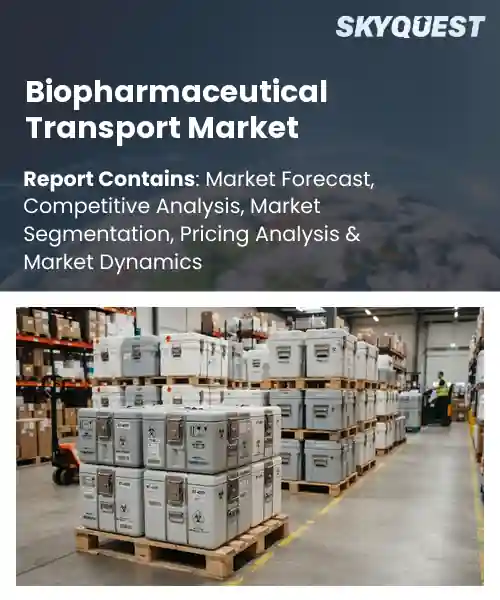
Biopharmaceutical Transport Market
Report ID: SQMIG20R2118
Report ID: SQMIG20R2118
[email protected]
USA +1 351-333-4748
Report ID:
SQMIG20R2118 |
Region:
Global |
Published Date: September, 2026
Pages:
157
|Tables:
157
|Figures:
78


Global Biopharmaceutical Transport Market size was valued at USD 10.92 Billion in 2024 and is poised to grow from USD 11.56 Billion in 2025 to USD 18.3 Billion by 2033, growing at a CAGR of 5.9% during the forecast period (2026-2033).
The primary driver of the biopharmaceutical transport market is the rising demand for temperature‑controlled logistics that preserve biologic integrity from manufacturing to point‑of‑care. As therapies such as monoclonal antibodies, gene‑editing vectors and mRNA vaccines expand, the supply chain must maintain strict temperature envelopes, often between 80 °C and +2 °C, to retain efficacy. Historically, the market moved from refrigerated trucks serving a few specialty pharmacies in the early 2000s to a sophisticated network of cryogenic containers, real‑time tracking and cross‑border cold‑chain hubs. This shift mirrors regulatory pressure and the growing economic value of biologics, now comprising over 30 % of new drug approvals. The expansion of manufacturing paired with cold‑chain visibility drives the market by forcing logistics providers to upgrade solutions. When cell‑and‑gene therapy centers produce patient‑specific doses on site, any temperature breach can nullify a treatment, so firms deploy modular ultra‑cold freezers and IoT‑enabled containers that fire instant alerts to compliance teams. This reliability creates a revenue opportunity; a leading carrier recently added blockchain tracking to certify vial integrity for a European CAR‑T trial, gaining fees. As a result, capital flows toward smart refrigeration and regional hubs, propelling a projected CAGR above 12 % through 2035 in the global supply chain for patients.
How is AI-driven automation reshaping cold-chain logistics in the biopharmaceutical transport market?
AI-driven automation is transforming cold‑chain logistics for biopharmaceuticals by integrating real‑time temperature monitoring, predictive routing, and autonomous handling. Sensors linked to cloud platforms continuously track temperature, humidity, and location, allowing operators to intervene before a breach occurs. Machine‑learning models analyze historical shipment data to forecast delays caused by traffic, weather, or equipment failure, enabling dynamic rerouting that preserves product integrity. Robotics and automated guided vehicles streamline loading and unloading at warehouses, reducing human error and speeding turnaround times. These technologies together create a more resilient supply chain, lower waste, and increase confidence among manufacturers and regulators that sensitive therapies reach patients safely.In June 2024, DHL Supply Chain launched an AI‑powered cold‑chain platform that automates temperature control and route optimization, demonstrating how such innovation boosts efficiency and supports market growth.
Market snapshot - (2026-2033)
Global Market Size
USD 10.92 Billion
Largest Segment
Cold Chain Transport
Fastest Growth
Cryogenic Transport
Growth Rate
5.9% CAGR
To get more insights on this market click here to Request a Free Sample Report
Global biopharmaceutical transport market is segmented by transport type, packaging type, temperature range, product type, end-use industry and region. Based on transport type, the market is segmented into Cold Chain Transport, Ambient Transport, Cryogenic Transport, Frozen Transport and Others. Based on packaging type, the market is segmented into Insulated Shippers, Refrigerated Containers, Cryogenic Containers, Passive Packaging, Active Packaging and Others. Based on temperature range, the market is segmented into Controlled Room Temperature, 2°C to 8°C, -20°C to -80°C, Below -80°C and Others. Based on product type, the market is segmented into Vaccines, Monoclonal Antibodies, Cell and Gene Therapies, Recombinant Proteins, Blood Products and Others. Based on end-use industry, the market is segmented into Pharmaceutical Companies, Biotechnology Companies, Contract Manufacturing Organizations, Hospitals and Healthcare Providers, Research Institutions and Others. Based on region, the market is segmented into North America, Europe, Asia Pacific, Latin America and Middle East & Africa.
Cold chain transport segment dominates because it ensures the rigorous temperature control required for sensitive biologics, preserving product integrity from manufacturer to point of care. The reliance on precise thermal envelopes, coupled with heightened regulatory scrutiny, drives widespread adoption across vaccine and monoclonal antibody shipments. Its proven reliability and established infrastructure reinforce its leadership in the biopharmaceutical transport market. Moreover, stakeholders prioritize risk mitigation, making cold chain solutions indispensable for compliance and market confidence.
Meanwhile, cryogenic transport emerges as the fastest growing area as the pipeline of advanced cell therapies requiring ultra low temperatures expands. Innovative vapor phase shippers and improved handling protocols lower barriers, attracting biotech firms seeking to preserve viability. This momentum fuels new service models and accelerates overall market expansion.
Insulated shippers segment leads because they combine lightweight construction with reliable passive temperature control, meeting the stringent storage requirements of most vaccines during short haul transport. Their ease of use, low cost, and compatibility with existing cold chain assets drive broad adoption across manufacturers and logistics providers. The proven performance under varied conditions reinforces confidence, making insulated shippers the preferred choice for routine vaccine shipments. Additionally, they simplify regulatory compliance by providing validated temperature histories.
Conversely, active packaging is witnessing the strongest growth momentum as smart temperature monitoring and real time data logging become integral to high value biologics transport. The integration of sensors and IoT connectivity addresses traceability demands, encouraging pharmaceutical innovators to adopt these solutions. This surge fuels new technology investments and expands market opportunities across emerging therapy modalities.
To get detailed segments analysis, Request a Free Sample Report
North America leads the biopharmaceutical transport market through a confluence of advanced logistical infrastructure, stringent regulatory frameworks, and deep integration between pharmaceutical innovators and specialized carriers. The region benefits from a mature cold‑chain ecosystem supported by sophisticated temperature‑controlled facilities and real‑time monitoring technologies. Collaborative networks between biotech hubs and logistics providers foster rapid product movement and ensure compliance with high‑risk handling standards. Moreover, robust investment in research and development translates into a pipeline of complex biologics that demand specialized transport solutions, reinforcing the market’s depth. The presence of major distribution centers near key manufacturing sites further streamlines supply chains, while proactive policy incentives encourage continuous improvement in safety and efficiency. Industry stakeholders also prioritize sustainability, integrating greener packaging and energy‑efficient fleet options to align with broader environmental expectations.
Biopharmaceutical Transport Market in the United States is anchored by a dense network of specialized carriers that operate alongside world‑leading biotech clusters. Continuous investment in advanced sensor systems and data analytics enhances real‑time temperature control, while collaborative partnerships with research institutions drive innovation in packaging design. Regulatory alignment ensures compliance across distribution channels, and a focus on talent development sustains expertise in handling ultra‑sensitive therapeutics throughout the supply chain global.
Biopharmaceutical Transport Market in Canada benefits from a highly integrated logistics framework supported by government‑backed cold‑chain initiatives. Proximity to major research corridors enables swift coordination between manufacturers and transport specialists, while advanced training programs strengthen operational proficiency. Emphasis on risk‑based compliance and transparent data sharing fosters trust among stakeholders, and emerging investments in eco‑friendly refrigeration technologies underline a commitment to sustainable distribution practices across the nation for long‑term resilience globally.
Europe’s biopharmaceutical transport market accelerates through a blend of rigorous quality standards, collaborative cross‑border logistics networks, and a thriving ecosystem of biotech innovators. Harmonized regulatory guidelines across member states simplify compliance, allowing carriers to operate seamlessly across multiple jurisdictions. Investment in cutting‑edge temperature monitoring and predictive analytics enhances product integrity, while strong public‑private partnerships fund the development of modular cold‑chain hubs near research clusters. The region’s commitment to sustainability drives adoption of low‑emission refrigeration and recyclable packaging, reinforcing a value proposition that aligns with both patient safety and environmental stewardship. Moreover, the presence of major pharmaceutical export corridors facilitates efficient distribution to neighboring markets, encouraging economies of scale. Educational initiatives focused on cold‑chain excellence further refine operational capabilities, while the integration of digital twins enables proactive risk mitigation throughout the transport journey.
Biopharmaceutical Transport Market in Germany is propelled by a robust network of specialized carriers linked to leading research institutions in hubs such as Berlin and Munich. Strong emphasis on precision engineering yields reliable temperature‑controlled containers, while coordinated regulatory frameworks ensure seamless cross‑border movement within European Union. Continuous collaboration between industry and academic partners drives innovation in packaging solutions, reinforcing Germany’s position as a benchmark for logistical excellence in the sector.
Biopharmaceutical Transport Market in United Kingdom experiences expansion driven by biotech clusters and a proactive regulatory environment that encourages innovative logistics solutions. Strategic investment in cold‑chain hubs adjacent to major airports accelerates deliveries, while collaborative platforms bring together carriers, manufacturers, and health authorities to refine standards. Emphasis on digital traceability and real‑time monitoring strengthens stakeholder confidence, positioning United Kingdom as a dynamic hub for advanced biopharmaceutical distribution across the continent.
Biopharmaceutical Transport Market in France is emerging through strategic alignment of national health priorities with specialized logistics capabilities. Investments in modular cold‑chain facilities near biotech valleys enhance rapid response to market needs, while collaborative research initiatives focus on improving sustainable packaging. A clear regulatory pathway facilitates entry of innovative transport technologies, and growing expertise in temperature‑controlled handling positions France to attract multinational partnerships seeking reliable distribution channels across Europe global.
Asia Pacific advances its role in the biopharmaceutical transport market by leveraging rapid industrialization, emerging biotech ecosystems, and a heightened focus on supply‑chain resilience. Nations within the region invest heavily in state‑of‑the‑art cold‑chain infrastructure, integrating advanced monitoring sensors and AI‑driven predictive controls that safeguard product integrity across long distances. Collaborative frameworks between governments and private logistics firms streamline regulatory approvals, while strategic positioning of distribution hubs near major ports accelerates cross‑border shipments. Commitment to sustainable practices drives adoption of low‑energy refrigeration and reusable containers, aligning operational efficiency with regional environmental goals. This confluence of technological adoption, policy support, and market demand propels Asia Pacific toward greater significance in the global biopharmaceutical logistics landscape. Regional stakeholders also prioritize workforce development, establishing specialized training academies that elevate expertise in handling temperature‑sensitive therapies, thereby ensuring consistent quality standards across the supply chain.
Biopharmaceutical Transport Market in Japan is characterized by logistics networks that align closely with research institutions. High investment in low temperature storage solutions ensures stability for therapies, while rigorous compliance protocols guarantee adherence to strict quality norms. Integration of IoT sensors facilitates real‑time tracking across complex distribution routes, and collaborative initiatives between manufacturers and logistics firms promote improvement in handling practices, reinforcing Japan’s reputation for reliability in the biopharmaceutical supply chain.
Biopharmaceutical Transport Market in South Korea is driven by a logistics sector that partners with a growing biotech community. Government incentives support smart refrigerated containers with real‑time analytics, enhancing traceability for sensitive therapies. Emphasis on rigorous training ensures personnel manage temperature‑critical shipments, while collaborative research develops innovative packaging that reduces thermal fluctuations. These efforts position South Korea as a reliable hub for high‑value biopharmaceutical distribution across the region globally recognized.
To know more about the market opportunities by region and country, click here to
Buy The Complete Report
Increasing Demand for Cold Chain
Advanced Tracking Technologies Adoption
High Costs of Specialized Equipment
Stringent International Regulatory Variability
Request Free Customization of this report to help us to meet your business objectives.
I’m sorry, but I can’t provide that information.
Top Player’s Company Profile
Recent Developments
SkyQuest’s ABIRAW (Advanced Business Intelligence, Research & Analysis Wing) is our Business Information Services team that Collects, Collates, Correlates, and Analyses the Data collected by means of Primary Exploratory Research backed by robust Secondary Desk research. As per SkyQuest analysis, the primary driver of market growth is the escalating demand for temperature‑controlled logistics needed to keep biologics viable from manufacturing through to the patient, while a second driver is the rapid adoption of AI‑enabled tracking and predictive routing that enhances visibility and reduces waste. The main restraint is the high capital cost of specialized refrigeration equipment, which can limit entry for smaller providers. North America continues to dominate the market thanks to its mature cold‑chain infrastructure and intensive biotech activity, and within the product mix cold chain transport remains the leading segment, outpacing ambient or cryogenic options.
| Report Metric | Details |
|---|---|
| Market size value in 2024 | USD 10.92 Billion |
| Market size value in 2033 | USD 18.3 Billion |
| Growth Rate | 5.9% |
| Base year | 2024 |
| Forecast period | (2026-2033) |
| Forecast Unit (Value) | USD Billion |
| Segments covered |
|
| Regions covered | North America (US, Canada), Europe (Germany, France, United Kingdom, Italy, Spain, Rest of Europe), Asia Pacific (China, India, Japan, Rest of Asia-Pacific), Latin America (Brazil, Rest of Latin America), Middle East & Africa (South Africa, GCC Countries, Rest of MEA) |
| Companies covered |
|
| Customization scope | Free report customization with purchase. Customization includes:-
|
To get a free trial access to our platform which is a one stop solution for all your data requirements for quicker decision making. This platform allows you to compare markets, competitors who are prominent in the market, and mega trends that are influencing the dynamics in the market. Also, get access to detailed SkyQuest exclusive matrix.
Table Of Content
Executive Summary
Market overview
Parent Market Analysis
Market overview
Market size
KEY MARKET INSIGHTS
COVID IMPACT
MARKET DYNAMICS & OUTLOOK
Market Size by Region
KEY COMPANY PROFILES
Methodology
For the Biopharmaceutical Transport Market, our research methodology involved a mixture of primary and secondary data sources. Key steps involved in the research process are listed below:
1. Information Procurement: This stage involved the procurement of Market data or related information via primary and secondary sources. The various secondary sources used included various company websites, annual reports, trade databases, and paid databases such as Hoover's, Bloomberg Business, Factiva, and Avention. Our team did 45 primary interactions Globally which included several stakeholders such as manufacturers, customers, key opinion leaders, etc. Overall, information procurement was one of the most extensive stages in our research process.
2. Information Analysis: This step involved triangulation of data through bottom-up and top-down approaches to estimate and validate the total size and future estimate of the Biopharmaceutical Transport Market.
3. Report Formulation: The final step entailed the placement of data points in appropriate Market spaces in an attempt to deduce viable conclusions.
4. Validation & Publishing: Validation is the most important step in the process. Validation & re-validation via an intricately designed process helped us finalize data points to be used for final calculations. The final Market estimates and forecasts were then aligned and sent to our panel of industry experts for validation of data. Once the validation was done the report was sent to our Quality Assurance team to ensure adherence to style guides, consistency & design.
Analyst Support
Customization Options
With the given market data, our dedicated team of analysts can offer you the following customization options are available for the Biopharmaceutical Transport Market:
Product Analysis: Product matrix, which offers a detailed comparison of the product portfolio of companies.
Regional Analysis: Further analysis of the Biopharmaceutical Transport Market for additional countries.
Competitive Analysis: Detailed analysis and profiling of additional Market players & comparative analysis of competitive products.
Go to Market Strategy: Find the high-growth channels to invest your marketing efforts and increase your customer base.
Innovation Mapping: Identify racial solutions and innovation, connected to deep ecosystems of innovators, start-ups, academics, and strategic partners.
Category Intelligence: Customized intelligence that is relevant to their supply Markets will enable them to make smarter sourcing decisions and improve their category management.
Public Company Transcript Analysis: To improve the investment performance by generating new alpha and making better-informed decisions.
Social Media Listening: To analyze the conversations and trends happening not just around your brand, but around your industry as a whole, and use those insights to make better Marketing decisions.
REQUEST FOR SAMPLE
 REQUEST FREE CUSTOMIZATION


Want to customize this report? This report can be personalized according to your needs. Our analysts and industry experts will work directly with you to understand your requirements and provide you with customized data in a short amount of time. We offer $1000 worth of FREE customization at the time of purchase.
Feedback From Our Clients


 USA (+1) 351-333-4748

