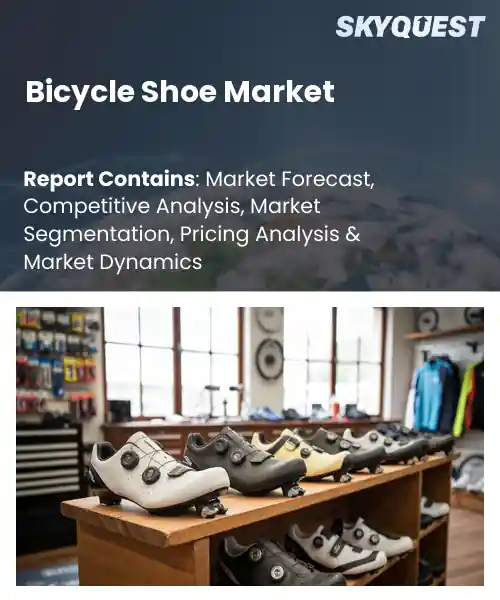
Bicycle Shoe Market
Report ID: SQMIG25G2039
Report ID: SQMIG25G2039
[email protected]
USA +1 351-333-4748
Report ID:
SQMIG25G2039 |
Region:
Global |
Published Date: July, 2026
Pages:
157
|Tables:
187
|Figures:
79


Global Bicycle Shoe Market size was valued at USD 2.1 Billion in 2024 and is poised to grow from USD 2.24 Billion in 2025 to USD 3.83 Billion by 2033, growing at a CAGR of 6.9% during the forecast period (2026-2033).
Market of bicycles shoes is characterized by special footwear which is produced for improving performance, comfort and safety while riding a bike in all types of biking such as road biking, mountain biking, gravel riding, track racing, commuting and leisure biking. Such shoes are characterized by rigidity of soles, lightness of weight, ergonomic design, and their ability to be attached to pedals, which allows them to ride more efficiently and safely. There exist road bike shoes, mountain bike shoes, touring and urban cycling shoes and indoor cycling shoes which serve professional bikers as well as cyclists who train for fitness.
Growth of the market is supported by the growing trend towards cycling as an athletic pursuit and means of transportation, in addition to the development of cycling infrastructures and increased interest in competitive and recreational cycling around the world. Constant product innovation, which includes carbon fiber soles, modern closures like BOA® dial, better ventilation, custom fit solutions, as well as the introduction of sustainable materials, improves product effectiveness and increases consumer appeal. Moreover, the fast expansion of e-commerce platforms, premium products and growing consumer demand for high-performance cycling shoes provide numerous opportunities for manufacturers, making the global bicycle shoe market grow steadily and in the long term.
How is AI-driven Customization Influencing the Global Bicycle Shoe Market?
The AI-enabled personalization revolution is changing the global bicycle shoe market because it transforms a standard static product into a customized piece. Now, thanks to AI-powered systems that use body-scanning data, real-time pressure analysis and machine learning, brands create unique midsoles, arches, and straps for every individual customer. As a result, there is less waste, shorter prototyping time and a unique premium experience for buyers who strive for an accurate fit. It also helps retailers because customers can see how their unique model would look like before buying shoes, while producers can reduce costs due to on-demand manufacturing in line with sustainability trends.
Market snapshot - (2026-2033)
Global Market Size
USD 2.1 Billion
Largest Segment
Road Cycling Shoes
Fastest Growth
Gravel Cycling Shoes
Growth Rate
6.9% CAGR
To get more insights on this market click here to Request a Free Sample Report
Global bicycle shoe market is segmented by product type, closure type, pedal compatibility, material type, end user, distribution channel and region. Based on product type, the market is segmented into Road Cycling Shoes, Mountain Bike (MTB) Shoes, Gravel Cycling Shoes, Touring Cycling Shoes, Indoor Cycling Shoes, Triathlon Cycling Shoes, Casual Cycling Shoes and Others. Based on closure type, the market is segmented into BOA Closure System, Velcro Closure, Lace-Up Closure, Ratchet Buckle Closure, Hybrid Closure Systems and Others. Based on pedal compatibility, the market is segmented into Clipless Shoes, Flat Pedal Shoes, Dual-Use Shoes and Others. Based on material type, the market is segmented into Synthetic Leather, Microfiber, Mesh, Carbon Fiber Sole, Composite Sole Materials and Others. Based on end user, the market is segmented into Professional Cyclists, Amateur Cyclists, Recreational Riders, Indoor Fitness Enthusiasts and Others. Based on distribution channel, the market is segmented into Specialty Bicycle Stores, Sporting Goods Stores, Online Retail, Direct-to-Consumer and Others. Based on region, the market is segmented into North America, Europe, Asia Pacific, Latin America and Middle East & Africa.
The reason why road cycling shoes dominate the market is due to the fact that such shoes are designed for power transmission and aerodynamics that are very crucial in road racing. This is because they have a stiff sole, light build, and cleats that are positioned to give them the advantage of performance. They also benefit from brand loyalty and premium prices, making them dominant players in the cycling shoe industry due to their connection to performance.
Nevertheless, the fastest-growing segment is gravel cycling shoes. The reason is the increasing interest in riding bikes on various terrains, meaning there is a need for shoes that combine comfort, durability, and power transmission.
BOA closure system closure is dominant due to its capability to provide accurate micrometric adjustments and a secure fit without much effort, which is very essential to performance-oriented cyclists. The dial mechanism prevents any form of pressure point and sustains tension during long-distance cycling. The reliable nature and high quality of the brand make it very attractive to elites and hardcore cyclists.
On the other hand, the most rapid momentum for sales is experienced from hybrid closures because they bring together the ease of use of the Velcro and the precision of BOA systems. This satisfies consumers looking for adaptability and performance at the same time.
To get detailed segments analysis, Request a Free Sample Report
The dominance of Europe is founded on a highly developed culture of cycling, legacy of manufacturing high-performance footwear, and effective distribution systems that include both high-end specialty stores and online portals. People in the region appreciate innovations a lot, which means that shoe manufacturers allocate significant resources into researching and using innovative materials and technologies. The synergy of cycling clubs, professional sports teams, and companies helps to speed up the process of getting product feedback, thus making sure the offers meet the needs of both top cyclists and amateurs. Regulations encouraging sustainable mobility increase the popularity of high-performance footwear, while good logistics systems enable fast market penetration.
Market for Bicycle Shoes in Germany has been greatly aided by the presence of strong engineering practices along with the customer base that emphasizes accuracy in fit and durability. There is a great level of collaboration between the domestic manufacturers of the bicycles and the professional teams of road and mountain bikes. The market environment features well-established specialty retail channels and an active commuting culture.
The Market for Bicycle Shoes in the United Kingdom is characterized by an active club culture and a greater health-conscious approach towards commuting. The British cyclists appreciate the concept of versatility; hence, companies develop shoes that can be used both in racing and commuting. Collaboration with prominent events and sponsoring young talents helps promote the company’s image, and an established online shopping platform enables access to a wider audience of cyclists.
French Bicycle Shoe Market represents the passion that the nation has for competitive as well as recreational cycling. The demand among French customers for shoes that are fashionable but also functional makes it imperative for companies to marry fashion with innovative technologies. The incorporation of niche retailing stores along with historical cycling centers adds impetus to the market.
Growth of the North American market increases at an impressive rate owing to increased consumer attention to health-oriented lifestyle and the prevalence of recreational biking among urban and suburban populations. Experience-oriented shopping, through provision of fittings and trials to create trust in high-end shoes, is one of the main focuses of the retailers. The use of technology, such as smart cleats, matches the tech-savvy consumer base in search of performance data. Promotion via collaboration with widely used fitness apps and high-profile cycling events also enhances brand recognition. In addition, an advanced logistics system ensures quick delivery of the products, whereas the environmentally oriented consumer base favors long-lasting sustainable shoes.
The US Bicycle Shoe Market is built around the variety of cyclists, from professional athletes to everyday commuters. It is aided by large retail networks in major cities and by a robust internet marketing platform that provides algorithms for customized fittings. Collaboration with professional racing teams and cycling festivals adds to the brand's credibility, while innovations in sole technology appeal to the sports-minded US consumer.
Market for Bicycle Shoes in Canada has been influenced by a climate-aware attitude among the consumers, thus creating a need for adaptable shoes that function effectively in different kinds of weather conditions. Sales strategies emphasize expert salespeople to help cyclists choose the right kind of flexibility and insulation. Partnership with provincial cycling organizations ensures that safety and skills are promoted in the market.
Asia Pacific is developing a strong presence through the combination of quick urbanization, growing income levels among the middle class, and rising governmental spending on cycling facilities. The companies in the region utilize sophisticated composite materials as well as cost-effective production processes, allowing them to offer affordable products without compromising their quality. The industry participants focus on designs that will be popular within the local culture, at the same time using digital means for marketing their products to technologically savvy customers. Partnership with bike-sharing systems and smart footwear systems enhances the development of bicycle shoes.
The Bicycle Shoe Market in Japan is one that pays close attention to fit and detail, which stems from the consumer’s requirement of precise engineering. Local companies concentrate on creating light footwear and improving sole design, targeting top-level racers as well as commuter cyclists. The presence of specialized retail outlets that offer fitting services, combined with connections to local cycling events, is advantageous for the market.
Market for Bicycle Shoes in South Korea capitalizes on the robust technological environment that includes sensor technology and applications in their footwear products. South Korean consumers value style and function in their shoes, motivating companies to explore new technologies and ergonomics. The marketing strategy is focused on building experience shops and online advertising campaigns in keeping with the consumer trends of South Korea.
To know more about the market opportunities by region and country, click here to
Buy The Complete Report
Increasing Demand for Performance Cycling
People who want more power transmission and comfort are moving towards specific bike shoes which have stiff soles, perfect cleats and breathable structures. Companies react to these demands by developing ergonomic designs and lightweight materials for better performance and reduced fatigue. Such a combination of consumer demands and technological advancements generates demand and helps in the growth of the market. It motivates companies to increase the range of products offered to suit different cycling needs.
Adoption of Sustainable Materials
Increasing awareness about environmental issues is pushing the cyclist community towards using shoes made from recycled polymers, bio-foams, and natural leather. Companies are capitalizing on such eco-friendly materials to distinguish their products among ethical customers. It is the message about lower environmental impact that appeals to both recreational users and cycling professionals, motivating them to switch to more sustainable products. This not only increases market penetration but also motivates companies to engage in circular economy principles.
High Cost of Advanced Technology
The use of carbon fiber plates, cleats that have been meticulously engineered, and sensing technology increases the cost of production, which is then passed on in the form of higher prices in stores. There is reluctance by many cyclists to pay for the added costs in products due to the fact that they find the prices too steep, especially casual cyclists and economically sensitive individuals. This means that there will be limited uptake since customers are more interested in purchasing affordable products than highly innovative products. This challenge affects growth in the market since retailers' stock limited numbers of high-end products.
Limited Awareness in Emerging Markets
The awareness regarding such cycling-specific footwear is still low in most developing regions where bicycles serve a functional purpose. The consumers in this region may not be aware of the benefits that come with using such products. Distribution channels are poor in this region and do not have enough outlets through which such products can be tried and fit. This is limiting their adoption due to their novelty and invisibility in the markets.
Request Free Customization of this report to help us to meet your business objectives.
The worldwide bicycle shoe market is distinguished by medium market concentration, whereby a few prominent cycling footwear producers compete along with regional and specialist brands. The market leaders secure themselves at their competitive positions owing to consistent innovation in terms of use of lightweight materials, carbon fiber soles, fit systems, and innovative closure mechanisms like BOA® dials.
The manufacturers include sustainable materials, breathable and recycled fabrics, fit technology, and digital product development to cater to changing customer preferences and to make their presence felt in new cycling markets of the Asia Pacific and Latin America regions. The market leaders compete on the strength of expanding range of high-end products, superior global distribution network, and performance technologies.
Sustainable Materials Adoption: The industry is fast moving towards sustainable raw materials like recycled polyester, biodegradable rubber, and plant-based adhesives due to rising customer preference for more sustainable options and stricter regulations. The brands are using the concept of closed loop production techniques where they market their products by highlighting the environmental benefits of low-impact shoes and working with the suppliers for certifying carbon-neutral supply chains. Not only will this make the product stand out from the rest, but it will also help build brand loyalty among cyclists worldwide.
Smart Connectivity Integration: Manufacturers are integrating sensors, Bluetooth technology, and application-based analytics in cycling shoes, allowing cyclists to keep track of power, cadence, and fitting of the shoes. Such technologies provide cyclists with the ability to optimize their performance by getting customized advice from coaches and prevent injury by early identification of any anomalies in biomechanics of the shoes. In the context of growing connectivity of wearable devices, there is an emerging trend among footwear manufacturers who are collaborating with digital platform service providers.
SkyQuest’s ABIRAW (Advanced Business Intelligence, Research & Analysis Wing) is our Business Information Services team that Collects, Collates, Correlates, and Analyses the Data collected by means of Primary Exploratory Research backed by robust Secondary Desk research.
As per SkyQuest analysis, the increasing need for performance-oriented cycling wherein maximum power transmission and comfort are key requirements to serve as key growth drivers. Another major factor promoting growth includes the use of sustainable material in the development of these shoes; many companies provide recycled polymers and bio-based foams as per the demands of eco-conscious consumers. On the other hand, the high cost of technologies like carbon fiber plates and sensors is restraining the growth of the industry among cost-sensitive cyclists. Europe continues to dominate the regional profile due to established cycling practices and efficient distribution channels, while road cycling shoes remain the leading type.
| Report Metric | Details |
|---|---|
| Market size value in 2024 | USD 2.1 Billion |
| Market size value in 2033 | USD 3.83 Billion |
| Growth Rate | 6.9% |
| Base year | 2024 |
| Forecast period | (2026-2033) |
| Forecast Unit (Value) | USD Billion |
| Segments covered |
|
| Regions covered | North America (US, Canada), Europe (Germany, France, United Kingdom, Italy, Spain, Rest of Europe), Asia Pacific (China, India, Japan, Rest of Asia-Pacific), Latin America (Brazil, Rest of Latin America), Middle East & Africa (South Africa, GCC Countries, Rest of MEA) |
| Companies covered |
|
| Customization scope | Free report customization with purchase. Customization includes:-
|
To get a free trial access to our platform which is a one stop solution for all your data requirements for quicker decision making. This platform allows you to compare markets, competitors who are prominent in the market, and mega trends that are influencing the dynamics in the market. Also, get access to detailed SkyQuest exclusive matrix.
Table Of Content
Executive Summary
Market overview
Parent Market Analysis
Market overview
Market size
KEY MARKET INSIGHTS
COVID IMPACT
MARKET DYNAMICS & OUTLOOK
Market Size by Region
KEY COMPANY PROFILES
Methodology
For the Bicycle Shoe Market, our research methodology involved a mixture of primary and secondary data sources. Key steps involved in the research process are listed below:
1. Information Procurement: This stage involved the procurement of Market data or related information via primary and secondary sources. The various secondary sources used included various company websites, annual reports, trade databases, and paid databases such as Hoover's, Bloomberg Business, Factiva, and Avention. Our team did 45 primary interactions Globally which included several stakeholders such as manufacturers, customers, key opinion leaders, etc. Overall, information procurement was one of the most extensive stages in our research process.
2. Information Analysis: This step involved triangulation of data through bottom-up and top-down approaches to estimate and validate the total size and future estimate of the Bicycle Shoe Market.
3. Report Formulation: The final step entailed the placement of data points in appropriate Market spaces in an attempt to deduce viable conclusions.
4. Validation & Publishing: Validation is the most important step in the process. Validation & re-validation via an intricately designed process helped us finalize data points to be used for final calculations. The final Market estimates and forecasts were then aligned and sent to our panel of industry experts for validation of data. Once the validation was done the report was sent to our Quality Assurance team to ensure adherence to style guides, consistency & design.
Analyst Support
Customization Options
With the given market data, our dedicated team of analysts can offer you the following customization options are available for the Bicycle Shoe Market:
Product Analysis: Product matrix, which offers a detailed comparison of the product portfolio of companies.
Regional Analysis: Further analysis of the Bicycle Shoe Market for additional countries.
Competitive Analysis: Detailed analysis and profiling of additional Market players & comparative analysis of competitive products.
Go to Market Strategy: Find the high-growth channels to invest your marketing efforts and increase your customer base.
Innovation Mapping: Identify racial solutions and innovation, connected to deep ecosystems of innovators, start-ups, academics, and strategic partners.
Category Intelligence: Customized intelligence that is relevant to their supply Markets will enable them to make smarter sourcing decisions and improve their category management.
Public Company Transcript Analysis: To improve the investment performance by generating new alpha and making better-informed decisions.
Social Media Listening: To analyze the conversations and trends happening not just around your brand, but around your industry as a whole, and use those insights to make better Marketing decisions.
REQUEST FOR SAMPLE
 REQUEST FREE CUSTOMIZATION
Global Bicycle Shoe Market size was valued at USD 2.1 Billion in 2024 and is poised to grow from USD 2.24 Billion in 2025 to USD 3.83 Billion by 2033, growing at a CAGR of 6.9% during the forecast period (2026-2033).
PedalStart: Established in 2024, their main objective is to integrate smart sensor technology into bicycle shoes for performance analytics. Recent development: secured a $100,000 pre‑seed investment in March 2025 to prototype a connected cleat system and begin limited beta testing with professional cyclists. StrideCycle: Established in 2022, their main objective is to produce 3‑D‑printed, lightweight cycling shoes using sustainable materials. Recent development: showcased a fully functional shoe at the STRIDE USA 2026 event, announcing a partnership with a major bike component distributor to launch the product line in North America later in 2026. 'Shimano Inc.', 'Giant Manufacturing', 'Specialized Bicycle Components', 'Trek Bicycle Corporation', 'Scott Sports', 'Fizik', 'Lake Cycling', 'Sidi Sport', 'Gaerne', 'Northwave', 'Mavic', 'Bont Cycling', 'Pearl Izumi', 'Louis Garneau Sports', 'Cube Bikes', 'FLR Cycling', 'Leatt Corporation', 'Ride Concepts', 'Quoc', 'Suplest'
Consumers seeking greater power transfer and comfort are turning to specialized bicycle shoes that integrate stiff soles, precise cleat systems, and breathable constructions. Manufacturers respond by introducing ergonomic designs and lightweight composites, enhancing riding efficiency and reducing fatigue. This alignment of user expectations with product innovation fuels demand across recreational and competitive segments, reinforcing market expansion and encouraging brands to broaden their portfolios with advanced options tailored to varied cycling disciplines and supporting long‑term brand loyalty among enthusiasts in both urban and mountain biking contexts.
Sustainable Materials Adoption: The industry is rapidly shifting toward eco‑friendly components such as recycled polyester, bio‑based rubbers, and plant‑derived adhesives, driven by consumer demand for greener products and stricter environmental regulations. Brands are integrating closed‑loop manufacturing processes, marketing the ecological benefits of low‑impact footwear, and collaborating with suppliers to certify carbon‑neutral supply chains. This focus on sustainability not only differentiates products but also builds long‑term brand loyalty among environmentally conscious cyclists worldwide while also supporting the broader goal of reducing overall carbon footprints globally.
Why does Europe Dominate the Global Bicycle Shoe Market? |@12


Want to customize this report? This report can be personalized according to your needs. Our analysts and industry experts will work directly with you to understand your requirements and provide you with customized data in a short amount of time. We offer $1000 worth of FREE customization at the time of purchase.
Feedback From Our Clients


 USA (+1) 351-333-4748

