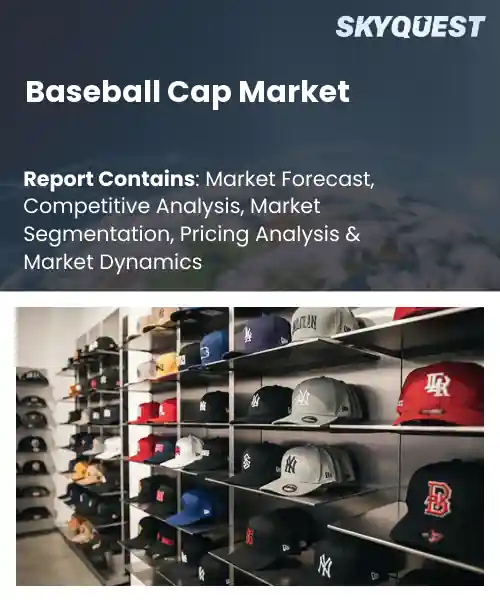
Baseball Cap Market
Report ID: SQMIG25K2203
Report ID: SQMIG25K2203
[email protected]
USA +1 351-333-4748
Report ID:
SQMIG25K2203 |
Region:
Global |
Published Date: June, 2026
Pages:
157
|Tables:
119
|Figures:
77


Global Baseball Cap Market size was valued at USD 22.52 Billion in 2024 and is poised to grow from USD 23.92 Billion in 2025 to USD 38.85 Billion by 2033, growing at a CAGR of 6.22% during the forecast period (2026-2033).
Born as a piece of athletic apparel, the global baseball cap market now accounts for a multi‑billion‑dollar segment that blends fashion, licensing, and culture. Its relevance derives from the cap’s dual role as sun protection and as a branding canvas for sports teams, entertainment franchises, and lifestyle labels. In the last two decades, sales moved from a niche sports‑equipment item to a mainstream consumer product, spurred by celebrity collaborations such as the 2015 partnership between a hip‑hop artist and a classic headwear brand. This shift illustrates how cultural relevance drives demand, pushing distribution from specialty shops to online marketplaces worldwide.
Digital commerce drives the growth phase because online platforms let brands reach fragmented consumer segments with personalized designs and fulfillment. Influencers showcase new caps on social media, prompting followers to convert exposure into purchases, which encourages manufacturers to adopt on‑demand production that lowers inventory risk. This agility creates opportunities in regions such as Southeast Asia, where increasing disposable income and a youthful appetite for streetwear boost demand for resonant headwear. Consequently, firms that combine trend analytics with flexible supply chains can capture market share, while retailers partnering with esports teams gain exposure to an audience eager for performance‑inspired accessories today.
How is AI-driven customization influencing the global baseball cap market?
AI‑driven customization is reshaping how baseball caps are designed, produced, and sold. Brands are using machine learning to analyze style trends, fan demographics and social media cues, allowing them to generate personalized graphics and fits at scale. This technology enables on demand manufacturing that reduces inventory waste while delivering unique products that resonate with individual buyers. Consumers now expect rapid turnaround and the ability to co‑create designs, prompting companies to integrate AI tools into their design pipelines. The result is a more dynamic market where personalization drives engagement and supports higher price points without compromising efficiency.
June 2024, a leading cap manufacturer introduced an AI‑powered customization platform that streamlines design selection and accelerates production, reinforcing market growth through enhanced consumer relevance and operational speed.
Market snapshot - (2026-2033)
Global Market Size
USD 22.52 Billion
Largest Segment
Unstructured (Adjustable) Caps
Fastest Growth
Snapback Caps
Growth Rate
6.22% CAGR
To get more insights on this market click here to Request a Free Sample Report
Global baseball cap market is segmented by type, material, end-user, distribution and region. Based on type, the market is segmented into Structured (Fitted) Caps, Unstructured (Adjustable) Caps, Snapback Caps and Trucker Caps. Based on material, the market is segmented into Cotton, Polyester and Wool Blend. Based on end-user, the market is segmented into Sports & Athletics, Fashion/Lifestyle and Promotional & Corporate. Based on distribution, the market is segmented into Online Retail, Sports Stores, Brand Stores and Promotional Distributors. Based on region, the market is segmented into North America, Europe, Asia Pacific, Latin America and Middle East & Africa.
Snapback caps segment leads because they combine iconic street wear aesthetics with easy size adjustment, appealing to a broad consumer base. Their flat brim and embroidered branding create a visual identity that resonates across casual and sports fans, driving repeat purchases. The absence of sizing constraints simplifies inventory for retailers, reducing stock outs and enhancing shelf presence. Consequently, brands prioritize snapback designs to capture cultural relevance and sustain market momentum.
Meanwhile, structured fitted caps are witnessing the strongest growth as consumers seek a premium silhouette that offers a tailored fit and enhanced durability. Innovations in fabric technology and collaborations with luxury influencers are elevating perceived value, prompting fashion forward buyers to adopt fitted caps for everyday wear, thereby expanding market depth.
Wool blend material segment dominates because it delivers superior warmth and moisture management while retaining a classic aesthetic that appeals to both outdoor enthusiasts and fashion consumers. The natural fibers provide breathability and odor resistance, reducing the need for frequent washing, which aligns with sustainability trends. Manufacturers leverage the premium feel to justify higher price points, fostering brand loyalty and reinforcing the cap’s functional and stylistic relevance.
On the other hand, polyester material segment is expanding as it offers lightweight durability and vibrant color retention suitable for high visibility branding. Advances in recycled polyester technology attract eco conscious buyers, while low production costs enable mass market distribution, accelerating adoption across casual and promotional channels and fueling market
To get detailed segments analysis, Request a Free Sample Report
North America retains a leading role in the baseball cap market due to a confluence of cultural, commercial and innovation factors. The region benefits from a deep‑rooted affinity for casual headwear that intersects with sports fandom, street style and promotional merchandising. A well‑developed retail infrastructure spanning large‑scale chains, specialty boutiques and vibrant e‑commerce platforms ensures broad product accessibility. Consumer preferences for premium materials, technical performance and brand heritage drive continual product refinement. Collaborative design initiatives between apparel brands and athletic organizations reinforce relevance across age groups. Moreover, an entrepreneurial ecosystem that supports fast‑fashion cycles and limited‑edition collaborations fuels rapid product turnover, sustaining high consumer engagement and reinforcing North America’s dominant market position.
Baseball Cap Market United States benefits from a diverse consumer base that merges athletic enthusiasm with fashion consciousness. Strong brand ecosystems and extensive distribution networks enable rapid diffusion of new styles. Collaborative licensing agreements with major sports leagues amplify cultural relevance, while a vibrant streetwear scene encourages experimental designs. The market also leverages digital marketing to reach niche audiences, fostering demand and reinforcing the United States as a growth engine.
Baseball Cap Market Canada thrives on a blend of outdoor lifestyle values and urban trend adoption that fuels demand. Strong retail partnerships and a supply chain facilitate product turnaround, while collaborations with local artists embed regional identity into designs. Consumer appreciation for sustainable materials influences brand positioning, prompting manufacturers to integrate eco‑friendly practices. Digital engagement through social platforms amplifies brand stories, making Canada a contributor to the regional market ecosystem.
The Asia Pacific region is experiencing a swift expansion of the baseball cap market propelled by evolving lifestyle preferences, heightened sports enthusiasm and a burgeoning appetite for street‑inspired fashion. Urban youth cultures across the region view caps as versatile accessories that merge functionality with personal expression, encouraging frequent style refreshes. Domestic manufacturers are leveraging advanced textile technologies to offer breathable, lightweight designs suited to varied climates, while collaborations with entertainment and gaming franchises amplify cultural relevance. Growing digital commerce ecosystems enable brands to reach fragmented markets efficiently, and a rising emphasis on sustainable production resonates with environmentally conscious consumers, collectively fueling momentum throughout the Asia Pacific landscape. Retail innovators are also tailoring localized collections that reflect regional art motifs and seasonal tastes, further embedding caps into everyday wardrobes.
Baseball Cap Market Japan blends craftsmanship with contemporary street culture, creating a distinctive product narrative. Consumers appreciate high‑quality fabrics and stitching, while fashion influencers incorporate caps into layered ensembles that echo both heritage and modernity. Collaborations with local music artists and manga franchises inject storytelling, expanding appeal beyond traditional sports fans. Digital retail experiences, including virtual try‑on features, cater to shoppers, reinforcing Japan’s role as a market within the region.
Baseball Cap Market South Korea merges fashion turnover with pop culture influence, fostering a cap scene. Youth consumers gravitate toward bold graphics and drops that align with K‑pop idols and gaming aesthetics. Domestic manufacturers prioritize lightweight breathable fabrics suitable for the climate, while integrating printing techniques that enhance visual impact. Platforms and media challenges amplify brand visibility, encouraging community participation and actively sustaining South Korea’s contribution to the regional market.
Europe is strengthening its position in the baseball cap market through a combination of heritage branding, sustainable production practices and collaborative design culture. Long‑standing fashion capitals infuse caps with a sense of artisanal prestige, while emerging designers reinterpret classic silhouettes for modern audiences. Manufacturers are increasingly adopting eco‑friendly fibers and circular manufacturing models, resonating with consumers who prioritize environmental responsibility. Cross‑border e‑commerce platforms and regional trade initiatives simplify market entry, enabling brands to scale across diverse consumer segments. Regulatory frameworks that endorse textile recycling and provide incentives for local sourcing further bolster industry confidence. Moreover, fashion weeks and street‑style showcases across European cities serve as incubators for trend diffusion, allowing cap designers to experiment with avant‑garde aesthetics while maintaining appeal. This multifaceted approach consolidates Europe’s competitive edge and drives continued market expansion.
Baseball Cap Market Germany blends precision with a sustainability ethos, shaping a distinct market profile. Consumers value fabrics that offer resilience, reflecting the country’s outdoor lifestyle. Local brands collaborate with football clubs and music festivals, creating collections that resonate culturally. The adoption of recycled polyester and circular manufacturing processes underscores a commitment to environmental stewardship. Retail channels combine modern digital tools, reinforcing Germany’s strong position within the European cap sector.
Baseball Cap Market United Kingdom thrives on a blend of heritage and cred, attracting a diverse consumer base. Club scarves and logos are reinterpreted as cap designs, bridging sports loyalty with everyday fashion. Designers experiment with graphics and sustainable yarns, appealing to aware shoppers. Influencer collaborations and festival activations amplify brand visibility, while omnichannel retail strategies ensure access across streets and storefronts, solidifying United Kingdom’s role in the European market.
Baseball Cap Market France blends aesthetic sensibility with casual functionality, resonating across lifestyle segments. Consumers value sleek silhouettes crafted from cotton and sustainably sourced fibers, reflecting an emphasis on quality. Partnerships with fashion houses and artistic collectives generate limited‑edition caps that serve as accessories. Boutique pop‑ups provide experiences, while digital platforms extend reach to markets. This blend of elegance and practicality reinforces France’s stance in the baseball cap global arena.
To know more about the market opportunities by region and country, click here to
Buy The Complete Report
Personalized Fashion Trend
Rise In Sports Sponsorship Deals
Supply Chain Disruptions
Economic Sensitivity To Price Fluctuations
Request Free Customization of this report to help us to meet your business objectives.
The global baseball cap market is shaped by intense competition, with leading brands accelerating growth through strategic mergers, cross‑industry collaborations, and the adoption of advanced manufacturing technologies such as automated knitting and sustainable material sourcing. Recent partnerships between apparel groups and tech firms have enabled real‑time customization platforms, while acquisitions of niche headwear designers have expanded product portfolios and market reach.
SkyQuest’s ABIRAW (Advanced Business Intelligence, Research & Analysis Wing) is our Business Information Services team that Collects, Collates, Correlates, and Analyses the Data collected by means of Primary Exploratory Research backed by robust Secondary Desk research. As per SkyQuest analysis, the market is propelled by personalized fashion trends while supply chain disruptions pose a restraint, and North America dominates the market with snapback caps as the leading segment; a second driver is the rise in sports sponsorship deals that boost visibility and demand. Digital customization platforms enable on‑demand design reducing inventory risk while sustainable material adoption attracts eco‑conscious buyers, further strengthening the market. The market is expected to rise from $23.9 billion in 2025 to $38.9 billion by 2033 at a CAGR of about 6 percent, reflecting the combined effect of these drivers.
| Report Metric | Details |
|---|---|
| Market size value in 2024 | USD 22.52 Billion |
| Market size value in 2033 | USD 38.85 Billion |
| Growth Rate | 6.22% |
| Base year | 2024 |
| Forecast period | (2026-2033) |
| Forecast Unit (Value) | USD Billion |
| Segments covered |
|
| Regions covered | North America (US, Canada), Europe (Germany, France, United Kingdom, Italy, Spain, Rest of Europe), Asia Pacific (China, India, Japan, Rest of Asia-Pacific), Latin America (Brazil, Rest of Latin America), Middle East & Africa (South Africa, GCC Countries, Rest of MEA) |
| Companies covered |
|
| Customization scope | Free report customization with purchase. Customization includes:-
|
To get a free trial access to our platform which is a one stop solution for all your data requirements for quicker decision making. This platform allows you to compare markets, competitors who are prominent in the market, and mega trends that are influencing the dynamics in the market. Also, get access to detailed SkyQuest exclusive matrix.
Table Of Content
Executive Summary
Market overview
Parent Market Analysis
Market overview
Market size
KEY MARKET INSIGHTS
COVID IMPACT
MARKET DYNAMICS & OUTLOOK
Market Size by Region
KEY COMPANY PROFILES
Methodology
For the Baseball Cap Market, our research methodology involved a mixture of primary and secondary data sources. Key steps involved in the research process are listed below:
1. Information Procurement: This stage involved the procurement of Market data or related information via primary and secondary sources. The various secondary sources used included various company websites, annual reports, trade databases, and paid databases such as Hoover's, Bloomberg Business, Factiva, and Avention. Our team did 45 primary interactions Globally which included several stakeholders such as manufacturers, customers, key opinion leaders, etc. Overall, information procurement was one of the most extensive stages in our research process.
2. Information Analysis: This step involved triangulation of data through bottom-up and top-down approaches to estimate and validate the total size and future estimate of the Baseball Cap Market.
3. Report Formulation: The final step entailed the placement of data points in appropriate Market spaces in an attempt to deduce viable conclusions.
4. Validation & Publishing: Validation is the most important step in the process. Validation & re-validation via an intricately designed process helped us finalize data points to be used for final calculations. The final Market estimates and forecasts were then aligned and sent to our panel of industry experts for validation of data. Once the validation was done the report was sent to our Quality Assurance team to ensure adherence to style guides, consistency & design.
Analyst Support
Customization Options
With the given market data, our dedicated team of analysts can offer you the following customization options are available for the Baseball Cap Market:
Product Analysis: Product matrix, which offers a detailed comparison of the product portfolio of companies.
Regional Analysis: Further analysis of the Baseball Cap Market for additional countries.
Competitive Analysis: Detailed analysis and profiling of additional Market players & comparative analysis of competitive products.
Go to Market Strategy: Find the high-growth channels to invest your marketing efforts and increase your customer base.
Innovation Mapping: Identify racial solutions and innovation, connected to deep ecosystems of innovators, start-ups, academics, and strategic partners.
Category Intelligence: Customized intelligence that is relevant to their supply Markets will enable them to make smarter sourcing decisions and improve their category management.
Public Company Transcript Analysis: To improve the investment performance by generating new alpha and making better-informed decisions.
Social Media Listening: To analyze the conversations and trends happening not just around your brand, but around your industry as a whole, and use those insights to make better Marketing decisions.
REQUEST FOR SAMPLE
 REQUEST FREE CUSTOMIZATION
Global Baseball Cap Market size was valued at USD 22.52 Billion in 2024 and is poised to grow from USD 23.92 Billion in 2025 to USD 38.85 Billion by 2033, growing at a CAGR of 6.22% during the forecast period (2026-2033).
The global baseball cap market is shaped by intense competition, with leading brands accelerating growth through strategic mergers, cross‑industry collaborations, and the adoption of advanced manufacturing technologies such as automated knitting and sustainable material sourcing. Recent partnerships between apparel groups and tech firms have enabled real‑time customization platforms, while acquisitions of niche headwear designers have expanded product portfolios and market reach. 'New Era Cap Company', 'Nike Inc.', 'Adidas AG', 'Under Armour', 'Callaway Golf (Callaway)', '47 Brand', 'Flexfit (Yupoong)', 'American Needle', 'Otto International', 'Pacific Headwear', 'Richardson Caps', 'Ahead Headwear', 'Adams Headwear', 'Fahrenheit', 'Boardroom Eco Apparel', 'Puma SE', 'Reebok (Authentic Brands)', 'Carhartt', 'Vineyard Vines', 'Patagonia Inc.'
The growing desire for individualized accessories encourages consumers to seek baseball caps that reflect personal style, team allegiance, or brand identity. Manufacturers respond by offering diverse color palettes, custom embroidery, and limited‑edition collaborations, expanding product variety and attracting niche segments. Retail platforms provide online design tools that let shoppers visualize and order bespoke caps swiftly. This personalization deepens consumer engagement, strengthens brand loyalty, and promotes repeat purchases, collectively driving market expansion without reliance on price or promotional discount and significant strategies.
Sustainable Materials Adoption: Consumers increasingly prioritize eco‑friendly apparel, prompting brands to source organic cotton, recycled polyester, and biodegradable trims for baseball caps. This shift is driven by heightened environmental awareness, corporate sustainability pledges, and retailer demand for greener product assortments. Manufacturers are investing in low‑impact dyeing processes and transparent supply‑chain certifications, allowing them to differentiate offerings and command premium positioning. As sustainability becomes a core purchasing criterion, cap producers that embed green practices gain competitive advantage and stronger brand loyalty in the marketplace.
Why does North America Dominate the Global Baseball Cap Market? |@12


Want to customize this report? This report can be personalized according to your needs. Our analysts and industry experts will work directly with you to understand your requirements and provide you with customized data in a short amount of time. We offer $1000 worth of FREE customization at the time of purchase.
Feedback From Our Clients


 USA (+1) 351-333-4748

