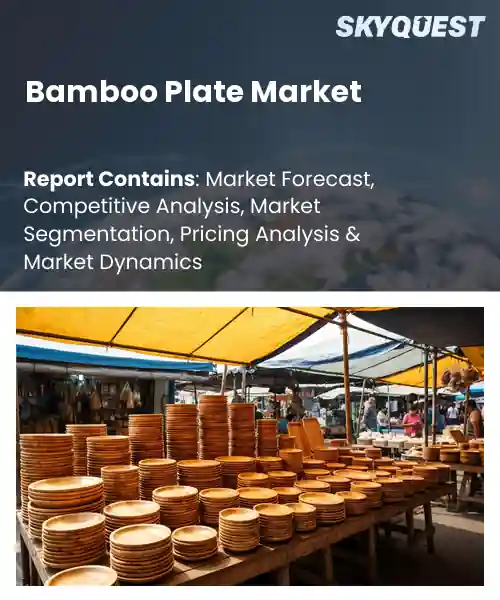
Bamboo Plate Market
Report ID: SQMIG25I2095
Report ID: SQMIG25I2095
[email protected]
USA +1 351-333-4748
Report ID:
SQMIG25I2095 |
Region:
Global |
Published Date: June, 2026
Pages:
157
|Tables:
143
|Figures:
78


Global Bamboo Plate Market size was valued at USD 382.5 Million in 2024 and is poised to grow from USD 412.41 Million in 2025 to USD 752.4 Million by 2033, growing at a CAGR of 7.82% during the forecast period (2026-2033).
Regulatory momentum and corporate sustainability commitments act as the catalyst for the bamboo plate sector because stricter bans on plastic cutlery force manufacturers to adopt biodegradable alternatives. This cause‑effect chain has opened contracts for suppliers in jurisdictions where law mandates compostable serviceware, illustrated by California’s SB 54 prompting fast‑food chains to replace trays with bamboo plates. Hospitality groups also leverage bamboo’s appeal to differentiate experiences, creating a niche that supports premium pricing and higher margins. The convergence of policy and branding thus fuels demand, driving investment in scalable bamboo fiber processing and expanding export opportunities to markets seeking green packaging.
How is AI-driven automation influencing sustainability and demand in the bamboo plate market?
AI driven automation is reshaping the bamboo plate market by streamlining production and enhancing sustainability. Smart cutting algorithms adjust blade paths in real time, minimizing material loss and extending the life of raw bamboo. Predictive maintenance reduces downtime of machinery, allowing factories to run more efficiently and lower energy consumption. Data analytics guide sourcing decisions, favoring responsibly managed bamboo forests and reducing the carbon footprint of supply chains. Consumers notice the greener profile of products, which fuels demand for plates that combine durability with environmental stewardship. The result is a virtuous cycle where technology supports both ecological goals and market growth.
In October 2025, a leading bamboo plate manufacturer introduced AI powered robotics to its production line, cutting waste and speeding up assembly while preserving the natural qualities of the material. This step illustrates how automation directly boosts sustainability and meets rising consumer interest.
Market snapshot - (2026-2033)
Global Market Size
USD 382.5 Million
Largest Segment
Disposable Bamboo Plates
Fastest Growth
Reusable Bamboo Plates
Growth Rate
7.82% CAGR
To get more insights on this market click here to Request a Free Sample Report
Global bamboo plate market is segmented by type, application, distribution, end-user, material and region. Based on type, the market is segmented into Disposable Bamboo Plates, Reusable Bamboo Plates and Bamboo Fiber Plates. Based on application, the market is segmented into Household Use, Catering & Events and Restaurants. Based on distribution, the market is segmented into Online, Supermarkets and Eco/Organic Stores. Based on end-user, the market is segmented into Household and Commercial (Hotels, Restaurants). Based on material, the market is segmented into Solid Bamboo and Bamboo Fiber Composite. Based on region, the market is segmented into North America, Europe, Asia Pacific, Latin America and Middle East & Africa.
Disposable Bamboo Plates segment dominates because consumers prioritize convenience and low waste disposal in everyday dining, prompting manufacturers to focus on mass production techniques that keep costs attractive. The ease of single use service aligns with fast paced lifestyles, encouraging retailers to stock large volumes. This convenience driven demand fuels supply chain efficiencies, reinforcing its leadership within the Type category of the Bamboo Plate Market and fostering brand loyalty among environmentally aware consumers.
However, Reusable Bamboo Plates segment emerges as the most rapidly expanding area because heightened sustainability consciousness encourages diners to adopt durable alternatives, prompting innovators to improve durability and design aesthetics. This shift broadens product appeal, creates new retail opportunities, and accelerates overall market expansion by driving repeat purchases and encouraging corporate sustainability programs.
Eco Organic Stores segment dominates because shoppers seeking natural and low impact lifestyles gravitate toward specialized retailers that curate environmentally responsible products, giving bamboo plates prominent shelf placement. These stores often provide storytelling around sourcing, reinforcing consumer trust and willingness to pay a premium. Their focused assortment and alignment with green values amplify demand, securing a leadership position within the Distribution category of the Bamboo Plate Market and drive repeat foot traffic.
Meanwhile, Online segment is witnessing the strongest growth momentum because ecommerce platforms simplify access to a wide variety of bamboo plate designs, reaching consumers beyond physical store limits. Digital marketing amplifies sustainability narratives, while subscription models and fast shipping lower purchase barriers, fostering rapid market penetration and opening new distribution channels.
To get detailed segments analysis, Request a Free Sample Report
Asia Pacific dominance originates from a deep cultural affinity for natural materials, extensive bamboo cultivation, and mature design expertise that blends sustainability with aesthetics. Consumers in the region prioritize eco‑friendly dining solutions and readily adopt innovative tableware that reflects traditional values. Strong supply chains linking bamboo growers with manufacturers reduce material costs and support high‑quality production. Collaborative innovation among designers, chefs, and sustainability advocates fuels continuous product refinement. Government policies encouraging renewable resources further reinforce market momentum, while a vibrant hospitality sector showcases bamboo plates in upscale and casual settings alike. These combined forces create a self‑reinforcing ecosystem that propels Asia Pacific ahead of other regions in the global bamboo plate landscape. Retail channels that highlight environmental storytelling enhance consumer connection, and educational campaigns reinforce the perceived value of bamboo as a premium yet responsible choice.
Bamboo Plate Market in Japan benefits from a long tradition of reverence for natural craftsmanship, where minimalist design aligns with sustainability goals. Domestic manufacturers leverage advanced processing techniques to produce refined textures that appeal to discerning diners. Hospitality venues, particularly those emphasizing health and wellness, integrate bamboo plates as symbols of eco‑conscious elegance. Consumer education programs and a strong retail presence further embed bamboo tableware into everyday dining experiences.
Bamboo Plate Market in South Korea draws on a cultural emphasis on harmony between nature and modern living, encouraging adoption of biodegradable tableware. Local firms combine traditional bamboo harvesting with cutting‑edge surface treatments to deliver plates that balance durability with aesthetic simplicity. Urban cafés and fine‑dining establishments showcase these products as extensions of a green lifestyle narrative. Collaborative initiatives between design schools and manufacturers nurture continuous product evolution, reinforcing market confidence.
Rapid expansion of the bamboo plate market in North America is propelled by heightened consumer awareness of environmental impact coupled with a growing preference for sustainable lifestyle choices. Retail channels emphasize the story of renewable resource use, positioning bamboo plates as a responsible alternative to conventional disposables. Foodservice operators, especially those aligning with health‑focused branding, adopt bamboo tableware to reinforce their eco‑friendly image. Innovation in manufacturing processes yields products that meet rigorous safety and performance expectations, easing adoption barriers. Collaborative campaigns between NGOs and retailers amplify educational outreach, fostering a cultural shift toward circular dining solutions. Together these dynamics create a fertile environment for accelerated market growth across the United States and Canada. The convergence of corporate sustainability pledges and consumer demand for authentic green products further amplifies retailer commitment to expanding bamboo plate assortments.
Bamboo Plate Market in the United States thrives on a robust ecosystem of environmentally conscious consumers, innovative startups, and large‑scale distributors seeking low‑impact alternatives. Culinary establishments that emphasize farm‑to‑table philosophies adopt bamboo plates to align with their brand narrative. Product design collaborations with artists generate visually compelling offerings that attract mainstream shoppers. Educational initiatives by sustainability NGOs reinforce the perceived credibility of bamboo as a safe, biodegradable material for everyday use.
Bamboo Plate Market in Canada gains momentum through strong governmental emphasis on green procurement and consumer desire for ethical products. Retail chains prioritize shelf space for bamboo tableware that meets stringent health standards, while hospitality venues incorporate plates to showcase commitment to reduced waste. Partnerships between indigenous artisans and manufacturers highlight cultural heritage, adding a unique storytelling dimension. Public awareness campaigns underline the environmental benefits, encouraging households to replace conventional options with bamboo alternatives.
Europe strengthens its position in the bamboo plate market through a combination of rigorous sustainability standards, innovative design culture, and collaborative policy frameworks that champion circular economy principles. Manufacturers integrate advanced treatment processes to meet strict European health and safety requirements, ensuring product reliability. Designers draw upon minimalist aesthetics and functional versatility, creating plates that resonate with discerning consumers. Cross‑border trade agreements facilitate the flow of high‑quality bamboo raw material, while sustainability certifications enhance market credibility. Educational outreach by environmental NGOs combined with consumer demand for transparent sourcing drives retailers to expand bamboo assortments. Collectively, these elements reinforce Europe as a leading proponent of environmentally responsible dining solutions. Strategic investments by eco‑focused venture capital further accelerate research into biodegradable composites, expanding product portfolios across the continent.
Bamboo Plate Market in Germany benefits from a strong emphasis on environmental engineering and a consumers base that values premium sustainability. Manufacturers adopt precision processing to deliver plates with consistent quality that meet rigorous German safety standards. Restaurants that promote seasonal, locally sourced menus incorporate bamboo options to underline their low‑impact credentials. Collaborative research projects between universities and industry drive material innovation, reinforcing confidence in bamboo as a mainstream dining solution.
Bamboo Plate Market in the United Kingdom is propelled by a vibrant design community that merges traditional craftsmanship with contemporary eco‑conscious trends. Retail outlets highlight the aesthetic appeal of bamboo plates alongside their reduced carbon footprint, attracting style‑aware shoppers. Hospitality venues focusing on sustainability showcase bamboo serving ware as a tangible expression of their green ethos. Government incentives for renewable material usage encourage manufacturers to scale production, while consumer education campaigns reinforce the perceived health benefits of natural tableware.
Bamboo Plate Market in France thrives on a cultural appreciation for artisanal elegance combined with a national commitment to ecological responsibility. Designers integrate bamboo into chic table settings that complement French culinary presentation, appealing to both domestic diners and tourists. Retail chains emphasize the biodegradable nature of the plates, aligning with French broader waste reduction initiatives. Partnerships with agricultural cooperatives ensure sustainable bamboo sourcing, while public campaigns highlight the role of such materials in preserving biodiversity.
To know more about the market opportunities by region and country, click here to
Buy The Complete Report
Rising Eco‑Conscious Consumer Preference
Corporate Sustainability Initiatives Adopted
Limited Shelf Life Concerns
Higher Production Cost Compared
Request Free Customization of this report to help us to meet your business objectives.
The competitive landscape is shaped by intense rivalry among eco‑focused kitchenware producers, driving rapid product differentiation and cost efficiencies. Market pressure has spurred strategic partnerships between leading bamboo growers and sustainable tableware brands, while several firms are investing in advanced processing technologies to improve durability and reduce waste, positioning themselves to capture expanding consumer demand for greener dining solutions.
SkyQuest’s ABIRAW (Advanced Business Intelligence, Research & Analysis Wing) is our Business Information Services team that Collects, Collates, Correlates, and Analyses the Data collected by means of Primary Exploratory Research backed by robust Secondary Desk research. According to SkyQuest analysis, the global bamboo plate market is expanding rapidly, propelled primarily by rising eco‑conscious consumer preference for biodegradable dining solutions, while corporate sustainability initiatives provide a second strong boost as companies mandate compostable serviceware. The market is constrained by limited shelf‑life concerns, since untreated plates can warp and develop moisture‑related issues that deter high‑turnover users. Asia Pacific dominates the landscape, benefitting from abundant bamboo resources, cultural affinity for natural materials and supportive policies. Within product types, disposable bamboo plates lead the segment, capturing the bulk of sales through convenience and cost‑effective production, positioning the region and segment as the market’s core drivers.
| Report Metric | Details |
|---|---|
| Market size value in 2024 | USD 382.5 Million |
| Market size value in 2033 | USD 752.4 Million |
| Growth Rate | 7.82% |
| Base year | 2024 |
| Forecast period | (2026-2033) |
| Forecast Unit (Value) | USD Million |
| Segments covered |
|
| Regions covered | North America (US, Canada), Europe (Germany, France, United Kingdom, Italy, Spain, Rest of Europe), Asia Pacific (China, India, Japan, Rest of Asia-Pacific), Latin America (Brazil, Rest of Latin America), Middle East & Africa (South Africa, GCC Countries, Rest of MEA) |
| Companies covered |
|
| Customization scope | Free report customization with purchase. Customization includes:-
|
To get a free trial access to our platform which is a one stop solution for all your data requirements for quicker decision making. This platform allows you to compare markets, competitors who are prominent in the market, and mega trends that are influencing the dynamics in the market. Also, get access to detailed SkyQuest exclusive matrix.
Table Of Content
Executive Summary
Market overview
Parent Market Analysis
Market overview
Market size
KEY MARKET INSIGHTS
COVID IMPACT
MARKET DYNAMICS & OUTLOOK
Market Size by Region
KEY COMPANY PROFILES
Methodology
For the Bamboo Plate Market, our research methodology involved a mixture of primary and secondary data sources. Key steps involved in the research process are listed below:
1. Information Procurement: This stage involved the procurement of Market data or related information via primary and secondary sources. The various secondary sources used included various company websites, annual reports, trade databases, and paid databases such as Hoover's, Bloomberg Business, Factiva, and Avention. Our team did 45 primary interactions Globally which included several stakeholders such as manufacturers, customers, key opinion leaders, etc. Overall, information procurement was one of the most extensive stages in our research process.
2. Information Analysis: This step involved triangulation of data through bottom-up and top-down approaches to estimate and validate the total size and future estimate of the Bamboo Plate Market.
3. Report Formulation: The final step entailed the placement of data points in appropriate Market spaces in an attempt to deduce viable conclusions.
4. Validation & Publishing: Validation is the most important step in the process. Validation & re-validation via an intricately designed process helped us finalize data points to be used for final calculations. The final Market estimates and forecasts were then aligned and sent to our panel of industry experts for validation of data. Once the validation was done the report was sent to our Quality Assurance team to ensure adherence to style guides, consistency & design.
Analyst Support
Customization Options
With the given market data, our dedicated team of analysts can offer you the following customization options are available for the Bamboo Plate Market:
Product Analysis: Product matrix, which offers a detailed comparison of the product portfolio of companies.
Regional Analysis: Further analysis of the Bamboo Plate Market for additional countries.
Competitive Analysis: Detailed analysis and profiling of additional Market players & comparative analysis of competitive products.
Go to Market Strategy: Find the high-growth channels to invest your marketing efforts and increase your customer base.
Innovation Mapping: Identify racial solutions and innovation, connected to deep ecosystems of innovators, start-ups, academics, and strategic partners.
Category Intelligence: Customized intelligence that is relevant to their supply Markets will enable them to make smarter sourcing decisions and improve their category management.
Public Company Transcript Analysis: To improve the investment performance by generating new alpha and making better-informed decisions.
Social Media Listening: To analyze the conversations and trends happening not just around your brand, but around your industry as a whole, and use those insights to make better Marketing decisions.
REQUEST FOR SAMPLE
 REQUEST FREE CUSTOMIZATION
Global Bamboo Plate Market size was valued at USD 382.5 Million in 2024 and is poised to grow from USD 412.41 Million in 2025 to USD 752.4 Million by 2033, growing at a CAGR of 7.82% during the forecast period (2026-2033).
The competitive landscape is shaped by intense rivalry among eco‑focused kitchenware producers, driving rapid product differentiation and cost efficiencies. Market pressure has spurred strategic partnerships between leading bamboo growers and sustainable tableware brands, while several firms are investing in advanced processing technologies to improve durability and reduce waste, positioning themselves to capture expanding consumer demand for greener dining solutions. 'Bambu (Bambu Lab)', 'Greener Choices', 'Bamboozle Home', 'Totally Bamboo', 'Lipper International', 'Core Bamboo', 'Nature's Tableware', 'Eco-Products (Novatek)', 'Susty Party', 'Bambu Organics', 'BrownLiving', 'BioKeys Products', 'Ecoware', 'GreenHome', 'Welly Bottle', 'Ecovita', 'Bamboogreenware', 'World Centric (Novatek)', 'Bionatic GmbH', 'Greenlid'
Consumers increasingly prioritize sustainable products, seeking alternatives that reduce plastic waste and carbon footprints. Bamboo plates, being biodegradable and derived from rapidly renewable resources, align with this ethical purchasing mindset. As households, restaurants, and catering services adopt greener dining solutions, demand for bamboo tableware expands. Manufacturers respond by enhancing design aesthetics and functional durability, further attracting environmentally aware buyers. This shift toward eco‑friendly lifestyles drives market expansion, reinforcing brand loyalty and encouraging wider distribution across retail channels globally and throughout emerging markets.
Sustainable Lifestyle Adoption: The growing emphasis on eco‑friendly living is driving restaurants, retailers, and households to prefer bamboo plates as a renewable alternative to plastic and paper. Consumers increasingly value products that reduce environmental impact, and bamboo’s natural biodegradability aligns with zero‑waste aspirations. This shift enhances brand image for businesses adopting bamboo, encourages supply chain partners to invest in sustainable sourcing, and creates a favorable regulatory environment that supports greener packaging solutions across the foodservice sector and promotes long‑term consumer loyalty in global markets.
Why does Asia Pacific Dominate the Global Bamboo Plate Market? |@12


Want to customize this report? This report can be personalized according to your needs. Our analysts and industry experts will work directly with you to understand your requirements and provide you with customized data in a short amount of time. We offer $1000 worth of FREE customization at the time of purchase.
Feedback From Our Clients


 USA (+1) 351-333-4748

