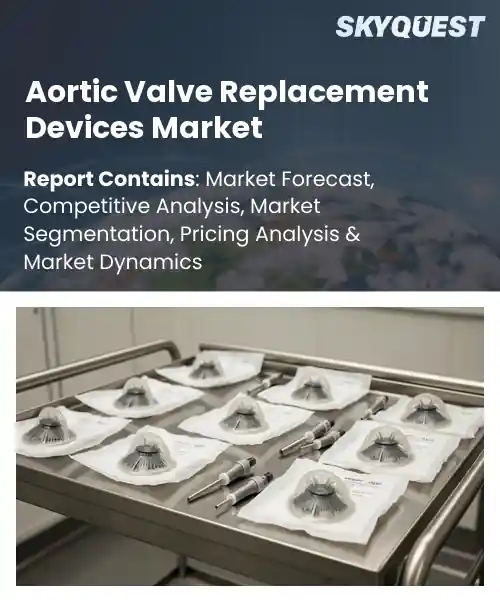
Aortic Valve Replacement Devices Market
Report ID: SQMIG35A3949
Report ID: SQMIG35A3949
[email protected]
USA +1 351-333-4748
Report ID:
SQMIG35A3949 |
Region:
Global |
Published Date: May, 2026
Pages:
157
|Tables:
176
|Figures:
79


Global Aortic Valve Replacement Devices Market size was valued at USD 7.5 Billion in 2024 and is poised to grow from USD 8.29 Billion in 2025 to USD 18.42 Billion by 2033, growing at a CAGR of 10.5% during the forecast period (2026-2033).
Rising prevalence of aortic stenosis in aging population coupled with better diagnostics, which has widened the candidate pool for intervention, is the major driver of the aortic valve replacement devices market. The market comprises surgical and transcatheter valves, delivery systems and imaging tools. Why does it matter? Untreated valve disease has a high morbidity, mortality and healthcare costs. Over decades the sector moved from open surgical replacement dominated by bioprosthetic and mechanical valves to adoption of transcatheter aortic valve replacement pioneered by companies such as Edwards Lifesciences and Medtronic, changing treatment algorithms and expanding options to higher risk patients across regions.
Technological innovation that reduces procedural risk and expands clinical indications, driving clinician adoption and payer support, is a major driver of market growth. The evidence from landmark trials showed the noninferiority and superiority of transcatheter approaches in cohorts, and as a result regulators expanded the approvals and hospitals integrated the transcatheter programs. This has allowed the real world use including valve in valve procedures for degenerated bioprostheses and same day discharge reducing the length of stay. Device manufacturers are thus investing in smaller delivery systems, retrievable frames and sealing skirts to reduce complications, creating a virtuous cycle of better outcomes, higher uptake and growing market opportunities in emerging regions and markets around the world.
How is AI improving patient selection and outcomes in the aortic valve replacement devices market?
AI is revolutionizing patient selection and outcomes in the aortic valve replacement devices market through automated imaging analysis, electronic health record mining and predictive risk models. Key components consist of automated detection of severe aortic stenosis from echocardiogram reports, and personalized valve sizing from CT image segmentation and decision support to assist heart teams in selecting appropriate candidates. The present scenario shows the earlier referrals and more consistent selection of candidates which helps in procedural planning and lower the risk of complication. Market dynamics support wider adoption as clinical indications expand, driving demand for tools that streamline workflows and standardize care.
In April 2026, Tempus and Medtronic viz. AI driven EHR notifications improved timely evaluation and intervention for aortic stenosis in ALERT trial, showing how AI increases appropriate referrals and supports market efficiency by reducing delays, standardizing patient selection and enabling more efficient use of valve inventory and procedure scheduling,
Market snapshot - (2026-2033)
Global Market Size
USD 7.5 Billion
Largest Segment
Transcatheter Aortic Valve Replacement (TAVR) Devices
Fastest Growth
Transcatheter Aortic Valve Replacement (TAVR) Devices
Growth Rate
10.5% CAGR
To get more insights on this market click here to Request a Free Sample Report
Global aortic valve replacement devices market is segmented by product type, material type, procedure type, application, end user, age group and region. Based on product type, the market is segmented into Surgical Aortic Valve Replacement (SAVR) Devices, Transcatheter Aortic Valve Replacement (TAVR) Devices, Mechanical Valves, Tissue/Bioprosthetic Valves and Others. Based on material type, the market is segmented into Mechanical Materials, Biological Tissue Materials, Polymer-Based Materials and Others. Based on procedure type, the market is segmented into Minimally Invasive Procedures and Open Heart Surgery. Based on application, the market is segmented into Aortic Stenosis, Aortic Regurgitation, Congenital Aortic Valve Disorders and Others. Based on end user, the market is segmented into Hospitals, Cardiac Centers, Ambulatory Surgical Centers, Specialty Clinics and Others. Based on age group, the market is segmented into Adult, Pediatric and Geriatric. Based on region, the market is segmented into North America, Europe, Asia Pacific, Latin America and Middle East & Africa.
The Transcatheter Aortic Valve Replacement (TAVR) Devices segment dominates the overall market owing to its less invasive delivery pathway that reduces perioperative trauma and shortens recovery thereby making valve therapy available to a broader patient population. As device designs and delivery systems improve, clinician confidence grows, resulting in more referrals and adoption by institutions This clinical preference and constant product improvement drives high demand and investment, further cementing market leadership.
But SAVR Devices are gaining traction fast, as surgical refinements and durable prostheses better accommodate complex anatomies and the needs of younger patients. Improved perioperative management and hybrid treatment pathways lead to increased surgical referrals, driving investment in surgical infrastructure and encouraging the ongoing development of devices and growth in procedures.
The Tissue/Bioprosthetic Valves segment is expected to dominate owing to the favorable hemodynamics offered by biological leaflets and the fact that they do not require lifelong anticoagulation, which improves the quality of life and clinician preference. Manufacturers’ investments in anti-calcification treatments and improved leaflet engineering lead to increased durability and surgeon confidence. These clinical and technological drivers are spurring robust adoption across replacement strategies and fuelling demand in diverse care settings.
Polymer-Based Materials are experiencing the fastest growth due to innovations that enable durable and customizable leaflets compatible with transcatheter platforms. Focused R&D and prototype commercialization enabled development of more durable, less thrombogenic prostheses that broaden future valve replacement applications and device differentiation, spurred by regulatory advances and robust developer interest.
To get detailed segments analysis, Request a Free Sample Report
North America is leading the global aortic valve replacement devices market owing to the presence of developed healthcare infrastructure, clustered clinical expertise, and fast-tracked adoption of advanced surgical and transcatheter technologies. Reimbursement mechanisms and major investment in clinical research help translate innovations quickly into routine care. Strong partnerships with centers of excellence at major medical device companies facilitate iterative refinement of devices and postmarket surveillance. High awareness among patients and widespread screening contribute to early diagnosis and referral pathways. “A strong regulatory environment that helps to speed up the approval of products, while ensuring safety, helps to build industry confidence. These structural strengths together support high procedure volumes, and sustained technological leadership, which sustain regional dominance and market resilience.
United States Aortic Valve Replacement Devices Market is characterized by the presence of leading clinical research, extensive specialist networks and early adoption of minimally invasive solutions. High procedural expertise and close collaboration between the industry and care centers enable iterative device optimization. Robust reimbursement mechanisms and well-established postmarket data collection support continuous improvement in patient selection and long term outcomes, which sustains demand for advanced valve platforms and a competitive vendor landscape focused on innovation.
United States Aortic Valve Replacement Devices Market is characterized by the presence of leading clinical research, extensive specialist networks and early adoption of minimally invasive solutions. High procedural expertise and close collaboration between the industry and care centers enable iterative device optimization. Robust reimbursement mechanisms and well-established postmarket data collection support continuous improvement in patient selection and long term outcomes, which sustains demand for advanced valve platforms and a competitive vendor landscape focused on innovation.
Europe is witnessing a rapid growth of the aortic valve replacement devices market due to harmonized clinical practice guidance, strong network of national heart centers, and strategic focus on minimally invasive therapies. Centralized reimbursement systems and commitment to multicenter clinical research facilitate timely adoption of novel transcatheter and surgical valve platforms. Established manufacturing ecosystems and wide networks of clinicians allow for rapid propagation of new techniques. Germany is often in the lead in utilisation and training and harmonization of regulations between countries facilates market entry. Better patient awareness, increasing screening initiatives and strategic collaborations between European device companies and academic institutions accelerate commercialization. These dynamics, along with a focus on real world evidence and postmarket registries, broaden patient access and promote competitive innovation.
The Aortic Valve Replacement Devices Market in Germany is characterized by strong clinical expertise and a well-established cardiac surgery infrastructure, with active involvement in device research. Heart centers and academic hospitals are training and participating in clinical evaluations that help refine the devices. Integrated supply chains and closeness to manufacturers support product availability. Familiarity with advanced implantation techniques and outcome monitoring among clinicians supports ongoing preference for innovative valve technologies and procedural improvements.
Aortic Valve Replacement Devices in United Kingdom Market shows a rapid uptake of transcatheter and invasive procedures, driven by increasing interventional cardiology capacity and the adoption of guidelines. Academic center collaborations with device innovators help with procedural learning and dissemination of best practices. Real world evidence and national registries further bolster clinician confidence and aid payer decisions. These, together with investment in training and facilities, are driving market growth and wider patient access.
The French market for Aortic Valve Replacement Devices is emerging with increasing adoption of transcatheter therapies within surgical settings. Equitable access is a national health priority that supports standardized patient evaluation and referral pathways. Academic hospitals also facilitate training of clinicians and engage in clinical investigations. Collaborations with device companies enable technology transfer. Improved regional procedural capacity and outcome reporting provides an enabling environment for adoption of valve technologies and increases clinician confidence.
Asia Pacific is amplifying its position in the aortic valve replacement devices market through strategic investment in clinical capacity, strategic industry partnerships and targeted regulatory reforms to accelerate device assessment. Regional centres of excellence are growing interventional cardiology and hybrid surgical programmes, enhancing local procedural expertise. Domestic manufacturers and global companies collaborate on joint development and local production, strengthening supply chain resilience and cost-effectiveness. Increased clinical adoption and outcome tracking require more focus on training, patient education and registry development. Cross border collaborations and market specific strategies take into account the diverse reimbursement models and healthcare delivery systems to allow for incremental market penetration and a gradual shift from import dependence to stronger regional innovation and self-sufficiency in device technologies. Investment in local clinical research capability and academic partnerships to produce evidence and build clinician confidence will position the region as a major consumer and nascent developer of advanced valve solutions.
Japan Aortic Valve Replacement Devices Market: Clinical Expertise, Adoption of Less Invasive Procedures and Domestic Manufacturing Academic centers work with device companies to improve products and to build them locally. Clinician training programs and outcome registries support evidence-based adoption and guideline alignment. Strong hospital networks and procedural excellence help integrate advanced valve therapies across care settings, reinforcing Japan as a valve technology application and research center.
South Korea Aortic Valve Replacement Devices Market is growing at a growing trend due to the growth of interventional cardiology and collaborations with the global device companies. Tertiary hospitals are expanding transcatheter implantation capacity and training Clinical acceptance is enhanced by local evidence generation and outcome monitoring. Localization of supply chains and manufacturing partnerships aids with product availability and affordability. This positions South Korea as the prime candidate to play a leading role in valve device adoption and innovation across the region.
To know more about the market opportunities by region and country, click here to
Buy The Complete Report
Technological Advancements In Devices
Growing Geriatric Patient Population
High Procedural Complexity and Training
Reimbursement and Cost Constraints
Request Free Customization of this report to help us to meet your business objectives.
Competition in the global aortic valve replacement devices market is being propelled by large incumbents’ targeted M&A and platform acquisitions to secure adjacent technologies, along with disruptive device innovations and procedural enablers by hospital spinouts and specialist startups. Edwards Lifesciences’ 2024 acquisitions of JenaValve and Endotronix, and multiple hospital spinouts attracting strategic deals are notable examples..
SkyQuest’s ABIRAW (Advanced Business Intelligence, Research & Analysis Wing) is our Business Information Services team that Collects, Collates, Correlates, and Analyses the Data collected by means of Primary Exploratory Research backed by robust Secondary Desk research. As per SkyQuest analysis, the global aortic valve replacement devices market is propelled primarily by the rising prevalence of aortic stenosis in aging populations, while continued technological innovation that expands indications and improves outcomes provides a second major growth engine. However, high procedural complexity and intensive training requirements remain a key restraint that concentrates services in specialized centers and slows broader adoption. North America remains the dominant region due to mature infrastructure, reimbursement support and clinical expertise, and the transcatheter aortic valve replacement segment leads market share as clinicians prefer less invasive approaches. The market outlook favors further device refinement and wider patient access over the coming decade.
| Report Metric | Details |
|---|---|
| Market size value in 2024 | USD 7.5 Billion |
| Market size value in 2033 | USD 18.42 Billion |
| Growth Rate | 10.5% |
| Base year | 2024 |
| Forecast period | (2026-2033) |
| Forecast Unit (Value) | USD Billion |
| Segments covered |
|
| Regions covered | North America (US, Canada), Europe (Germany, France, United Kingdom, Italy, Spain, Rest of Europe), Asia Pacific (China, India, Japan, Rest of Asia-Pacific), Latin America (Brazil, Rest of Latin America), Middle East & Africa (South Africa, GCC Countries, Rest of MEA) |
| Companies covered |
|
| Customization scope | Free report customization with purchase. Customization includes:-
|
To get a free trial access to our platform which is a one stop solution for all your data requirements for quicker decision making. This platform allows you to compare markets, competitors who are prominent in the market, and mega trends that are influencing the dynamics in the market. Also, get access to detailed SkyQuest exclusive matrix.
Table Of Content
Executive Summary
Market overview
Parent Market Analysis
Market overview
Market size
KEY MARKET INSIGHTS
COVID IMPACT
MARKET DYNAMICS & OUTLOOK
Market Size by Region
KEY COMPANY PROFILES
Methodology
For the Aortic Valve Replacement Devices Market, our research methodology involved a mixture of primary and secondary data sources. Key steps involved in the research process are listed below:
1. Information Procurement: This stage involved the procurement of Market data or related information via primary and secondary sources. The various secondary sources used included various company websites, annual reports, trade databases, and paid databases such as Hoover's, Bloomberg Business, Factiva, and Avention. Our team did 45 primary interactions Globally which included several stakeholders such as manufacturers, customers, key opinion leaders, etc. Overall, information procurement was one of the most extensive stages in our research process.
2. Information Analysis: This step involved triangulation of data through bottom-up and top-down approaches to estimate and validate the total size and future estimate of the Aortic Valve Replacement Devices Market.
3. Report Formulation: The final step entailed the placement of data points in appropriate Market spaces in an attempt to deduce viable conclusions.
4. Validation & Publishing: Validation is the most important step in the process. Validation & re-validation via an intricately designed process helped us finalize data points to be used for final calculations. The final Market estimates and forecasts were then aligned and sent to our panel of industry experts for validation of data. Once the validation was done the report was sent to our Quality Assurance team to ensure adherence to style guides, consistency & design.
Analyst Support
Customization Options
With the given market data, our dedicated team of analysts can offer you the following customization options are available for the Aortic Valve Replacement Devices Market:
Product Analysis: Product matrix, which offers a detailed comparison of the product portfolio of companies.
Regional Analysis: Further analysis of the Aortic Valve Replacement Devices Market for additional countries.
Competitive Analysis: Detailed analysis and profiling of additional Market players & comparative analysis of competitive products.
Go to Market Strategy: Find the high-growth channels to invest your marketing efforts and increase your customer base.
Innovation Mapping: Identify racial solutions and innovation, connected to deep ecosystems of innovators, start-ups, academics, and strategic partners.
Category Intelligence: Customized intelligence that is relevant to their supply Markets will enable them to make smarter sourcing decisions and improve their category management.
Public Company Transcript Analysis: To improve the investment performance by generating new alpha and making better-informed decisions.
Social Media Listening: To analyze the conversations and trends happening not just around your brand, but around your industry as a whole, and use those insights to make better Marketing decisions.
REQUEST FOR SAMPLE
 REQUEST FREE CUSTOMIZATION
Global Aortic Valve Replacement Devices Market size was valued at USD 7.5 Billion in 2024 and is poised to grow from USD 8.29 Billion in 2025 to USD 18.42 Billion by 2033, growing at a CAGR of 10.5% during the forecast period (2026-2033).
Competition in the global aortic valve replacement devices market is driven by large incumbents executing targeted M&A and platform acquisitions to secure adjacent technologies, while hospital spinouts and specialist startups push disruptive device innovations and procedural enablers; notable examples include Edwards Lifesciences’ 2024 acquisitions of JenaValve and Endotronix, and multiple hospital spinouts attracting strategic deals. 'Edwards Lifesciences Corporation', 'Medtronic plc', 'Abbott Laboratories', 'Boston Scientific Corporation', 'JenaValve Technology, Inc.', 'Meril Life Sciences Pvt. Ltd.', 'LivaNova PLC', 'CryoLife, Inc.', 'Artivion, Inc.', 'Braile Biomedica', 'Colibri Heart Valve LLC', 'Lepu Medical Technology (Beijing) Co., Ltd.', 'Venus Medtech (Hangzhou) Inc.', 'Peijia Medical Limited', 'MicroPort Scientific Corporation', 'JC Medical, Inc.', 'Foldax, Inc.', 'Anteris Technologies Ltd.', 'Balton Sp. z o.o.', 'TTK Healthcare Limited'
New iterations of valve design, delivery systems, and imaging integration have enhanced procedural predictability and clinical outcomes, encouraging broader adoption among clinicians and patients. Improvements in device materials and reduced profile delivery platforms have expanded suitability for minimally invasive approaches and for patients previously considered high risk, which elevates clinician confidence and referral patterns. Continuous innovation by manufacturers also stimulates training and hospital investment in infrastructure and skill development, creating a reinforcing cycle that supports market expansion through increased procedure acceptance and perceived therapeutic value.
Minimally Invasive Adoption Surge: Clinical preference is shifting toward less invasive aortic valve procedures as physicians prioritize faster recovery, reduced hospital stays, and improved patient comfort. Healthcare providers are increasingly integrating transcatheter approaches into treatment pathways, driving procedural adoption across broader patient populations. This transition encourages service-line investments, multidisciplinary center development, and expanded training programs that emphasize catheter-based skills. Payers and hospitals are adapting care protocols and patient selection criteria to support minimally invasive strategies that align with institutional efficiency goals and patient-centered outcomes.
Why does North America Dominate the Global Aortic Valve Replacement Devices Market? |@12


Want to customize this report? This report can be personalized according to your needs. Our analysts and industry experts will work directly with you to understand your requirements and provide you with customized data in a short amount of time. We offer $1000 worth of FREE customization at the time of purchase.
Feedback From Our Clients


 USA (+1) 351-333-4748

