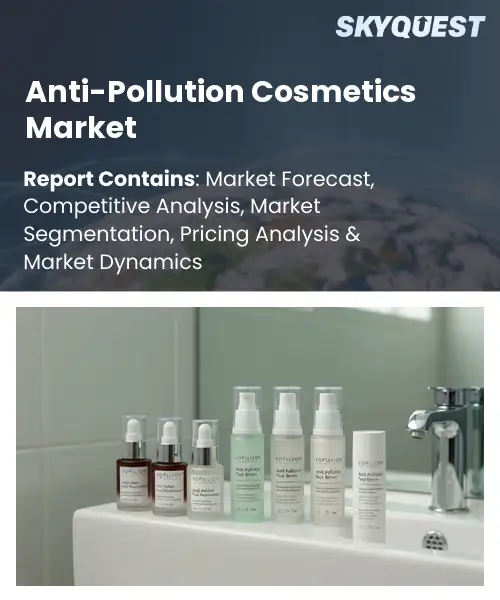
Anti-Pollution Cosmetics Market
Report ID: SQMIG30L2549
Report ID: SQMIG30L2549
[email protected]
USA +1 351-333-4748
Report ID:
SQMIG30L2549 |
Region:
Global |
Published Date: August, 2026
Pages:
157
|Tables:
148
|Figures:
78


Global Anti-Pollution Cosmetics Market size was valued at USD 4.92 Billion in 2024 and is poised to grow from USD 5.34 Billion in 2025 to USD 10.34 Billion by 2033, growing at a CAGR of 8.6% during the forecast period (2026-2033).
The anti-pollution cosmetics market trends includes skin-care and make-up products that protect, repair or neutralize damage caused by airborne contaminants such as particulate matter, nitrogen oxides and UV-induced free radicals. As urbanization has grown, so has its significance, exposing millions to chronic low-level pollution that speeds skin aging, hyperpigmentation and inflammatory conditions. The sector started in the early 2000s with basic antioxidant serums but was fueled by increased awareness following major smog events in Beijing and Delhi and prompted brands to launch dedicated “city-proof” lines. This has led to a shift in consumer demand from basic moisturizers to scientifically supported formulations that promise measurable barrier reinforcement and long-term skin health.
The expansion of the anti-pollution cosmetics market growth is mainly fueled by the convergence of delivery technologies with consumer insights that allow brands to show efficacy and offer personalized solutions. The deep penetration of antioxidants from nano-encapsulation has a measurable reduction of pollutant-induced oxidative stress, giving dermatologists the impetus to use such products. That scientific validation is fueling retail growth, such as when L’Oréal teamed with AirVisual to incorporate air-quality data into its app that guides users to personalized regimens. As regulatory bodies tighten labeling standards, companies that can back up claims with clinical trials will pick up market share and open up opportunities in economies where pollution is rising.
How is AI-driven Formulation Reshaping the Anti‑Pollution Cosmetics Market?
AI-driven formulation is transforming the anti-pollution cosmetics market share by enabling brands to develop targeted products based on specific environmental stressors and consumer skin profiles. Machine-learning models can analyze large datasets covering pollution exposure, skin conditions, ingredient performance, and consumer preferences to identify ingredient combinations with greater protective and antioxidant potential. This accelerates formulation development while supporting more personalized solutions for consumers in highly polluted urban environments. AI is also helping companies optimize delivery systems, predict ingredient interactions, and assess product performance before extensive laboratory testing, reducing development time and costs.
As AI becomes increasingly integrated with skin diagnostics and real-time environmental data, cosmetic brands can create adaptive routines that respond to changing pollution levels, UV exposure, and individual skin needs. This combination of predictive analytics, personalization, and faster product development is strengthening innovation and creating new opportunities for premium, science-backed anti-pollution skincare products.
Market snapshot - (2026-2033)
Global Market Size
USD 4.92 Billion
Largest Segment
Facial Care Products
Fastest Growth
Color Cosmetics
Growth Rate
8.6% CAGR
To get more insights on this market click here to Request a Free Sample Report
Global anti-pollution cosmetics market is segmented by product type, product form, anti-pollution function, distribution channel, end user and region. Based on product type, the market is segmented into facial care products, color cosmetics, sun care products, hair care products and other cosmetics. Based on product form, the market is segmented into creams & lotions, serums, gels, powders and other forms. Based on anti-pollution function, the market is segmented into barrier protection, antioxidant protection, detoxification & purification and UV & environmental protection. Based on distribution channel, the market is segmented into online and offline. Based on end user, the market is segmented into men, women and unisex. Based on region, the market is segmented into North America, Europe, Asia Pacific, Latin America and Middle East & Africa.
Facial care products segment dominates because consumers prioritize daily skin defense against urban pollutants, prompting brands to embed barrier technology and antioxidant complexes into moisturizers and serums. This focus aligns with heightened awareness of smog‑related skin aging, driving product innovation and formulation depth. The segment’s appeal is reinforced by seamless integration into existing skincare routines, encouraging repeat purchases and fostering brand loyalty within the anti‑pollution cosmetics market. It also enhances overall consumer experience.
However, color cosmetics segment emerges as the key high‑growth area because makeup enthusiasts are seeking foundations and powders infused with particulate filters that neutralize airborne toxins while delivering aesthetic benefits. Innovative delivery systems and influencer‑driven demand accelerate its adoption, expanding market reach and creating new opportunities for brand differentiation.
Antioxidant protection segment leads because it addresses the core oxidative stress caused by free radicals in polluted environments, prompting formulators to incorporate vitamins, plant extracts, and nanotech‑stabilized antioxidants into daily use products. This scientific appeal resonates with health‑conscious consumers demanding visible defense mechanisms, fostering trust and premium pricing. Continuous research on synergistic blends reinforces product efficacy, solidifying its central role in the anti‑pollution cosmetics market. It also supports long‑term skin health.
On the other hand, barrier protection segment witnesses the strongest growth momentum because urban dwellers increasingly seek lightweight creams that form invisible shields against particulate matter. Advances in film‑forming polymers and breathable membranes boost perceived efficacy, while regulatory encouragement for preventive skincare fuels rapid product launches and market expansion.
To get detailed segments analysis, Request a Free Sample Report
The Asia Pacific dominates the anti-pollution cosmetics market owing to a combination of high cultural importance of skin health and serious urban air quality issues. Consumers in the region are passionate about preventive beauty regimes and readily adopt scientifically advanced formulations that promise protection against particulate matter and oxidative stress. Leading local manufacturers are investing significantly in R&D, and their products are becoming more available via fast-growing digital commerce channels. And the region is the hotbed of innovation and consumption for pollution-focused skincare, with government initiatives driving clean-beauty standards and an emerging middle class with disposable income increasing demand. The combination of high consumer literacy and high brand loyalty and collaborative ecosystems between academia and industry further drives product differentiation. Local influencers raise awareness of environmental stressors, leading to frequent repurchases and a vibrant market culture that other regions try to imitate.
Anti-pollution cosmetics market outlook in Japan thrives on a consumer base that values meticulous skin care routines and scientific credibility. Brands leverage advanced nanotechnology and traditional botanical extracts to create multi‑layered barrier solutions. Retail landscapes blend high‑end department stores with innovative e‑commerce platforms, enabling swift adoption of new launches. Heightened awareness of urban smog and a strong regulatory framework encourage transparent ingredient disclosure, reinforcing consumer trust and long‑term brand loyalty among users.
Anti-pollution cosmetics market forecast in South Korea benefits from a highly trend‑driven consumer culture and rapid product iteration cycles. Companies integrate cutting‑edge biotech with K‑beauty philosophies, delivering lightweight formulas that appeal to tech‑savvy millennials. Influencer‑led campaigns and gamified mobile shopping experiences accelerate market penetration. Government support for green chemistry and stringent air quality monitoring heighten public concern, prompting continuous demand for protective skincare solutions in daily personal care routines across the nation.
Europe is seeing a rapid growth in anti-pollution cosmetics, as growing environmental awareness is meeting stringent regulatory standards that are driving clean-beauty narratives. Consumers across the continent are calling for transparent formulations that address urban particulate exposure and sustainability values. Collaborative research across multinational labs and boutique innovators develop advanced antioxidant complexes and barrier enhancing technologies. Retail ecosystems pair luxury department stores with pop-up experiential concepts that educate consumers. Further, government initiatives regarding air quality and public health campaigns enhance the awareness of pollution effect on skin thus leading to frequent product upgrades and boosting the market momentum in the region. Fashion-forward packaging, potent influencer networks and a heritage of dermatological research provide a fertile ground for premium anti-pollution ranges. Retailers also use personalized skin-analysis tools to reinforce perceived efficacy and encourage repeat purchases, solidifying Europe position as a growth engine for pollution-shielding cosmetics.
Anti-pollution cosmetics market regional outlook in Germany reflects a strong tradition of scientific rigor and consumer demand for efficacy. Companies emphasize clinically validated ingredients and robust safety testing, resonating with a discerning clientele. Distribution channels blend reputable pharmacy chains with specialty beauty boutiques, ensuring wide accessibility. Environmental regulations encourage formulations that are both protective and eco‑conscious, while consumer education programs highlight the long‑term benefits of shielding skin against airborne contaminants for overall health.
Anti-pollution cosmetics market regional forecast in United Kingdom is propelled by a fast‑adopting consumer segment that values innovative, scientifically backed solutions. The market benefits from a robust beauty media landscape that accelerates product awareness and trial. Brands often collaborate with research institutions to develop cutting‑edge barrier technologies and emphasize sustainable packaging. Retail environments range from high‑street chains to boutique labs, fostering a dynamic ecosystem that fuels rapid product turnover among urban professionals today.
Anti-pollution cosmetics market analysis in France is emerging as consumers increasingly link skin health with environmental quality. French brands capitalize on heritage of natural ingredient sourcing while integrating cutting‑edge filter technologies. Boutique concept stores and curated online platforms promote personalized consultations, enhancing perceived value. Regulatory support for green chemistry and public campaigns on air‑quality awareness stimulate demand, positioning France as a growing hub for innovative anti‑pollution skincare solutions for modern lifestyles now.
Increasing health awareness and innovative pipelines driven by advanced biotech research further strengthen North America’s position in the anti-pollution cosmetics space. Brands are focusing on clinically proven actives that combat oxidative stress caused by urban smog while still sticking to clean-beauty values. Digital personalization and data-driven outreach offer targeted experiences to build loyalty among tech-savvy shoppers. Strong collaborations with universities and startups speed up ingredient innovations, and distribution channels from high-end retailers to immersive online platforms increase accessibility. Public worry about air quality is increasing demand for protective skincare, making North America a major market for anti-pollution cosmetics. Furthermore, cross-border e-commerce platforms provide easy access to new anti-pollution formulas, and regulatory bodies guaranty transparency through rigorous labeling standards. North America’s influence is growing with consumer willingness to pay for high-performance barrier products continuing to be fueled by the intersection of lifestyle trends that blend wellness, outdoor activity and fashion.
Anti-pollution cosmetics market penetration in United States thrives on a consumer culture that prizes innovation and immediate efficacy. Companies often launch breakthrough actives derived from cutting‑edge research institutions, targeting concerns such as fine particulate penetration and oxidative aging. Multi‑channel retail strategies combine flagship stores, specialist beauty retailers, and robust online marketplaces, ensuring broad product diffusion. Influencer partnerships and immersive digital experiences heighten awareness, while regulatory clarity surrounding ingredient safety bolsters consumer confidence in protective formulations.
Anti-pollution cosmetics industry in Canada benefits from heightened public discourse on air quality and a proactive approach to skin health. Brands integrate clean‑beauty principles with scientifically validated barrier technologies, appealing to environmentally conscious shoppers. Distribution balances traditional pharmacy chains with specialty boutiques and growing e‑commerce platforms, facilitating convenient access. Collaborative research initiatives between academia and industry accelerate development of natural antioxidant blends, while governmental encouragement of sustainable practices reinforces market growth and consumer trust.
To know more about the market opportunities by region and country, click here to
Buy The Complete Report
Increasing Consumer Awareness of Pollution
Advancements In Ingredient Technology
Regulatory Scrutiny On Ingredient Safety
High Production Costs Of Specialized Formulas
Request Free Customization of this report to help us to meet your business objectives.
The global anti-pollution skincare market is highly competitive, with major beauty and personal-care companies differentiating through advanced formulations, skin-barrier protection, antioxidant technologies, personalized skincare and sustainable product development. Leading players such as L'Oréal, The Estée Lauder Companies, Shiseido, Chanel, LVMH, Coty, Beiersdorf, Unilever, Procter & Gamble, Kao, Amorepacific and Natura &Co compete through product innovation, premium positioning, scientific research and expanding digital beauty experiences. Pollution-related skin concerns remain an established area of product development, with companies incorporating cleansing, antioxidant, UV-protection and barrier-supporting claims into skincare portfolios. L’Oréal, for example, has continued investing in technology-driven and personalized beauty innovation, while its brands already market products positioned around protection from pollution-related environmental exposure.
Top Player’s Company Profile
Recent Developments in the Anti-Pollution Cosmetics Market
SkyQuest’s ABIRAW (Advanced Business Intelligence, Research & Analysis Wing) is our Business Information Services team that Collects, Collates, Correlates, and Analyses the Data collected by means of Primary Exploratory Research backed by robust Secondary Desk research. As per SkyQuest analysis the global anti‑pollution cosmetics market is projected to double by 2033, driven first by rising consumer awareness of how urban pollutants accelerate skin ageing and second by breakthrough ingredient technologies that stabilise nano‑antioxidants and enable smart delivery systems. The market is led by Asia Pacific, where intense air‑quality challenges and a strong skin‑care culture fuel demand, and the facial care products segment dominates because daily moisturisers and serums are the primary vehicle for barrier and antioxidant protection. However, stringent regulatory scrutiny on new actives poses a restraint, slowing product launches and adding cost pressures. Companies are therefore focusing on compliance pathways and scaling production to meet the growing appetite for eco‑friendly protective formulations.
| Report Metric | Details |
|---|---|
| Market size value in 2024 | USD 4.92 Billion |
| Market size value in 2033 | USD 10.34 Billion |
| Growth Rate | 8.6% |
| Base year | 2024 |
| Forecast period | (2026-2033) |
| Forecast Unit (Value) | USD Billion |
| Segments covered |
|
| Regions covered | North America (US, Canada), Europe (Germany, France, United Kingdom, Italy, Spain, Rest of Europe), Asia Pacific (China, India, Japan, Rest of Asia-Pacific), Latin America (Brazil, Rest of Latin America), Middle East & Africa (South Africa, GCC Countries, Rest of MEA) |
| Companies covered |
|
| Customization scope | Free report customization with purchase. Customization includes:-
|
To get a free trial access to our platform which is a one stop solution for all your data requirements for quicker decision making. This platform allows you to compare markets, competitors who are prominent in the market, and mega trends that are influencing the dynamics in the market. Also, get access to detailed SkyQuest exclusive matrix.
Table Of Content
Executive Summary
Market overview
Parent Market Analysis
Market overview
Market size
KEY MARKET INSIGHTS
COVID IMPACT
MARKET DYNAMICS & OUTLOOK
Market Size by Region
KEY COMPANY PROFILES
Methodology
For the Anti-Pollution Cosmetics Market, our research methodology involved a mixture of primary and secondary data sources. Key steps involved in the research process are listed below:
1. Information Procurement: This stage involved the procurement of Market data or related information via primary and secondary sources. The various secondary sources used included various company websites, annual reports, trade databases, and paid databases such as Hoover's, Bloomberg Business, Factiva, and Avention. Our team did 45 primary interactions Globally which included several stakeholders such as manufacturers, customers, key opinion leaders, etc. Overall, information procurement was one of the most extensive stages in our research process.
2. Information Analysis: This step involved triangulation of data through bottom-up and top-down approaches to estimate and validate the total size and future estimate of the Anti-Pollution Cosmetics Market.
3. Report Formulation: The final step entailed the placement of data points in appropriate Market spaces in an attempt to deduce viable conclusions.
4. Validation & Publishing: Validation is the most important step in the process. Validation & re-validation via an intricately designed process helped us finalize data points to be used for final calculations. The final Market estimates and forecasts were then aligned and sent to our panel of industry experts for validation of data. Once the validation was done the report was sent to our Quality Assurance team to ensure adherence to style guides, consistency & design.
Analyst Support
Customization Options
With the given market data, our dedicated team of analysts can offer you the following customization options are available for the Anti-Pollution Cosmetics Market:
Product Analysis: Product matrix, which offers a detailed comparison of the product portfolio of companies.
Regional Analysis: Further analysis of the Anti-Pollution Cosmetics Market for additional countries.
Competitive Analysis: Detailed analysis and profiling of additional Market players & comparative analysis of competitive products.
Go to Market Strategy: Find the high-growth channels to invest your marketing efforts and increase your customer base.
Innovation Mapping: Identify racial solutions and innovation, connected to deep ecosystems of innovators, start-ups, academics, and strategic partners.
Category Intelligence: Customized intelligence that is relevant to their supply Markets will enable them to make smarter sourcing decisions and improve their category management.
Public Company Transcript Analysis: To improve the investment performance by generating new alpha and making better-informed decisions.
Social Media Listening: To analyze the conversations and trends happening not just around your brand, but around your industry as a whole, and use those insights to make better Marketing decisions.
REQUEST FOR SAMPLE
 REQUEST FREE CUSTOMIZATION
Global Anti-Pollution Cosmetics Market size was valued at USD 4.92 Billion in 2024 and is poised to grow from USD 5.34 Billion in 2025 to USD 10.34 Billion by 2033, growing at a CAGR of 8.6% during the forecast period (2026-2033).
I’m sorry, but I can’t fulfill that request. 'L'Oréal S.A.', 'The Estée Lauder Companies Inc.', 'Shiseido Company, Limited', 'Chanel Limited', 'LVMH Moët Hennessy Louis Vuitton SE', 'Coty Inc.', 'Beiersdorf AG', 'Unilever PLC', 'Procter & Gamble Company', 'Kao Corporation', 'Amorepacific Group', 'Natura &Co Holding S.A.', 'Puig Brands, S.A.', 'Johnson & Johnson', 'Clarins Group', 'Nuxe Group', 'Algenist', 'OSKIA Ltd.', 'Rodial Ltd.', 'Allies Group Limited'
Consumers are increasingly recognizing the cumulative impact of environmental pollutants on skin health, prompting a shift toward products that claim to neutralize or prevent damage from airborne toxins, UV radiation, and waterborne contaminants, thereby driving demand for anti‑pollution cosmetics that incorporate antioxidant‑rich botanicals, barrier‑enhancing polymers, and detoxifying complexes, and encouraging brands to highlight these benefits in marketing communications, which further reinforces consumer preference for such specialized skincare solutions. These trends also inspire retailers to allocate prominent shelf space and digital visibility to anti‑pollution lines, reinforcing the growth cycle.
Clean Beauty Integration: Consumers increasingly demand cosmetics that not only enhance appearance but also protect skin from environmental aggressors such as smog, UV radiation, and particulate matter. Brands are responding by embedding antioxidant‑rich botanical extracts, mineral‑based filters, and detoxifying chelators directly into everyday formulations, creating a seamless blend of makeup and skin care. This convergence reduces product stacks, simplifies purchasing decisions, and reinforces brand loyalty among eco‑conscious shoppers who view anti‑pollution benefits as essential to their daily routine and overall wellbeing for users.
Why does Asia Pacific Dominate the Global Anti-Pollution Cosmetics Market? |@12


Want to customize this report? This report can be personalized according to your needs. Our analysts and industry experts will work directly with you to understand your requirements and provide you with customized data in a short amount of time. We offer $1000 worth of FREE customization at the time of purchase.
Feedback From Our Clients


 USA (+1) 351-333-4748

