Anti-Bacterial Lamination Film Market
Report ID: SQMIG15E3388
Report ID: SQMIG15E3388
[email protected]
USA +1 351-333-4748
Report ID:
SQMIG15E3388 |
Region:
Global |
Published Date: March, 2026
Pages:
157
|Tables:
118
|Figures:
77


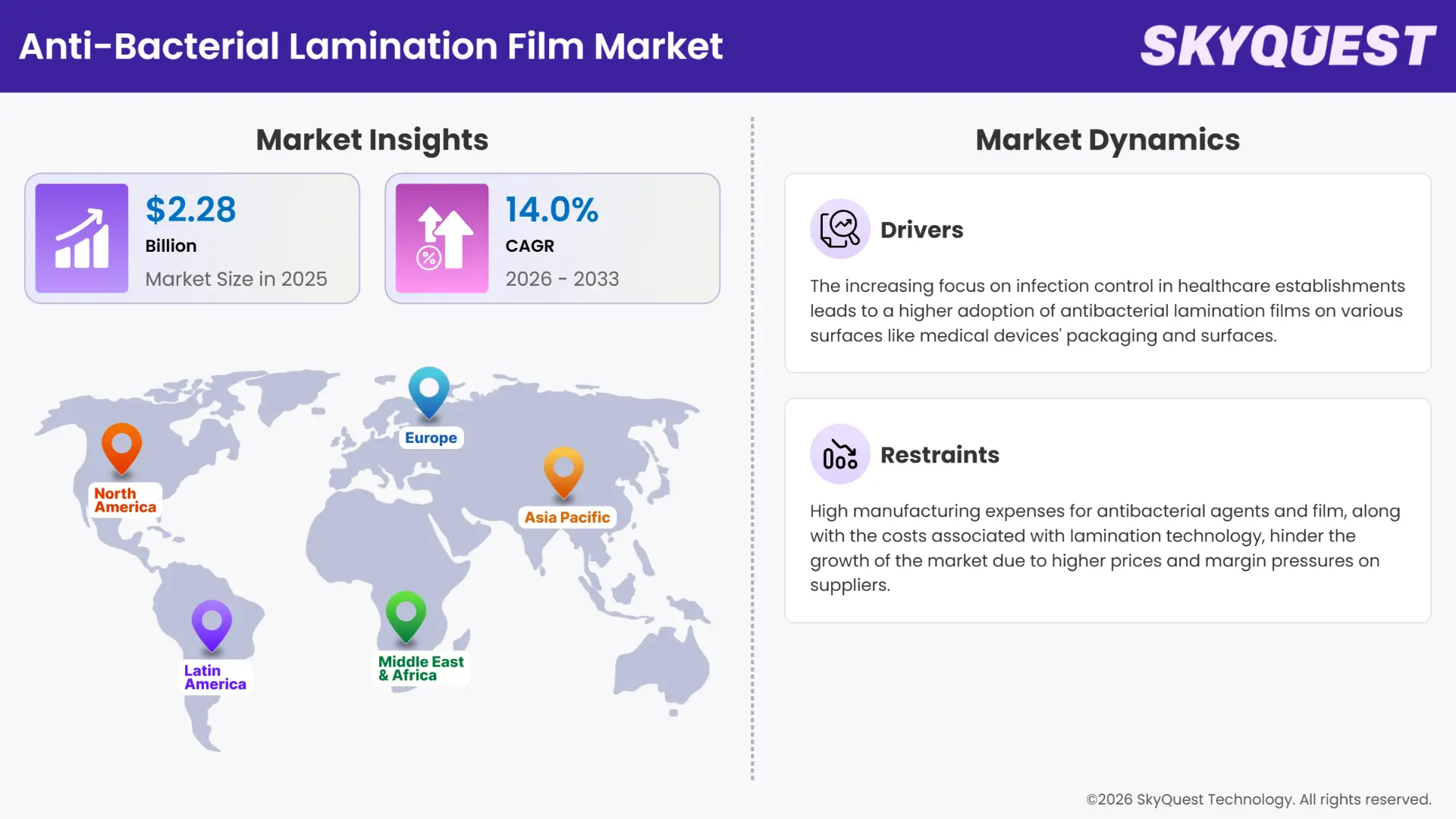
Global Anti-Bacterial Lamination Film Market size was valued at USD 2.00 Billion in 2024 and is poised to grow from USD 2.28 Billion in 2025 to USD 6.50 Billion by 2033, growing at a CAGR of 14.0% during the forecast period (2026-2033).
Key Takeaways: Market Trends & Insights
Growing emphasis on hygiene and infection control, rising demand from healthcare and food packaging sectors, increasing awareness of surface contamination risks, advancements in antimicrobial film technologies, and focus on safety and preventive measures are driving sales of antibacterial lamination films.
Increasing application on the surface of medical devices used in healthcare settings and food packaging to increase shelf life are key contributors to the growth of the market. Improved technology for film production has helped achieve high-quality films that offer both antimicrobial and transparent features. Surge in incidence of hospital-acquired infections and food contamination concerns are also expected to boost investments in anti-bacterial lamination film adoption. Growing awareness regarding hygiene and infection prevention among consumers and industries around the world coupled with a shift toward safer packaging and surface protection is expected to primarily drive anti-bacterial lamination film market growth.
On the contrary, high costs of advanced antibacterial films, regulatory compliance challenges, performance variability, and concerns regarding long-term effectiveness and environmental impact are expected to impede anti-bacterial lamination film market penetration through 2033.
How is IoT Enhancing Quality Control in the Anti-bacterial Lamination Film Market?
Management of quality in the industry of antibacterial lamination film is experiencing a dramatic change because of sensors that use IoT capabilities to continually track vital parameters such as film coating thickness, humidity levels, temperature, and adhesion. This is facilitated by machine vision technology to detect surface imperfections and inline sensors to measure the distribution of the antimicrobial substance. The cloud dashboard has further benefitted by providing batch tracking features.
In September 2025, Sealed Air implemented IoT monitoring with AI analytics in its lamination lines to optimize coating processes and reduce defects and waste. This approach improves confidence in antibacterial film performance and accelerates market adoption by lowering production risks and enhancing operational efficiency across the supply chain.
To get more insights on this market click here to Request a Free Sample Report
Global anti-bacterial lamination film market is segmented by material base, anti-microbial agent, finish type, application, and region. Based on material base, the market is segmented into Polypropylene (BOPP) Films, Polyethylene Terephthalate (PET) Films, and nylon based films. Based on anti-microbial agent, the market is segmented into Silver Ion (Ag+) Technology, Zinc/Copper based additives, and organic/natural antimicrobials. Based on finish type, the market is segmented into high gloss anti-bacterial, silk/matte finish, and scratch resistant coatings. Based on application, the market is segmented into food & beverage packaging, medical records & healthcare stationery, educational books & menus, and high-traffic signage & displays. Based on region, the market is segmented into North America, Europe, Asia Pacific, Latin America, and Middle East & Africa.
What Role Do Polypropylene (BOPP) Films Play In Enhancing Antibacterial Lamination Film Performance?
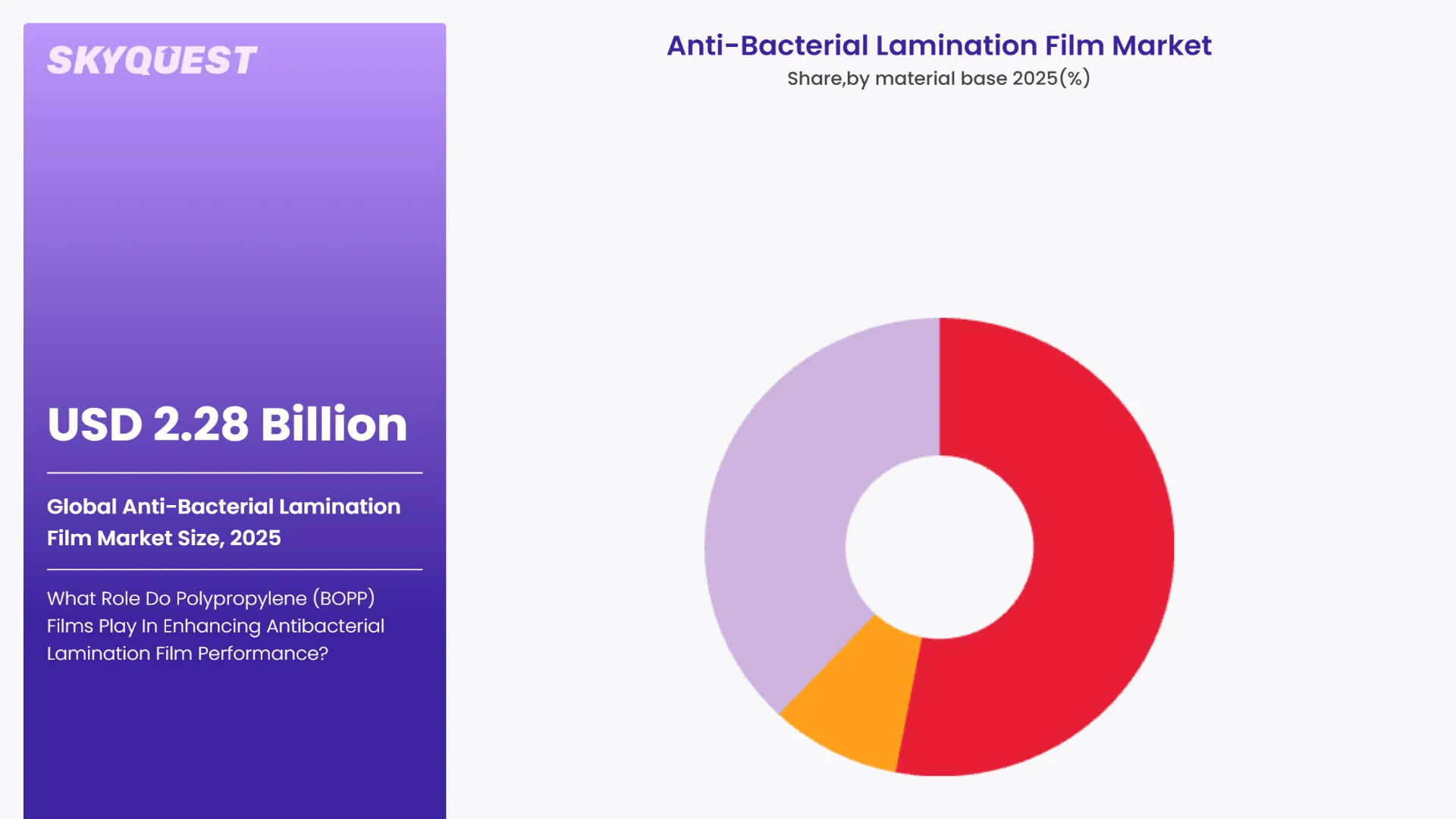
The polypropylene (BOPP) films segment is slated to account for the highest global anti-bacterial lamination film market share. Base material properties align with large scale lamination manufacturing demands, yielding excellent printability, moisture handling, and cost-effective processing, which cements the dominance of this segment. This makes the process more compatible, enabling high throughput usage of biocidal films, and encouraging suppliers to develop formulations specifically for such applications, thereby developing a self-reinforcing preference among brand owners and packagers.
However, Polyethylene Terephthalate (PET) films are emerging as the most rapidly expanding segment as per this anti-bacterial lamination film market forecast. Superior thermal and dimensional stability that enable sterilization compatible lamination creates new opportunities via this segment. Increasing needs from the medical industry and premium packaging sectors, coupled with innovation in materials which improve bonding capabilities, increase adoption and expand potential in high value laminates.
How is Silver Ion (Ag+) Technology Addressing Durability And Safety Concerns In Anti-bacterial Lamination Films?
The Silver Ion (Ag+) technology segment is estimated to lead the global anti-bacterial lamination film market revenue generation through 2033. Its proven broad spectrum antimicrobial efficacy integrates effectively into polymer matrices without compromising optical clarity or surface durability, thereby helping this segment hold sway over others. Familiarity with existing regulations and prior experience with suppliers reduce the risks associated with implementation by converters and brands alike, resulting in the extensive use of these products in healthcare and consumer applications involving laminated substrates.
On the other hand, organic/natural antimicrobials represent the fastest growing segment, fueled by the requirement for “clean label” and environmentally sustainable formulations that encourage formulators to create bio-based and biodegradable active ingredients suitable for laminated films. Progress in stabilizing technology and encapsulation systems, along with increased importance placed by brands on naturalness and environmentally sustainable sourcing, further propels the trend, leading to new product categories and partnerships with film manufacturers.
To get detailed segments analysis, Request a Free Sample Report
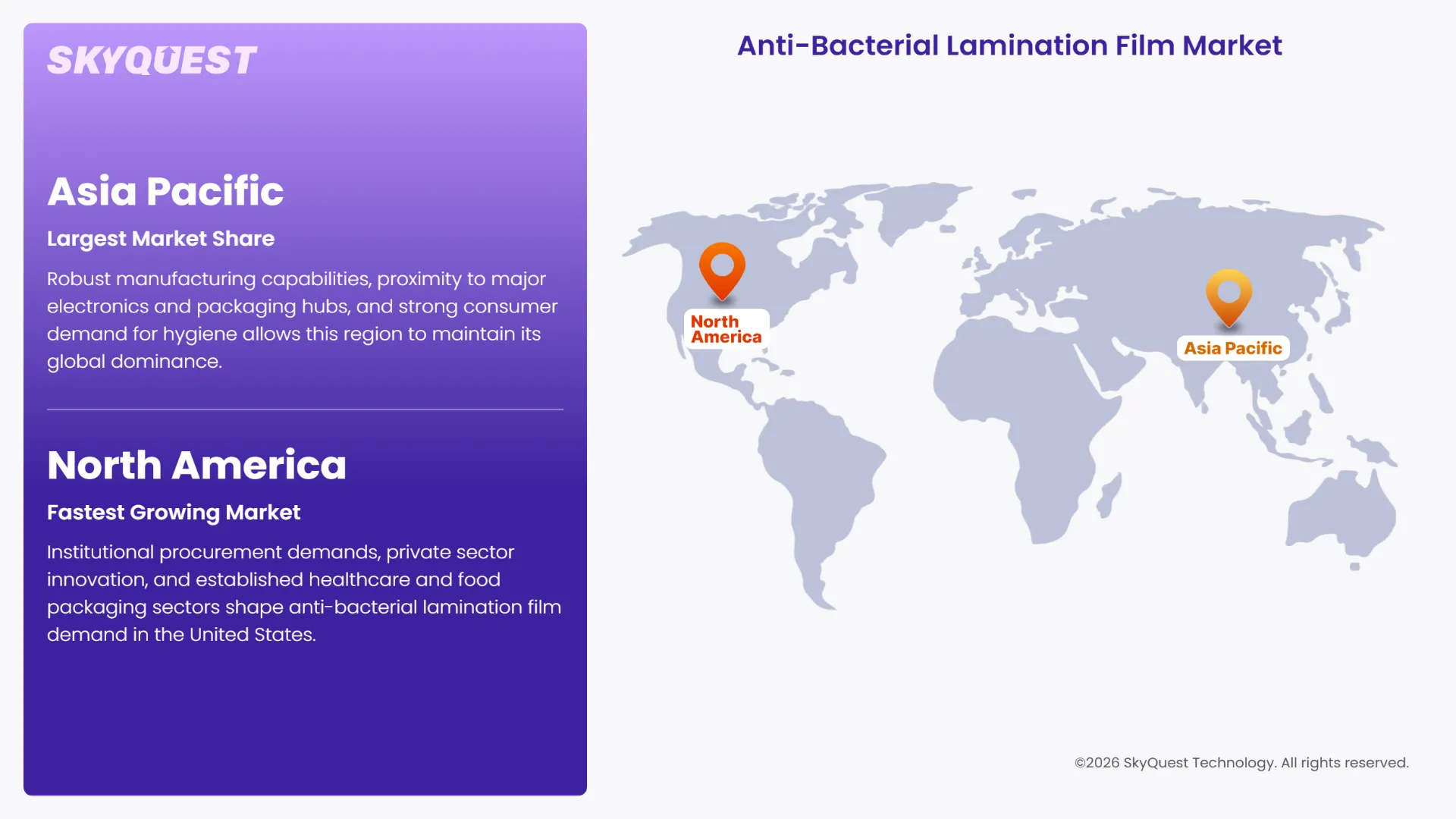
Robust manufacturing capabilities, proximity to major electronics and packaging hubs, and strong consumer demand for hygiene allows this region to maintain its global dominance. Public health regulations and the establishment of proactive standards in countries such as China, Japan, India, and Australia encourage the use within the following three areas healthcare; food packaging; and consumer electronics. Competitive pricing, along with innovative coating and surface treatment technology, has made the Asia Pacific both a manufacturing powerhouse, but also an industry leader in developing new applications and performance standards. Local manufacturing agility, along with a strong export base, provide further reinforcement to this market and attract continued investment and strategic partnerships across the entire value chain. Low costs of manufacturing and supportive government initiatives are also helping cement the dominance of Asia Pacific in the long run.
Advanced material science, precision manufacturing, and early adoption by healthcare and electronics manufacturers shapes anti-bacterial lamination film sales in Japan. The importance of these films is further reinforced by the durability and dependability of the films along with the stress laid on the performance aspect during purchases. Effective coordination between research institutes and the industry results in the production of high-quality films.
Rapid innovation, strong integration with electronics and packaging clusters, and scale-up activity by converters and manufacturers shapes market growth in South Korea. Technical exchanges with international suppliers facilitate exports, whereas brand-conscious buyers opt for proven technologies. Manufacturers put effort into developing surface treatment processes and antimicrobial treatments that can be used in different applications. The government’s quality standards and customers’ focus on safety promote adoption of innovations in the market.
Emphasis on infection prevention in healthcare, increasing demand for safe food packaging, and strong interest from commercial and consumer product manufacturers are creating new business scope in the region. Presence of a mature regulatory framework combined with established standards incentivize manufacturers to procure certified materials for their products, while strong distribution networks and technical service organizations support the interrelationships necessary for penetration into this marketplace. Material innovators collaborate with converters and end-users to accelerate the development of customized products for specific applications. There is a high level of awareness by brand owners about their reputations and potential liability for defective products, and this awareness creates an incremental investment into laminated protective coatings on products. Strategic collaborations and targeted R&D efforts by local companies continue to optimize their ability to meet sophisticated performance criteria while shortening the amount of time it takes for a product to enter the markets.
Institutional procurement demands, private sector innovation, and established healthcare and food packaging sectors shape anti-bacterial lamination film demand in the United States. Validated antimicrobial efficacy is key to brand owners, leading manufacturers to provide such certifications and assistance. The specialty converters create films for challenging uses, while the collaborative pilot programs with users speed up the process of product launch. Liability and consumer assurance are the focus areas when choosing laminates.
High demand for safe food packaging, procurement standards, and collaboration between converters and material suppliers' shapes anti-bacterial lamination film adoption in Canada. Buyers are interested in films that have a combination of efficiency in anti-microbial action and are recyclable. The local producers stress custom products that cater to both cold chain and retail uses, along with services. Dynamics of the market work in favor of suppliers who comply with health guidelines.
Robust regulatory standards, sustainability integration, and close collaboration between research institutes and industry are boosting anti-bacterial lamination film demand in Europe. Rapid prototyping and customized solutions for healthcare, food packaging, and public infrastructure are achieved through strong engineering capabilities and extensive networks of specialty converters. Establishment of cross border partnerships and developing certified frameworks creates credibility in product claims. Continuing to invest in surface technologies and coatings increases product differentiation; combined these conditions encourage quality-conscious buyers to adopt new products and support a competitive market that focuses on performance, traceability, and responsible material choices. Pilot projects, industry consortia and targeted funding to applied materials science continue to accelerate the commercialization of next generation films while improving market access among European countries such as France, Spain, and the United Kingdom.
Emphasis on precision engineering, stringent quality norms, and demand from medical end users shapes anti-bacterial lamination film sales in Germany. Partnership with research institutes facilitates product improvement. Purchase policies encourage the use of only certified films that prove effective and environmentally sound. German manufacturers are characterized by their pursuit of technical perfection in cooperation with automation systems, thus providing top-notch anti-bacterial lamination films.
Blend of innovation and strong healthcare procurement, with emphasis on product safety shapes anti-bacterial lamination film procurement in the United Kingdom. Technical service and testing help achieve market access and procurements based on demonstrated performance. In such conditions, the implementation of specific lamination systems becomes attractive. Suppliers collaborate with brand owners in designing and validating antimicrobial films for use in retail and medical environments, considering their recycling potential.
Emphasis on food safety, collaborative research, and interest from healthcare providers for hygienic surface solutions is boosting sales of anti-bacterial lamination film in France. Collaboration between producers and consumers is very beneficial in promoting innovation and its application. French converters excel in providing customized coating and finishing systems that fulfil the requirement for antimicrobial properties.
To know more about the market opportunities by region and country, click here to
Buy The Complete Report
Expanding Healthcare Sterility Needs
Consumer Preference for Hygienic Surfaces
High Production Material Costs
Complex Regulatory Approval Requirements
Request Free Customization of this report to help us to meet your business objectives.
The competitive landscape is characterized by rapid product differentiation and strategic alliances as hygiene demand drives suppliers to embed antimicrobial chemistries into lamination films; incumbents and new entrants pursue partnerships and product launches to secure specification wins, exemplified by Diversey’s alliance with Halomine and Cosmo Films’ BOPP antimicrobial lamination launch, while technical validation such as Taghleef’s Derprosa antiviral testing accelerates procurement decisions.
SkyQuest’s ABIRAW (Advanced Business Intelligence, Research & Analysis Wing) is our Business Information Services team that Collects, Collates, Correlates, and Analyses the Data collected by means of Primary Exploratory Research backed by robust Secondary Desk research.
As per SkyQuest analysis, high emphasis on hygiene and infection control along with increasing demand from healthcare and food packaging industries are anticipated to drive the demand for antibacterial lamination films going forward. However, high production costs, regulatory compliance challenges, and performance variability are slated to slow down the adoption of antibacterial lamination films in the future. Asia Pacific is slated to spearhead the demand for antibacterial lamination films owing to developing healthcare infrastructure, stringent food safety regulations, and growing awareness regarding infection prevention. Advancements in antimicrobial coatings, integration of IoT-enabled quality monitoring systems, and development of eco-friendly film solutions are anticipated to be key trends driving the antibacterial lamination film sector in the future.
| Report Metric | Details |
|---|---|
| Market size value in 2024 | USD 2.00 Billion |
| Market size value in 2033 | USD 6.50 Billion |
| Growth Rate | 14.0% |
| Base year | 2024 |
| Forecast period | 2026-2033 |
| Forecast Unit (Value) | USD Billion |
| Segments covered |
|
| Regions covered | North America (US, Canada), Europe (Germany, France, United Kingdom, Italy, Spain, Rest of Europe), Asia Pacific (China, India, Japan, Rest of Asia-Pacific), Latin America (Brazil, Rest of Latin America), Middle East & Africa (South Africa, GCC Countries, Rest of MEA) |
| Companies covered |
|
| Customization scope | Free report customization with purchase. Customization includes:-
|
To get a free trial access to our platform which is a one stop solution for all your data requirements for quicker decision making. This platform allows you to compare markets, competitors who are prominent in the market, and mega trends that are influencing the dynamics in the market. Also, get access to detailed SkyQuest exclusive matrix.
Table Of Content
Executive Summary
Market overview
Parent Market Analysis
Market overview
Market size
KEY MARKET INSIGHTS
COVID IMPACT
MARKET DYNAMICS & OUTLOOK
Market Size by Region
KEY COMPANY PROFILES
Methodology
For the Anti-Bacterial Lamination Film Market, our research methodology involved a mixture of primary and secondary data sources. Key steps involved in the research process are listed below:
1. Information Procurement: This stage involved the procurement of Market data or related information via primary and secondary sources. The various secondary sources used included various company websites, annual reports, trade databases, and paid databases such as Hoover's, Bloomberg Business, Factiva, and Avention. Our team did 45 primary interactions Globally which included several stakeholders such as manufacturers, customers, key opinion leaders, etc. Overall, information procurement was one of the most extensive stages in our research process.
2. Information Analysis: This step involved triangulation of data through bottom-up and top-down approaches to estimate and validate the total size and future estimate of the Anti-Bacterial Lamination Film Market.
3. Report Formulation: The final step entailed the placement of data points in appropriate Market spaces in an attempt to deduce viable conclusions.
4. Validation & Publishing: Validation is the most important step in the process. Validation & re-validation via an intricately designed process helped us finalize data points to be used for final calculations. The final Market estimates and forecasts were then aligned and sent to our panel of industry experts for validation of data. Once the validation was done the report was sent to our Quality Assurance team to ensure adherence to style guides, consistency & design.
Analyst Support
Customization Options
With the given market data, our dedicated team of analysts can offer you the following customization options are available for the Anti-Bacterial Lamination Film Market:
Product Analysis: Product matrix, which offers a detailed comparison of the product portfolio of companies.
Regional Analysis: Further analysis of the Anti-Bacterial Lamination Film Market for additional countries.
Competitive Analysis: Detailed analysis and profiling of additional Market players & comparative analysis of competitive products.
Go to Market Strategy: Find the high-growth channels to invest your marketing efforts and increase your customer base.
Innovation Mapping: Identify racial solutions and innovation, connected to deep ecosystems of innovators, start-ups, academics, and strategic partners.
Category Intelligence: Customized intelligence that is relevant to their supply Markets will enable them to make smarter sourcing decisions and improve their category management.
Public Company Transcript Analysis: To improve the investment performance by generating new alpha and making better-informed decisions.
Social Media Listening: To analyze the conversations and trends happening not just around your brand, but around your industry as a whole, and use those insights to make better Marketing decisions.
REQUEST FOR SAMPLE
 REQUEST FREE CUSTOMIZATION
Global Anti-Bacterial Lamination Film Market size was valued at USD 2.0 Billion in 2024 and is poised to grow from USD 2.28 Billion in 2025 to USD 6.5 Billion by 2033, growing at a CAGR of 14.0% during the forecast period (2026-2033).
The competitive landscape is characterized by rapid product differentiation and strategic alliances as hygiene demand drives suppliers to embed antimicrobial chemistries into lamination films; incumbents and new entrants pursue partnerships and product launches to secure specification wins, exemplified by Diversey’s alliance with Halomine and Cosmo Films’ BOPP antimicrobial lamination launch, while technical validation such as Taghleef’s Derprosa antiviral testing accelerates procurement decisions. 'Avery Dennison Corporation', '3M Company', 'Sealed Air Corporation', 'DuPont de Nemours, Inc.', 'Transcendia, Inc.', 'Coveris Holdings S.A.', 'Klöckner Pentaplast Group', 'UPM-Kymmene Corporation', 'Tetra Pak International S.A.', 'Innovia Films Ltd.', 'Berry Global, Inc.', 'Ahlstrom-Munksjö Oyj', 'Asteelflash', 'Mondi Group', 'CCL Industries Inc.', 'Lintec Corporation', 'Toppan Printing Co., Ltd.', 'Toray Industries, Inc.', 'Schott AG', 'Allwyn Corp.'
Healthcare facilities increasingly prioritize infection control, which encourages widespread use of antibacterial lamination films on medical packaging, device surfaces, and high contact areas. This priority drives procurement decisions toward materials that reduce microbial contamination risk, prompting manufacturers to specify and adopt laminated films as part of sterile barrier systems and protective coverings. As demand for reliable surface protection grows, suppliers expand production and innovate formulations and laminating techniques, reinforcing market growth through broader specification inclusion and stronger value propositions for buyers.
Sustainable Material Innovation: Manufacturers and converters are prioritizing development of eco-conscious lamination films that balance antibacterial performance with reduced environmental footprint. Emphasis on bio-based polymers, enhanced recyclability and compatibility with circular economy practices is driving material choices and supplier collaborations. Brands seek differentiation through certified sustainable packaging that meets consumer expectations while preserving antimicrobial efficacy. Investments in coating chemistries and processing methods aim to lower lifecycle impact without compromising safety, enabling partnerships, supply chain transparency and market positioning focused on hygiene and sustainability.
Asia Pacific Dominate the Global Anti-Bacterial Lamination Film Market.
Polypropylene (BOPP) Films hold the largest share of the Anti-Bacterial Lamination Film Market due to their excellent transparency, durability, cost-effectiveness, and compatibility with antimicrobial coatings.
Nylon Based Films are projected to be the fastest-growing segment because of their superior barrier properties, strength, and increasing adoption in specialized packaging applications.
High production costs of antimicrobial materials, regulatory compliance requirements, performance variability, and concerns regarding long-term effectiveness and environmental impact are key restraints for market expansion.


Want to customize this report? This report can be personalized according to your needs. Our analysts and industry experts will work directly with you to understand your requirements and provide you with customized data in a short amount of time. We offer $1000 worth of FREE customization at the time of purchase.
Feedback From Our Clients


 USA (+1) 351-333-4748

