Adherence Packaging Market
Report ID: SQMIG15H2223
Report ID: SQMIG15H2223
[email protected]
USA +1 351-333-4748
Report ID:
SQMIG15H2223 |
Region:
Global |
Published Date: June, 2026
Pages:
157
|Tables:
183
|Figures:
79


Global Adherence Packaging Market size was valued at USD 1.13 Billion in 2024 and is poised to grow from USD 1.21 Billion in 2025 to USD 2.06 Billion by 2033, growing at a CAGR of 6.9% during the forecast period (2026-2033).
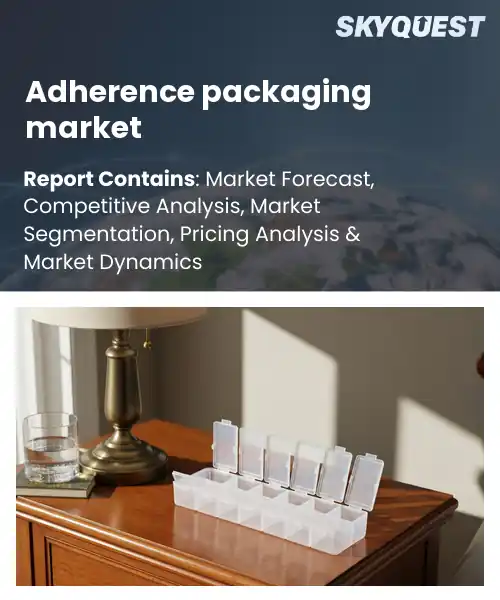
Adherence packaging market globally is made up of packaging products that include blister packs, dose dispensing tray and intelligent dispensers that allow for organizing medicines in a way that they will be taken on time according to scheduled days of usage. The main driving force for this type of innovation was due to the rising trend of chronic illnesses and medication nonadherence by patients that have led to huge expenses in the field of healthcare each year. Innovations started from the cardboard pill box in the early 2000s until the development of electronic caps and Bluetooth containers in recent years.
The other important factor that is necessary to change the market for adherence packaging is its connection with the digital healthcare sector, which allows for developing an interaction between the patient, the doctor, and the payer. Due to the smart packaging technology collecting and delivering data on dosing, the actions can be taken, thus reducing the number of unsuccessful dosages. Such a property was the reason for the development of such payment methods in Europe and the USA based on the proven benefits of the improved adherence rate. The examples of implementation may be smart pill bottles used in a hospice company to prevent 15% of the hospital admission cases.
How is AI-driven Automation Improving Efficiency in the Adherence Packaging Market?
The AI enabled automation revolutionizes the adherence of packaging in the sense that prescription information gets digitally matched with the print speed and production line. Demand predictions, production scheduling, and blister layout changes happen dynamically, thus minimizing waste and lowering turnaround times. There are vision systems in place that validate all the dose compartments, eliminating the need for any human intervention, and making the whole process more accurate. Robotic arms do the pouch sealing and labeling operations, hence allowing operators to be engaged in monitoring the operations for quality assurance. This is how manufacturers are trying to cope with the growing needs of chronic diseases in terms of medication packaging.
Market snapshot - (2026-2033)
Global Market Size
USD 1.13 Billion
Largest Segment
Multi-dose Adherence Packaging
Fastest Growth
Smart Adherence Packaging
Growth Rate
6.9% CAGR
To get more insights on this market click here to Request a Free Sample Report
Global adherence packaging market is segmented by product type, material type, technology, application, end user, packaging format and region. Based on product type, the market is segmented into Blister Adherence Packaging, Multi-dose Adherence Packaging, Unit-dose Packaging, Calendar Packaging, Pouch-based Adherence Packaging, Smart Adherence Packaging and Medication Compliance Cards. Based on material type, the market is segmented into Plastic, Paperboard, Aluminum Foil and Composite Materials. Based on technology, the market is segmented into Conventional Adherence Packaging, RFID-enabled Packaging, NFC-enabled Packaging and Connected Smart Packaging. Based on application, the market is segmented into Prescription Drugs, OTC Medications, Clinical Trials, Specialty Pharmaceuticals and Long-term Care Medications. Based on end user, the market is segmented into Retail Pharmacies, Hospital Pharmacies, Long-term Care Facilities, Pharmaceutical Manufacturers and Home Healthcare Providers. Based on packaging format, the market is segmented into Blister Cards, Strip Packs, Pouches, Wallet Packs and Smart Medication Packs. Based on region, the market is segmented into North America, Europe, Asia Pacific, Latin America and Middle East & Africa.
Adherence packaging segment of blister packaging takes the lead as it has a dose-specific visual indicator, which works on the principle of alignment with patient’s routine and reduces dose misses as well as medication errors. The healthcare practitioners prefer it owing to its tamper evidence feature, inventory management capability, and printed instruction feature that instills confidence in patients. Pharmacies can save time in the preparation process, and it enables faster dispensation as well as labor, and manufacturers like it because of its scalable blister lines that make high-volume manufacturing possible.
However, smart adherence packaging segment is expected to have the highest growth rate as it has built-in sensors and connectivity features that offer real-time dose verification and reminders as well as analytics. It caters to tech-savvy customers as well as caregivers, and hence there is a strong need for health platforms.
Conventional adherence packaging segment takes the lead due to its efficiency, cost effectiveness, ability to satisfy the regulatory compliance standards, and its acceptance among pharmacists and patients. With its simple design, it has a lower barrier to entry, stable supply chain and good medication security, thus becoming a major part of many dispensing procedures in various healthcare facilities. Its strong manufacturing base and pharmacist training also contribute to the leadership of the conventional adherence packaging segment while its reliability makes the manufacturer less vulnerable to any risks.
On the other hand, RFID enabled packaging segment represents a potential high growth area due to digital tagging that provides better inventory tracking, automated dispensing, and anti-counterfeiting abilities which correspond to the requirements of the current safety regulations and supply chain digitalization.
To get detailed segments analysis, Request a Free Sample Report
The leadership position held by North America is a result of the maturity of its healthcare system, stringent regulation policies that promote the development of patient-centered solutions, and significant investments in cutting-edge packaging technologies. Companies in the pharmaceutical industry in both Canada and the United States have the advantage of an already well-developed network of delivery systems and the high use of digital health technologies that work effectively in conjunction with adherence packaging solutions. The priority of payers and providers regarding drug adherence leads to lower costs of treatment and drives the adoption of multi-dose and dose-timer systems.
Market for adherence packaging in the United States is driven by the combination of the advanced health-IT infrastructure, high motivation of insurers to comply with the rules, and various specialty pharmacies that support customized packaging. Pharmaceutical firms experiment with smart blister packaging and electronic prompts, and big healthcare systems incorporate them into the chronic disease management programs. Education campaigns for patients enhance this process, creating a positive feedback loop.
The market for adherence packaging products in Canada is fostered by the presence of a healthcare system that prioritizes cost-effective drug management and patient safety. Provinces’ formularies are prone to compensating for compliance packaging, hence motivating companies to design their products for aging and rural patients. Synergy between pharmacies and technology vendors results in an integration of dispensing systems, whereas multilingual support materials ensure better user-friendliness.
The fast growth of Europe is underpinned by progressive regulatory frameworks which support patient-centred medicine management and fragmented but cooperative markets where the speed of innovation diffusion is high. Health ministries of the area use reimbursement programs to encourage patients to follow treatment plans, and high attention to sustainability encourages producers to develop recyclable and biodegradable packs. The presence of chronic diseases in combination with the elderly population constantly drives the demand for easy-to-use multiple dose delivery systems. The integration of electronic medical records and smart packaging provides opportunities for real-time tracking, which is highly appreciated by both doctors and payers.
Germany's adherence packaging industry operates in a tightly regulated environment that demands stringent safety guidelines for patients, thereby promoting multi-dose packages. There is collaboration between pharmaceutical manufacturers and technology companies due to a strong presence of both in the country. Health insurance companies offer incentives for proper packaging, especially when dealing with patients who suffer from chronic diseases. Academic institutions conduct research into clinical outcomes, which boosts the country's dominance in the market.
Market for adherence packaging in the United Kingdom has witnessed a fast uptake due to initiatives from the NHS where adherence tools are integrated into treatment processes. The payers’ preference for adherence products is seen especially with medicines prescribed for hypertension and psychiatric disorders, and they promote the use of smart blister packages. The health-oriented startup ecosystem spurs innovation, while pharmacies experiment with dispensing machines. Patient education campaigns promote drug safety; consequently, the UK leads the market.
The adherence packaging industry in France is emerging through the incorporation of compliance tools in community pharmacies' services by healthcare providers. Reimbursement policies favor multi-dose packaging especially for senior citizens who are on multiple drugs. Local companies work with technology companies to incorporate QR codes in their packages, making them more accessible. Patient education promotes understanding of the importance of drug administration schedules, hence acceptance.
Asia Pacific is consolidating its position because of a combination of technological advances, policy initiatives, and demographic trends that favor drug adherence. Prominent countries in Asia Pacific are making considerable investments in research and development of smart packaging technologies that feature connectivity and sensors, which fit well with prevalent smartphone usage among their population. Governments are offering incentives and guidelines that reduce the entrybarriers to adoption of such technologies by enabling reimbursement and other policies for innovative drug adherence solutions especially for patients suffering from chronic diseases. Increasing size of the middle class in Asia Pacific creates greater accessibility to private healthcare, thus boosting the need for multi-dose packages.
The market for medication adherence packaging in Japan utilizes the sophisticated technology base of the country by developing smart blisters featuring NFC and sensor technology. The growing number of elderly people in the population creates a need for simple-to-use multi-dose packaging systems for complex medication schedules. Government-sponsored health schemes finance the use of compliant packaging for chronic illnesses, while leading pharmaceutical companies collaborate with technology start-ups to enable the transfer of data.
The drive behind the South Korean market for adherence packaging lies in the fast adoption of digital technology in health and robust government backing of innovation in medication management. Top biotech companies work together with electronics companies to ensure that their dosage instruments have built-in Bluetooth and mobile app connectivity for easy monitoring of adherence. The insurance programs cover smart packaging for diabetics and heart disease patients, facilitating increased adoption.
To know more about the market opportunities by region and country, click here to
Buy The Complete Report
Regulatory Policies are Strengthening Demand
Strict regulatory bodies are now coming up with tougher labeling rules that include dosage information and tamper evidence to make the manufacturers use special adherence of packaging. The push from regulatory bodies makes pharmaceutical firms incorporate smart packaging systems, thus making the products safer and more reliable for patients. Consequently, the market faces high demand, since compliance in packaging is seen as a way of curbing medication errors and improving the results of therapy by health care providers and insurance firms.
Patient Engagement Technologies are Enhancing Compliance
There are smart adherence packages being integrated into digital health solutions where reminders are provided on real-time basis as well as keeping track of how frequently the medications are used by patients. This technology will impactpatient behavior in adopting consistency in using their drugs through connectivity and user-friendly designs to enable people to cope with the complexity of taking medicines without any help from outside sources. Physicians gain benefits from the insights provided in these solutions for better patient care.
High Material Costs are Limiting Adoption
The specific type of polymers as well as electronic technology involved in making smart adherence packaging makes them costly, hence increasing the cost of production. As the price of materials increases, pharmaceutical companies tend to postpone their investments in packaging technology to maintain their profitability margins. Therefore, there is reluctance among pharmaceutical companies to embrace these innovations because of cost concerns. Hence, small firms face challenges in competing with big players due to high costs.
Supply Chain Disruptions are Hindering Growth
The unpredictability in the global supply chain owing to shortages of raw materials and logistical problems makes it difficult to determine the lead time of critical components that will go into the adherence packaging, like sensors and tamper evidence films. Companies face delayed delivery which adds to the cost of holding inventories as well as the unreliability of product launch. This makes the companies take a conservative approach toward production, which in turn limits the size of the introduction of new packaging. Consequently, the ability to expand the market becomes limited due to the focus on risk management rather than innovation in packaging.
Request Free Customization of this report to help us to meet your business objectives.
Competition within the international market for medication adherence packaging industry has been influenced by M&A strategies, collaborations, and technology advancements with the goal of increasing compliance among patients and improving efficiency in the supply chain. Top companies are making acquisitions of packaging service providers to increase their product lines. Collaborations have been made with pharmaceutical producers to provide solutions that integrate intelligent blisters and digital medication adherence tracking. Technology advancements are centered on RFID packaging and dispensing technologies.
Sustainability‑Driven Material Innovation: In response to regulations and customer expectations, manufacturers are paying greater attention to the development of environmentally friendly packaging options for their health care products. Biodegradable plastics, recycled PET, and films from plants are being incorporated into adherence packaging design. This helps minimize carbon emissions while preserving necessary barrier properties. These trends prompt partnerships with eco-friendly material providers and foster innovation in research and development of packaging components that can be recycled or reused.
Digital Integration Enhances Compliance: With the advent of interconnected health ecosystems, there is an increase in efforts being made by packaging companies to integrate technological components like QR code and near-field communication into adherence products. The integration makes it possible to track intake in real time, provide automatic alerts, and transmit data to either healthcare professionals or health platforms, hence helping in ensuring better patient care and developing stronger therapeutic cycles. Packaging companies are teaming up with software companies to design easy-to-use and secure software interfaces.
SkyQuest’s ABIRAW (Advanced Business Intelligence, Research & Analysis Wing) is our Business Information Services team that Collects, Collates, Correlates, and Analyses the Data collected by means of Primary Exploratory Research backed by robust Secondary Desk research.
As per SkyQuest analysis the global adherence packaging market is anticipated to stricter regulatory measures which demand clear dosing information and tampering detection, forcing companies to use specific packaging formats. Another significant driver is the fast pace of digitization of healthcare in which sensors, QR codes, and Bluetooth are embedded to create adherence packs and provide real-time data to doctors. North America continues to dominate the regional markets due to the developed health IT infrastructure and payers' motivation. Blister adherence packaging dominates the product landscape due to the presence of dose-specific visual indications and ease of manufacturing. Yet, the high cost of materials for smart components hinders market growth.
| Report Metric | Details |
|---|---|
| Market size value in 2024 | USD 1.13 Billion |
| Market size value in 2033 | USD 2.06 Billion |
| Growth Rate | 6.9% |
| Base year | 2024 |
| Forecast period | (2026-2033) |
| Forecast Unit (Value) | USD Billion |
| Segments covered |
|
| Regions covered | North America (US, Canada), Europe (Germany, France, United Kingdom, Italy, Spain, Rest of Europe), Asia Pacific (China, India, Japan, Rest of Asia-Pacific), Latin America (Brazil, Rest of Latin America), Middle East & Africa (South Africa, GCC Countries, Rest of MEA) |
| Companies covered |
|
| Customization scope | Free report customization with purchase. Customization includes:-
|
To get a free trial access to our platform which is a one stop solution for all your data requirements for quicker decision making. This platform allows you to compare markets, competitors who are prominent in the market, and mega trends that are influencing the dynamics in the market. Also, get access to detailed SkyQuest exclusive matrix.
Table Of Content
Executive Summary
Market overview
Parent Market Analysis
Market overview
Market size
KEY MARKET INSIGHTS
COVID IMPACT
MARKET DYNAMICS & OUTLOOK
Market Size by Region
KEY COMPANY PROFILES
Methodology
For the Adherence Packaging Market, our research methodology involved a mixture of primary and secondary data sources. Key steps involved in the research process are listed below:
1. Information Procurement: This stage involved the procurement of Market data or related information via primary and secondary sources. The various secondary sources used included various company websites, annual reports, trade databases, and paid databases such as Hoover's, Bloomberg Business, Factiva, and Avention. Our team did 45 primary interactions Globally which included several stakeholders such as manufacturers, customers, key opinion leaders, etc. Overall, information procurement was one of the most extensive stages in our research process.
2. Information Analysis: This step involved triangulation of data through bottom-up and top-down approaches to estimate and validate the total size and future estimate of the Adherence Packaging Market.
3. Report Formulation: The final step entailed the placement of data points in appropriate Market spaces in an attempt to deduce viable conclusions.
4. Validation & Publishing: Validation is the most important step in the process. Validation & re-validation via an intricately designed process helped us finalize data points to be used for final calculations. The final Market estimates and forecasts were then aligned and sent to our panel of industry experts for validation of data. Once the validation was done the report was sent to our Quality Assurance team to ensure adherence to style guides, consistency & design.
Analyst Support
Customization Options
With the given market data, our dedicated team of analysts can offer you the following customization options are available for the Adherence Packaging Market:
Product Analysis: Product matrix, which offers a detailed comparison of the product portfolio of companies.
Regional Analysis: Further analysis of the Adherence Packaging Market for additional countries.
Competitive Analysis: Detailed analysis and profiling of additional Market players & comparative analysis of competitive products.
Go to Market Strategy: Find the high-growth channels to invest your marketing efforts and increase your customer base.
Innovation Mapping: Identify racial solutions and innovation, connected to deep ecosystems of innovators, start-ups, academics, and strategic partners.
Category Intelligence: Customized intelligence that is relevant to their supply Markets will enable them to make smarter sourcing decisions and improve their category management.
Public Company Transcript Analysis: To improve the investment performance by generating new alpha and making better-informed decisions.
Social Media Listening: To analyze the conversations and trends happening not just around your brand, but around your industry as a whole, and use those insights to make better Marketing decisions.
REQUEST FOR SAMPLE
 REQUEST FREE CUSTOMIZATION
Global Adherence Packaging Market size was valued at USD 1.13 Billion in 2024 and is poised to grow from USD 1.21 Billion in 2025 to USD 2.06 Billion by 2033, growing at a CAGR of 6.9% during the forecast period (2026-2033).
The competitive landscape of the global adherence packaging market is shaped by strategic M&A activity, collaborative partnerships, and technology‑driven innovations aimed at improving patient compliance and supply‑chain efficiency. Leading firms are acquiring specialized packaging providers to broaden their product portfolios, while alliances with pharmaceutical manufacturers enable integrated solutions that combine smart blister packs with digital adherence monitoring. Recent technology innovations focus on RFID‑enabled packaging and automated dispensing systems to differentiate offerings and capture market share. 'Jones Healthcare Group', 'WestRock', 'Cardinal Health', 'Omnicell', 'TCGRx', 'Parata Systems', 'Pearson Medical Technologies', 'Medicine-On-Time', 'Drug Package', 'Rx Systems', 'SureMed Compliance Packaging', 'AARDEX Group', 'Global Factories', 'McKesson Corporation', 'RxSafe', 'Pharmapack', 'Dividella', 'Constantia Flexibles', 'Liveo Research', 'Pharma Packaging Solutions'
Regulatory agencies worldwide are issuing stricter labeling requirements that mandate clear dosage instructions and tamper‑evident features, prompting manufacturers to adopt specialized adherence packaging solutions. This regulatory momentum encourages pharmaceutical companies to integrate smart packaging technologies, thereby reinforcing product safety and patient confidence. As a result, the market experiences heightened demand, because healthcare providers and insurers view compliant packaging as a means to reduce medication errors and improve treatment outcomes, which drives broader industry acceptance. This alignment encourages ongoing investment across the supply chain.
Sustainability‑Driven Material Innovation: Manufacturers are increasingly prioritizing eco‑friendly packaging solutions to meet regulatory pressure and consumer demand for greener healthcare products. Biodegradable polymers, recycled PET, and plant‑based films are being integrated into adherence packaging designs, reducing carbon footprints while maintaining barrier performance. This shift encourages collaborations with sustainable material suppliers and drives investment in R&D to create recyclable or reusable components that align with circular economy principles, fostering brand differentiation and long‑term market resilience across global distribution networks and pharmacy channels through innovation.
Why does North America Dominate the Global Adherence packaging market? |@12


Want to customize this report? This report can be personalized according to your needs. Our analysts and industry experts will work directly with you to understand your requirements and provide you with customized data in a short amount of time. We offer $1000 worth of FREE customization at the time of purchase.
Feedback From Our Clients


 USA (+1) 351-333-4748

