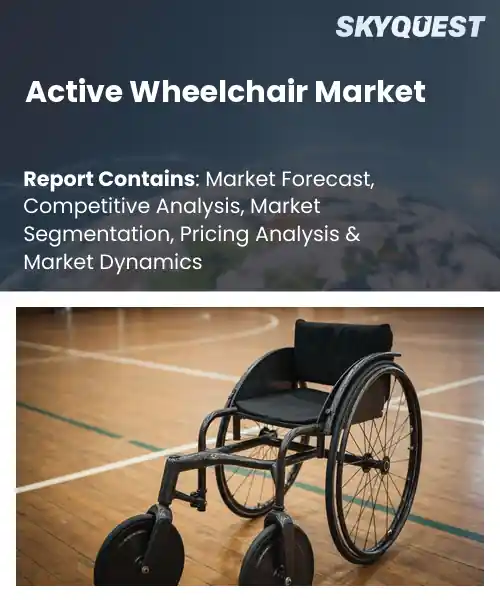
Active Wheelchair Market
Report ID: SQMIG35A3532
Report ID: SQMIG35A3532
[email protected]
USA +1 351-333-4748
Report ID:
SQMIG35A3532 |
Region:
Global |
Published Date: May, 2026
Pages:
157
|Tables:
120
|Figures:
77


Global Active Wheelchair Market size was valued at USD 1.66 Billion in 2024 and is poised to grow from USD 1.76 Billion in 2025 to USD 2.76 Billion by 2033, growing at a CAGR of 5.8% during the forecast period (2026-2033).
A major factor driving growth in the active wheelchair market growth is demographic changes resulting in more users needing mobility assistance to become independent and involved. Active wheelchairs offer performance capabilities as a function of their purpose and use by individuals who wish to have speed, agility, and durability instead of simply using a mode of transportation. This active wheelchair user community is critical to the future of active mobility because mobility has a direct impact on health, employment, and social participation.
Over the past 30 years, design and materials have evolved from very heavy steel frames to ultra-lightweight materials that include aluminum alloys and carbon fiber. Also, the introduction of power assist modules extends the use of active wheelchairs into additional segments by allowing users to utilize various types of seating. A good example of this progression is the advances made by the companies TiLite and Permobil, as they have incorporated many of the innovations developed for the Paralympic sports wheelchair community into their commercial products.
How is AI Improving Safety and Autonomy in the Active Wheelchair Market?
The addition of advanced sensing technologies, machine perception, and adaptive control is enhancing the safety and independence of the active wheelchair market trends. Obstacle detection (using camera & LiDAR), collision avoidance, accurate routing (through environmental mapping for resource planning), recognition of the user’s intent (so that the wheelchair can adaptively assist), and predictive diagnostics (in order to minimize downtime) exemplify key areas where AI and sensor fusion are being integrated within the active wheelchair marketplace. The current state of the active wheelchair market consists of lab testing, commercial pilot programs, and increasing numbers of real-world venue trials for end-user testing. The design of the active wheelchair is becoming more user-friendly and allowing the user to operate it with less fatigue, while simultaneously allowing providers to evaluate their workflows in the real-world and build confidence in their use by operators.
The rollout of WHILL in April 2026, confirms how AI navigation and collision avoidance will allow for the everyday practicality of fleet operations by integrating multiple autonomous wheelchair deployment at various airports. This rollout will enhance the efficiency of operations, provide greater independence for users of active wheelchairs, and establish a clear commercial pathway for autonomous wheelchairs based on AI perception and user-driven autonomy.
Market snapshot - (2026-2033)
Global Market Size
USD 1.66 Billion
Largest Segment
Manual Active Wheelchairs
Fastest Growth
Powered Active Wheelchairs
Growth Rate
5.8% CAGR
To get more insights on this market click here to Request a Free Sample Report
Global active wheelchair market is segmented by product type, material, indication, end-user and region. Based on product type, the market is segmented into manual active wheelchairs and powered active wheelchairs. Based on material, the market is segmented into aluminum, titanium, carbon fiber and others. Based on indication, the market is segmented into spinal cord injuries, neuromuscular disorders, lower limb amputation, cerebral palsy and others. Based on end-user, the market is segmented into rehabilitation centers, home care settings, sports facilities and others. Based on region, the market is segmented into North America, Europe, Asia Pacific, Latin America and Middle East & Africa.
Powered active wheelchair segment continues to dominate the market as they provide a higher level of independence for users who require additional support from their caregivers while also offering improved functional scope. Further, powered wheelchairs provide the user with a better overall quality of life through the use of advanced electronics, improved battery technology, and adjustable seating systems.
There is a growing acceptance of powered active wheelchair technology in clinical settings and the customizability of these devices supports higher levels of institutional purchasing and price premiums. Institutions have thus created greater incentives for manufacturers to invest in innovative products and service ecosystems that will allow them to maintain their positions as leaders in the market.
Due to the unique strength-to-weight characteristic of carbon fiber, it has continued to be the leading material used for creating super-light frames that provide enhanced propulsion and maneuverability, benefiting athletes and other active users. Carbon fiber allows for complex shapes and specifically designed stiffness profiles leading to improved energy transfer and comfort for the user, while delivering a sleek look and premium positioning. Manufacturers’ investments in carbon fabrication processes and custom carbon frame options drive demand at both the clinical level and consumer levels, solidifying carbon fiber’s market leadership as a performance-oriented material.
On the other hand, titanium is now the fastest-growing material choice because of its unique combination of strength, fatigue resistance, and good strength-to-weight ratio, which meets the needs of consumers looking for the most reliable and clinically stable product. Advances in titanium welding and fabrication are making it easier to produce titanium frames with more customization options at a lower cost, resulting in more opportunities to sell into the rehabilitation market and the active lifestyles consumer marketplace.
To get detailed segments analysis, Request a Free Sample Report
Due to the combination of advanced medical care systems; established payment systems; the concentration of leadership among those working in this field; and widespread acceptance in clinical practice, North America is the centre of the modern active wheelchair market globally. Manufacturers and rehabilitation facilities collaborate closely to bring new products to market quickly, while the evidence gathered through community-based disability groups speeds up the process of validating new products. Extensive distribution and a large consumer base are conducive to supporting product lines priced above and/or with features that target niche markets. The presence of regulatory clarity, as well as regulatory standards that facilitate the introduction of new products into the North American market, creates the conditions necessary for the innovative development of new technologies, while both public and private insurance and funding sources provide access to new technologies for consumers. Ongoing investment in research and development (R&D), along with a strong community of users who seek high-performance and highly-portable mobility devices, creates an ongoing demand for new technologies from North America that serve to further solidify North America as the epicentre of innovative and entrepreneurial development of active wheelchairs. All developers of active wheelchairs will benefit from well-defined, advanced clinical pathways that incorporate mobility solutions within rehabilitation programs; as well as the difference that all developers will be able to access localised expertise when developing customised configurations for the divergent needs of users.
Active wheelchair market sahre in the United States has a well-established network of specialty clinics and skilled clinicians which provide the user with the best product possible. In addition, the active wheelchair manufacturing base is very innovative and focuses on user-centered design. The active wheelchair insurance framework, clinical guidelines, and integrated mobility services into the rehabilitation process, provides the opportunity for these types of products to fit into people's lives. The aftermarket services, customization options, and dealer networks for maintaining and customizing can provide the users with the full use of their wheelchairs. Lastly, the advocacy for and research on those who use active wheelchairs helps to provide data, which is used by the manufacturers to refine their products for real-world usability. Collaborations amongst various stakeholders also enhance the transition of safe and innovative products to the end-user.
Active wheelchair market outlook in Canada indicates a collaborative approach from all levels of the Canadian healthcare system (public), varying procurement practices throughout different provinces, and increasing involvement by rehabilitation providers seeking solutions related to mobility independence. Manufacturers have partnered with local provincial programs/clinics to provide customized products that meet the diverse needs of their service delivery environments (service jurisdictions) through the provision of portable and ergonomically designed offerings. Providing training to users and facilitating community reintegration will help encourage retention of active wheelchair users. Collaborations between local manufacturers and health care networks will continue to create products designed for active wheelchair users and provide the ongoing support they require after purchase.
Integrated healthcare systems, collaborative public procurement and a focus on inclusive mobility are driving rapid expansion in Europe, boosting demand for active wheelchair solutions. Regional standards and clinical pathways are driving adoption in rehabilitation and community care settings and a vibrant manufacturing ecosystem is promoting modular, lightweight and personalisation options. Cross border collaboration between clinicians, insurers and industry speeds up knowledge transfer and product refinement. Growing consumer expectations for mobility independence, supportive policy frameworks and growing research investment in assistive technologies create a dynamic market environment. European suppliers are facing competitive pressure to continually improve the ergonomics, weight and efficiency of power assist options. Clinicians are also contributing to the generation of evidence through collaborative pilot programs and outcome studies that can be used to inform procurement decisions.
Active wheelchair market forecast in Germany is rooted in advanced-engineering knowledge, medical-device manufacturing, and cooperation of clinics with the manufacturers of active wheelchairs. The availability of strong clinic networks and VRS programs creates demand for mobility solutions based on performance. Hospital purchasing decisions are made with an emphasis on product durability, customization, and strict testing requirements. The continuing development of functional-weight wheelchairs and assistive technology products is supported by local innovation centres and collaboration on research.
Active wheelchair market regional outlook in the United Kingdom is influenced by an increasingly dynamic mixture of 'new' manufacturers, responsive clinical services focused on enabling independent movement through mobility aids, and progressive procurement initiatives. There is a palpable strength of interchange between start-ups, design centres, and healthcare providers speeding up the adoption of lightweight user-centric configurations. Community-based rehabilitation systems, specialist suppliers, and an extended electronic user support network all advocate for their utilisation. A strong emphasis on providing users with enabling technologies and involving them throughout the product development process positively impacts both the responsiveness of the marketplace to product development.
Active wheelchair market regional forecats in France is emerging through focused investments in assistive technology design, close ties between rehabilitation clinics and research institutes, and selective procurement by healthcare networks. Local manufacturers emphasize ergonomic solutions and aesthetic considerations to improve user acceptance. Growing pilot initiatives and clinician led evaluations refine offerings for community mobility. Strengthening service ecosystems, dealer networks, and training programs enhance adoption and long term usability for active wheelchair users.
With a combination of localized innovation, expanding manufacturing capabilities and strategic partnership with global technology partners, Asia Pacific continues to strengthen its position. Market participants are focusing on customizing designs for dense urban environments, priority on portability, and cost effective configurations that meet regional care delivery models. More clinical research, better distribution networks and integration of rehabilitation programs are making active mobility solutions more accessible. Pilot programs and training to promote clinician familiarity are being supported by public and private players alike. The emerging supplier landscape is characterized by scalable production, modularity, and features that cater to a diverse range of user preferences, making the region an increasingly powerful contributor to active wheelchair development globally. Regional innovation hubs bring together precision engineering and human centered design to accelerate clinical validation and user feedback, with enhanced after sales ecosystems and technician training to boost long-term performance and consumer confidence.
Active wheelchair market analysis in Japan is known for being highly advanced through technological advancements, strict quality control and the close collaborative relationship between manufacturers and health care professionals. Manufacturers are concentrating on producing smaller but very high performing designs, which include functional equipment that have adapted to urban living. Pilot projects that have been conducted together with therapy centers have added to the understanding of how best to implement and improve products over time, whereas a strong after sales support will lead to confidence among active users. Ergonomic and portable designs will further aid to the support of active mobility users.
Active wheelchair industry in South Korea is propelled by the combination of sophisticated electronics integration technologies, leading-edge systems designs, and outstanding industrial design skills. Companies located in this area focus on smart features to aid the user, as well as the ability to maintain connection to health-monitoring systems and compact form factors appropriate for urban transit. Manufacturers’ partnerships with hospitals and technology incubators foster speedier clinical validation and iterative improvements in design. A strong supply chain for components, along with a collaborative mindset centered on prototyping, gives manufacturers greater agility when responding to both clinical input and user needs.
To know more about the market opportunities by region and country, click here to
Buy The Complete Report
Technological Advancements In Motors
Growing Adoption Of Smart Controls
High Cost Of Advanced Components
Limited Reimbursement and Coverage
Request Free Customization of this report to help us to meet your business objectives.
As competition intensifies globally in the active wheelchair business; competition is driven by three sequential factors: technological differentiation, distribution reach, and service integration. Incumbents in the active wheelchair market are actively pursuing OEM integrations and supplier-distributor relationships as new start-up firms develop compact, sensor-based designs focused on travel. Major strategic movements include developing OEM and distributor relationships, creating product licenses to distribute goods through many supply channels, and consolidating distributions of products. Specific examples include the auto manufacturer’s integration of LUCI with major OEM companies, Sunrise Medical’s launch of a new model for Magic Mobility, the National Seating & Mobility’s distribution of WHILL, and partnerships between universities and the active wheelchair industry.
Top Player’s Company Profile
Recent Developments in the Active Wheelchair Market
SkyQuest’s ABIRAW (Advanced Business Intelligence, Research & Analysis Wing) is our Business Information Services team that Collects, Collates, Correlates, and Analyses the Data collected by means of Primary Exploratory Research backed by robust Secondary Desk research.
As per SkyQuest analysis, the active wheelchair market is expanding globally because people want greater independence and want to be more engaged with their communities; therefore, demand for mobility devices continues to drive growth within the industry. Rapid technological advancements (e.g., better motors, batteries, computer controls, AI safety features) have also contributed to the growth of the industry because of increased usability and user experience. Additionally, the cost of new technologies is prohibiting some from being able to purchase new wheeled devices while other forms remain stagnant due to the inconsistent way insurance companies reimburse for new devices. In general, the North American market is growing at a much faster rate than other parts of the world because of existing healthcare infrastructure and reimbursement pathways. On the other hand, powered active wheeled devices are the most popular type of device, as they provide propulsion, seating adaptability and have been clinically accepted.
| Report Metric | Details |
|---|---|
| Market size value in 2024 | USD 1.66 Billion |
| Market size value in 2033 | USD 2.76 Billion |
| Growth Rate | 5.8% |
| Base year | 2024 |
| Forecast period | (2026-2033) |
| Forecast Unit (Value) | USD Billion |
| Segments covered |
|
| Regions covered | North America (US, Canada), Europe (Germany, France, United Kingdom, Italy, Spain, Rest of Europe), Asia Pacific (China, India, Japan, Rest of Asia-Pacific), Latin America (Brazil, Rest of Latin America), Middle East & Africa (South Africa, GCC Countries, Rest of MEA) |
| Companies covered |
|
| Customization scope | Free report customization with purchase. Customization includes:-
|
To get a free trial access to our platform which is a one stop solution for all your data requirements for quicker decision making. This platform allows you to compare markets, competitors who are prominent in the market, and mega trends that are influencing the dynamics in the market. Also, get access to detailed SkyQuest exclusive matrix.
Table Of Content
Executive Summary
Market overview
Parent Market Analysis
Market overview
Market size
KEY MARKET INSIGHTS
COVID IMPACT
MARKET DYNAMICS & OUTLOOK
Market Size by Region
KEY COMPANY PROFILES
Methodology
For the Active Wheelchair Market, our research methodology involved a mixture of primary and secondary data sources. Key steps involved in the research process are listed below:
1. Information Procurement: This stage involved the procurement of Market data or related information via primary and secondary sources. The various secondary sources used included various company websites, annual reports, trade databases, and paid databases such as Hoover's, Bloomberg Business, Factiva, and Avention. Our team did 45 primary interactions Globally which included several stakeholders such as manufacturers, customers, key opinion leaders, etc. Overall, information procurement was one of the most extensive stages in our research process.
2. Information Analysis: This step involved triangulation of data through bottom-up and top-down approaches to estimate and validate the total size and future estimate of the Active Wheelchair Market.
3. Report Formulation: The final step entailed the placement of data points in appropriate Market spaces in an attempt to deduce viable conclusions.
4. Validation & Publishing: Validation is the most important step in the process. Validation & re-validation via an intricately designed process helped us finalize data points to be used for final calculations. The final Market estimates and forecasts were then aligned and sent to our panel of industry experts for validation of data. Once the validation was done the report was sent to our Quality Assurance team to ensure adherence to style guides, consistency & design.
Analyst Support
Customization Options
With the given market data, our dedicated team of analysts can offer you the following customization options are available for the Active Wheelchair Market:
Product Analysis: Product matrix, which offers a detailed comparison of the product portfolio of companies.
Regional Analysis: Further analysis of the Active Wheelchair Market for additional countries.
Competitive Analysis: Detailed analysis and profiling of additional Market players & comparative analysis of competitive products.
Go to Market Strategy: Find the high-growth channels to invest your marketing efforts and increase your customer base.
Innovation Mapping: Identify racial solutions and innovation, connected to deep ecosystems of innovators, start-ups, academics, and strategic partners.
Category Intelligence: Customized intelligence that is relevant to their supply Markets will enable them to make smarter sourcing decisions and improve their category management.
Public Company Transcript Analysis: To improve the investment performance by generating new alpha and making better-informed decisions.
Social Media Listening: To analyze the conversations and trends happening not just around your brand, but around your industry as a whole, and use those insights to make better Marketing decisions.
REQUEST FOR SAMPLE
 REQUEST FREE CUSTOMIZATION
Global Active Wheelchair Market size was valued at USD 1.66 Billion in 2024 and is poised to grow from USD 1.76 Billion in 2025 to USD 2.76 Billion by 2033, growing at a CAGR of 5.8% during the forecast period (2026-2033).
Competition in the global active wheelchair market is intensifying around tech differentiation, distribution reach and service integration, with incumbents securing OEM integrations and distribution deals while startups push compact, sensor driven and travel focused designs. Strategic moves include OEM and distributor partnerships, product licensing and channel consolidation; examples include LUCI integrations with major OEMs, Sunrise Medical launching Magic Mobility’s new model, NSM distribution of WHILL and university industry collaborations. 'Invacare Holdings Corporation', 'Sunrise Medical', 'Permobil', 'Ki Mobility', 'Karman Healthcare', 'Meyra Group', 'Alber Gmbh', 'Motion Composites', 'Panthera X', 'Kuschall', 'Wolturnus', 'Top End', 'Sportaid', 'Box Wheelchairs', 'Gf Health Products', 'Roma Medical', 'Ottobock', 'Sorg Rollstuhltechnik', 'Handicare Group', 'Hoveround Corporation'
Improved motor designs and control systems have enhanced maneuverability, efficiency, and reliability of active wheelchairs, enabling smoother, quieter operation and greater endurance in daily use. These technological refinements allow manufacturers to offer lighter, more compact drive units and integrate advanced features without compromising performance, which increases appeal among users and caregivers seeking independence and comfort. As a result, product differentiation and perceived value rise, encouraging stakeholder investment and adoption, and stimulating innovation cycles that collectively support broader market expansion and higher acceptance rates among target populations.
Smart Connectivity And Remote Care: Integration of sensors, connectivity, and telehealth platforms is reshaping active wheelchair value propositions, enabling remote monitoring, predictive maintenance, and personalized therapy adjustments. Manufacturers and service providers are collaborating with software developers and healthcare networks to deliver cloud based analytics and configuration. This trend enhances continuity of care, supports data driven decision making, and strengthens after sales relationships, while creating opportunities for subscription services and ecosystem partnerships focused on improving mobility outcomes and reducing reliance on episodic in person clinical visits.
Why does North America Dominate the Global Active Wheelchair Market? |@12


Want to customize this report? This report can be personalized according to your needs. Our analysts and industry experts will work directly with you to understand your requirements and provide you with customized data in a short amount of time. We offer $1000 worth of FREE customization at the time of purchase.
Feedback From Our Clients


 USA (+1) 351-333-4748

