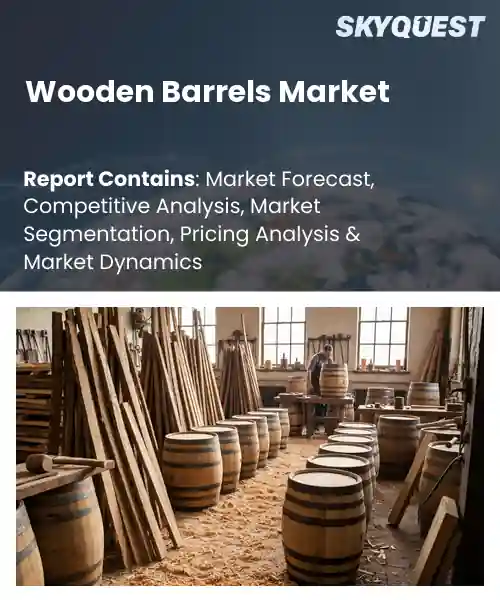
Wooden Barrels Market
Report ID: SQMIG15G2197
Report ID: SQMIG15G2197
[email protected]
USA +1 351-333-4748
Report ID:
SQMIG15G2197 |
Region:
Global |
Published Date: July, 2026
Pages:
157
|Tables:
174
|Figures:
79


Global Wooden Barrels Market size was valued at USD 1.87 Billion in 2024 and is poised to grow from USD 2.00 Billion in 2025 to USD 3.50 Billion by 2033, growing at a CAGR of 7.2% during the forecast period (2026-2033).
The global wooden barrels market trends consists of manufacturers and suppliers of oak, chestnut and other hardwood containers used to age, ferment and store liquids such as wine, whiskey and beers. The important thing is that wood can add flavors . Producers are using this to make products more unique . The market was born out of cooperage traditions but in the last 20 years we have seen a resurgence from craft spirits and boutique wineries looking for maturation. For example, a California distillery that transitioned from stainless steel to French oak barrels saw a 12 % growth in sales, illustrating how consumer demand for sensory authenticity fuels market expansion.
Among the forces shaping the wooden barrels market share, sustainability has emerged as a key growth driver, prompting producers to adopt forest-certification schemes and reuse models. With regulators tightening the rules on carbon-footprint reporting, distilleries that source their barrels from sustainably managed oak forests gain preferential access to consumers, which translates into higher price premiums. A well-known example is a Scotch whisky house that started a take-back program to collect used barrels, re-char them, and re-sell them to craft distilleries, extending asset life and reducing costs. This closed-loop approach reduces the risk of deforestation and creates a revenue stream that incentivizes further investment in cooperage practices.
How is IoT Improving Quality Control in the Wooden Barrels Market?
Tiny sensors are revolutionizing quality control in the wooden barrels market growth, monitoring moisture, temperature and wood strain during the aging process. Data streams arrive at cloud platforms where algorithms identify deviations before they impact flavor. Producers can remotely adjust storage settings, minimizing the risk of over-drying or microbial development. Real time dashboards give visibility over multiple cooperages, allowing winemakers to ensure consistent product profiles and react faster to batch variations. The technology also creates digital records that provide traceability to regulators and consumers, further building brand trust.
In March 2026, Oak Barrels unveiled barrels equipped with embedded sensors that continually track humidity and temperature, providing winemakers the capability to fine-tune conditions instantaneously and prevent spoilage, improving efficiency and aiding market expansion. The system also records the environmental profile of each batch, creating a searchable archive that helps producers maintain consistent flavor and meet certification standards.
Market snapshot - (2026-2033)
Global Market Size
USD 1.87 Billion
Largest Segment
Interleukin-2.Biosimilars
Fastest Growth
Interleukin-2.Biosimilars
Growth Rate
7.2% CAGR
To get more insights on this market click here to Request a Free Sample Report
Global wooden barrels market is segmented by wood type, application, capacity, end user, distribution channel and region. Based on wood type, the market is segmented into oak, chestnut, acacia, cherry, and others. Based on application, the market is segmented into wine aging, whiskey & spirits aging, beer aging, food storage, decorative & furniture, and others. Based on capacity, the market is segmented into below 100 liters, 100–250 liters, and above 250 liters. Based on end user, the market is segmented into wineries, distilleries, breweries, food processing companies, hospitality, and others. Based on distribution channel, the market is segmented into direct sales distributors, and online sales. Based on region, the market is segmented into North America, Europe, Asia Pacific, Latin America and Middle East & Africa.
Oak dominates because it offers an ideal combination of strength, durability, and controlled oxygen permeability, making it the preferred material for aging wine, whiskey, and other premium spirits. Its natural compounds, including tannins and aromatic compounds, enhance flavor, aroma, and texture while providing long service life. The widespread preference for oak barrels among wineries and distilleries continues to reinforce its leading position in the global market.
Meanwhile, acacia is witnessing the fastest growth due to increasing demand for alternative wood species that impart unique flavor profiles while supporting sustainable forestry practices. Craft beverage producers are increasingly adopting acacia barrels to differentiate premium products.
Wine aging dominates because wooden barrels remain essential for producing premium wines by facilitating controlled oxygen exchange and imparting desirable flavor characteristics such as vanilla, spice, and toast notes. Growing consumer demand for high-quality aged wines and continued investments by wineries support sustained demand for wooden barrels.
Meanwhile, whiskey & spirits aging is the fastest-growing application due to expanding global whiskey production, rising premiumization trends, and increasing consumer interest in craft spirits. Distilleries continue to invest in high-quality wooden barrels to achieve distinctive maturation characteristics and meet regulatory aging requirements.
To get detailed segments analysis, Request a Free Sample Report
The European advantage is really a long tradition of high-quality spirit production and strict quality control standards that set the bar high for barrel making. The region boasts a highly skilled cooperage artisan community, advanced wood treatment techniques, and a strong cultural focus on heritage aging processes. Universities and barrel makers work together on solid research partnerships that continuously innovate the selection of oak and the design of barrels. Also, existing distribution networks and proximity to the main wine and whisky producing countries streamline supply chains. Demand for European-sourced wooden barrels is bolstered by consumer preference for authentic, terroir-driven flavor profiles, reinforcing the continent’s commanding position in the market.
Wooden barrels market outlook in Germany is shaped by a legacy of meticulous engineering and a focus on precision in barrel production. Renowned cooperages combine traditional methods with modern quality controls, delivering barrels that meet exacting standards for aroma retention. The German market serves both domestic distillers and international exporters, reinforcing its reputation for reliability and fine craftsmanship.
Wooden barrels market forecast in the United Kingdom reflects a strong heritage of whisky and gin maturation, where historic cooperages preserve time‑honored techniques. The emphasis on bespoke barrel designs caters to premium brands seeking distinct flavor development. Collaborative initiatives between distillers and cooperages drive experimental approaches, strengthening the UK’s influence in specialty barrel segments.
Wooden barrels market analysis in France benefits from centuries‑old viticultural traditions that prioritize nuanced oak integration for wine aging. French cooperages specialize in diverse oak species and tight grain structures, delivering barrels that enhance terroir expression. The close relationship between winemakers and barrel makers fosters continuous refinement, positioning France as a benchmark for quality in the global market.
The North American expansion is driven by a boom in craft distillation and boutique winemaking that wants real oak character without the dependency on imported barrels. Domestic cooperage is growing, driven by innovation in locally sourced timber and a growing emphasis on sustainability. Producers experiment with different barrel finishes to satisfy strong consumer interest in artisanal spirits, creating demand across the United States and Canada. The joint research of agricultural institutes and barrel makers brings new ways of wood treatment for better performance and less ecological impact. This combination of craftsmanship, sustainability and market enthusiasm is driving the rapid growth of the wooden barrels segment in North America.
Wooden barrels market regional outlook in the United States is characterized by a dynamic craft spirit movement that values locally produced oak solutions. Cooperages blend traditional hand‑craftsmanship with innovative finishing techniques, catering to diverse flavor profiles sought by distillers. Close ties between agricultural producers and barrel makers enable the use of domestic oak varieties, reinforcing supply chain resilience and supporting regional economies.
Wooden barrels market regional forecast in Canada reflects a strong commitment to sustainable forestry and premium barrel production. Canadian cooperages leverage abundant native timber, applying meticulous seasoning processes that yield barrels prized for subtle aroma integration. The market supports both domestic wine and spirit producers, emphasizing eco‑friendly practices that align with consumer expectations for responsible sourcing.
The Asia Pacific is forging its footing with strategic investments in cooperage technology and an increasing appetite for oak-aged beverages. Japan and South Korea are examples of countries where traditional barrel making and a modern adaptation are being embraced in response to a burgeoning cadre of premium whisky and craft beer producers. On one hand, research collaboration on wood selection and barrel longevity is an area of focus, while cultural appreciation for nuanced flavor profiles is another driver. The expansion of sustainable forestry practices and the rise of niche market players also contribute to the diversification of supply sources. The combined efforts make the region more credible and influential in the industry of wooden barrels.
Wooden barrels market penetration in Japan blends meticulous craftsmanship with a reverence for subtle flavor development, especially in whisky and sake aging. Japanese cooperages emphasize precise grain control and innovative finishing methods, delivering barrels that complement delicate beverage profiles. The market benefits from close collaboration between producers and artisans, fostering continuous refinement of barrel characteristics.
Wooden barrels industry in South Korea is driven by a rising interest in premium spirits and artisanal brewing, encouraging the adoption of high‑quality oak barrels. Korean cooperages focus on integrating traditional techniques with modern quality assurance, producing barrels that enhance complex flavor dynamics. Partnerships with local vineyards and distilleries support tailored barrel solutions, strengthening the market’s growth trajectory.
To know more about the market opportunities by region and country, click here to
Buy The Complete Report
Rising Consumer Preference for Sustainability
Expansion of Premium Spirits Production
Higher Cost of Wooden Materials
Stringent Regulatory Compliance Requirements
Request Free Customization of this report to help us to meet your business objectives.
The global wooden barrels market is highly competitive, with established cooperages focusing on premium oak sourcing, customized barrel toasting technologies, and sustainable forest management to differentiate their offerings. Manufacturers continue to invest in precision craftsmanship, digital inventory management, and traceability solutions while expanding partnerships with wineries, distilleries, and breweries to deliver application-specific maturation solutions. Growing demand for premium wines, whiskies, and craft spirits, together with increasing emphasis on certified sustainable wood procurement and circular production practices, continues to drive innovation across the cooperage industry.
Top Player’s Company Profile
Recent Developments in the Wooden Barrels Market
SkyQuest’s ABIRAW (Advanced Business Intelligence, Research & Analysis Wing) is our Business Information Services team that Collects, Collates, Correlates, and Analyses the Data collected by means of Primary Exploratory Research backed by robust Secondary Desk research. As per SkyQuest analysis, the global wooden barrels market is being propelled primarily by rising consumer preference for sustainability, which pushes producers toward eco‑friendly oak barrels and fuels premium‑spirit growth as a second driver that leverages authentic flavor narratives. Europe remains the dominating region thanks to its deep cooperage heritage and stringent quality standards, while the Interleukin‑2 biosimilars segment leads usage because wood’s inert environment preserves delicate protein structures. In addition, IoT‑enabled sensors are improving quality control, offering real‑time monitoring that further strengthens demand for smart barrel solutions. However, higher cost of wooden materials restrains broader adoption, especially among cost‑sensitive manufacturers, tempering the market’s overall expansion.
| Report Metric | Details |
|---|---|
| Market size value in 2024 | USD 1.87 Billion |
| Market size value in 2033 | USD 3.5 Billion |
| Growth Rate | 7.2% |
| Base year | 2024 |
| Forecast period | (2026-2033) |
| Forecast Unit (Value) | USD Billion |
| Segments covered |
|
| Regions covered | North America (US, Canada), Europe (Germany, France, United Kingdom, Italy, Spain, Rest of Europe), Asia Pacific (China, India, Japan, Rest of Asia-Pacific), Latin America (Brazil, Rest of Latin America), Middle East & Africa (South Africa, GCC Countries, Rest of MEA) |
| Companies covered |
|
| Customization scope | Free report customization with purchase. Customization includes:-
|
To get a free trial access to our platform which is a one stop solution for all your data requirements for quicker decision making. This platform allows you to compare markets, competitors who are prominent in the market, and mega trends that are influencing the dynamics in the market. Also, get access to detailed SkyQuest exclusive matrix.
Table Of Content
Executive Summary
Market overview
Parent Market Analysis
Market overview
Market size
KEY MARKET INSIGHTS
COVID IMPACT
MARKET DYNAMICS & OUTLOOK
Market Size by Region
KEY COMPANY PROFILES
Methodology
For the Wooden Barrels Market, our research methodology involved a mixture of primary and secondary data sources. Key steps involved in the research process are listed below:
1. Information Procurement: This stage involved the procurement of Market data or related information via primary and secondary sources. The various secondary sources used included various company websites, annual reports, trade databases, and paid databases such as Hoover's, Bloomberg Business, Factiva, and Avention. Our team did 45 primary interactions Globally which included several stakeholders such as manufacturers, customers, key opinion leaders, etc. Overall, information procurement was one of the most extensive stages in our research process.
2. Information Analysis: This step involved triangulation of data through bottom-up and top-down approaches to estimate and validate the total size and future estimate of the Wooden Barrels Market.
3. Report Formulation: The final step entailed the placement of data points in appropriate Market spaces in an attempt to deduce viable conclusions.
4. Validation & Publishing: Validation is the most important step in the process. Validation & re-validation via an intricately designed process helped us finalize data points to be used for final calculations. The final Market estimates and forecasts were then aligned and sent to our panel of industry experts for validation of data. Once the validation was done the report was sent to our Quality Assurance team to ensure adherence to style guides, consistency & design.
Analyst Support
Customization Options
With the given market data, our dedicated team of analysts can offer you the following customization options are available for the Wooden Barrels Market:
Product Analysis: Product matrix, which offers a detailed comparison of the product portfolio of companies.
Regional Analysis: Further analysis of the Wooden Barrels Market for additional countries.
Competitive Analysis: Detailed analysis and profiling of additional Market players & comparative analysis of competitive products.
Go to Market Strategy: Find the high-growth channels to invest your marketing efforts and increase your customer base.
Innovation Mapping: Identify racial solutions and innovation, connected to deep ecosystems of innovators, start-ups, academics, and strategic partners.
Category Intelligence: Customized intelligence that is relevant to their supply Markets will enable them to make smarter sourcing decisions and improve their category management.
Public Company Transcript Analysis: To improve the investment performance by generating new alpha and making better-informed decisions.
Social Media Listening: To analyze the conversations and trends happening not just around your brand, but around your industry as a whole, and use those insights to make better Marketing decisions.
REQUEST FOR SAMPLE
 REQUEST FREE CUSTOMIZATION
Global Wooden Barrels Market size was valued at USD 1.87 Billion in 2024 and is poised to grow from USD 2.0 Billion in 2025 to USD 3.5 Billion by 2033, growing at a CAGR of 7.2% during the forecast period (2026-2033).
The competitive landscape of the global wooden barrels market is shaped by intense rivalry among traditional cooperages and tech‑enabled entrants, driving innovations such as smart‑tracking sensors and sustainable sourcing. Recent M&A activity includes a major cooperage acquiring a niche oak‑flavor specialist to broaden its portfolio, while partnerships between barrel manufacturers and winery tech platforms accelerate data‑driven inventory management, sharpening differentiation and market share competition. 'Sandoz Group AG', 'Celltrion, Inc.', 'Samsung Bioepis Co., Ltd.', 'Amgen Inc.', 'Biocon Biologics Limited', 'Fresenius Kabi AG', 'Teva Pharmaceutical Industries Ltd.', 'Alvotech S.A.', 'STADA Arzneimittel AG', 'Viatris Inc.', 'Dr. Reddy's Laboratories Ltd.', 'Intas Pharmaceuticals Ltd.', 'Shanghai Henlius Biotech, Inc.', 'NeuClone Pty Ltd.', 'Bio-Thera Solutions Ltd.', 'Coherus BioSciences, Inc.', 'AryoGen Pharmed', 'Reliance Life Sciences Pvt. Ltd.', 'mAbxience Holding S.L.', 'CinnaGen Co.'
Manufacturers and wineries are increasingly adopting wooden barrels because consumers associate natural wood aging with authentic flavor profiles and environmentally friendly practices. This perception drives demand for products that showcase sustainable packaging, prompting producers to source more barrels to meet market expectations. As brand narratives emphasize heritage and ecological responsibility, the preference for wooden containers strengthens, encouraging suppliers to expand capacity and innovate designs that align with these values, thereby supporting overall market expansion. This trend also reinforces brand loyalty among discerning consumers.
Sustainable Packaging Preference: Consumers and brands increasingly prioritize environmental stewardship, driving demand for wooden barrels as eco‑friendly alternatives to metal or plastic containers. The natural grain of oak and other hardwoods offers a renewable, biodegradable solution that aligns with circular‑economy objectives. Producers are emphasizing sustainable forest management certifications and low‑impact manufacturing processes, positioning wooden barrels as premium, responsible packaging choices that enhance brand reputation while meeting rising expectations for reduced carbon footprints throughout the supply chain and fostering worldwide ecological resilience in industries.
Why does Europe Dominate the Global Wooden Barrels Market? |@12


Want to customize this report? This report can be personalized according to your needs. Our analysts and industry experts will work directly with you to understand your requirements and provide you with customized data in a short amount of time. We offer $1000 worth of FREE customization at the time of purchase.
Feedback From Our Clients


 USA (+1) 351-333-4748

