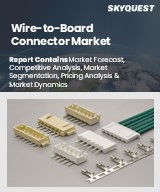
Wire-to-Board Connector Market
Report ID: SQMIG45K2150
Report ID: SQMIG45K2150
[email protected]
USA +1 351-333-4748
Report ID:
SQMIG45K2150 |
Region:
Global |
Published Date: May, 2025
Pages:
182
|Tables:
162
|Figures:
78


Global Wire-to-Board Connector Market size was valued at USD 5.05 Billion in 2024 and is poised to grow from USD 5.28 Billion in 2025 to USD 7.56 Billion by 2033, growing at a CAGR of 4.58% during the forecast period 2026–2033.
The growing demand for consumer electronics like smartphones, laptops, and wearable devices has given rise to a trend towards more advanced and compact forms. This calls for much higher requirements for smaller and high-performance wire-to-board connectors that can support higher functionalities while ensuring reliability and efficiency in further miniaturized electronic systems.
The accelerating growth of Internet of Things (IoT) and smart technology is propelling the need for advanced connectors. More devices becoming connected are requiring the need for high-speed, high-reliability wire-to-board connectors in order to support effortless data exchange. The connectors are required in order to provide ongoing communication to support the functionality and performance of IoT systems and smart devices across numerous industries, including healthcare and smart homes.
On the other hand, the production of high-performance wire-to-board connectors, particularly those produced to niche or high-tech markets, is generally an issue of upscale materials and precision engineering. They are more expensive to produce, which may make them hesitant to be used on a high volume, especially in cost-sensitive markets. Low-price firms might implement cheaper alternatives, which stops high-performance connectors from penetrating even when they are more superior in terms of performance and reliability under hard conditions.
While, creating wire-to-board connectors to satisfy the specific needs of different industries—automotive, medical, and industrial automation—is bringing enormous added complexity. Each industry has specific performance, safety, and durability requirements, and thus the design process becomes more intricate and time-consuming. Such complexity may cause longer design cycles, higher engineering cost, and difficulty in gaining compatibility, finally slowing down the speed of innovation and market responsiveness for manufacturers.
How do AI and IoT trends influence wire-to-board connector design and use?
Artificial intelligence and the Internet of Things are transforming wire-to-board connector design and application. More and more devices connected and low-latency, high-speed data requirements create the need for higher-density, more compact connectors. AI streamlines manufacturing processes using predictive modeling and automation, ensuring maximum efficiency and cost reduction. IoT applications require connectors that support perpetual data transfer and remote monitoring, driving improvements in connector performance and durability. These trends call for connectors that will handle more data transfer and withstand a number of environmental conditions.
For example, Molex has launched its Mirror Mezz Pro and Enhanced high-speed connectors to meet growing AI and IoT demands. Supporting up to 224 Gbps, they offer solid signal integrity in a very small package—ideal for servers and data centers. IoT Industry Award of week 2023 winner, this innovation speaks to the evolving role of connectors in complex tech environments.
Market snapshot - 2026–2033
Global Market Size
USD 4.83 Billion
Largest Segment
Pin Headers and Receptacles
Fastest Growth
Pin Headers and Receptacles
Growth Rate
4.58% CAGR
To get more insights on this market click here to Request a Free Sample Report
pitch size, connector type, current rating, application, and region. By connector style, the market is classified into accessory, header, housing, plug, receptacle, and socket. Depending on pitch size, it is divided into 0.8mm, 1.0mm, 1.25mm, 1.27mm, 2.0mm, 2.5mm, 2.54mm, 3.3mm, 3.96mm, 5.0mm, 7.92mm, and 10.16mm. According to connector type, the market is categorized into pin headers and receptacles, insulation displacement connectors (IDC), crimp-style connectors, FPC/FFC connectors, and others. According to current rating, the market is categorized into low current, medium current, and high current. According to application, the market is categorized into computer and peripherals, medical, industrial and instrumentation, data/telecom, automotive, aerospace and defense, and others. Regionally, the market is analyzed across North America, Europe, Asia-Pacific, Middle East & Africa, and Latin America.
According to the 2024 global Wire-to-Board Connector Market report, pin headers and receptacles are the industry leaders in wire-to-board connectors due to their adequacy to accommodate diversified mating formats with ease, cost effectiveness, and widespread application in mass uses across many industries including automotive, industrial automation systems, and consumer goods. Their ease of use enables them to be employed on automated as well as manual production lines, thereby becoming an asset in mass production. Appreciated for stable electrical operation and flexible customization possibilities—such as pitch and configuration—they can be easily integrated in various mating formats. Such cost-saving design advantage makes them superior to more application-specific options such as IDC or FPC/FFC connectors.
Insulation Displacement Connectors (IDC) is the fastest-growing product category for the wire-to-board connector market due to their capability of simplifying assembly processes. With elimination of wire stripping or soldering needs, IDCs provide quick and simple assemblies that are optimally suited for mass production. They are little in dimension but are nonetheless assured of providing the latest needs for high-density and high-speed connection, particularly where commercial environments are involved such as consumer electronics, telecom, and automobiles where miniaturization and efficiency drive next-generation achievement in technology.
According to the 2024 world Wire-to-Board Connector Market forecast, Medium Current connectors lead in the wire-to-board connector market because of their versatility and wide range of applications. They are capable of sustaining power capacity and miniaturization and hence are perfectly positioned for consumer electronics, automotive systems, and industrial control. They are less expensive than high current connectors but more flexible to accommodate space-limited designs, without providing less performance than low current connectors. They are therefore the best option for most general electronic applications needing moderate power transmission.
High Current connectors are experiencing the quickest growth in the wire-to-board connector market. The boom is fueled by increased demand for high-performance uses in sectors like industrial automation, automotive, and data centers. Industrial sectors demand high-powered connectors that are capable of handling high power levels and ensure stable and efficient performance even under harsh conditions. Growth in electric vehicles and automation technology also boosts the need for high-current interconnect solutions that are durable.
To get detailed segments analysis, Request a Free Sample Report
Asia Pacific is the market leader in the Wire-to-Board Connector Market by dominating the production of sophisticated electronics, especially in China, Japan, South Korea, and Taiwan. Its robust automotive, consumer electronics, and telecom sectors fuel high demand. Urbanization develops at a fast pace, and government support towards smart technologies and increasing industrial automation also fuel growth. Further, the existence of leading OEMs and cost-efficient production capabilities render Asia Pacific a center for connector innovation and supply globally.
The Japanese wire-to-board connector industry is growing due to innovation in auto electronics, industrial automation, and 5G technology. For instance: Hirose Electric introduced in February 2025 the AU1 Series USB 3.2-compatible wire-to-board connector for sole use in motor vehicles, which will enhance the transferring of data on the road. It's symbolic of so much about Japan's emphasis on innovation and development of infrastructure in the field of connector technology.
The South Korean wire-to-board (WTB) connector market is growing steadily, fueled by progress in consumer electronics, automotive systems, and industrial automation. The focus for manufacturers has been to develop high-performance, compact connectors that can handle harsh environments and high temperature. The growth of such connectors is also driven by the need for efficient and dependable electrical connection across different applications.
North America is a pioneer in the wire-to-board connector market, driven by consumer electronics, automotive, and telecommunications industry advancements. The U.S. is the pioneer of connectors through miniaturization and high-speed data rates to drive IoT devices and smart electronics. Strong infrastructure and focus on automation in the region also drive market growth, thus making North America a leading driver of the world connector market.
The U.S. wire-to-board connector market is growing slowly, driven by rising numbers of data centers—nearly 5,000 nationwide—and greater usage of miniaturized components in consumer electronics, automotive, and telecom applications. Industry leaders include Kyocera AVX, TE Connectivity, and Molex. According to the National Telecommunications and Information Administration, in march 2025 demand for data centers will grow 9% per year through 2030, boosting demand for connectors that provide efficient, trouble-free data transfer.
The Canadian wire-to-board connector market is increasing gradually due to the increased demand for effective and high-performance connectors used in industrial applications and electronic equipment. Wire-to-board connectors are vital in making electrical connections between printed circuit boards (PCBs) and wires. The expansion of electronics production, the increasing complexity of electronic devices, and the need for space-saving and resilient connectors are among the key drivers of market growth. Improvements in connector technologies such as signal integrity and reduced size continue to support the use of wire-to-board connectors across a broad range of applications.
Europe is the most dominant region in the wire-to-board connector market due to superior manufacturing plants in countries such as Germany, Italy, and France. The nations are known for providing top-class connectors that are more durable compared to other regions for applications in the automobile, industrial, and telecom industries. The leadership of the region is complemented by the investments in digital infrastructure by the European Union and its adherence to strict environmental regulations, promoting ongoing growth and development in the industry.
Germany's wire-to-board connector market is increasing due to its industrial and automotive industries. These connectors provide safe electrical connections in automotive, consumer electronics, and machinery. Demand for smaller, high-performance connectors is increasing, following the trend towards miniaturization and the transfer of data, with Germany complying with European standards. Phoenix Contact GmbH introduced a new range of automotive wire-to-board connectors in April 2025, increasing vibration resistance and conforming to ISO standards, following Germany's continued innovation and leadership in the sector.
Spain's wire-to-board connector market is seeing significant growth due to growing demand across industries like automotive, consumer electronics, and industrial automation. The connectors play a critical role in providing robust electrical connections in small electronic devices. The industry is being supported by technological improvements in connectors, which are enhancing performance and reliability. But challenges such as rising raw material costs and competition from wireless technologies persist. Government policies emphasizing safety and innovation are fueling development by setting high standards and supporting research and development activities.
To know more about the market opportunities by region and country, click here to
Buy The Complete Report
Shrinking Size of Electronic Components for Efficiency
Increasing Demand for Data Centers Drives Demand for Connectivity Solutions
Increasing Costs of Raw Materials Impact Production and Pricing Strategies
Disruptions in the Flow and Transport of Goods and Materials
Request Free Customization of this report to help us to meet your business objectives.
The wire-to-board connector market on a global level is competitive with leading firms including Molex, TE Connectivity, and Amphenol. Molex is famous for innovative interconnect solutions with a broad portfolio of wire-to-board connectors to cater to diverse applications. TE Connectivity offers robust and reliable connector systems with emphasis on innovation to meet changing needs in industries like automotive, aerospace, and industrial automation. Amphenol has a wide range of products consisting of interconnects, including wire-to-board connectors, utilized across markets such as telecommunications, automotive, and consumer electronics. In addition to these established businesses, companies like Onanon have contributed significantly to the sector. Founded in 1981, Onanon revolutionized the connector production industry by utilizing printed circuit boards as pin substrates for connectors, a practice that has since become the standard in the industry. Their pioneering approach has resulted in more cost-effective and scalable manufacturing methods in connector technology.
Emerging Trends Shaping the Future of Wire-to-Board Connector
SkyQuest’s ABIRAW (Advanced Business Intelligence, Research & Analysis Wing) is our Business Information Services team that Collects, Collates, Correlates, and Analyses the Data collected using Primary Exploratory Research backed by robust Secondary Desk research.
As per SkyQuest analysis, The Wire-to-Board Connector Market is witnessing considerable growth fueled by the growing need for high-performance, compact connectors in industries such as consumer electronics, IoT, and smart technologies. AI is enhancing production efficiency, while IoT encourages innovation in connector speed and reliability. Nonetheless, factors like high manufacturing cost and design complexity are hindering adoption, especially in cost-sensitive industries such as automotive and healthcare. Regionally, Asia Pacific leads the market, boosted by its sound manufacturing base, followed by North America and Europe with innovation through data center progress, miniaturization, and green technologies that continue to propel additional innovation in connector form and usage.
| Report Metric | Details |
|---|---|
| Market size value in 2024 | USD 5.05 Billion |
| Market size value in 2033 | USD 7.56 Billion |
| Growth Rate | 4.58% |
| Base year | 2024 |
| Forecast period | 2026–2033 |
| Forecast Unit (Value) | USD Billion |
| Segments covered |
|
| Regions covered | North America (US, Canada), Europe (Germany, France, United Kingdom, Italy, Spain, Rest of Europe), Asia Pacific (China, India, Japan, Rest of Asia-Pacific), Latin America (Brazil, Rest of Latin America), Middle East & Africa (South Africa, GCC Countries, Rest of MEA) |
| Companies covered |
|
| Customization scope | Free report customization with purchase. Customization includes:-
|
To get a free trial access to our platform which is a one stop solution for all your data requirements for quicker decision making. This platform allows you to compare markets, competitors who are prominent in the market, and mega trends that are influencing the dynamics in the market. Also, get access to detailed SkyQuest exclusive matrix.
Table Of Content
Executive Summary
Market overview
Parent Market Analysis
Market overview
Market size
KEY MARKET INSIGHTS
COVID IMPACT
MARKET DYNAMICS & OUTLOOK
Market Size by Region
KEY COMPANY PROFILES
Methodology
For the Wire-to-Board Connector Market, our research methodology involved a mixture of primary and secondary data sources. Key steps involved in the research process are listed below:
1. Information Procurement: This stage involved the procurement of Market data or related information via primary and secondary sources. The various secondary sources used included various company websites, annual reports, trade databases, and paid databases such as Hoover's, Bloomberg Business, Factiva, and Avention. Our team did 45 primary interactions Globally which included several stakeholders such as manufacturers, customers, key opinion leaders, etc. Overall, information procurement was one of the most extensive stages in our research process.
2. Information Analysis: This step involved triangulation of data through bottom-up and top-down approaches to estimate and validate the total size and future estimate of the Wire-to-Board Connector Market.
3. Report Formulation: The final step entailed the placement of data points in appropriate Market spaces in an attempt to deduce viable conclusions.
4. Validation & Publishing: Validation is the most important step in the process. Validation & re-validation via an intricately designed process helped us finalize data points to be used for final calculations. The final Market estimates and forecasts were then aligned and sent to our panel of industry experts for validation of data. Once the validation was done the report was sent to our Quality Assurance team to ensure adherence to style guides, consistency & design.
Analyst Support
Customization Options
With the given market data, our dedicated team of analysts can offer you the following customization options are available for the Wire-to-Board Connector Market:
Product Analysis: Product matrix, which offers a detailed comparison of the product portfolio of companies.
Regional Analysis: Further analysis of the Wire-to-Board Connector Market for additional countries.
Competitive Analysis: Detailed analysis and profiling of additional Market players & comparative analysis of competitive products.
Go to Market Strategy: Find the high-growth channels to invest your marketing efforts and increase your customer base.
Innovation Mapping: Identify racial solutions and innovation, connected to deep ecosystems of innovators, start-ups, academics, and strategic partners.
Category Intelligence: Customized intelligence that is relevant to their supply Markets will enable them to make smarter sourcing decisions and improve their category management.
Public Company Transcript Analysis: To improve the investment performance by generating new alpha and making better-informed decisions.
Social Media Listening: To analyze the conversations and trends happening not just around your brand, but around your industry as a whole, and use those insights to make better Marketing decisions.
REQUEST FOR SAMPLE
 REQUEST FREE CUSTOMIZATION
Global Wire-to-Board Connector Market size was valued at USD 5.05 Billion in 2024 and is poised to grow from USD 5.28 Billion in 2025 to USD 7.56 Billion by 2033, growing at a CAGR of 4.58% in the forecast period (2026–2033).
The wire-to-board connector market on a global level is competitive with leading firms including Molex, TE Connectivity, and Amphenol. Molex is famous for innovative interconnect solutions with a broad portfolio of wire-to-board connectors to cater to diverse applications. TE Connectivity offers robust and reliable connector systems with emphasis on innovation to meet changing needs in industries like automotive, aerospace, and industrial automation. Amphenol has a wide range of products consisting of interconnects, including wire-to-board connectors, utilized across markets such as telecommunications, automotive, and consumer electronics. In addition to these established businesses, companies like Onanon have contributed significantly to the sector. Founded in 1981, Onanon revolutionized the connector production industry by utilizing printed circuit boards as pin substrates for connectors, a practice that has since become the standard in the industry. Their pioneering approach has resulted in more cost-effective and scalable manufacturing methods in connector technology. 'Molex Incorporated', 'TE Connectivity Ltd.', 'Amphenol Corporation', 'Samtec, Inc.', 'Japan Aviation Electronics Industry, Ltd.', 'C&K Components, Inc.', 'Kyocera Corp.', 'J.S.T. MFG. Co. Ltd.', 'Harting Technology Group.', 'Phoenix Contact GmbH & Co. Kg', 'Hirose Electric', 'ADAM Technology', 'Sullins Connector Solutions', 'Dinkle', 'Wurth Elektronik', 'Konnra Electronics', 'Tanotis', 'Oupiin Connector', 'Cinch Connectivity Solutions', 'Lumberg Connect'
The increasing tendency of miniaturization of electronic devices is compelling the need for even smaller, more efficient connectors. Such connectors have to fit into smaller spaces with high performance. With shrinking sizes of devices and increasing power, the need for connectors with the ability to shrink in size without compromising on reliability and performance gains greater importance for sophisticated technology uses.
Short-Term: Wire-to-board connectors are being pushed by surging demand influenced by the spurring growth in EVs and consumer electronics. Products are experiencing efforts at miniaturization as well as longer service life as devices become compact in size. The integration specifically of high-rate data transfer capacities (e.g., USB 3.2, HDMI) is gaining steam due to requirements in infotainment systems as well as in smart devices requiring greater speed, yet more trustworthy, internal interfaces.
Asia Pacific is the market leader in the Wire-to-Board Connector Market by dominating the production of sophisticated electronics, especially in China, Japan, South Korea, and Taiwan. Its robust automotive, consumer electronics, and telecom sectors fuel high demand. Urbanization develops at a fast pace, and government support towards smart technologies and increasing industrial automation also fuel growth. Further, the existence of leading OEMs and cost-efficient production capabilities render Asia Pacific a center for connector innovation and supply globally.


Want to customize this report? This report can be personalized according to your needs. Our analysts and industry experts will work directly with you to understand your requirements and provide you with customized data in a short amount of time. We offer $1000 worth of FREE customization at the time of purchase.
Feedback From Our Clients


 USA (+1) 351-333-4748

