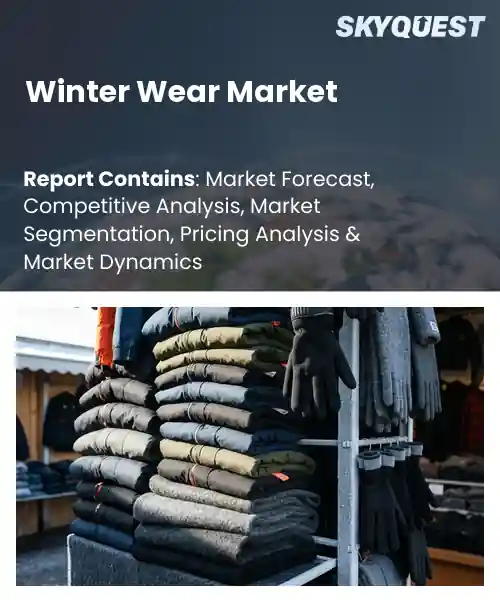
Winter Wear Market
Report ID: SQMIG25K2182
Report ID: SQMIG25K2182
[email protected]
USA +1 351-333-4748
Report ID:
SQMIG25K2182 |
Region:
Global |
Published Date: May, 2026
Pages:
157
|Tables:
122
|Figures:
72


Global Winter Wear Market size was valued at USD 382.52 Billion in 2024 and is poised to grow from USD 400.57 Billion in 2025 to USD 582.85 Billion by 2033, growing at a CAGR of 4.72% during the forecast period (2026-2033).
The key reason behind the winter clothing market being what it is today is evolving consumer preferences for clothing with optimal insulation properties. Winter wear comprises insulated jackets, moisture-wicking base layers, heated clothes, and winter accessories sold through retail, online, and outdoor stores. The importance of the winter wear market lies in the increasing frequency of temperature fluctuations and increased participation in outdoor activities among consumers. In terms of the evolution of winter wear, the trend has been away from bulky clothing like woolen and down to lighter and more functional synthetic clothes; The North Face and Patagonia led the way.
Following the trend of product innovation, technology development related to insulation and clothing comes next as the key driver influencing the growth of the global winter wear industry, since advancements in insulation materials and heating systems make clothing lighter and more efficient, encouraging customers to buy for their use in different activities. In this way, companies allocate resources towards R&D and premiumization, resulting in practical applications, including Columbia’s Omni-Heat reflective technology used by hikers, ORORO heated clothing for people traveling to work, and luxury down from Canada Goose used in cities. The cycle provides room for e-commerce DTC, leasing, subscriptions, customization, and expansion into new cold regions.
How is AI Optimizing Inventory Forecasting in the Winter Wear Market?
AI is altering the brand’s ability to predict inventory needs by using a variety of signals to develop accurate forecasting techniques. Some of the important considerations include integrating sales data with live inventory visibility, climatic patterns, consumer mood and channel behaviors in order to predict consumer buying patterns within a short period of time. The present situation has seen the use of machine learning techniques in predicting which coat designs and sizes will be sold in order to initiate replenishment before demand arises. In the winter wear industry, this will help to minimize stock-outs whenever there is an adverse cold period and reduce overstocking once the period elapses. Examples in this regard will involve the use of AI technology to allocate inventory to the appropriate stores and ensure that key products are always in stock. S&S Activewear May 2026, revealed ApparelSoft IQ which uses AI to increase demand forecasting and decrease stockouts in apparel assortments.
Market snapshot - (2026-2033)
Global Market Size
USD 382.52 Billion
Largest Segment
Coats & Jackets
Fastest Growth
Thermal Wear
Growth Rate
4.72% CAGR
To get more insights on this market click here to Request a Free Sample Report
Global winter wear market is segmented by product type, material, end-user, distribution and region. Based on product type, the market is segmented into Coats & Jackets, Sweaters & Hoodies, Thermal Wear, Gloves & Mittens, Scarves & Hats and Boots. Based on material, the market is segmented into Wool, Down & Feather, Synthetic Insulation and Fleece. Based on end-user, the market is segmented into Men, Women and Children. Based on distribution, the market is segmented into Online Retail, Brand Stores, Department Stores and Sports Retailers. Based on region, the market is segmented into North America, Europe, Asia Pacific, Latin America and Middle East & Africa.
The Down & Feather is the dominant segment due to the material’s superior warm-to-weight ratio and natural insulation capabilities, giving rise to a strong premium positioning that enables luxury positioning of the outerwear. Due to its authentic and capability-based positioning, companies can invest in specialty sourcing and manufacturing processes that further help them develop products in their premium ranges.
Conversely, the Synthetic Insulation is the fastest-growing segment in the market, thanks to the closing of the performance gap between engineered materials and down & feather, alongside other benefits like easy maintenance and reliable supply chain. This helps brands expand their product lines at an unprecedented rate and explore new formats and use cases, thus accelerating growth and opportunity generation.
The online segment holds the dominant share owing to e-commerce capabilities in terms of aggregation of large assortments, flexibility in merchandising activities, and personalization of discovery to find appropriate winter wear products for specific individuals. Online retailing minimizes time-to-market of seasons' collections and enables testing of products without much hassle related to distribution. It leads to more efficient and effective marketing efforts, thus making retailers invest more in online retailing and restructuring their processes along the way.
On the other side, the brand stores segment is the fastest-growing channel due to immersive experiences and personalized service that can make premium winter wear popular. Flagship stores enable retailers to emphasize their unique approach by showcasing cutting-edge technologies used to create clothing and offering exclusive collections that will never be available anywhere else. It makes consumers more loyal and interested in purchasing such items.
To get detailed segments analysis, Request a Free Sample Report
Asia Pacific leads the global market in winter clothing owing to its immense capabilities in manufacturing and its sophisticated supply chain systems. Asia Pacific also leads in consumer demand for winter clothing. Its strengths include the ability to conduct comprehensive research on materials, rapid translation of trends into clothing in production systems, and its wide range of channels such as the specialtyoutdoor stores. Japan and South Korea lead in designing the region, which also inspires the world's designs. Competitive sourcing and costs allow for a wide variety of products. Collaboration among brands, material scientists, and retailers results in innovation in the areas of insulation and sustainability.
Japan Winter Wear Market can take advantage of innovative design, high-quality materials, and local consumer interest in small-size but powerful clothing items for urban use and for different seasons. The retail strategies focus on quality, selective lines, and collaboration between traditional producers of materials and trendy brands. Buyers prefer technical details, aesthetics, and eco-friendly materials, which contributes to the development of a high-end and well-engineered winter wear market in Japan.
Winter Wear Market in South Korea exhibits significant convergence of fashion-centric design, technology-oriented fabrics, and digital selling channels. Consumers from urban settings prefer daring silhouettes, innovative insulation techniques, and multi-functional designs that integrate elements from both the streetwear and performance categories. Cooperation between brands and fabric companies and the quick turnover of trends facilitate the integration of innovative finishing options and sustainability solutions.
The fast growth throughout Europe has been propelled by a combination of rich consumers' desire for superior performance cold weather clothing, active outdoor and urban winter lifestyle choices, and legacy of technical and luxury apparel producers. Consumer sophistication, manifested by specialized outdoors stores, high-end department stores, and web-only brands, ensures a wide selection of insulated, waterproof, and fashionable clothes. Sustainable sources and circular practices, favored by policy and consumers, lead to innovations in recycled fabrics and durability. Winter travel and activity fuel the need for functional outdoor jackets as well as fashionable urban apparel. Collaborative development and marketing of new materials together with performance and fashion trends have cemented Europe's status as a leader in rapidly developing winter apparel markets.
Germany’s Winter Wear Market is characterized by a strong foundation of performance pedigree, outdoor culture, and highly discerning consumers that value functionality and durability. Local manufacturers and specialty retailers place emphasis on function, quality construction, and weatherproof clothing. The marketing strategy is inclined toward expert advice from well-informed retailers. Issues of sustainability and product lifespan determine the choice of materials used. This makes the market inclined towards proficient and durable winter wear for all occasions.
Market of Winter Clothing in UK is driven by high level of fashionability, street culture, and rapid development of digital technologies which promote products and increase engagement. There is an evidentconsumer interest towards fashionable yet practical coats which can provide adequate weather protection in city environments. Both independent designers and traditional clothing brands test their ideas regarding sustainability of their materials and finishing techniques.
French Winter Apparel Market showcases fashion-forward winterwear garments, incorporating luxury elements into their functional designs. Material authenticity, traditional craftsmanship, and elegant aesthetics are key elements for consumers, while fashion designers incorporate premium insulating fabrics and finishes in their collections. The retail strategy is geared towards selecting the finest winterwear garments and offering an immersive shopping experience for consumers. Gradual incorporation of sustainability in the winterwear market can be achieved through these methods.
North America is enhancing its standing by placing increased emphasis on technical performance, customer satisfaction, and varied sales strategies combining the expertise of specialty outdoor shops, traditional clothing stores, and digital channels. With its investment in sophisticated insulations, waterproof breathable layers, and functional designs, the brand caters to the requirements of rugged performance in the outdoors as well as the urban appeal. An active winter lifestyle and vast market presence for outdoor activities, together with an innovative mindset, ensure the interaction between material scientists and leading manufacturers. In addition, sustainability and longevity have become important topics for companies, which resulted in recycling practices and longer use cycles for products. Improved shopping experience, better localization of ranges, and improved omnichannel capabilities make it possible to expand into the market.
Winter Wear Industry in the United States is an example of a blend of a highly developed culture of outdoor activities along with metropolitan requirements for versatile and high-performance clothing. Prominent brands focus on innovations in materials used to create insulating and breath-protecting garments designed according to the regional climate. The distribution network includes outdoor stores, large apparel companies, as well as digital distribution channels enabling customization.
Market of Winter Clothing in Canada is determined by climatic requirements that call for high insulation effectiveness, sturdy construction, and water repellency in both cities and wild locations. Local manufacturers and specialists provide protective clothes during the winter season and also add some design elements to their creations. Retail channels combine local specialty stores with large chains as well as e-commerce sites for the benefit of the population.
To know more about the market opportunities by region and country, click here to
Buy The Complete Report
Rising Cold Climate Demand
With the rise in the occurrence of low temperatures in several areas, there is bound to be increased demand for products that provide warmth, thus prompting producers to come up with new products and marketers to reserve extra shelf space for winter apparel categories. Such focused effort from the supply chain will lead to an improvement in the availability of different varieties of products, innovation in production materials, and a better season cycle, all leading to greater expansion of markets.
Advancements in Insulation Technology
Advancements in in insulative material technology have contributed to improved warmth-to-weight ratios and enhanced wearing experience. This allows for a range of premium and unique winter clothing to be produced by companies that cater to consumer needs in terms of functionality and fashion. These materials allow clothing companies to produce more flexible products and increase the wearability of their items, resulting in repeat purchases by the consumer. This enables manufacturers to offer high-end products in various collections and work with retailers to capitalize on technological advances to boost growth.
High Production and Material Costs
Increased expenses in relation to technology fabrics, special insulation materials, and labor contribute to higher manufacturing expenses that are normally passed on to the consumer through higher retail prices. Price becomes a major constraint in consumer adoption, especially in price sensitive economies. High pricing will limit the number of times purchases are made and hinder entry into lower socio-economic groups within the market. This creates a challenge for small scale competitors that cannot afford high expenses towards product development and growth.
Sustainable Material Sourcing Challenges
Problems associated with sourcing sustainable fiber types and complying with various environmental benchmarks pose difficulties for fashion brands and add another layer of complications to their supply chain, which in turn creates barriers to introducing eco-friendly lines of winter clothing. The limitations related to material procurement and processing may affect design choices, thus increasing time spent on production and the effort made by fashion brands to purchase raw materials needed for eco-products. Sustainable practices that should be followed when creating green lines prevent companies from focusing on product development and market expansion.
Request Free Customization of this report to help us to meet your business objectives.
The competitive dynamics of the global winter wear industry can be seen as being fueled by technical differentiation, consolidation of the premium segment, and licensing of performance-based fabrics. Such dynamics have led to actions like the acquisition of Stone Island by Moncler and the extensive use of innovative heat-retaining technology in their products, such as Columbia Omni-Heat.
Smart Connected Apparel: Incorporation of sensor technology, heating elements, and connectivity into winter wear is moving companies away from solely focusing on the thermal aspects of their garments towards value propositions based on experience. Consumers now expect smart clothes that respond to physical exertion and environmental changes, allowing them to be customized according to the wearer's needs while integrating health and safety technologies alongside control via mobile devices. Fashion companies are collaborating with technology firms to integrate electronics into garments without sacrificing launderability or flexibility. Retailers are promoting the new generation of clothes as premium, serviceable items, thereby providing room for the development of subscription-based models.
Circular Consumption Models: Consumers' increased tendency to embrace flexible ownership models is leading clothing companies to explore various methods for extending the lifespan of their products while safeguarding brand equity. Premiumization of brands through exclusive garment collections and maintenance services is achievable through such means. Meanwhile, retailers are developing reverse logistics, third-party relationships, and quality assurance measures to facilitate pre-owned sales channels.
SkyQuest’s ABIRAW (Advanced Business Intelligence, Research & Analysis Wing) is our Business Information Services team that Collects, Collates, Correlates, and Analyses the Data collected by means ofPrimary Exploratory Research backed by robust Secondary Desk research.
As per SkyQuest analysis, the growth in the global winter wear industry stems from evolving consumer demand for practical clothing items that offer optimum performance with respect to insulation and sustainability, along with developments in technology, which help create lighter products. The industry’s growth is bolstered by its strong presence in the Asia Pacific region, characterized by deep industrial capabilities, integrated supply chains, and high consumer interest, coupled with the dominance of the down & feathers material category, owing to its better warmth-to-weight ratio and premium nature. One of the restraining factors includes increasing cost pressures on the business resulting from increased production and raw material prices.
| Report Metric | Details |
|---|---|
| Market size value in 2024 | USD 382.52 Billion |
| Market size value in 2033 | USD 582.85 Billion |
| Growth Rate | 4.72% |
| Base year | 2024 |
| Forecast period | (2026-2033) |
| Forecast Unit (Value) | USD Billion |
| Segments covered |
|
| Regions covered | North America (US, Canada), Europe (Germany, France, United Kingdom, Italy, Spain, Rest of Europe), Asia Pacific (China, India, Japan, Rest of Asia-Pacific), Latin America (Brazil, Rest of Latin America), Middle East & Africa (South Africa, GCC Countries, Rest of MEA) |
| Companies covered |
|
| Customization scope | Free report customization with purchase. Customization includes:-
|
To get a free trial access to our platform which is a one stop solution for all your data requirements for quicker decision making. This platform allows you to compare markets, competitors who are prominent in the market, and mega trends that are influencing the dynamics in the market. Also, get access to detailed SkyQuest exclusive matrix.
Table Of Content
Executive Summary
Market overview
Parent Market Analysis
Market overview
Market size
KEY MARKET INSIGHTS
COVID IMPACT
MARKET DYNAMICS & OUTLOOK
Market Size by Region
KEY COMPANY PROFILES
Methodology
For the Winter Wear Market, our research methodology involved a mixture of primary and secondary data sources. Key steps involved in the research process are listed below:
1. Information Procurement: This stage involved the procurement of Market data or related information via primary and secondary sources. The various secondary sources used included various company websites, annual reports, trade databases, and paid databases such as Hoover's, Bloomberg Business, Factiva, and Avention. Our team did 45 primary interactions Globally which included several stakeholders such as manufacturers, customers, key opinion leaders, etc. Overall, information procurement was one of the most extensive stages in our research process.
2. Information Analysis: This step involved triangulation of data through bottom-up and top-down approaches to estimate and validate the total size and future estimate of the Winter Wear Market.
3. Report Formulation: The final step entailed the placement of data points in appropriate Market spaces in an attempt to deduce viable conclusions.
4. Validation & Publishing: Validation is the most important step in the process. Validation & re-validation via an intricately designed process helped us finalize data points to be used for final calculations. The final Market estimates and forecasts were then aligned and sent to our panel of industry experts for validation of data. Once the validation was done the report was sent to our Quality Assurance team to ensure adherence to style guides, consistency & design.
Analyst Support
Customization Options
With the given market data, our dedicated team of analysts can offer you the following customization options are available for the Winter Wear Market:
Product Analysis: Product matrix, which offers a detailed comparison of the product portfolio of companies.
Regional Analysis: Further analysis of the Winter Wear Market for additional countries.
Competitive Analysis: Detailed analysis and profiling of additional Market players & comparative analysis of competitive products.
Go to Market Strategy: Find the high-growth channels to invest your marketing efforts and increase your customer base.
Innovation Mapping: Identify racial solutions and innovation, connected to deep ecosystems of innovators, start-ups, academics, and strategic partners.
Category Intelligence: Customized intelligence that is relevant to their supply Markets will enable them to make smarter sourcing decisions and improve their category management.
Public Company Transcript Analysis: To improve the investment performance by generating new alpha and making better-informed decisions.
Social Media Listening: To analyze the conversations and trends happening not just around your brand, but around your industry as a whole, and use those insights to make better Marketing decisions.
REQUEST FOR SAMPLE
 REQUEST FREE CUSTOMIZATION
Global Winter Wear Market size was valued at USD 382.52 Billion in 2024 and is poised to grow from USD 400.57 Billion in 2025 to USD 582.85 Billion by 2033, growing at a CAGR of 4.72% during the forecast period (2026-2033).
Competitive dynamics in the global winter wear market are driven by technical differentiation, premium consolidation, and licensing of performance fabrics, prompting concrete strategies such as Moncler's acquisition of Stone Island and widespread deployment of proprietary warmth technologies like Columbia Omni-Heat. Brands execute M&A, fabric licensing agreements with Gore-Tex, and partnerships with heated apparel startups to defend premium positioning and accelerate product innovation. 'VF Corporation (The North Face, Timberland)', 'Columbia Sportswear', 'Moncler SpA', 'Canada Goose Holdings', 'Patagonia', 'Arc'teryx (Amer Sports)', 'Uniqlo (Fast Retailing)', 'H&M Group', 'Zara (Inditex)', 'Adidas AG', 'Nike Inc.', 'Haglöfs (Asics)', 'Peak Performance', 'Fjällräven (Fenix Outdoor)', 'Woolrich'
Increasing prevalence of cold weather conditions in many regions encourages consumers and institutions to prioritize thermal protection, which in turn motivates manufacturers to expand product lines and retailers to allocate more shelf space and marketing resources to winter wear categories. This sustained attention from supply chain participants enhances product availability and variety, encourages innovation in materials and design, and strengthens seasonal retail cycles, together fostering broader market expansion by aligning production capacities with consumer needs and retailer merchandising strategies effectively.
Smart Connected Apparel: Integration of sensors, heating elements, and connectivity into winter garments is shifting brand value propositions from purely thermal performance to experience-led offerings. Consumers seek garments that adapt to activity and environment, enabling personalized comfort, safety features, and smartphone-enabled controls. Manufacturers are partnering across technology and textiles to embed durable electronics while maintaining washability and mobility. Retailers position connected products as premium, serviceable items, opening opportunities for subscription services, extended engagement, and differentiated aftercare ecosystems in a competitive market landscape.
Why does Asia Pacific Dominate the Global Winter Wear Market? |@12


Want to customize this report? This report can be personalized according to your needs. Our analysts and industry experts will work directly with you to understand your requirements and provide you with customized data in a short amount of time. We offer $1000 worth of FREE customization at the time of purchase.
Feedback From Our Clients


 USA (+1) 351-333-4748

