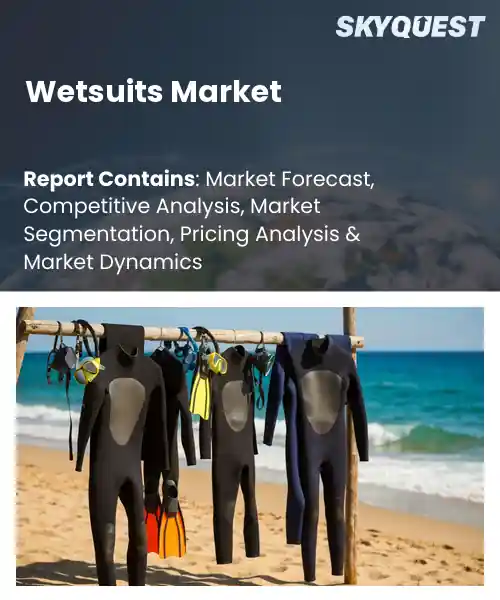
Wetsuits Market
Report ID: SQMIG25K2227
Report ID: SQMIG25K2227
[email protected]
USA +1 351-333-4748
Report ID:
SQMIG25K2227 |
Region:
Global |
Published Date: July, 2026
Pages:
157
|Tables:
176
|Figures:
79


Global Wetsuits Market size was valued at USD 2.2 Billion in 2024 and is poised to grow from USD 2.34 Billion in 2025 to USD 3.85 Billion by 2033, growing at a CAGR of 6.4% during the forecast period (2026-2033).
A major factor behind the growth of the wetsuits industry is an increased interest in water activities together with the development of coastal tourism that leads to greater need for thermal insulation. This is an industry of neoprene wetsuits and other equipment, providing thermal insulation and buoyancy during surfing, diving and open water swimming. It is important since it links recreation, safety, and physical performance together, influencing product development and marketing strategies. The history of this industry goes back to heavy neoprene wetsuits of the middle of the 20th century and evolved to lighter and more environmentally friendly wetsuits made of limestone-based neoprene and recycled materials.
Following these developments in terms of materials used and designs, significant growth in the international wetsuit market will depend on innovations in the same areas that reduce obstacles and increase accessibility. With more light sustainable neoprene and bonded seams used by the companies producing suits, people feel more comfortable wearing them. Thus, the number of recreational diving, triathlons, and cold-water swimming participants increases. With the development of online selling and renting websites, customers can experiment with different suits thanks to the trial prices, which speeds up the process. This can be seen from the increased attendance of surf schools in Baja California and cold-water swimmingclubs in northern Europe.
How is AI Improving Wetsuit Design and Market Competitiveness?
AI is helping with improved wetsuit designs and competitive positioning by allowing more intelligent design processes, faster validation and better fit according to customer requirements. Important components include generative design for panel configuration, fit customization based on machine learning using 3D scanning, and physics simulations that forecast thermal efficiency. Those technologies minimize the need for expensive physical prototypes and provide opportunity for material experimentation digitally. With fierce competition in the marketplace where sustainability and personalization become increasingly important, companies may apply AI for developing unique patterns and adaptive materials while reducing product development time. There are several successful cases, such as AI optimized camouflage for spearfishing suits and proliferation of AI design solutions being featured at trade shows.
Market snapshot - (2026-2033)
Global Market Size
USD 2.2 Billion
Largest Segment
Full Wetsuits
Fastest Growth
Shorty Wetsuits
Growth Rate
6.4% CAGR
To get more insights on this market click here to Request a Free Sample Report
Global wetsuits market is segmented by product type, material type, thickness, application, end user, distribution channel and region. Based on product type, the market is segmented into Full Wetsuits, Spring Wetsuits, Shorty Wetsuits, Long John/Jane Wetsuits and Others. Based on material type, the market is segmented into Neoprene Wetsuits, Natural Rubber Wetsuits and Hybrid Wetsuits. Based on thickness, the market is segmented into Below 3 mm, 3–5 mm and Above 5 mm. Based on application, the market is segmented into Surfing, Diving, Swimming, Water Sports and Others. Based on end user, the market is segmented into Men, Women and Children. Based on distribution channel, the market is segmented into Specialty Sports Stores, Online Retail, Hypermarkets & Supermarkets and Others. Based on region, the market is segmented into North America, Europe, Asia Pacific, Latin America and Middle East & Africa.
Neoprene Wetsuits segment is the market leader since neoprene exhibits high insulating properties, flexibility, and ease of manufacturing in different configurations required in surfing, diving, and water sports. The material characteristics allow the companies to create different size and thickness models that reduce production costs while retaining insulating functions. Thus, such predictability fosters retailer support, expert endorsement, and customer preferences that reinforce each other and form a pattern that is characteristic of performance wetsuits.
At the same time, Hybrid Wetsuits represent the fastest growing segment since the producers combine synthetic and natural components to provide consumers with environmentally friendly and functional products. The need for sustainability and new materials becomes an impetus for product innovations and cooperation with eco brands that leads to greater interest from retailers and premium pricing strategy.
Thickness from 3–5 mm dominates as its balanced thickness provides a good trade-off between insulation and flexibility that can be applied to various water activities and users’ types. Such wide application possibilities minimize the number of special suits needed and encourage the retailer to provide a variety of colors and styles while manufacturers can organize production effectively. Therefore, such a thickness range becomes the focus of designers and brands when considering the mass market and multifunctional application of the products.
The fastest-growing thickness range on the other hand is Below 3 mm since lighter suits are intended to be used for recreation in warm water and sports where agility is important. New thin foaming and elastic materials improve comfort and performance of suits and attract casual users and new types of water sports.
To get detailed segments analysis, Request a Free Sample Report
European countries occupy a dominant position in the world’s wetsuit market thanks to their combination of a strong interest of consumers in aquatic activities, highly developed manufacturing, and concentrated branding heritage. The existing European brands ensure the premiumization of their products thanks to technological advances, cooperation with top athletes, and high-quality control. An extensive retail network that covers coastal and inland leisure areas helps to spread products widely, and a tendency to introduce sustainable materials and design is another factor contributing to the value of the products. Favorable regulatory environment and certification programs promote safety and performance, which also helps to build customer confidence. Moreover, an effective research environment and specific suppliers of alternative neoprene and seams give an additional advantage.
Wetsuit Market in Germany exhibits a customer base that is concerned about durability, performance, and environmentally friendly materials. The demand is focused on wetsuits that have been designed specifically for cold water sports, and this is facilitated by German manufacturing and specialist retail outlets. Cooperation between engineering companies and sportswear brands allows the development of innovative stitching and insulation techniques, whereas rigorous testing plays an important role in the development of the market.
The Wetsuits Market of the United Kingdom is formed based on the dynamic culture of surfing, diving, and other sea recreational activities that create a constant demand for such products. Customers are interested in both efficiency and comfort in design and fast drying fabrics that work well in different coastal climates. Local sellers, surf schools, and event communities provide opportunities for trying out products and building brand loyalty, as well as sportspeople and designers who shape fashion trends.
Market of Wetsuits in France is characterized by the existence of varied coastal regions, which promote active engagement in watersports as well as leisure tourism. Consumers in France tend to prefer fashion-conscious wetsuits that can serve both recreational and competitive markets owing to the presence of independent surf shops and specialist online channels. Closely associated relationships between designers and athletes drive innovations in the field of comfort and thermal efficiency.
Rapid growth in North America is attributed to increased participation in water sports, increased engagement in outdoor lifestyle, and increasing interest in performance and wellness. The presence of well-developed retail environments such as specialty stores and omnichannel brand platforms makes it easier for the consumer to access and experiment with products. Advancements in materials that increase comfort and decrease the environmental footprint resonate well with consumers who are interested in performance and sustainability. Brand partnerships with surf academies and influencers help speed up the process of educating and adopting in the market. Furthermore, increased focus on R&D and production facilities along with an efficient distribution network makes products available across various recreational markets.
The United States Wetsuits Market reflects varied regional needs, spanning from requirements of cold water wetsuits to warm water leisure suits, leading to diversified product range. Interest in adventure and sports activities among consumers drives the demand for thermal insulation and flexibility attributes. Brands partner with sports persons and media outlets to create aspirational marketing campaigns, and retailers offer experience-based interactions through demonstrations and fittings. Sustainable manufacturing practices are increasingly gaining importance among consumers.
The Wetsuits Market in Canada emphasizes the importance of thermal insulation and robust construction in order to meet the demands of the cooler coastlines and interior regions preferred by aficionados. The target market consists of consumers that need thermal insulation and sturdy seams for longer periods of exposure, thus driving vendors towards investing in performance-based construction methods and materials. There are several specialty stores and outfitters that act as marketing tools for educating and fitting individuals with the right products.
The Asia Pacific region has been working on improving its position in the wetsuits market via an array of factors such as increased involvement in water activities, improved production capabilities, and specific brand positioning. The development of the tourist industry, as well as urbanization of the coastal zones, is increasing the number of people who may be interested in purchasing such products, whereas designers are developing the latest inventions taking into account the peculiarities of the local environment. Production centers have been improving their skills in terms of work with technical textiles and seams, which allows for competitive production chains and flexible response times.
Japan Wetsuits Market highlights precision fitting, innovation in materials, and excellent craftsmanship as key aspects of ensuring quality that customers desire. Domestic firms and specialty stores pay attention to perfect sizing and finish, tailoring their wetsuit design according to different water environments and customer taste. Cooperation between manufacturers and research centers is conducive to gradual development in terms of thermal and seam efficiency. Fitting services offered by retailers facilitate the establishment of loyal client relations.
South Korean Wetsuits Market is characterized by increased attraction to leisure activities along the coast and young consumers who prefer sportive but stylish wetsuits. Local companies are developing new materials and cooperating with designers to create comfortable, stylish wetsuits that will be appropriate for different water sports. Internet trading and social networks help in the quick propagation of trends and marketing to specific groups of customers. More attention is paid to the usage of environmentally friendly materials and production methods.
To know more about the market opportunities by region and country, click here to
Buy The Complete Report
Rising Participation in Water Sports
With rising interest in recreation and competition through surfing, diving, triathlons, and open-water swimming, the need for protective and functional clothing is increasing. With more individuals looking to have year-round participation and enhanced comfort through different water conditions, suppliers meet such needs with an increased variety of products. In addition, retailers and those involved with rentals will also stock up on their inventory due to the growing interest of consumers, which results in the expansion of the market by ensuring constant demand for newer suits.
Technological Advancements in Materials
Innovation with respect to materials, such as neoprene formulation; seams; thermal linings; and even environmentally friendly substitutes has increased the effectiveness and attractiveness of the product. Flexibility, lightweight, and better thermal insulation have contributed to making the product more appealing to use under various temperatures of water. This innovation gives manufacturers a chance to divide their products according to activity and experience levels. Such an improvement makes it possible to have a more upscale and distinct position among the competition, which will result in presenting the more expensive line of the product.
High Production Costs and Pricing
The rising cost structure for advanced material, precision production, and quality assurance increases the retail price levels that will discourage price-sensitive buyers and limit use to occasional users. Small sellers and startups may be under margin pressure and unable to increase their product range and marketing efforts. The higher pricing structure limits impulse buying and encourages renting and sharing options among occasional users. All these factors act together as a barrier to market penetration due to limited pricing range.
Environmental Regulatory Compliance Burdens
Environmental laws and shifting sustainability norms make it necessary for manufacturers to change material sourcing methods and manufacturing processes and handling wastes; this will cause delays and complicate manufacturing activities. Some material sourcing options may be limited due to legal requirements and may incur extra costs of certification and therefore hinder fast development of new products. Smaller companies may find it difficult to adhere to such requirements, and this will affect their competitive advantage and ability to innovate.
Request Free Customization of this report to help us to meet your business objectives.
Global wetsuits competitive dynamics focus on athletes led niche brands, sustainability, and innovation in materials, M&A, and licensing. Competitive activities that have been shaping the industry include the acquisition of Rip Curl by Kathmandu, Patagonia's move to neoprene-free products, and the fast growth of entrepreneur-led brands like Florence Marine X, which emphasize research and development in materials, differentiating features, and the direct-to-consumer business model.
Sustainable Materials Adoption: Sustainable materials and manufacturing techniques are now being employed by brands to fulfill the increasing consumer need for sustainability and ethical sourcing. There is innovation in plant-based substitutes for neoprene as well as recycling textiles and closed-loop manufacturing to create a unique brand proposition. Collaboration with sustainable material providers and certifications makes sure that marketing and access to retail stores becomes easier along with dealing with end-of-life considerations through repairs, resale, and return programs.
Digital Sales and Customization: Direct consumer e-commerce and personalization technology trends are changing how the manufacturing process for wetsuits is being transformed. Using virtual fitting software, highly accurate body scanning techniques, and customized styles can help minimize any returns while adding value. Companies are making use of social media and crowdsourced content to create stronger interactions with enthusiasts and create brand loyalty. The integration of the omnichannel strategy will allow for online configuration and in-store fitting and repairs, resulting in increased profitability and customer retention through personalized products and aftercare services.
SkyQuest’s ABIRAW (Advanced Business Intelligence, Research & Analysis Wing) is our Business Information Services team that Collects, Collates, Correlates, and Analyses the Data collected by means of Primary Exploratory Research backed by robust Secondary Desk research.
As per SkyQuest analysis, the increasing popularity of water sports activities is fueling the demand for performance and protection of wetsuits. However, increased cost of production and pricing limit the growth of the industry. Europe has continued being the dominating region because of the rich brand reputation, manufacturing capacity, and commitment towards sustainable development. Neoprene wetsuits have been dominating the market because of the effectiveness of their insulating capabilities and manufacture. The second factor affecting the wetsuit industry is the developments in materials used such as lightweight bonded and natural plant material.
| Report Metric | Details |
|---|---|
| Market size value in 2024 | USD 2.2 Billion |
| Market size value in 2033 | USD 3.85 Billion |
| Growth Rate | 6.4% |
| Base year | 2024 |
| Forecast period | (2026-2033) |
| Forecast Unit (Value) | USD Billion |
| Segments covered |
|
| Regions covered | North America (US, Canada), Europe (Germany, France, United Kingdom, Italy, Spain, Rest of Europe), Asia Pacific (China, India, Japan, Rest of Asia-Pacific), Latin America (Brazil, Rest of Latin America), Middle East & Africa (South Africa, GCC Countries, Rest of MEA) |
| Companies covered |
|
| Customization scope | Free report customization with purchase. Customization includes:-
|
To get a free trial access to our platform which is a one stop solution for all your data requirements for quicker decision making. This platform allows you to compare markets, competitors who are prominent in the market, and mega trends that are influencing the dynamics in the market. Also, get access to detailed SkyQuest exclusive matrix.
Table Of Content
Executive Summary
Market overview
Parent Market Analysis
Market overview
Market size
KEY MARKET INSIGHTS
COVID IMPACT
MARKET DYNAMICS & OUTLOOK
Market Size by Region
KEY COMPANY PROFILES
Methodology
For the Wetsuits Market, our research methodology involved a mixture of primary and secondary data sources. Key steps involved in the research process are listed below:
1. Information Procurement: This stage involved the procurement of Market data or related information via primary and secondary sources. The various secondary sources used included various company websites, annual reports, trade databases, and paid databases such as Hoover's, Bloomberg Business, Factiva, and Avention. Our team did 45 primary interactions Globally which included several stakeholders such as manufacturers, customers, key opinion leaders, etc. Overall, information procurement was one of the most extensive stages in our research process.
2. Information Analysis: This step involved triangulation of data through bottom-up and top-down approaches to estimate and validate the total size and future estimate of the Wetsuits Market.
3. Report Formulation: The final step entailed the placement of data points in appropriate Market spaces in an attempt to deduce viable conclusions.
4. Validation & Publishing: Validation is the most important step in the process. Validation & re-validation via an intricately designed process helped us finalize data points to be used for final calculations. The final Market estimates and forecasts were then aligned and sent to our panel of industry experts for validation of data. Once the validation was done the report was sent to our Quality Assurance team to ensure adherence to style guides, consistency & design.
Analyst Support
Customization Options
With the given market data, our dedicated team of analysts can offer you the following customization options are available for the Wetsuits Market:
Product Analysis: Product matrix, which offers a detailed comparison of the product portfolio of companies.
Regional Analysis: Further analysis of the Wetsuits Market for additional countries.
Competitive Analysis: Detailed analysis and profiling of additional Market players & comparative analysis of competitive products.
Go to Market Strategy: Find the high-growth channels to invest your marketing efforts and increase your customer base.
Innovation Mapping: Identify racial solutions and innovation, connected to deep ecosystems of innovators, start-ups, academics, and strategic partners.
Category Intelligence: Customized intelligence that is relevant to their supply Markets will enable them to make smarter sourcing decisions and improve their category management.
Public Company Transcript Analysis: To improve the investment performance by generating new alpha and making better-informed decisions.
Social Media Listening: To analyze the conversations and trends happening not just around your brand, but around your industry as a whole, and use those insights to make better Marketing decisions.
REQUEST FOR SAMPLE
 REQUEST FREE CUSTOMIZATION
Global Wetsuits Market size was valued at USD 2.2 Billion in 2024 and is poised to grow from USD 2.34 Billion in 2025 to USD 3.85 Billion by 2033, growing at a CAGR of 6.4% during the forecast period (2026-2033).
Competitive intensity in the global wetsuits market is concentrated around athlete led niche brands, sustainability and material innovation, and consolidation through targeted M&A and licensing. Concrete moves shaping competition include Kathmandu’s acquisition of Rip Curl, Patagonia’s shift to neoprene free alternatives and the rapid rise of founder driven labels such as Florence Marine X, all of which push material R&D, differentiated product features and direct to consumer models. 'Patagonia', 'O'Neill', 'Kathmandu Holdings', 'Authentic Brands Group', 'Xcel Wetsuits', 'C-Skins', 'HEAD Group', 'Aqualung Group', 'Johnson Outdoors', 'Fourth Element', 'Bare Sports', 'Typhoon International', 'Gul Watersports', 'Zone3', 'Orca', 'HUUB', 'Mystic', 'Boards & More', 'Hyperflex Wetsuits', 'SRFACE'
Growing recreational and competitive engagement in surfing, diving, triathlons, and open-water swimming has expanded demand for protective and performance apparel. As more participants seek extended season access and improved comfort in varied water conditions, manufacturers respond with broader product ranges and targeted features. Retailers and rental operators also increase stocking levels and promotion, reinforcing consumer awareness and purchase intent. This sustained interest in active water pursuits directly supports market expansion by creating consistent need for updated, specialized wetsuits that address diverse user requirements.
Sustainable Materials Adoption: Brands are adopting environmentally friendly fabrics and production methods to satisfy rising consumer demand for sustainability and ethical sourcing. Innovations in plant-based neoprene alternatives, recycled textiles and closed-loop manufacturing enable differentiation and compelling brand narratives. Partnerships with sustainable suppliers and recognized certifications support marketing and retail access while addressing end-of-life through repair, resale and take-back programs. Storytelling around durability and reduced environmental impact helps build loyalty, allowing wetsuit makers to appeal to eco-conscious athletes and expand into lifestyle retail channels.
Why does Europe Dominate the Global Wetsuits Market? |@12


Want to customize this report? This report can be personalized according to your needs. Our analysts and industry experts will work directly with you to understand your requirements and provide you with customized data in a short amount of time. We offer $1000 worth of FREE customization at the time of purchase.
Feedback From Our Clients


 USA (+1) 351-333-4748

