

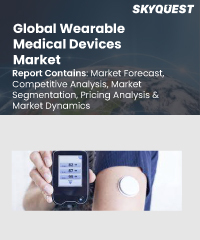
Wearable Medical Devices Market
Report ID: SQMIG35A2674
Skyquest Technology's expert advisors have carried out comprehensive research and identified these companies as industry leaders in the Wearable Medical Devices Market. This Analysis is based on comprehensive primary and secondary research on the corporate strategies, financial and operational performance, product portfolio, market share and brand analysis of all the leading Wearable Medical Devices industry players.


The most influential primary driver of the Global Wearable Medical Devices Market is the rising prevalence of chronic diseases such as diabetes, hypertension, cardiac disorders, and respiratory illnesses. As these conditions require continuous monitoring and early detection of complications, patients and clinicians increasingly rely on wearable technologies for real-time health insights. This shift toward proactive disease management pushes healthcare systems to adopt solutions that can track vital parameters like glucose levels, heart rhythms, blood pressure, and oxygen saturation. The growing emphasis on personalized care and prevention creates strong demand for devices that support timely intervention, reduce hospital visits, and improve long-term outcomes.
According to SkyQuest Technology “Global Wearable Medical Devices Market” By Product Type (Therapeutic Devices, Diagnostic Devices), By Site (Handheld, Headband), By Application, By Region - Industry Forecast 2025-2032,” Global wearable medical devices market is projected to grow at a CAGR of over 20.5% by 2032, on account of urgent need for automating quantified data. A major key factor accelerating the global wearable medical devices market is rapid technological advancement, particularly in sensor miniaturization, wireless connectivity, and data analytics. As sensors become more precise, energy-efficient, and comfortable to wear, users experience minimal disruption to daily activities, improving compliance and long-term usage.
|
Company |
Est. Year |
Headquarters |
Revenue |
Key Services |
|
Apple Inc. |
1976 |
Cupertino, California |
USD 383.3 billion (2023) |
Wearable health tracking, ECG monitoring, blood oxygen monitoring, activity tracking, fall detection, fitness coaching |
|
Fitbit |
2007 |
San Francisco, California |
USD 1.04 billion (2023) |
Activity tracking, heart-rate monitoring, sleep analysis, stress management tools, guided fitness programs, wellness data analytics |
|
Garmin Ltd. |
1989 |
Olathe, Kansas |
USD 5.23 billion (2023)
|
GPS-enabled fitness tracking, heart-rate monitoring, sports performance analytics, health metrics tracking, sleep monitoring, activity coaching |
|
Medtronic plc |
1949 |
Minneapolis, Minnesota |
USD 31.23 billion (2023) |
Cardiac monitoring systems, insulin pump therapy, continuous glucose monitoring (CGM), remote patient monitoring, wearable cardiac diagnostics, digital diabetes management |
|
Abbott Laboratories |
1888 |
Abbott Park, Illinois |
USD 43.7 billion (2023) |
Continuous glucose monitoring (FreeStyle Libre), biosensors, remote health monitoring, diabetes management platforms, metabolic health tracking, cardiovascular diagnostics |
|
Dexcom, Inc. |
1999 |
San Diego, California |
USD 3.622 billion (2023) |
Real-time continuous glucose monitoring, connected diabetes management solutions, sensor-based glucose trend tracking, smartphone-integrated glucose analytics |
|
Masimo Corporation |
1989 |
Irvine, California |
USD 2.048 billion (2023) |
Wearable pulse oximetry, respiratory monitoring, hydration monitoring, hospital-to-home patient monitoring, multiparameter biosensors, remote health data platforms |
|
Koninklijke Philips N.V. |
1891 |
Amsterdam, Netherlands |
USD 19.72 billion (2023) |
Wearable patient monitoring, remote cardiac diagnostics, sleep health devices, connected vitals monitoring, telehealth integration, chronic disease management solutions |
|
Samsung Electronics Co., Ltd. |
1969 |
Yeongtong (Suwon), South Korea |
USD 198.25 billion (2023) |
Smartwatch-based health tracking, ECG monitoring, blood pressure monitoring, fitness analytics, sleep tracking, stress analysis |
|
Huawei Technologies Co., Ltd. |
1987 |
Shenzhen, Guangdong |
USD 99.7 billion (2023) |
Wearable fitness tracking, heart-rate monitoring, sleep analysis, blood oxygen measurement, activity coaching, stress tracking |
Apple Inc. is a global innovator in consumer electronics and digital health technologies, playing a pivotal role in shaping the wearable medical devices market. Founded in 1976, the company has leveraged its vast ecosystem to transform the Apple Watch into a powerful health-monitoring platform. Its wearables offer advanced features such as ECG measurement, blood oxygen monitoring, fall detection, and irregular rhythm notifications, enhancing real-time health insights for millions worldwide. Apple continues to expand its health capabilities through research partnerships, software enhancements, and sensor innovations, reinforcing its commitment to preventive care, wellness tracking, and personalized digital health experiences.
Fitbit, founded in 2007 and now part of Google, is a global leader in wearable health technology, dedicated to helping individuals track, understand, and improve their wellbeing. Over the years, the company has evolved from simple activity trackers to advanced health-monitoring wearables featuring continuous heart-rate tracking, sleep analysis, ECG assessments, and stress measurement tools. Its devices integrate seamlessly with Google’s AI and cloud ecosystem, enabling more personalized insights and early health detection. Fitbit continues expanding its role in digital health through clinical collaborations, algorithm enhancements, and preventive-care–focused innovations.
Garmin Ltd. is a global leader in GPS-enabled wearables and health-tracking technologies, committed to advancing personal wellness and performance monitoring through precision engineering. Founded in 1989, the company has grown into a worldwide innovator with a strong presence across fitness, outdoor, aviation, and marine markets. Garmin’s wearable medical offerings include heart-rate monitoring, advanced sleep analysis, pulse oximetry, and training-focused biometric insights across its smartwatch and fitness tracker portfolio. Recently, Garmin has expanded its health ecosystem with improved sensor accuracy, AI-driven analytics, and integrated platforms designed to support preventive care, endurance training, and long-term wellness management.
Medtronic plc is a global leader in medical technology, services, and connected health solutions, committed to improving patient outcomes through innovative wearable and diagnostic systems. Founded in 1949, the company has grown into one of the world’s most influential healthcare manufacturers with a presence in more than 150 countries. Its wearable offerings span continuous glucose monitoring, insulin delivery, and remote cardiac monitoring. Recently, Medtronic has expanded its connected health ecosystem through advanced CGM technologies, AI-enhanced monitoring tools, and strategic digital health partnerships designed to strengthen personalized and preventive care globally.
Abbott Laboratories is a global leader in medical devices, diagnostics, and health technologies, dedicated to advancing patient care through innovative, data-driven solutions. Founded in 1888, the company has grown into a multinational healthcare powerhouse with a strong presence across more than 160 countries. Its wearable medical offerings are anchored by the FreeStyle Libre continuous glucose monitoring system, which has transformed diabetes management worldwide. Recently, Abbott has expanded its digital health ecosystem with next-generation biosensors, integrated mobile platforms, and clinical partnerships aimed at improving real-time monitoring, preventive care, and chronic disease management.
Dexcom, Inc. is a global leader in continuous glucose monitoring technology, dedicated to transforming diabetes care through real-time, sensor-based insights. Founded in 1999, the company has grown significantly, serving millions of patients worldwide with its clinically validated CGM systems. Dexcom’s wearable devices provide continuous glucose readings, trend analysis, and customizable alerts, enabling more precise and proactive diabetes management. Recently, Dexcom has strengthened its digital health ecosystem with simplified wearable designs, smartphone integration, and data-sharing platforms, while expanding global access through strategic partnerships and next-generation sensor innovations aimed at improving long-term patient outcomes.
Masimo Corporation is a global leader in noninvasive monitoring technologies, dedicated to improving patient outcomes through advanced wearable and sensor-based solutions. Founded in 1989, the company has expanded into a major healthcare innovator with a broad international presence. Its wearable offerings include pulse oximetry sensors, multiparameter monitors, and the Masimo W1 health-tracking device, all designed to deliver continuous, clinically reliable data. Recently, Masimo has enhanced its digital health ecosystem through cloud connectivity, expanded biomarker monitoring, and strategic healthcare collaborations aimed at strengthening remote patient management, early detection, and personalized care delivery.
Koninklijke Philips N.V. is a global leader in health technology, committed to advancing patient care through connected medical devices, digital platforms, and clinical-grade wearables. Founded in 1891, the company has grown into a multinational powerhouse with a strong presence across more than 100 countries. Philips’ wearable medical solutions include remote cardiac monitoring devices, sleep therapy systems, and continuous vital-sign trackers designed for both clinical and home use. Recently, Philips has expanded its digital health ecosystem through AI-enabled diagnostics, cloud-connected monitoring tools, and strategic partnerships aimed at enhancing preventive care, chronic disease management, and patient-centered healthcare delivery.
Samsung Electronics Co., Ltd. is a global leader in consumer electronics and digital health innovation, committed to integrating advanced monitoring capabilities into everyday wearable technology. Founded in 1969, the company has grown into one of the world’s largest technology manufacturers with a presence spanning more than 70 countries. Samsung’s wearable medical offerings include ECG measurement, blood pressure monitoring, sleep analysis, and continuous wellness tracking through its Galaxy Watch lineup. Recently, Samsung has strengthened its digital health ecosystem through AI-powered insights, improved biosensors, and strategic healthcare collaborations aimed at enhancing preventive care and personalized health management.
Huawei Technologies Co., Ltd. is a global leader in telecommunications and smart device innovation, dedicated to enhancing digital health through advanced wearable technologies. Founded in 1987, the company has expanded into a multinational powerhouse with a strong presence across more than 170 countries. Huawei’s wearable medical offerings include heart-rate monitoring, ECG analysis, sleep tracking, and blood oxygen measurement integrated across its Watch and Band series. Recently, Huawei has strengthened its health ecosystem with AI-driven analytics, improved biosensor accuracy, and strategic collaborations aimed at supporting preventive care, chronic condition monitoring, and personalized wellness management.
The Global Wearable Medical Devices Market is rapidly transforming healthcare by enabling real-time monitoring, early disease detection, and data-driven clinical decision-making. Rising chronic disease prevalence and continuous innovation in sensor technologies are accelerating adoption across both consumer and clinical environments. As ecosystems become more interconnected through AI, cloud platforms, and mobile integration, wearables are shifting from simple tracking tools to essential components of preventive and personalized care. Leading companies—including Apple, Fitbit, Garmin, Medtronic, Abbott, Dexcom, Masimo, Philips, Samsung, and Huawei—continue to expand capabilities through advanced biosensors, digital health partnerships, and next-generation monitoring platforms, positioning the market for sustained global growth.
REQUEST FOR SAMPLE
 REQUEST FREE CUSTOMIZATION
Major advancements in technology such as multi-parameter sensing, miniaturization, artificial intelligence (AI), and remote patient monitoring are transforming the functionalities of products, enhancing outcomes, and allowing for new use-cases across hospital and home settings.
New participants in these markets face substantial hurdles such as development costs associated with new devices, very complicated runway for local and international regulatory compliance, cumbersome data privacy laws, and meeting international medical device criteria and standards like ISO and GDPR.
A shift in consumer preferences toward home-based care trends such as fitness monitoring, remote care, and chronic disease management has created demand for real-time non-invasive devices, fostering innovation in usability, portability, and integration in mobile health.
A robust regulatory framework can promote growth via quicker approvals, reimbursements and new services, but regulations can also prove barriers to growth because of the high cost associated with regulation and compliance with international standards and others like GDPR which impact on data protection laws.
Industry partnerships to accelerate innovation, commercialization and technology collaboration through expertise. For example, through Linxens partnership with Nocturnal accelerated the enhancement of a new wearable device developed through biosensors integrate into ultra-low power hardware.
Estimates project that rapid growth will come in wearables therapeutics segments, particularly in remote care applications such as insulin pumps, and pain management devices driven by demand for home health care, and to provide wireless, simple technologies (that are useful).
Global Wearable Medical Devices Market size was valued at USD 39.95 Billion in 2024 and is poised to grow from USD 48.14 Billion in 2025 to USD 213.99 Billion by 2033, growing at a CAGR of 20.5% in the forecast period (2026–2033).
Dexcom Inc., Medtronic plc, Abbott Laboratories, Masimo Corporation, iRhythm Technologies Inc., Koninklijke Philips N.V., Omron Corporation, VitalConnect, Biotricity, Biobeat, iHealth Labs Inc., Withings, Garmin Ltd., Verily Life Sciences LLC, Boston Scientific, PHC Holdings (Senseonics), Asahi Kasei Group (ZOLL Medical), Biotronik, Cardiac Insight Inc., VivaLNK Inc.
The key driver of the wearable medical devices market is the increasing demand for remote health monitoring and personalized healthcare solutions, driven by rising chronic disease prevalence, aging populations, technological advancements, and growing consumer interest in proactive health management.
A key market trend in the wearable medical devices market is the integration of advanced technologies, including IoT, AI, and biosensors, enabling real-time monitoring, data analytics, and seamless connectivity with healthcare platforms for personalized and continuous patient care.
North America accounted for the largest share in the wearable medical devices market, driven by advanced healthcare infrastructure, high adoption of digital health technologies, strong R&D investments, and growing awareness of remote patient monitoring and preventive healthcare solutions.
Want to customize this report? This report can be personalized according to your needs. Our analysts and industry experts will work directly with you to understand your requirements and provide you with customized data in a short amount of time. We offer $1000 worth of FREE customization at the time of purchase.
Feedback From Our Clients
Report ID: SQMIG35A2674
sales@skyquestt.com
USA +1 351-333-4748
 USA (+1) 351-333-4748

