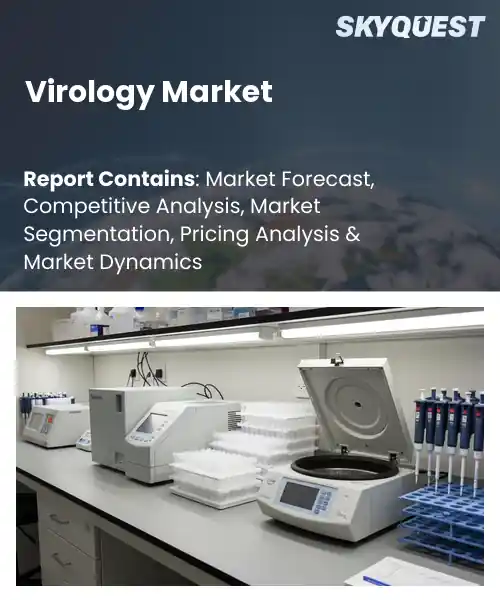
Virology Market
Report ID: SQMIG35J2468
Report ID: SQMIG35J2468
[email protected]
USA +1 351-333-4748
Report ID:
SQMIG35J2468 |
Region:
Global |
Published Date: June, 2026
Pages:
157
|Tables:
119
|Figures:
77


Global Virology Market size was valued at USD 38.52 Billion in 2024 and is poised to grow from USD 41.07 Billion in 2025 to USD 68.85 Billion by 2033, growing at a CAGR of 6.62% during the forecast period (2026-2033).
The global virology market, covering diagnostics, therapeutics, and research tools for viral pathogens, has basically become a pillar for health and biotech investment. Its importance comes from this constant flow of new viruses showing up, plus the long tail of pandemics like COVID-19, which shifted funding patterns and sped up product pipelines.
One of the major factors for the global virology market growth is more money flowing into platform technologies that help vaccine and diagnostic development move more quickly. When governments and venture capital keep raising budgets for pandemic readiness, companies with modular mRNA, viral-vector, or CRISPR platforms can turn genome sequences into clinical candidates in weeks, not months. That shortens the time-to-market, and it tends to reduce costs too. This results in rapid mRNA COVID-19 booster rollouts, CRISPR-enhanced Ebola diagnostic kits, and pan-coronavirus vaccine candidates. Because of those wins, demand keeps rising for specialized reagents, bioprocessing services, and data-analytics solutions, which opens meaningful revenue paths for established biotechs and newer startups globally.
AI-driven diagnostics are changing the global virology market outlook directly, mostly by speeding up pathogen detection, improving how accurate tests are, and supporting real-time surveillance. Machine learning models can process genomic sequences and imaging data more quickly than older, more manual approaches, so clinicians can spot viral strains earlier and adjust treatment choices. That reduces lab turnaround time, helps with outbreak monitoring, and lowers costs for health systems. As virology research keeps expanding, AI platforms are also starting to plug into existing diagnostic kits, so offer hybrid setups that blend molecular assays with predictive analytics. The net effect is a market that reacts faster to emerging threats, while also supporting drug development pipelines.
Market snapshot - (2026-2033)
Global Market Size
USD 38.52 Billion
Largest Segment
Vaccines
Fastest Growth
Virology Diagnostic Instruments
Growth Rate
6.62% CAGR
To get more insights on this market click here to Request a Free Sample Report
The global virology market is segmented by product, technology, application, end-user, and region. Based on product, the market is segmented into virology diagnostic instruments, reagents & kits, antiviral drugs, and vaccines. Based on technology, the market is segmented into PCR-based, sequencing-based, and immunoassay technologies. Based on application, the market is segmented into HIV, hepatitis, and respiratory viruses (including influenza and COVID-19). Based on end-user, the market is segmented into hospitals, diagnostic laboratories, and pharmaceutical & biotechnology companies. Regionally, the market is segmented into North America, Europe, Asia Pacific, Latin America, and the Middle East & Africa.
As per the virology market analysis, the Virology Diagnostic Instruments segment dominates because they provide fast, high throughput detection, which is essential for timely patient management and outbreak control. Also the way they can integrate with hospital information systems makes the whole workflow feel seamless , while automation lowers operator mistake rates and labor costs. Clinicians mostly count on these tools for a definitive diagnosis across a wide range of viral infections, so procurement becomes more steady, and in practice they turn into the cornerstone for virology testing infrastructure.
However, the Reagents & Kits segment is seeing stronger growth momentum, because point of care testing is expanding and there is a clear need for ready to use solutions that are flexible and can be deployed quickly. Newer, emerging viral strains also create demand for adaptable assays, and then the regulatory support for rapid diagnostics helps speed adoption, so this segment acts like a catalyst for broader market expansion.
According to the virology market forecast, the PCR based segment leads, because it delivers rapid, very specific nucleic acid amplification that can be done in a variety of clinical settings. Plus the overall simplicity means it can be rolled out widely across hospitals and laboratories. And the sensitivity matters too, it supports early detection even when viral loads are low. Together these points shrink diagnostic turnaround time, they help patient outcomes, and in the end PCR becomes foundational tech that supports stability in the virology market.
Meanwhile, the sequencing-based segment is popping up as a high growth area since the cost of next generation platforms keeps coming down. That makes it easier to go deeper in viral genomics analysis. With comprehensive sequencing, teams can do strain identification more precisely, track resistance, and even support vaccine design, which matches the expectations around emerging pathogens. This capability keeps investment flowing and adoption rising, so sequencing is positioned as a primary engine for future market expansion.
To get detailed segments analysis, Request a Free Sample Report
As per the virology market regional forecast, North America leads the market, because advanced research infrastructure shows up a lot there, plus there’s huge public and private investment, and also a solid web of academic and commercial laboratories. The region also has these well-established regulatory routes, and they speed up product development, and then market entry, before the competition even fully catches up. What keeps it going is how government agencies, biotech innovators, and big pharmaceutical players keep working together so that a steady pipeline forms, and forms again, like no big pause. On top of that, there’s a big concentration of trained scientists and an almost cultural habit of interdisciplinary teamwork, which helps translate discoveries into therapeutics and diagnostics faster than you’d think. The leading research universities and a supportive intellectual-property setup, also make it easier to turn those new virology solutions into actual commercial products. Plus, there are extensive clinical trial networks which allow quicker testing of new candidates and somehow that keeps the region in front.
United States Virology Market
The Virology sector in the United States is doing well, mostly because there’s a tight concentration of biotech clusters, famous academic institutions, and a venture-capital ecosystem that’s already matured. Strong government funding programs and strategic public private partnerships push early-stage research forward, while large pharmaceutical companies help with scaling up. The regulatory environment tends to encourage faster approval cycles, and the workforce is skilled, so the movement from lab work to market-ready products across different therapeutic segments and diagnostic platforms happens efficiently, and globally too.
Canada Virology Market
The Virology industry in Canada is strengthened by a research landscape that feels very collaborative, connecting federal institutes, provincial health agencies, and newer startups. Public funding mechanisms back vaccine and antiviral development, and there’s also a strong emphasis on translational science so work moves from bench to bedside faster. Biotech operations exist there too, and the regulatory framework feels supportive, so there are clear channels for international market access, which helps reinforce Canada’s role as a meaningful contributor inside the North American virology ecosystem.
Europe’s virology market penetration is pushed forward by a mix of serious public health initiatives, heavy research collaboration, and a clear commitment to innovation across member states. There’s a well-connected set of universities, research institutes and biotech clusters, so cross-border knowledge exchange happens more smoothly, and discovery pipelines get accelerated too. Big public funding, paired with proactive policy frameworks, makes it easier for investors to put money into vaccine platforms and new antiviral therapies. Also the regulatory environment is balanced, it keeps strict safety standards in place while still offering streamlined approval pathways, which shortens the time to market for emerging solutions. Another piece is the way clinical trial protocols are being harmonized across the European Union, that improves participant recruitment efficiency and makes data more comparable, so the collaborative research mood stays strong. Beyond that, strategic public-private partnerships in major cities increase translational capacity, meaning scientific breakthroughs move into commercial applications more quickly, without as much lag, or awkward delays.
Germany Virology Market
The Virology Market in Germany sits on a strong pharmaceutical heritage, plus a dense concentration of research universities that keep driving advanced virology studies. Government-backed programs focus on vaccine research and antiviral development, while industry clusters in key cities promote constant interaction between academia and biotech firms. A transparent regulatory framework and efficient clinical trial infrastructure also help keep product development streamlined, which helps lock in Germany’s position as the dominant player across Europe’s virology space.
United Kingdom Virology Market
The Virology Market in the United Kingdom is seeing fast expansion, largely due to energetic biotech ecosystems and government incentives that feel proactive. The UK’s well known academic institutions generate a pipeline of research innovations, especially around vaccine platforms and therapeutic antibodies. Collaborative networks that link startups with established pharmaceutical companies speed up translational work, while a regulatory approach enables quicker evaluation of products. Together, this is what supports the United Kingdom’s claim as the fastest-growing virology market in Europe, overall.
France Virology Market
The Virology Market in France is starting to emerge through national strategies that emphasize preparedness, and therapeutic development, at the same time. Public research institutions work closely with a rising set of biotech startups, which helps create an environment for vaccine candidates and antiviral research. Incentives for projects, plus streamlined regulatory pathways, encourage quick movement from lab experiments to clinical testing. As these initiatives build momentum, France is becoming more of an emerging contributor to Europe’s wider virology ecosystem, and it’s not slowing down.
Asia Pacific is strengthening its position in the virology market over time, mostly by pulling together a mix of advanced scientific talent, more biotech investment, and a very proactive, health focused government agenda. In places like Japan and South Korea, they’ve built research setups that are world class, and they keep pushing collaborations between universities, contract research organizations, and big pharmaceutical players. The strategic focus on vaccine innovation, plus quick regulatory adjustments, helps them move fast from early science to novel antivirals that can actually be deployed. Also, the region has been leaning harder into digital health and precision medicine, so they’re bringing sophisticated analytics right into virology research, which speeds up how targets get found and how therapeutics get designed. On top of that, these countries build collaborative ecosystems that stress knowledge transfer, and that means new breakthroughs end up turning into commercial products sooner rather than later. With stronger intellectual property protection in place, innovative ventures feel more protected too, so the whole region keeps gaining influence.
Japan Virology Market
Japan’s virology market looks a lot like a blend of deep scientific know how and a long running habit of public private partnership, especially in vaccine development. Major research institutes team up with multinational pharmaceutical firms, and this helps new antiviral candidates move quicker from the lab into real translation. Government programs also provide funding, and they offer streamlined regulatory pathways, so clinical evaluation isn’t dragged out. Beyond that, manufacturing capabilities are integrated, so when products are approved there’s better support for fast scale up which reinforces Japan’s standing as a key cornerstone in the wider Asia Pacific virology scene.
South Korea Virology Market
South Korea’s virology market is largely driven by research funding and a biotech sector that tends to stay innovation led. Collaborative programs that connect universities, government labs, and pharmaceutical partners help accelerate discovery, whether that is vaccine platforms or antiviral therapies. The regulatory setup allows expedited clinical testing, but the real impact also comes from infrastructure that supports data analytics for target identification. As a result, South Korea can take scientific breakthroughs and turn them into solutions that are market ready, and this supports its rising leadership within the Asia Pacific virology arena.
To know more about the market opportunities by region and country, click here to
Buy The Complete Report
Increasing Vaccine Development Initiatives
Adoption Of Advanced Sequencing Technologies
Regulatory Approval Complexities
Limited Skilled Workforce Availability
Request Free Customization of this report to help us to meet your business objectives.
Global virology companies are getting more aggressive with competition, by doing strategic acquisitions, collaborating on joint research ,and pushing out brand new diagnostic platforms quickly. Lately, the M&A scene looks like a clear signal, for example when a virology diagnostics leader bought a CRISPR -based detection startup , it shows the goal to expand test portfolios, fast. Meanwhile, vaccine developers working alongside AI driven antigen design groups, help speed up candidate pipelines. Also, money is flowing into next generation sequencing, which makes outbreak response faster, and helps firms stand out in the market.
Top Player’s Company Profile
Recent Developments in the Virology Market
SkyQuest’s ABIRAW (Advanced Business Intelligence, Research & Analysis Wing) is our Business Information Services team that Collects, Collates, Correlates, and Analyses the Data collected by means of Primary Exploratory Research backed by robust Secondary Desk research.
As per SkyQuest analysis, the global virology market is generally propelled mainly by growing investment in vaccine development efforts, which in turn brings public‑private collaborations together and speeds pipelines. A second major driver is the quick adoption of advanced sequencing technologies, they reduce the time to identify pathogens and they enable precision therapeutics as well. Even so, the market hits constraints because regulatory approval complexities tend to stretch development timelines and raise costs for new diagnostics and drugs. North America still leads overall, largely because it has mature research infrastructure, a strong funding ecosystem and relatively streamlined regulatory pathways. Within the market, virology diagnostic instruments stand out and lead the segment, with high‑throughput automated testing that supports hospital and laboratory demand, and that shapes overall growth.
| Report Metric | Details |
|---|---|
| Market size value in 2024 | USD 38.52 Billion |
| Market size value in 2033 | USD 68.85 Billion |
| Growth Rate | 6.62% |
| Base year | 2024 |
| Forecast period | (2026-2033) |
| Forecast Unit (Value) | USD Billion |
| Segments covered |
|
| Regions covered | North America (US, Canada), Europe (Germany, France, United Kingdom, Italy, Spain, Rest of Europe), Asia Pacific (China, India, Japan, Rest of Asia-Pacific), Latin America (Brazil, Rest of Latin America), Middle East & Africa (South Africa, GCC Countries, Rest of MEA) |
| Companies covered |
|
| Customization scope | Free report customization with purchase. Customization includes:-
|
To get a free trial access to our platform which is a one stop solution for all your data requirements for quicker decision making. This platform allows you to compare markets, competitors who are prominent in the market, and mega trends that are influencing the dynamics in the market. Also, get access to detailed SkyQuest exclusive matrix.
Table Of Content
Executive Summary
Market overview
Parent Market Analysis
Market overview
Market size
KEY MARKET INSIGHTS
COVID IMPACT
MARKET DYNAMICS & OUTLOOK
Market Size by Region
KEY COMPANY PROFILES
Methodology
For the Virology Market, our research methodology involved a mixture of primary and secondary data sources. Key steps involved in the research process are listed below:
1. Information Procurement: This stage involved the procurement of Market data or related information via primary and secondary sources. The various secondary sources used included various company websites, annual reports, trade databases, and paid databases such as Hoover's, Bloomberg Business, Factiva, and Avention. Our team did 45 primary interactions Globally which included several stakeholders such as manufacturers, customers, key opinion leaders, etc. Overall, information procurement was one of the most extensive stages in our research process.
2. Information Analysis: This step involved triangulation of data through bottom-up and top-down approaches to estimate and validate the total size and future estimate of the Virology Market.
3. Report Formulation: The final step entailed the placement of data points in appropriate Market spaces in an attempt to deduce viable conclusions.
4. Validation & Publishing: Validation is the most important step in the process. Validation & re-validation via an intricately designed process helped us finalize data points to be used for final calculations. The final Market estimates and forecasts were then aligned and sent to our panel of industry experts for validation of data. Once the validation was done the report was sent to our Quality Assurance team to ensure adherence to style guides, consistency & design.
Analyst Support
Customization Options
With the given market data, our dedicated team of analysts can offer you the following customization options are available for the Virology Market:
Product Analysis: Product matrix, which offers a detailed comparison of the product portfolio of companies.
Regional Analysis: Further analysis of the Virology Market for additional countries.
Competitive Analysis: Detailed analysis and profiling of additional Market players & comparative analysis of competitive products.
Go to Market Strategy: Find the high-growth channels to invest your marketing efforts and increase your customer base.
Innovation Mapping: Identify racial solutions and innovation, connected to deep ecosystems of innovators, start-ups, academics, and strategic partners.
Category Intelligence: Customized intelligence that is relevant to their supply Markets will enable them to make smarter sourcing decisions and improve their category management.
Public Company Transcript Analysis: To improve the investment performance by generating new alpha and making better-informed decisions.
Social Media Listening: To analyze the conversations and trends happening not just around your brand, but around your industry as a whole, and use those insights to make better Marketing decisions.
REQUEST FOR SAMPLE
 REQUEST FREE CUSTOMIZATION
Global Virology Market size was valued at USD 38.52 Billion in 2024 and is poised to grow from USD 41.07 Billion in 2025 to USD 68.85 Billion by 2033, growing at a CAGR of 6.62% during the forecast period (2026-2033).
Global virology firms are intensifying competition through strategic acquisitions, joint research agreements, and rapid rollout of novel diagnostic platforms. Recent M&A activity, such as a leading virology diagnostics company acquiring a CRISPR‑based detection startup, illustrates the drive to broaden test portfolios. Partnerships between vaccine developers and AI‑driven antigen design firms accelerate candidate pipelines, while investments in next‑generation sequencing technologies enable faster outbreak response and market differentiation. 'Roche Diagnostics', 'Abbott Laboratories', 'Thermo Fisher Scientific', 'Becton Dickinson', 'bioMérieux SA', 'Qiagen NV', 'Hologic Inc.', 'Gilead Sciences', 'GlaxoSmithKline', 'Merck & Co.', 'Pfizer Inc.', 'Johnson & Johnson', 'AstraZeneca', 'Moderna Inc.', 'BioNTech SE', 'Sanofi SA', 'Bio-Rad Laboratories', 'Cepheid (Danaher)', 'Luminex (DiaSorin)', 'Siemens Healthineers'
The growing emphasis on preventive healthcare drives substantial investment in vaccine research, encouraging collaborations across academia, biotech firms, and pharmaceutical companies. This collaborative environment accelerates discovery of novel viral antigens, streamlines clinical trial designs, and improves regulatory pathways. By fostering shared expertise and resources, the industry can bring effective vaccines to market more efficiently, addressing emerging viral threats and expanding the overall market potential for virology products and services. Additionally, the heightened public awareness of infectious disease risks reinforces demand for comprehensive virological testing and surveillance, further stimulating market expansion.
Precision Diagnostics Expansion: The rise of next‑generation sequencing and point‑of‑care platforms is driving a shift toward highly personalized virological testing. Laboratories are adopting multiplex assays that can simultaneously detect multiple pathogens, reducing turnaround time and improving outbreak management. Clinicians increasingly rely on genomic data to tailor antiviral therapies, while health systems prioritize early detection to mitigate transmission. This trend accelerates investment in portable devices, bioinformatics infrastructure, and collaborative networks, fostering a more agile and data‑rich diagnostic ecosystem across both high‑income and emerging markets globally and sustainably.
Why does North America Dominate the Global Virology Market? |@12


Want to customize this report? This report can be personalized according to your needs. Our analysts and industry experts will work directly with you to understand your requirements and provide you with customized data in a short amount of time. We offer $1000 worth of FREE customization at the time of purchase.
Feedback From Our Clients


 USA (+1) 351-333-4748

