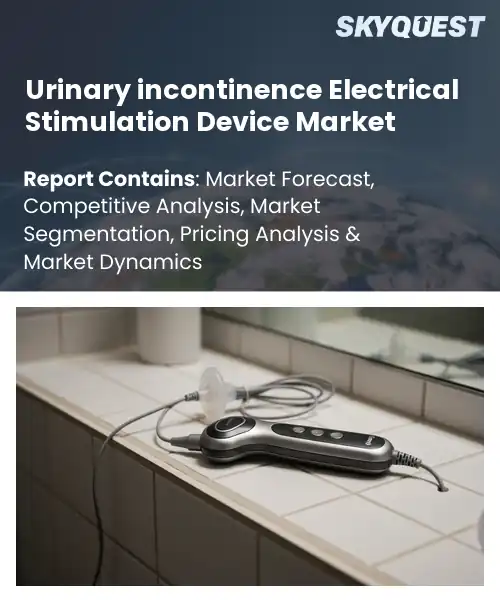
Urinary incontinence Electrical Stimulation Device Market
Report ID: SQMIG35A3324
Report ID: SQMIG35A3324
[email protected]
USA +1 351-333-4748
Report ID:
SQMIG35A3324 |
Region:
Global |
Published Date: March, 2026
Pages:
157
|Tables:
177
|Figures:
79


Global Urinary Incontinence Electrical Stimulation Device Market size was valued at USD 230.1 Million in 2024 and is poised to grow from USD 257.71 Million in 2025 to USD 638.09 Million by 2033, growing at a CAGR of 12.0% during the forecast period (2026-2033).
The primary driver of the urinary incontinence electrical stimulation device market is the growing prevalence of pelvic floor dysfunction driven by ageing societies, shaping a market focused on restoring continence and quality of life. The market encompasses implantable sacral neuromodulators, percutaneous and transcutaneous tibial nerve stimulators, and non invasive pelvic floor devices used in urology, gynecology and rehabilitation settings. Over time innovation moved devices from hospital bound implants to clinic based percutaneous therapies and to compact home use stimulators, reflecting advances in miniaturization, battery life and user interfaces; these shifts matter because they expand access and reduce care costs overall.
A key trend driving the global urinary incontinence electrical stimulation device sector is stronger clinical evidence and reimbursement; when trials and real world studies show symptom reduction and cost effectiveness payers cover therapies and clinicians adopt them. That shift causes manufacturers to invest in scalable, user friendly platforms and pursue regulatory clearances, creating opportunities for home based pelvic floor stimulators and clinic delivered tibial nerve therapy. In real world use community clinics can add low cost percutaneous sessions, elderly patients can self administer maintenance therapy at home, and health systems may realize reduced long term care expenditures through better adherence and fewer incontinence related complications overall.
How is AI Improving Efficacy and Market Adoption of Urinary Incontinence Electrical Stimulation Devices?
AI is improving efficacy and adoption of urinary incontinence electrical stimulation devices by enabling smarter, more patient centered therapy. Some major components are customized programs based on user feedback for responsive stimulation, closed loop signal assessment that refines pulse timing and strength, and remote tracking that allows continued support of compliance and quality by both patients and clinicians. Emerging connected homes and app-enabled products are trendsetting because they help make therapy more compatible with patients' lifestyles and easier to complete. Companies and clinics are combining neuromodulation with digital coaching and data driven adjustments to improve comfort and perceived benefit which helps uptake among patients and providers.
In March 2025, Boston Scientific announced a partnership to co develop an integrated pelvic floor rehabilitation platform that links neuromodulation with imaging and guided therapy. This type of innovation shows how AI driven parameter tuning and remote analytics can raise clinical confidence and broaden market access by simplifying personalized treatment and follow up.
Market snapshot - (2026-2033)
Global Market Size
USD 230.1 Million
Largest Segment
Stress Incontinence
Fastest Growth
Urge Incontinence
Growth Rate
12.0% CAGR
To get more insights on this market click here to Request a Free Sample Report
Global urinary incontinence electrical stimulation device market is segmented by incontinence type, patient type, application, product, end user, severity level and region. Based on incontinence type, the market is segmented into stress incontinence, urge incontinence, mixed incontinence, overflow incontinence and functional incontinence. Based on patient type, the market is segmented into female patients, male patients and transgender patients. Based on application, the market is segmented into urinary incontinence, neurodegenerative diseases and sexual dysfunction. Based on product, the market is segmented into urinary catheters, surgical devices and other urinary devices. Based on end user, the market is segmented into hospitals, clinics, physicians' offices, home care settings, nursing homes, rehabilitation centers and other end users. Based on severity level, the market is segmented into mild, moderate and severe. Based on region, the market is segmented into North America, Europe, Asia Pacific, Latin America and Middle East & Africa.
Based on the global urinary incontinence electrical stimulation device market growth, female patients segment dominates because female users represent the primary clinical population for urinary incontinence therapies, directing product design toward pelvic floor stimulation solutions and noninvasive home use models. The emphasis that clinical research priorities and practice patterns by providers put on female-specific target outcomes, combined with an intense clinical focus by manufacturers in the development of ergonomics, electrode location, and stimulation protocols specifically designed for the anatomical structure of women, drives adoption, attention to reimbursement issues, and innovation for the purposes of addressing women's continence needs.
However, male patients are emerging as the fastest growing patient type due to rising recognition of post prostatectomy incontinence and development of male-tailored device configurations. Targeted clinical studies, adaptations for male anatomy, and growing engagement from urology specialists are accelerating device uptake. These trends are expanding the addressable population and creating new product lines and clinical pathways that broaden future market opportunity.
Neurodegenerative diseases segment dominates because neurological disorders often cause complex, refractory bladder dysfunction that conventional therapies cannot fully manage, creating sustained demand for neuromodulation solutions. Clinicians prioritize programmable and implantable stimulation approaches to restore neural control, stimulating device makers to invest in advanced control algorithms, durable leads, and chronic therapy delivery systems. Research programs and interdisciplinary care models further focus resources on solutions suited to long term neurogenic incontinence management.
However, sexual dysfunction is the fastest growing application area as investigators repurpose electrical stimulation modalities for pelvic nerve modulation that can address both continence and sexual health outcomes. The information being garnered from this growth is enabling new revenue channels for manufacturers and speeding up the adoption of these products in various clinical areas.
To get detailed segments analysis, Request a Free Sample Report
As per the global urinary incontinence electrical stimulation device market share, North America leads the global market due to an integrated ecosystem that aligns advanced clinical practice, concentrated medtech expertise, and favorable pathways for device adoption. Well defined reimbursement systems and existing clinical guidelines promote the use of Pelvic Floor related products in hospital and non-hospital settings, while vast amounts of clinical evidence generated through strong collaboration between manufacturers and specialists allows for further development of test products through well-established means by utilizing the consumer’s acceptance of using products in their homes for pelvic floor disorders. A strong and well-established distribution network, trained professionals for pelvic floor specialists, acceptance of home therapy products by the general populace, and the accelerated growth of new markets enable a level of commercial success which allows for rapid expansion and continuous improvement based on user feedback and multi-sector partnerships.
Urinary incontinence electrical stimulation device market in United States is characterized by advanced clinical adoption and strong medtech innovation clusters that accelerate device development and commercialization. High awareness among clinicians and patients, established reimbursement frameworks, and dense provider networks support broad integration across care settings. Active collaboration among manufacturers, research institutions, and specialist societies facilitates robust evidence generation and clinician training that sustain steady technology refinement and uptake. Wider adoption.
Urinary incontinence electrical stimulation device market in Canada reflects structured adoption through provincial procurement and coordinated clinical pathways that emphasize evidence-based care and equitable access. The health system's emphasis on standardized protocols and experimentation with pilot programs are supporting the adoption of new devices; academia and regional facility partnerships are collaborating with industry to provide education and research opportunity. The design of patient-centric environments and an emphasis on safety will dictate the need for simple-to-use systems in the home or clinic.
Europe is experiencing rapid expansion in the urinary incontinence electrical stimulation device market driven by converging clinical interest, policy support for innovative pelvic health solutions, and a growing emphasis on minimally invasive and home based therapies. Healthcare systems differ from one another, creating several different ways of getting products into the market through their use of expert facilities and educational networks to provide the evidence and guidance needed for clinicians to implement new methods. The availability of harmonized regulations for products and the dynamic nature of suppliers supports localized manufacturing and customized marketing strategies. Rising patient awareness, professional society advocacy, and collaborative pilots between manufacturers and health authorities support scale up across national markets, while reimbursement discussions and procurement models increasingly accommodate device led interventions that address quality of life and long term care objectives.
Urinary incontinence electrical stimulation device market in Germany benefits from a robust medical device manufacturing ecosystem and established clinical research networks that drive product validation. Strong hospital infrastructure and specialized urology and pelvic floor clinics facilitate clinical adoption, while health technology assessment processes and insurer engagement create pathways for reimbursement of proven therapies. Collaboration between academic centres and industry fosters iterative device refinement and supports clinician education and guideline integration.
Urinary incontinence electrical stimulation device market in United Kingdom is driven by innovative startups collaborating with clinical centres to accelerate commercialization. Pilot programmes within health services and interest in digital health integration support testing and real world validation. Nimble adoption of new service models or device formats is supported by patient engagement, clinician advocacy and investment in community care and outpatient settings. Clear regulatory engagement supports evidence generation and clinician training programmes.
Urinary incontinence electrical stimulation device market in France is emerging through targeted clinical initiatives and growing clinician interest in conservative pelvic health interventions. Pilot evaluations facilitate partnerships between manufacturers and healthcare providers. Partnerships create care pathways that improve comfort, safety, and usability of devices to allow for acceptance of patients as well as increased engagement from payers and professional societies leading to guidelines and clinical adoption in both the public and private sectors.
Asia Pacific is strengthening its position in the urinary incontinence electrical stimulation device market by combining localized innovation with strategic collaborations that bridge global technologies and regional healthcare needs. Companies that produce medical devices have developed a strong connection with the markets they serve, allowing them to create products that fit user needs and cultural expectations. At the same time, these companies are increasing clinical research and training programs in order to create evidence that is relevant to the local market. In addition, cross-border partnerships, expanding distribution networks, and an emphasis on telehealth follow-up visits are improving access to care and helping ensure that patients continue to receive proper treatment. Overall, this has positioned many companies in this region as key players in developing new products as well as improving operational practices and processes. As regulations evolve and approval pathways become clearer, investments targeted at growing domestic manufacturing capabilities will create new export opportunities for companies in this region.
Urinary incontinence electrical stimulation device market in Japan combines advanced device engineering and rigorous clinical evaluation, supported by well developed hospital networks and specialist clinics. Both domestic manufacturers as well as multinational companies focus on creating consumer-friendly and patient centered designs that are culturally acceptable and have been designed to meet usability standards. The integration of remote monitoring systems and rehabilitation programs into patient care contributes to continued long-term adherence. Jointly, industry and academic institutions are conducting research; developing an evidence base for product design, along with providing structured training for clinicians.
Urinary incontinence electrical stimulation device market in South Korea is shaped by a strong electronics manufacturing base and agile medtech startups that accelerate product innovation and miniaturization. Clinical validation is actively performed by both hospitals and specialist clinics while the focus on maintaining an easily integrated, user-friendly digital environment fosters the creation of remote therapy models. Government programmes and industry collaborations encourage rapid prototyping and commercialization, enabling locally developed solutions to compete regionally and support export oriented strategies.
To know more about the market opportunities by region and country, click here to
Buy The Complete Report
Rising Prevalence Of Urinary Incontinence
The rising patient population who suffer from urinary incontinence is increasing the clinical need and patient demand for non-invasive therapies, driving healthcare professionals to look to electrical stimulation devices as viable treatment options. As clinicians and patients have more clinical encounters with an increased variety of devices, both groups have become more aware of the growing body of research on how these devices work. More awareness among clinicians and patients also leads to greater investment in research, product development and increased distribution networks for these devices by manufacturers.
Advancements In Device Technology
The development of newer technologies related to both the design of the device and the incoming protocols used with it has improved usability, comfort and perceived effectiveness. This has led to an increase in clinician confidence, as well as patient willingness to consider using electrical stimulation as a therapeutic modality. Newer designs have also included miniaturization and more ergonomic interfaces. The technology-assisted benefits resulting from the new designs have eliminated barriers to prescribing and enabled more widespread distribution through both clinical and consumer channels. As such, manufacturers and providers must make electrical stimulation devices a priority among all modalities used in a patient's course of treatment.
Limited Reimbursement Coverage
Inadequate or inconsistent reimbursement policies for electrical stimulation therapies create cost barriers that limit patient access and reduce clinician inclination to adopt these devices as standard care options. When payers do not recognize or uniformly cover these treatments, healthcare providers may prioritize alternatives with clearer funding pathways, and patients may be deterred by potential out of pocket expenses. This ecosystem is a barrier to adoption, makes it much harder for manufacturers to come up with successful reimbursement strategies and limits their ability to invest in additional distribution and support services that would help the market grow faster.
Limited Clinical Awareness And Training
Insufficient clinician education and limited training opportunities on electrical stimulation device use reduce confidence and familiarity among healthcare professionals, which in turn constrains routine incorporation into treatment plans. If clinicians do not have a lot of physical experience or depend on activities with a clear pathway, they will be less likely to suggest devices and help with patient follow through, resulting in slow referrals and very limited innovation in the care environment. Consequently, manufacturers and professional organizations must make significant investments in professional education before widespread clinical adoption will happen.
Request Free Customization of this report to help us to meet your business objectives.
Competition in the global urinary incontinence electrical stimulation device market outlook is intensifying as incumbents pursue acquisitions and targeted deals while deeptech startups push differentiated neuromodulation approaches; M&A activity such as a major urology portfolio acquisition and heavy venture rounds for adaptive implant developers illustrate consolidation and tech-driven disruption, and partnerships for clinical access plus miniaturized closed loop implants are primary competitive drivers.
SkyQuest’s ABIRAW (Advanced Business Intelligence, Research & Analysis Wing) is our Business Information Services team that Collects, Collates, Correlates, and Analyses the Data collected by means of Primary Exploratory Research backed by robust Secondary Desk research.
As per SkyQuest analysis, the key driver is the rising prevalence of pelvic floor dysfunction which increases demand for home and clinic based neuromodulation therapies, and a second driver is growing clinical evidence and reimbursement that enable broader adoption. The market faces a restraint in limited and inconsistent reimbursement coverage that can impede access and slow clinician uptake. North America currently dominates the market thanks to mature reimbursement, strong clinical research, and medtech ecosystems, while the female patients segment remains the dominating patient cohort shaping product design and commercialization. Continued device miniaturization and digital integration will support expanded home based therapy adoption.
| Report Metric | Details |
|---|---|
| Market size value in 2024 | USD 230.1 Million |
| Market size value in 2033 | USD 638.09 Million |
| Growth Rate | 12.0% |
| Base year | 2024 |
| Forecast period | (2026-2033) |
| Forecast Unit (Value) | USD Million |
| Segments covered |
|
| Regions covered | North America (US, Canada), Europe (Germany, France, United Kingdom, Italy, Spain, Rest of Europe), Asia Pacific (China, India, Japan, Rest of Asia-Pacific), Latin America (Brazil, Rest of Latin America), Middle East & Africa (South Africa, GCC Countries, Rest of MEA) |
| Companies covered |
|
| Customization scope | Free report customization with purchase. Customization includes:-
|
To get a free trial access to our platform which is a one stop solution for all your data requirements for quicker decision making. This platform allows you to compare markets, competitors who are prominent in the market, and mega trends that are influencing the dynamics in the market. Also, get access to detailed SkyQuest exclusive matrix.
Table Of Content
Executive Summary
Market overview
Parent Market Analysis
Market overview
Market size
KEY MARKET INSIGHTS
COVID IMPACT
MARKET DYNAMICS & OUTLOOK
Market Size by Region
KEY COMPANY PROFILES
Methodology
For the Urinary incontinence Electrical Stimulation Device Market, our research methodology involved a mixture of primary and secondary data sources. Key steps involved in the research process are listed below:
1. Information Procurement: This stage involved the procurement of Market data or related information via primary and secondary sources. The various secondary sources used included various company websites, annual reports, trade databases, and paid databases such as Hoover's, Bloomberg Business, Factiva, and Avention. Our team did 45 primary interactions Globally which included several stakeholders such as manufacturers, customers, key opinion leaders, etc. Overall, information procurement was one of the most extensive stages in our research process.
2. Information Analysis: This step involved triangulation of data through bottom-up and top-down approaches to estimate and validate the total size and future estimate of the Urinary incontinence Electrical Stimulation Device Market.
3. Report Formulation: The final step entailed the placement of data points in appropriate Market spaces in an attempt to deduce viable conclusions.
4. Validation & Publishing: Validation is the most important step in the process. Validation & re-validation via an intricately designed process helped us finalize data points to be used for final calculations. The final Market estimates and forecasts were then aligned and sent to our panel of industry experts for validation of data. Once the validation was done the report was sent to our Quality Assurance team to ensure adherence to style guides, consistency & design.
Analyst Support
Customization Options
With the given market data, our dedicated team of analysts can offer you the following customization options are available for the Urinary incontinence Electrical Stimulation Device Market:
Product Analysis: Product matrix, which offers a detailed comparison of the product portfolio of companies.
Regional Analysis: Further analysis of the Urinary incontinence Electrical Stimulation Device Market for additional countries.
Competitive Analysis: Detailed analysis and profiling of additional Market players & comparative analysis of competitive products.
Go to Market Strategy: Find the high-growth channels to invest your marketing efforts and increase your customer base.
Innovation Mapping: Identify racial solutions and innovation, connected to deep ecosystems of innovators, start-ups, academics, and strategic partners.
Category Intelligence: Customized intelligence that is relevant to their supply Markets will enable them to make smarter sourcing decisions and improve their category management.
Public Company Transcript Analysis: To improve the investment performance by generating new alpha and making better-informed decisions.
Social Media Listening: To analyze the conversations and trends happening not just around your brand, but around your industry as a whole, and use those insights to make better Marketing decisions.
REQUEST FOR SAMPLE
 REQUEST FREE CUSTOMIZATION
Global Urinary Incontinence Electrical Stimulation Device Market size was valued at USD 230.1 Million in 2024 and is poised to grow from USD 257.71 Million in 2025 to USD 638.09 Million by 2033, growing at a CAGR of 12.0% during the forecast period (2026-2033).
Competition in the global urinary incontinence electrical stimulation device market is intensifying as incumbents pursue acquisitions and targeted deals while deeptech startups push differentiated neuromodulation approaches; M&A activity such as a major urology portfolio acquisition and heavy venture rounds for adaptive implant developers illustrate consolidation and tech-driven disruption, and partnerships for clinical access plus miniaturized closed loop implants are primary competitive drivers. 'Laborie, Inc.', 'BOSTON SCIENTIFIC CORPORATION', 'Medtronic', 'Coloplast A/S', 'Johnson & Johnson', 'Renovia Inc.', 'ActivLife Technologies', 'Zynex Inc.', 'TensCare Ltd.', 'Verity Medical Ltd.', 'InControl Medical', 'The Prometheus Group', 'Atlantic Therapeutics', 'B. BRAUN SE', 'COLOPLAST CORP.', 'CONVATEC INC.', 'TELEFLEX INCORPORATED', 'HOLLISTER INCORPORATED', 'Caldera Medical', 'Essity (SE)'
The growing number of individuals affected by urinary incontinence increases clinical need and patient demand for effective noninvasive therapies, prompting healthcare providers to consider electrical stimulation devices as practical treatment options. Increased clinical encounters lead to greater awareness among clinicians and patients, which encourages research investment, product development, and broader distribution networks. As a result, manufacturers receive clearer signals to expand product portfolios and support services, fostering market expansion through enhanced adoption across outpatient, homecare, and long term care settings.
Home-Based Therapy Adoption: Growing preference for home-based electrical stimulation reflects patients’ demand for convenience. Manufacturers prioritize compact, user-friendly devices with simple interfaces and remote monitoring features to support adherence and empower self-management. Clinicians increasingly endorse home protocols for appropriate candidates, enabling care continuity outside clinics. Payers and care networks value reduced clinic burden and improved patient satisfaction. Acceptance of at-home regimens drives product design shifts toward portability, clear instructions, and supportive digital resources, fostering broader market adoption across outpatient and community care settings.
Why does North America Dominate the Global Urinary incontinence Electrical Stimulation Device Market? |@12


Want to customize this report? This report can be personalized according to your needs. Our analysts and industry experts will work directly with you to understand your requirements and provide you with customized data in a short amount of time. We offer $1000 worth of FREE customization at the time of purchase.
Feedback From Our Clients


 USA (+1) 351-333-4748

