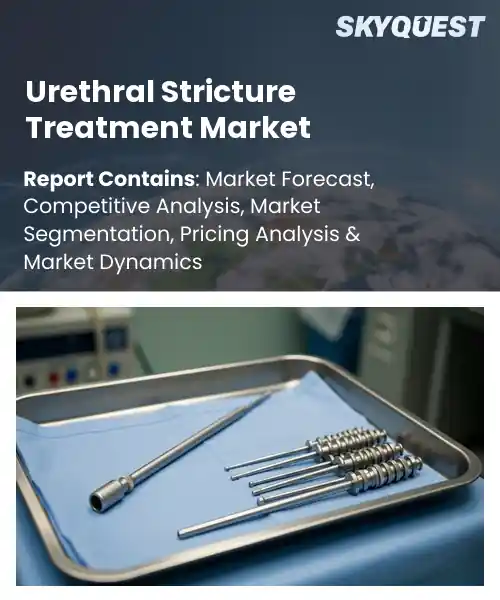
Urethral Stricture Treatment Market
Report ID: SQMIG35A4056
Report ID: SQMIG35A4056
[email protected]
USA +1 351-333-4748
Report ID:
SQMIG35A4056 |
Region:
Global |
Published Date: July, 2026
Pages:
157
|Tables:
172
|Figures:
79


Global Urethral Stricture Treatment Market size was valued at USD 1.9 Billion in 2024 and is poised to grow from USD 2.02 Billion in 2025 to USD 3.26 Billion by 2033, growing at a CAGR of 6.2% during the forecast period (2026-2033).
The urethral stricture treatment industry focuses on medical work that restores urinary flow once the urethra gets narrowed. The relevance is mostly tied to how this condition messes with quality of life, and also because urogenital injuries are showing up more often in older people, where the aging population keeps expanding.
In addition, the urethral stricture treatment market growth is being fueled by the rising disposable income in emerging regions. When health budgets keep climbing, more hospitals are able to bring in state‑of‑the‑art laser systems, and that helps clinicians carry out procedures with less downtime. In practical terms, this can lower bed occupancy while also increasing how many procedures get done in a given time window. Then patients tend to get back to routine sooner, and insurers see it as easier to justify reimbursement, since they’re trying to reduce overall cost of care. There are also real-world stories: for example, a clinic network in Southeast Asia reportedly switched to high‑frequency balloon dilators, and noted something like a 30% drop in re‑intervention frequency. Those results then push interest in next‑generation devices, and they also create openings for collaborations between device makers and regional distributors.
AI is changing the urethral stricture treatment market outlook in a few big ways like improving imaging interpretation, forecasting recurrence risks, and supporting more personal treatment strategies. Machine‑learning systems can digest ultrasound and endoscopic information to flag subtle constrictions that may be missed during routine checks. On top of that, predictive models weigh patient history plus stricture features, and steer clinicians toward the more effective approach, whether that’s dilation, urethroplasty, or something minimally invasive. Real‑time decision support can cut down on procedures that are unnecessary, and it may also speed up recovery. Afterward, remote monitoring platforms track outcomes post‑procedure, so complications can be caught earlier. Put together, these improvements support higher patient satisfaction and keep clinical workflows more streamlined, which helps the market keep growing steadily.
Market snapshot - (2026-2033)
Global Market Size
USD 1.9 Billion
Largest Segment
Urethroplasty
Fastest Growth
Urethroplasty
Growth Rate
6.2% CAGR
To get more insights on this market click here to Request a Free Sample Report
The global urethral stricture treatment market is segmented by treatment type, stricture type, procedure type, application, end user, patient group and region. Based on treatment type, the market is segmented into Urethral Dilation, Direct Vision Internal Urethrotomy (DVIU), Urethroplasty, Drug Therapy and Others. Based on stricture type, the market is segmented into Anterior Urethral Stricture and Posterior Urethral Stricture. Based on procedure type, the market is segmented into Minimally Invasive Procedures and Open Surgical Procedures. Based on application, the market is segmented into Traumatic Urethral Strictures, Iatrogenic Urethral Strictures, Inflammatory Urethral Strictures, Congenital Urethral Strictures and Others. Based on end user, the market is segmented into Hospitals, Urology Clinics and Ambulatory Surgical Centers. Based on patient group, the market is segmented into Adult and Pediatric. Based on region, the market is segmented into North America, Europe, Asia Pacific, Latin America and Middle East & Africa.
As per the urethral stricture treatment market analysis, the Urethroplasty segment dominates mostly because it gives a durable restoration of urethral continuity, and somehow it also tackles those high recurrence rates tied to less invasive options. Surgeons often choose it for tricky or longer strictures, and patients tend to appreciate the reduced need for redo procedures. Over time, the long-term success builds clinician confidence, so hospitals and clinics start prioritizing it in care protocols. Also, reimbursement frameworks are increasingly acknowledging the cost-effectiveness that comes from fewer follow-up procedures, and that ends up reinforcing its preferred status across different care settings.
However, the Direct Vision Internal Urethrotomy segment is seeing the strongest growth momentum because minimally invasive improvements make it usable for shorter strictures and for outpatient situations. Faster recovery and lower cost seem to pull in both providers and patients, so adoption increases in urology clinics and ambulatory centers, and that helps move the market expansion along.
According to the urethral stricture treatment market forecast, the iatrogenic urethral strictures segment dominates because these make up the majority of cases that show up from modern surgical routines and catheterization practices . Since endoscopic procedures are used widely , plus transurethral instrumentation and sometimes aggressive catheter management, mucosal irritation or injury happens more often , so clinicians naturally place extra emphasis on treatments for these strictures. Their prevalence basically keeps demand steady for both minimally invasive and reconstructive solutions , which helps ensure continuous attention and resource allocation in care facilities .
Meanwhile, the Inflammatory urethral strictures segment is growing rapidly because infectious and autoimmune urethritis incidents are climbing . That trend supports earlier intervention, and then improved diagnostic imaging plus greater awareness helps urologists spot inflammatory lesions sooner , so targeted dilation and adjunct anti inflammatory therapies get adopted faster. This clinical shift starts opening new product avenues and it also stimulates research efforts , which positions this segment as a main growth enabler across the overall market .
To get detailed segments analysis, Request a Free Sample Report
As per the urethral stricture treatment market regional forecast, North America is dominating a confluence of advanced healthcare infrastructure, solid reimbursement mechanisms and a culture of early technology uptake, which together keep it as the leader. There’s also a lot of research and development going on, plus a dense cluster of specialized urology centers, and a fairly tight loop between academic institutions and medical-device manufacturers. So clinicians in the United States and Canada are regularly exposed to newer minimally invasive procedures, which helps these innovations spread fast. Strong payer systems back up broad coverage, while regulatory pathways more or less push for quick market entry for new therapeutic tools. All this stuff builds a capable workforce, keeps patient awareness high and makes evidence based practice feel normal, and that’s what sustains the dominance of the market in North America.
United States Urethral Stricture Treatment Market
The Urethral Stricture Treatment sector in the United States is propelled by a big patient base and a mature clinical trial environment, that accelerates the introduction of fresh therapies. Leading academic hospitals and specialty clinics work close with device innovators , enabling rapid adoption of endoscopic , and laser based solutions. Broad insurance coverage makes patient access easier, while professional societies nudge guideline‑driven care. Put together, technological readiness and a highly specialized urology workforce keep market activity strong across the country.
Canada Urethral Stricture Treatment Market
The Urethral Stricture Treatment Market outlook in Canada is shaped by a universal healthcare framework that leans toward cost‑effective plus evidence‑based interventions. Provincial health authorities help pull minimally invasive procedures into publicly funded hospitals, encouraging consistent adoption across regions. At the same time, more urology specialists and dedicated referral centers improve patient pathways, and collaborative research projects support incremental refinements in treatment protocols. This support keeps market development steady, anchored in accessible, high‑quality care.
Europe’s urethral stricture treatment market penetration seems supported by harmonized regulatory standards, deep clinical know-how, and a real focus on patient‑centered results. The region also gains from extensive cross‑border research partnerships, plus reimbursement schemes that tend to favor innovative minimally invasive therapies. Many national health systems, especially in key markets , emphasize guideline adherence, which in turn encourages steady adoption of advanced treatment approaches. Then there’s investment in medical-device innovation, paired with a dense web of specialized urology centers, which helps products diffuse. Also, people are more aware of quality-of-life tradeoffs, so there is rising demand for procedures that can reduce hospital stays and support faster functional recovery, and that collectively accelerates growth throughout Europe.
Germany Urethral Stricture Treatment Market
The Urethral Stricture Treatment Market in Germany is defined by a solid ecosystem of leading medical‑device manufacturers and high uptake of endoscopic technologies. Reimbursement policies are strong, which supports widespread use of advanced therapies , while academic hospitals and research institutes keep pushing clinical innovation. The country’s broad specialist network helps spread best practices quickly, and that reinforces Germany’s position as the dominant European market for urethral stricture management.
United Kingdom Urethral Stricture Treatment Market
The Urethral Stricture Treatment Market share in the United Kingdom is accelerating partly due to NHS initiatives that prioritize outpatient care and minimally invasive procedures. Expanded specialist training programs are increasing the pool of skilled urologists, while newer guideline updates motivate early intervention with modern technologies. The focus on efficient , cost‑effective care helps speed up uptake of innovative treatment options, making the UK one of the fastest-growing markets in the region.
France Urethral Stricture Treatment Market
The Urethral Stricture Treatment Market in France is turning into a more dynamic segment, driven by expanding specialty centers and rising patient awareness. Adoption of European clinical guidelines promotes consistent therapeutic approaches, and early integration of novel devices shows a commitment to elevating care standards. This evolving environment places France as a meaningful contributor to the broader European market expansion.
Asia Pacific is pushing harder on the whole thing, mainly with coordinated government backing, more healthcare infrastructure getting built out, and a growing interest in minimally invasive urology solutions. A bunch of countries there are putting money into modern hospital networks, and they also want medical-device manufacturing to be localized, this lowers entry barriers for innovative therapies. At the same time, professional societies are growing, and training programs help raise clinical know-how ,so acceptance gets easier. Patients also seem to be leaning toward less invasive, quicker recovery procedures, and that demand matters. Plus, collaborative research efforts and cross regional knowledge sharing help move new technology faster, so the region can grab a larger slice of the global urethral stricture treatment space.
Japan Urethral Stricture Treatment Market
The Urethral Stricture Treatment Market in Japan is helped by a very mature urology community, and a regulatory setup that approves new cutting edge technologies fast. There is a laser plus endoscopic approaches being integrated into tertiary care centers, and it shows a strong focus on patient centered outcomes. There are also collaborations between universities and device innovators, and that keeps adoption moving toward the newest therapies, which reinforces Japan’s top role across the Asian market.
South Korea Urethral Stricture Treatment Market
The Urethral Stricture Treatment Market in South Korea is powered by quick take-up of advanced devices, alongside government initiatives that support better diagnostic and therapeutic solutions. The private hospital segment is active, and combined with lots of clinical trial work it speeds up the introduction of fresh minimally invasive options. There is an ongoing emphasis on technology driven care, including AI assisted diagnostics, and it makes South Korea look like a forward looking market in the Asia Pacific region, even when competitors are catching up.
To know more about the market opportunities by region and country, click here to
Buy The Complete Report
Growing Preference for Endoscopic Procedures
Increasing Adoption of Telemedicine Follow‑up
High Cost of Advanced Devices
Regulatory Uncertainty Around Novel Therapies
Request Free Customization of this report to help us to meet your business objectives.
The competitive landscape in the urethral stricture treatment market is a blend , of established medical device giants specialized urology companies, and newer biotechnology firms. Some of the big players are trying to stay strong and grow, by leaning hard into product innovation, strategic partnerships, and also basically expanding across regions. The best known companies tend to have solid R&D pipelines , focused on improving surgical instruments, graft materials, plus these minimally invasive technologies. And then there are collaborations with hospitals and research institutions, those help them validate clinical performance of new therapies in a more grounded way.
Top Player’s Company Profile
Recent Developments in the Urethral Stricture Treatment Market
SkyQuest’s ABIRAW (Advanced Business Intelligence, Research & Analysis Wing) is our Business Information Services team that Collects, Collates, Correlates, and Analyses the Data collected by means of Primary Exploratory Research backed by robust Secondary Desk research.
As per SkyQuest analysis, the global urethral stricture treatment market is set to expand at a 6.2% CAGR , driven mainly by a stronger preference for endoscopic procedures that shorten hospital stays and speed recovery. Another catalyst is the rising uptake of telemedicine follow-up, it helps monitoring after the procedure, and boosts patient adherence. North America stays the dominant region because of advanced healthcare infrastructure, solid reimbursement models, and early technology uptake. Within the market, urethroplasty is still the leading segment, largely because it supports durable restoration and lower recurrence rates. Still, the high cost of advanced devices acts as a restraint, and it tempers adoption in settings where budgets are tight, like cost conscious clinics that watch every decision.
| Report Metric | Details |
|---|---|
| Market size value in 2024 | USD 1.9 Billion |
| Market size value in 2033 | USD 3.26 Billion |
| Growth Rate | 6.2% |
| Base year | 2024 |
| Forecast period | (2026-2033) |
| Forecast Unit (Value) | USD Billion |
| Segments covered |
|
| Regions covered | North America (US, Canada), Europe (Germany, France, United Kingdom, Italy, Spain, Rest of Europe), Asia Pacific (China, India, Japan, Rest of Asia-Pacific), Latin America (Brazil, Rest of Latin America), Middle East & Africa (South Africa, GCC Countries, Rest of MEA) |
| Companies covered |
|
| Customization scope | Free report customization with purchase. Customization includes:-
|
To get a free trial access to our platform which is a one stop solution for all your data requirements for quicker decision making. This platform allows you to compare markets, competitors who are prominent in the market, and mega trends that are influencing the dynamics in the market. Also, get access to detailed SkyQuest exclusive matrix.
Table Of Content
Executive Summary
Market overview
Parent Market Analysis
Market overview
Market size
KEY MARKET INSIGHTS
COVID IMPACT
MARKET DYNAMICS & OUTLOOK
Market Size by Region
KEY COMPANY PROFILES
Methodology
For the Urethral Stricture Treatment Market, our research methodology involved a mixture of primary and secondary data sources. Key steps involved in the research process are listed below:
1. Information Procurement: This stage involved the procurement of Market data or related information via primary and secondary sources. The various secondary sources used included various company websites, annual reports, trade databases, and paid databases such as Hoover's, Bloomberg Business, Factiva, and Avention. Our team did 45 primary interactions Globally which included several stakeholders such as manufacturers, customers, key opinion leaders, etc. Overall, information procurement was one of the most extensive stages in our research process.
2. Information Analysis: This step involved triangulation of data through bottom-up and top-down approaches to estimate and validate the total size and future estimate of the Urethral Stricture Treatment Market.
3. Report Formulation: The final step entailed the placement of data points in appropriate Market spaces in an attempt to deduce viable conclusions.
4. Validation & Publishing: Validation is the most important step in the process. Validation & re-validation via an intricately designed process helped us finalize data points to be used for final calculations. The final Market estimates and forecasts were then aligned and sent to our panel of industry experts for validation of data. Once the validation was done the report was sent to our Quality Assurance team to ensure adherence to style guides, consistency & design.
Analyst Support
Customization Options
With the given market data, our dedicated team of analysts can offer you the following customization options are available for the Urethral Stricture Treatment Market:
Product Analysis: Product matrix, which offers a detailed comparison of the product portfolio of companies.
Regional Analysis: Further analysis of the Urethral Stricture Treatment Market for additional countries.
Competitive Analysis: Detailed analysis and profiling of additional Market players & comparative analysis of competitive products.
Go to Market Strategy: Find the high-growth channels to invest your marketing efforts and increase your customer base.
Innovation Mapping: Identify racial solutions and innovation, connected to deep ecosystems of innovators, start-ups, academics, and strategic partners.
Category Intelligence: Customized intelligence that is relevant to their supply Markets will enable them to make smarter sourcing decisions and improve their category management.
Public Company Transcript Analysis: To improve the investment performance by generating new alpha and making better-informed decisions.
Social Media Listening: To analyze the conversations and trends happening not just around your brand, but around your industry as a whole, and use those insights to make better Marketing decisions.
REQUEST FOR SAMPLE
 REQUEST FREE CUSTOMIZATION
Global Urethral Stricture Treatment Market size was valued at USD 1.9 Billion in 2024 and is poised to grow from USD 2.02 Billion in 2025 to USD 3.26 Billion by 2033, growing at a CAGR of 6.2% during the forecast period (2026-2033).
The competitive landscape is shaped by aggressive capital inflows and rapid product innovation, with companies securing sizable financing to accelerate minimally invasive solutions. Ventaris Surgical’s $30 million Series A fuels development of a next‑generation ureteroscopic platform, while Urologic Health’s $11 million seed round advances its niuTM System toward FDA clearance, illustrating how funding-driven tech breakthroughs are intensifying rivalry and prompting strategic portfolio expansions. 'Boston Scientific Corporation', 'Olympus Corporation', 'Coloplast A/S', 'Cook Medical LLC', 'Becton, Dickinson and Company', 'Teleflex Incorporated', 'Urotronic, Inc.', 'Laborie Medical Technologies Corp.', 'KARL STORZ SE & Co. KG', 'Richard Wolf GmbH', 'Medi-Globe GmbH', 'Well Lead Medical Co., Ltd.', 'Uromed Kurt Drews KG', 'Allium Medical Solutions Ltd.', 'Pnn Medical A/S', 'Advin Health Care', 'Urovision GmbH', 'Promedon Group', 'Endo Pharmaceuticals Inc.', 'Medi-Tate Ltd.'
Healthcare providers are increasingly favoring endoscopic interventions because they reduce patient discomfort, shorten hospital stays, and allow quicker return to daily activities. This procedural advantage encourages clinicians to recommend minimally invasive options over traditional open surgeries, thereby expanding the patient base eligible for treatment. The perceived safety and efficiency of these techniques also enhance physician confidence, fostering broader acceptance across various clinical settings and driving market expansion through heightened procedure volumes and increased product utilization in the urology specialty globally.
Minimally Invasive Innovation Surge: The market is being reshaped by rapid adoption of minimally invasive procedures such as urethral dilation, endoscopic urethrotomy, and laser ablation. Clinicians favor these techniques because they reduce hospital stay, lower postoperative discomfort, and accelerate patient recovery. This shift is driven by advances in fiber‑optic technology, improved visualization, and growing surgeon confidence. As a result, providers are expanding outpatient urology suites, and manufacturers are focusing R&D on compact, user‑friendly devices that can be deployed in office settings for routine use.
Why does North America Dominate the Global Urethral Stricture Treatment Market? |@12


Want to customize this report? This report can be personalized according to your needs. Our analysts and industry experts will work directly with you to understand your requirements and provide you with customized data in a short amount of time. We offer $1000 worth of FREE customization at the time of purchase.
Feedback From Our Clients


 USA (+1) 351-333-4748

