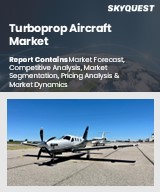
Turboprop Aircraft Market
Report ID: SQMIG20A2378
Report ID: SQMIG20A2378
[email protected]
USA +1 351-333-4748
Report ID:
SQMIG20A2378 |
Region:
Global |
Published Date: December, 2025
Pages:
197
|Tables:
113
|Figures:
72


Global Turboprop Aircraft Market size was valued at USD 2.41 Billion in 2024 and is poised to grow from USD 2.52 Billion in 2025 to USD 3.61 Billion by 2033, growing at a CAGR of 4.6% during the forecast period (2026–2033).
Global turboprop aircraft market growth is fueled by rising demand for regional connectivity, growing air travel in emerging economies, and advancements in engine technology. Turboprops are efficient for flights operating short distances, offering lower operating costs, reduced fuel consumption and the ability to operate from shorter runways and less developed airports. These aircraft play a vital role in expanding aviation access to remote or underdeveloped regions. Additionally, with the aviation sector under the pressure to reduce its carbon footprints, turboprop has been immersed as a greener alternative for short-haul travel.
For instance, in 2024 Central Mountain Air launched De Havilland Dash 8 Q400 from Dease Lake, British Colombia. This move connects remote mining communities to larger hubs overcoming geographic and runway limitations. Moreover, it also supports essential logistics and emergency needs.
The global turboprop aircraft market is transforming through integration of AI, machine learning, IoT, augmented reality, and virtual reality. AI and machine learning enable predictive maintenance systems that forecast mechanical issues before they happen. AI-powered intelligence systems help extend component life, reduce costs and ensure flight safety. IoT sensors collect data on engine temperature, pressure, vibration, and other parameters that influence performance. Blockchain technology helps to reduce the risk of counterfeit parts and streamlines regulatory audits. Furthermore, AR and VR are widely used to train pilots and technicians in simulated environments.
What Makes AI Crucial for the Turboprop Aircraft Market?
AI has become a crucial factor in the turboprop aircraft market as it enables predictive maintenance, optimizes fuel efficiency, and supports autonomous operations. Turboprop aircraft rely on consistent engine performance and structural integrity, and AI enables real time monitoring of key components. By analyzing sensor data, AI can detect early signs of wear corrosion or mechanical issues which helps to reduce costs and downtime. AI powered flight management systems can adjust engine settings and propeller pitch to ensure maximum efficiency throughout different flight phases. Moreover, AI can alert pilots to anomalies that may not be immediately visible, which helps in emergency scenarios.
Market snapshot - 2026-2033
Global Market Size
USD 2.3 billion
Largest Segment
New
Fastest Growth
Pre-Owned
Growth Rate
4.6% CAGR
To get more insights on this market click here to Request a Free Sample Report
Global Turboprop Aircraft Market is segmented by Point of Sale, Passenger Capacity, Component, Engine, End-user and region. Based on Point of Sale, the market is segmented into New and Pre-Owned. Based on Passenger Capacity, the market is segmented into Upto 5 Passengers, 5-10 Passengers and More than 10 Passengers. Based on Component, the market is segmented into Aerostructures, Avionics, Engine, Landing Gears and Others. Based on Engine, the market is segmented into Conventional and Hybrid. Based on End-user, the market is segmented into Commercial and Military. Based on region, the market is segmented into North America, Europe, Asia Pacific, Latin America and Middle East & Africa.
Based on the 2024 turboprop aircraft industry outlook, new turboprop aircraft are preferred due to factors such as improved fuel efficiency, lower emissions, quieter operations and greater passenger capacity. Advancements in turboprop aircraft result in lower operational costs per flight and smaller carbon footprints aligning with global aviation industry’s push towards sustainability. Additionally, new turboprop aircraft come with warranty coverage, reduced maintenance intervals in better parts availability, which reduces long-term costs and downtime.
Pre-owned turboprop aircraft are the fastest growing in the segment due to reasons such as economic value, shorter delivery timelines, and availability of upgraded models. For smaller operators and cargo services, pre-owned turboprops offer practical and cost-effective entry into regional aviation. Many pre-owned turboprop aircraft are being refurbished with new engines and interiors extending their service life and enhancing operational efficiency. Government aviation programmes are increasingly relying on affordable used to reach remote areas and provide medical services.
As per the 2024 global turboprop aircraft market analysis, the predominance of commercial turboprop aircraft is attributed to factors such as efficiency cost effectiveness and suitability for short to medium regional routes. As passenger demand grows in developing markets, airlines are expanding regional networks using commercial turbo prop fleets. Governments and local authorities are investing in regional aviation infrastructure further encouraging the use of commercial turboprop aircraft
Military turboprop aircraft is the fastest growing segment in the turboprop aircraft market due to factors such as versatility, durability, and performance in diverse operational environments. Advanced military turboprop aircraft are highly effective for tactical missions, humanitarian operations, and border security tasks. They are increasingly favored by the Airforce that need cost effective alternatives to high performance jets for noncombat operations. Additionally, turboprops are also being adopted for pilot training due to their easy flight characteristics and reliability.
To get detailed segments analysis, Request a Free Sample Report
As per the 2024 turboprop aircraft regional forecast, North America leads the market due to factors such as strategic industrial capabilities, vast geographical requirements, and sustained investment in aerospace innovation. The region benefits from the presence of aircraft manufacturing and aviation excellence and is home to global aerospace giants. The turboprop aircraft in the region are extensively used in civil, military, and commercial uses. Furthermore, North America benefits from mature infrastructure for aviation training operations and maintenance.
The US turboprop aircraft market remains a healthy sector, with growth, supported by growing need for regional air connectivity, ageing aircraft fleet replacement and rising fuel efficiency demands. Regional air service programmes directly funded by the US government support the use of turboprop aircraft. The US market is also seeing interest in hybrid and electric turboprop developments supported by innovation giants aimed at decarbonizing regional aviation. As the demand for versatile aircraft solutions increases, the turboprop aircraft market in the US is poised for sustained growth.
As per 2024, turboprop aircraft industry analysis, Canada's market is expanding rapidly due to factors such as geographic vastness and remote community needs, strong presence of regional and commuter airlines and local aircraft manufacturing heritage. Many northern and remote communities in Canada are not connected by road year-round and rely heavily on-air services. Canada benefits from exceptional aircrafts offering robust performance, operational flexibility and dependability under extreme weather conditions. Furthermore, Canada also has a mature ecosystem of support infrastructure including training centers, spare parts availability and MRO capabilities.
As per 2024, the turboprop aircraft regional outlook, Europe is emerging as the fastest growing region in market due to factors such as regional connectivity needs, environmental concerns, and growing interest in efficient short distance aviation. Many European countries are small island nations that rely on turboprop aircraft to link smaller cities and remote communities to larger herbs. With growing pressure from the European Union to reduce aviation emissions, turboprops are gaining renewed relevance. Moreover, as the public perception regarding discomfort and high-ticket pricing is reducing, the turboprop aircraft market in Europe is poised to grow.
As per 2024 turboprop aircraft industry forecast, the demand for turboprop aircraft in UK is driven by increased demand for regional air connectivity, advancements in aircraft technology and sustainability goals. Defense applications support the turboprop market with the UK military employing aircraft for training, surveillance, and maritime petrol machines. Moreover, government-backed airport modernization projects, and incentives for regional connectivity are improving the economic feasibility of turboprop operations.
The market for turboprop aircraft in Germany is driven by robust industrial logistics, strong emphasis on sustainable aviation, and defense procurement programmes. Germany lacks infrastructure to support large jets which creates ample opportunities for turboprop aircrafts. Germany benefits from well-established aerospace industry that contributes significantly to turboprop supply chain and innovation ecosystem. Additionally, investment in clean aviation research and development under government funded initiatives further supports the turboprop aircraft market expansion.
As per 2024, turboprop aircraft industrial analysis the growth of market in France is driven by factors such as regional air mobility initiatives, domestic aerospace leadership and demand for eco efficient transportation. The French government's commitment to promote regional connectivity has strengthened the position of turboprop as a reliable transportation option. France is also home to key turbo prop aircraft manufacturers which supplies aircraft globally and maintains strong domestic demand.
As per 2024, turboprop aircraft regional forecast, Asia-Pacific region is an emerging market due to factors such as growing demand for regional connectivity, rising preference for cost efficient aircraft and government backed regional aviation schemes. As many nations in Asia Pacific are composed of mountainous terrains and remote islands, turboprop aircraft provide an ideal solution. The rising middle class and growing tourism, and business travel have significantly increased the demand for short-distance routes. The cargo sector is also increasing demand for turboprops in e-commerce and pharmaceutical logistics.
Japan’s turboprop aircraft market is driven by growing investment in domestic tourism, rising usage of small aircraft in Defense and modernization of ageing aircraft fleets. Japan's high number of rural and remote airports have fostered strong demand for turboprops. Japan airport consists of short runways or operational constraints which creates favorable environment for adoption of turboprop aircrafts. The Japan’s government is investing in regional infrastructure, offering subsidies for regional airlines and supporting aviation research and development which creates ample opportunities for expansion of turboprop aircraft market.
As per 2024 turboprop aircraft market forecast, the market in South Korea is driven by factors such as rising domestic air travel demand, development of regional and Inter Island connectivity and growing short distance transportation. These aircrafts offer cost effective and reliable solutions for connecting underserved islands of South Korea. The government is supporting regional air development through subsidies and policy initiatives. Moreover, manufacturers are partnering with universities and defense contractors for research into electric and hybrid aircraft, further propelling market growth.
To know more about the market opportunities by region and country, click here to
Buy The Complete Report
Rising Demand for Regional Air Connectivity
Advancements in Aircraft Technology
Competition from Jet Aircraft Market
Limited Payload Capacity
Request Free Customization of this report to help us to meet your business objectives.
Global and regional players interested in innovation and growth are locked in fierce competition in the global turboprop aircraft market. To manage competition, companies employ a variety of strategies such as strategic differentiation, cost-efficiency, and after-service. The turbo crop manufacturers are focusing on refining engine technology, cabin comfort and noise reduction to stand out in crowded segments. As competition intensifies, companies are also strengthening their global support network through partnerships and long-term service agreements. Some players are forming joint ventures with local governments or private operators to increase maintenance bases and reduce import costs. Moreover, governments are pushing regional air connectivity programmes which offer subsidies to airlines operating in underserved areas, thereby increasing turboprop demand.
SkyQuest’s ABIRAW (Advanced Business Intelligence, Research & Analysis Wing) is our Business Information Services team that Collects, Collates, Correlates, and Analyses the Data collected by means of Primary Exploratory Research backed by robust Secondary Desk research.
As per SkyQuest analysis, the global turboprop aircraft market is driven by factors such as airlines seeking efficiency, cost effective solutions, and remote airports. The widening focus on sustainability, including adoption of sustainable aviation fuels and development of hybrid electric propulsion, offers significant growth. However, the market faces challenges such as limited speed, high cost of maintenance, and fuel price volatility. The market also experiences regulatory and certification challenges which delay new model rollouts and escalate development costs. The push towards hybrid electric and hydrogen propulsion systems highlights industry efforts to reduce fuel consumption and environmental impact. Companies are expanding geographically by targeting emerging markets via local partnerships, and service centers. The turboprop aircraft market is poised for rapid growth propelled by its strategic alignment with sustainability goals, and increasing air travel.
| Report Metric | Details |
|---|---|
| Market size value in 2024 | USD 2.41 Billion |
| Market size value in 2033 | USD 3.61 Billion |
| Growth Rate | 4.6% |
| Base year | 2024 |
| Forecast period | 2026-2033 |
| Forecast Unit (Value) | USD Billion |
| Segments covered |
|
| Regions covered | North America (US, Canada), Europe (Germany, France, United Kingdom, Italy, Spain, Rest of Europe), Asia Pacific (China, India, Japan, Rest of Asia-Pacific), Latin America (Brazil, Rest of Latin America), Middle East & Africa (South Africa, GCC Countries, Rest of MEA) |
| Companies covered |
|
| Customization scope | Free report customization with purchase. Customization includes:-
|
To get a free trial access to our platform which is a one stop solution for all your data requirements for quicker decision making. This platform allows you to compare markets, competitors who are prominent in the market, and mega trends that are influencing the dynamics in the market. Also, get access to detailed SkyQuest exclusive matrix.
Table Of Content
Executive Summary
Market overview
Parent Market Analysis
Market overview
Market size
KEY MARKET INSIGHTS
COVID IMPACT
MARKET DYNAMICS & OUTLOOK
Market Size by Region
KEY COMPANY PROFILES
Methodology
For the Turboprop Aircraft Market, our research methodology involved a mixture of primary and secondary data sources. Key steps involved in the research process are listed below:
1. Information Procurement: This stage involved the procurement of Market data or related information via primary and secondary sources. The various secondary sources used included various company websites, annual reports, trade databases, and paid databases such as Hoover's, Bloomberg Business, Factiva, and Avention. Our team did 45 primary interactions Globally which included several stakeholders such as manufacturers, customers, key opinion leaders, etc. Overall, information procurement was one of the most extensive stages in our research process.
2. Information Analysis: This step involved triangulation of data through bottom-up and top-down approaches to estimate and validate the total size and future estimate of the Turboprop Aircraft Market.
3. Report Formulation: The final step entailed the placement of data points in appropriate Market spaces in an attempt to deduce viable conclusions.
4. Validation & Publishing: Validation is the most important step in the process. Validation & re-validation via an intricately designed process helped us finalize data points to be used for final calculations. The final Market estimates and forecasts were then aligned and sent to our panel of industry experts for validation of data. Once the validation was done the report was sent to our Quality Assurance team to ensure adherence to style guides, consistency & design.
Analyst Support
Customization Options
With the given market data, our dedicated team of analysts can offer you the following customization options are available for the Turboprop Aircraft Market:
Product Analysis: Product matrix, which offers a detailed comparison of the product portfolio of companies.
Regional Analysis: Further analysis of the Turboprop Aircraft Market for additional countries.
Competitive Analysis: Detailed analysis and profiling of additional Market players & comparative analysis of competitive products.
Go to Market Strategy: Find the high-growth channels to invest your marketing efforts and increase your customer base.
Innovation Mapping: Identify racial solutions and innovation, connected to deep ecosystems of innovators, start-ups, academics, and strategic partners.
Category Intelligence: Customized intelligence that is relevant to their supply Markets will enable them to make smarter sourcing decisions and improve their category management.
Public Company Transcript Analysis: To improve the investment performance by generating new alpha and making better-informed decisions.
Social Media Listening: To analyze the conversations and trends happening not just around your brand, but around your industry as a whole, and use those insights to make better Marketing decisions.
REQUEST FOR SAMPLE
 REQUEST FREE CUSTOMIZATION


Want to customize this report? This report can be personalized according to your needs. Our analysts and industry experts will work directly with you to understand your requirements and provide you with customized data in a short amount of time. We offer $1000 worth of FREE customization at the time of purchase.
Feedback From Our Clients


 USA (+1) 351-333-4748

