Tunnel Kiln Market
Report ID: SQMIG20I3361
Report ID: SQMIG20I3361
[email protected]
USA +1 351-333-4748
Report ID:
SQMIG20I3361 |
Region:
Global |
Published Date: July, 2026
Pages:
157
|Tables:
148
|Figures:
78


Global Tunnel Kiln Market size was valued at USD 1.42 Billion in 2024 and is poised to grow from USD 1.5 Billion in 2025 to USD 2.36 Billion by 2033, growing at a CAGR of 5.8% during the forecast period (2026-2033).
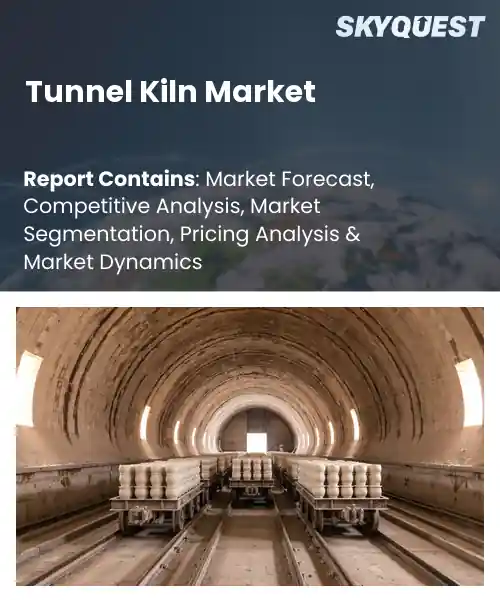
Global tunnel kiln is characterized by industrial kilns that consist of furnaces which move materials on a belt through a heated zone, thus facilitating continuous heat treatment of ceramics, bricks, and composite materials. The relevance of the global tunnel kiln market is based on providing high-quality products with minimal losses of energy resources. This market has been changing from batch-type kilns to automated tunnel kilns due to growing urbanization and the need for the rapid production of construction materials. The development of China housing markets in the 2010s contributed to the growth of the use of tunnel kilns with high efficiency and reduction in time of firing from 24 hours to 8 hours.
Major developments in the tunnel kiln market include strict rules on energy efficiency and the implementation of green building practices, which lead firms to opt for environmentally friendly heating sources. Whenever there are stricter restrictions on carbon emissions, firms will purchase recuperative burners and better insulation materials capable of reducing fuel usage by 30%, thereby making operations more efficient. For instance, in the EU, there was a directive on energy performance of buildings that led brick manufacturing firms to acquire tunnel kilns with IoT-controlled temperature profiling and better dimensional accuracy. The market grows due to regulatory and sustainable material demand incentives.
How is AI-driven Automation Improving Efficiency in the Tunnel Kiln Market?
AI-based automated system in tunnel kilns is revolutionizing the process through the integration of sensors that monitor temperature, airflow and fuel use. The information is fed to a learning system that helps in predicting the best firing curve for each batch, thus eliminating guesswork. The operator is informed through visual notifications, allowing him to make changes before the deviation affects the quality of the process, thereby cutting down the cycle time and energy wastage. Predictive maintenance notification allows operators to be aware of worn-out components and helps prevent equipment breakdown and increases the lifespan of equipment. This has resulted in an efficient workflow and better product uniformity. The net result is an efficient and sustainable process that matches the current trend in the market.
Market snapshot - (2026-2033)
Global Market Size
USD 1.42 Billion
Largest Segment
Natural Gas
Fastest Growth
Electric
Growth Rate
5.8% CAGR
To get more insights on this market click here to Request a Free Sample Report
Global tunnel kiln market is segmented by fuel type, application, temperature range, capacity, end user and region. Based on fuel type, the market is segmented into Natural Gas, Electric, Coal, and Hybrid. Based on application, the market is segmented into Ceramics, Bricks & Tiles, Refractories and Advanced Ceramics. Based on temperature range, the market is segmented into Low Temperature, Medium Temperature, High Temperature, and Ultra-High Temperature. Based on capacity, the market is segmented into Small Scale, Medium Scale, and Large Scale. Based on end user, the market is segmented into Ceramic Manufacturers, Brick Manufacturers, Refractory Manufacturers and Advanced Material Manufacturers. Based on region, the market is segmented into North America, Europe, Asia Pacific, Latin America and Middle East & Africa.
The dominance of natural gas in this industry emanates from the consistency in flames produced, high heat efficiency levels, and availability in well-established supply chains, which are compatible with the continuous nature of the tunnel kilns. Companies prefer natural gas for the ease with which one can ensure uniform heat distribution to minimize waste and product defects. Its reliability ensures simpler design in plants, and its wide use across different capacities of tunnel kilns further strengthens its dominance in this market.
On the other hand, the rapid growth of electric emanates from the increasing pressure over the amount of carbon dioxide emissions in the atmosphere as companies turn to cleaner energy sources. Improved heating elements and availability of renewable energy sources have made electric tunnel kilns feasible.
The dominance of the Bricks & Tiles segment is attributed to the high volumes of production that require constant and high-speed heating processes, which are provided by the tunnel kilns. Moreover, the straightforwardness of raw materials and the necessity of constant temperatures during sintering increase the significance of this application and result in integration of the tunnel kiln technology. Thus, companies prefer to invest in special kiln installations for bricks and tiles.
Advanced ceramics is one of the fastest growing segments due to the specific features of performance that require strict control of temperature and its uniformity – the features which can be obtained in modern tunnel kilns. The innovations in the field of materials science along with increasing usage in aerospace, electronics, and medical devices stimulate the development of this segment through advanced installation of additional controls.
To get detailed segments analysis, Request a Free Sample Report
The Asia Pacific market uses the synergy of experience in manufacturing, strong industrial connections, and constant technology development. The top companies in this region focus on research and development, resulting in highly effective kiln technologies of premium quality. High demand for ceramics, bricks, and refractories drives high production volumes, whereas favorable regulations spur modernization and energy saving efforts. An experienced labor force and good logistics make the costs competitive, thus turning this region into the best supplier of advanced tunnel kilns to the international market.
Japanese Tunnel Kiln Market is supported by the tradition of excellence in engineering and an intense focus on quality control. Local producers have the advantage of tight cooperation with top ceramic companies, allowing for fast development of new kilns technology. The Japanese Tunnel Kiln Market is fueled by a complex system of components and a high commitment to environmental issues, which result in the adoption of low-emission technologies. Investments in automation and monitoring technologies are another factor strengthening the reputation of Japan in this area.
The South Korea Tunnel Kiln Market thrives due to constant innovation and the presence of an industrial policy environment that is adaptive to change. Manufacturers of tunnel kilns in the country have the capability to make use of high-level materials and controls, resulting in efficient operations with lower consumption of energy. Good relationships with players in the construction and building materials industry allow for the development of products that meet the requirements of the changing market environment.
The European tunnel kiln industry is experiencing an accelerated growth rate owing to a high level of emphasis on environmental protection, specialty products, and standardization practices in the industry. High emissions standards have forced companies to employ greener and efficient kilns, thereby driving the demand for advanced systems. The existence of different sectors in the European ceramics, tiles, and refractories industry provides room for innovations. Research and development practices have also facilitated technology transfer from one country to another within the European continent.
Tunnel Kiln Market in Germany has an advantage of having a rich tradition in engineering coupled with an extensive system of component suppliers worldwide known. The German suppliers give priority to precise production, longevity, and energy saving, thus following the principles of German industrial standards. Cooperation with the automobile and advanced ceramic industries leads to incorporating technologies into processes. The commitment to integrating renewable energy contributes to Germany’s dominance in manufacturing quality tunnel kilns.
Tunnel Kilns Market in United Kingdom witnesses' quick expansion owing to collaborative efforts between academia and industries, along with sustainability in manufacturing. Manufacturers opt for modular systems that provide quick scalability and customization for fulfilling requirements across the construction industry and restoration industry. Incentives by the government for green technologies speed up the adoption of future‑ready kilns. Focused efforts towards digitalization and predictive maintenance help manufacturers in the UK enhance performance and cut down operating expenses.
Market of Tunnel Kilns in France is becoming a specialized center of manufacture of high-quality ceramic and decorative tiles. French producers combine artisan skills with technological innovations to produce their kilns. Environmental requirements for building materials contribute to the development of low-emission kilns. Clusters, consisting of design schools, scientific institutions, and suppliers, make it possible for France to become an innovative player in the field of tunnel kilns in Europe.
North America strengthens its standing in tunnel kilns by focusing on integration, flexible production capacities, and a strong supply chain. The industry is focused on embracing smart control systems and data analysis to improve the performance of the kilns as well as resource utilization. The construction and building materials sector in North America remain robust and provides steady demands for conventional and customized kiln systems. Manufacturers, along with research institutions and equipment suppliers, work together in developing modular and portable kilns that can be used on different projects.
The US Tunnel Kiln Market features a wide industrial base and rapid innovation as an element of its culture. The use of sophisticated Internet of Things systems and real-time monitoring allows optimizing productivity and energy consumption. Being strongly connected with such extensive industries as construction, bricks, and refractories, manufacturers develop products tailored to different regional needs. Partnership with technology companies helps to introduce predictive maintenance solutions faster.
Market of Tunnel Kiln in Canada relies on the high priority given to sustainability issues and well-developed natural resource industry. Manufacturers are paying much attention to the design of efficient kilns for cold weather, using proper insulation and heat recovery features. Cooperation with national forestry and construction industry helps to make kilns more environmentally friendly through using alternative fuels. Government initiatives aimed at reducing carbon dioxide emissions stimulate implementation of innovative technologies in production of tunnel kilns.
To know more about the market opportunities by region and country, click here to
Buy The Complete Report
Increasing Demand for Energy Efficient Products
With increased focus on cutting down the amount of energy used in operations, manufacturing firms are increasingly adopting the use of tunnel kilns, which offer continuous process and are highly efficient thermally. The use of tunnel kilns helps firms reduce their costs while meeting sustainable goals. The trend results in capital investments in the adoption of better kilns, hence leading to continued demand in the ceramics, refractory materials, and specialty glass markets.
Adoption of Advanced Automation Technologies
Automation and controls incorporated into the tunnel kilns are revolutionizing production processes, offering possibilities for real-time tracking, predictive maintenance, and precise temperature control. All of these contribute to fewer mistakes, more consistent products, and shorter cycles, thereby resulting in increased capacity and profitability for the plant. In connection with increasing focus on creating smart factories, the trend towards more automated tunnel kilns becomes stronger, which, in turn, stimulates manufacturers to create smarter equipment.
High Capital Investment Requirements
The considerable initial cost involved in buying and setting up tunnel kilns is one of the major barriers for many companies, especially small and medium‑sized companies. The high cost is due to the complicated engineering work, special parts required, and preparatory work that needs to be done, hence discouraging investment in new machinery. As such, companies may delay their plans for upgrades or settle for less effective options, thus slowing down the pace of market acceptance.
Stringent Environmental Regulations
More stringent rules regarding emissions, waste management, and energy usage make companies adhere to stricter standards when using the tunnel kiln. In some cases, companies will have to use more pollution control devices, monitoringtools, and auditing services, which will make the construction of tunnel kilns difficult and costly. Companies can opt not to purchase new tunnel kilns and choose other types of technology instead because of the regulations that will hinder the growth of the market for tunnel kilns.
Request Free Customization of this report to help us to meet your business objectives.
Competition in the tunnel kiln industry is high due to strategic mergers and acquisitions, partnerships with raw material suppliers, and fast adaptation to digital twin and AI process control technologies to improve energy efficiency and product quality. Collaborations between tunnel kiln manufacturers and construction technology companies seek to incorporate modular kilns into prefabricated building modules to expedite market entry.
Advanced Material Coatings Adoption: Innovative manufacturers are now employing high-performance ceramics and nano-coatings within the interior surfaces and conveyors of the tunnel kilns to increase their lifespan and minimize downtime. The use of such advanced technology allows for operation at increased temperatures and improved temperature uniformity, thus the production of new lightweight alloys and composite panels. Through minimizing wear and corrosion, there is minimized cost of maintenance and quick changeovers, providing these companies with competitive advantage in industries including aerospace, automobiles, and renewable energy.
Digital Twin Optimization: Digital twin solutions are being used by operators, which simulate the actual physical tunnel kiln environment, thus enabling real-time tracking of temperature variations, air flow, and fuel usage. The simulated model helps in making predictions about the performance of the burners and recuperators, thereby saving energy and maintaining product quality. Through machine learning analytics, there is the ability to forecast machinery breakdowns and plan for interventions ahead of time, thus improving the overall efficiency of the equipment and ensuring sustainability practices along the value chain.
SkyQuest’s ABIRAW (Advanced Business Intelligence, Research & Analysis Wing) is our Business Information Services team that Collects, Collates, Correlates, and Analyses the Data collected by means of Primary Exploratory Research backed by robust Secondary Desk research.
As per SkyQuest analysis, the tunnel kiln market is primarily driven by the rising need for energy-efficient products. This causes a push among the manufacturers to adopt continuous-process kilns as they help reduce fuel consumption and operational costs. Another driving factor for the market is the growing adoption of advanced automation and artificial intelligence (AI)-based controls that provide enhanced accuracy in temperatures and increase the efficiency of processes. However, the considerable amount of capital needed to establish efficient tunnel kiln systems is the main restraining factor for the market, especially for smaller enterprises. The Asia-Pacific region is expected to continue dominating the market due to its substantial production base of ceramics, bricks, and refractories.
| Report Metric | Details |
|---|---|
| Market size value in 2024 | USD 1.42 Billion |
| Market size value in 2033 | USD 2.36 Billion |
| Growth Rate | 5.8% |
| Base year | 2024 |
| Forecast period | (2026-2033) |
| Forecast Unit (Value) | USD Billion |
| Segments covered |
|
| Regions covered | North America (US, Canada), Europe (Germany, France, United Kingdom, Italy, Spain, Rest of Europe), Asia Pacific (China, India, Japan, Rest of Asia-Pacific), Latin America (Brazil, Rest of Latin America), Middle East & Africa (South Africa, GCC Countries, Rest of MEA) |
| Companies covered |
|
| Customization scope | Free report customization with purchase. Customization includes:-
|
To get a free trial access to our platform which is a one stop solution for all your data requirements for quicker decision making. This platform allows you to compare markets, competitors who are prominent in the market, and mega trends that are influencing the dynamics in the market. Also, get access to detailed SkyQuest exclusive matrix.
Table Of Content
Executive Summary
Market overview
Parent Market Analysis
Market overview
Market size
KEY MARKET INSIGHTS
COVID IMPACT
MARKET DYNAMICS & OUTLOOK
Market Size by Region
KEY COMPANY PROFILES
Methodology
For the Tunnel Kiln Market, our research methodology involved a mixture of primary and secondary data sources. Key steps involved in the research process are listed below:
1. Information Procurement: This stage involved the procurement of Market data or related information via primary and secondary sources. The various secondary sources used included various company websites, annual reports, trade databases, and paid databases such as Hoover's, Bloomberg Business, Factiva, and Avention. Our team did 45 primary interactions Globally which included several stakeholders such as manufacturers, customers, key opinion leaders, etc. Overall, information procurement was one of the most extensive stages in our research process.
2. Information Analysis: This step involved triangulation of data through bottom-up and top-down approaches to estimate and validate the total size and future estimate of the Tunnel Kiln Market.
3. Report Formulation: The final step entailed the placement of data points in appropriate Market spaces in an attempt to deduce viable conclusions.
4. Validation & Publishing: Validation is the most important step in the process. Validation & re-validation via an intricately designed process helped us finalize data points to be used for final calculations. The final Market estimates and forecasts were then aligned and sent to our panel of industry experts for validation of data. Once the validation was done the report was sent to our Quality Assurance team to ensure adherence to style guides, consistency & design.
Analyst Support
Customization Options
With the given market data, our dedicated team of analysts can offer you the following customization options are available for the Tunnel Kiln Market:
Product Analysis: Product matrix, which offers a detailed comparison of the product portfolio of companies.
Regional Analysis: Further analysis of the Tunnel Kiln Market for additional countries.
Competitive Analysis: Detailed analysis and profiling of additional Market players & comparative analysis of competitive products.
Go to Market Strategy: Find the high-growth channels to invest your marketing efforts and increase your customer base.
Innovation Mapping: Identify racial solutions and innovation, connected to deep ecosystems of innovators, start-ups, academics, and strategic partners.
Category Intelligence: Customized intelligence that is relevant to their supply Markets will enable them to make smarter sourcing decisions and improve their category management.
Public Company Transcript Analysis: To improve the investment performance by generating new alpha and making better-informed decisions.
Social Media Listening: To analyze the conversations and trends happening not just around your brand, but around your industry as a whole, and use those insights to make better Marketing decisions.
REQUEST FOR SAMPLE
 REQUEST FREE CUSTOMIZATION
Global Tunnel Kiln Market size was valued at USD 1.42 Billion in 2024 and is poised to grow from USD 1.5 Billion in 2025 to USD 2.36 Billion by 2033, growing at a CAGR of 5.8% during the forecast period (2026-2033).
The tunnel kiln market is shaped by intense competition among manufacturers leveraging strategic M&A, joint ventures with raw material suppliers, and rapid adoption of digital twins and AI-driven process controls to enhance energy efficiency and product quality. Recent partnerships between kiln producers and construction technology firms aim to integrate modular kiln designs into prefabricated building components, accelerating market penetration. 'Nutec Bickley Ltd.', 'Harrop Industries, Inc.', 'Keller HCW GmbH', 'SACMI Imola S.C.', 'Ceric Technologies Ltd.', 'Lingl Anlagenbau GmbH', 'Höganäs Bjuf Refractories AB', 'Keramischer Ofenbau GmbH', 'Sabo S.A.', 'Nutec Group', 'J.C. Steele & Sons, Inc.', 'Bongioanni Macchine S.p.A.', 'Händle GmbH Maschinen und Anlagenbau', 'Ceramifor Equipamentos Industriais Ltda.', 'CLEIA S.A.S.', 'Shandong Mine Machinery Cosmec Construction Materials Machinery Co., Ltd.', 'Shandong Kaitai Industrial Technologies Co., Ltd.', 'KEDA Industrial Group Co., Ltd.', 'Sinoma International Engineering Co., Ltd.', 'Tianjin Cement Industry Design & Research Institute Co., Ltd.'
The growing emphasis on reducing operational energy consumption drives manufacturers to replace traditional batch kilns with tunnel kilns that provide continuous processing and superior thermal efficiency. By delivering consistent temperature profiles and lower fuel usage, tunnel kilns enable plants to lower production costs while meeting sustainability targets. This shift encourages capital projects and retrofit initiatives, creating sustained demand for advanced kiln systems across ceramics, refractories, and specialty glass sectors, thereby expanding the overall market opportunity and fostering long‑term supplier relationships.
Advanced Material Coatings Adoption: Manufacturers are increasingly integrating high‑performance ceramic and nanostructured coatings into tunnel kiln liners and conveyor components, extending service life and reducing downtime. These advanced materials enable operation at higher temperatures with improved thermal uniformity, supporting the production of next‑generation lightweight alloys and composite panels. By mitigating wear and corrosion, firms achieve lower maintenance costs and faster changeover cycles, strengthening their competitive positioning in sectors such as aerospace, automotive, and renewable energy where product quality and schedule adherence are critical, and.
Why does Asia Pacific Dominate the Global Tunnel Kiln Market? |@12


Want to customize this report? This report can be personalized according to your needs. Our analysts and industry experts will work directly with you to understand your requirements and provide you with customized data in a short amount of time. We offer $1000 worth of FREE customization at the time of purchase.
Feedback From Our Clients


 USA (+1) 351-333-4748

