Tuberculous Meningitis Treatment Market
Report ID: SQMIG35J2248
Report ID: SQMIG35J2248
[email protected]
USA +1 351-333-4748
Report ID:
SQMIG35J2248 |
Region:
Global |
Published Date: March, 2026
Pages:
157
|Tables:
117
|Figures:
77


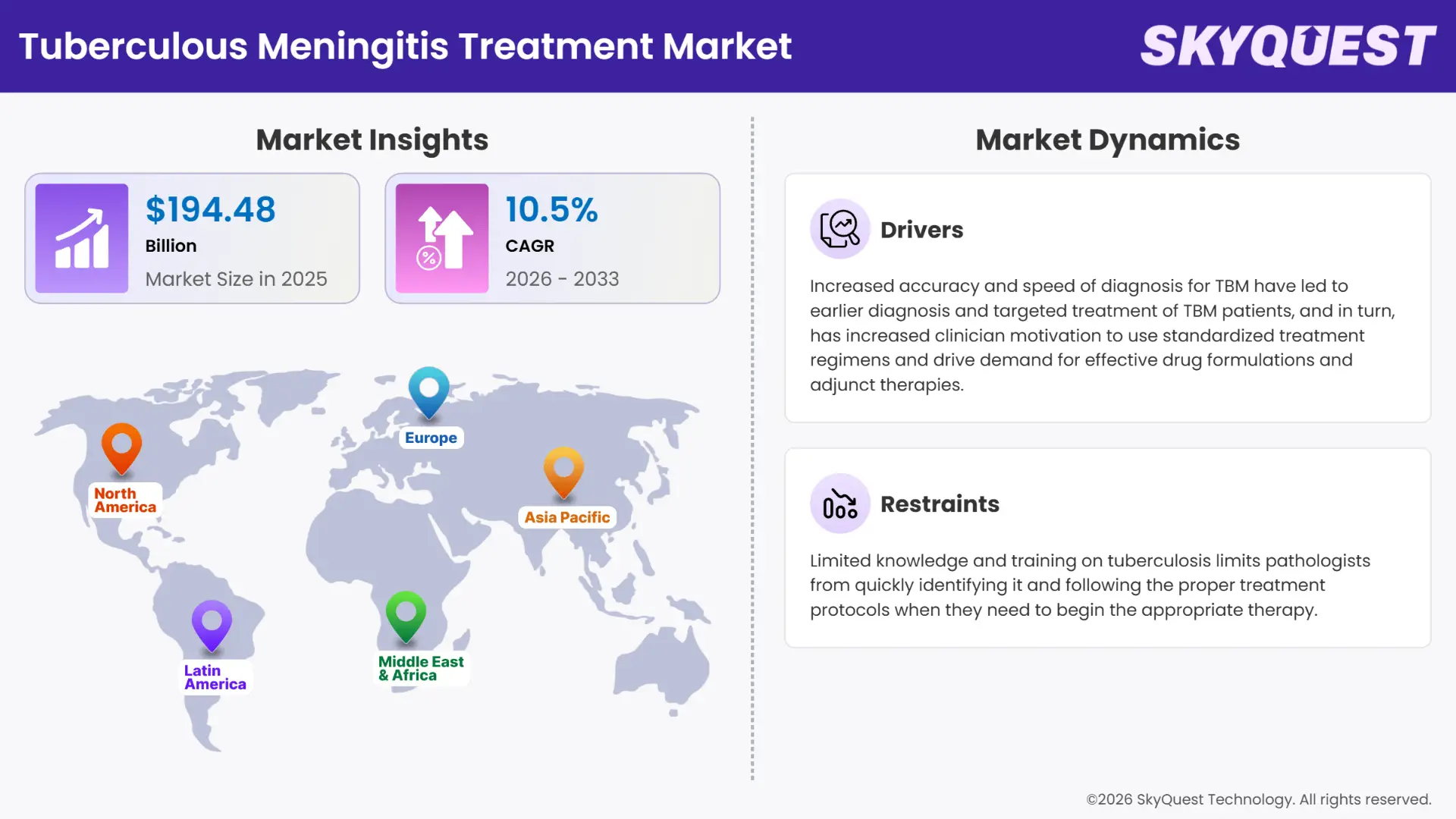
Global Tuberculous Meningitis Treatment Market size was valued at USD 176.00 Billion in 2024 and is poised to grow from USD 194.48 Billion in 2025 to USD 432.29 Billion by 2033, growing at a CAGR of 10.5% during the forecast period (2026-2033).
Key Takeaways: Market Trends & Insights
Tuberculous meningitis treatment market main growth driver is the clinical burden of and management options for CNS tuberculosis as clinicians and health systems prioritize effective treatment and diagnosis. It includes adjunctive to decrease inflammation and supportive care technologies, and it is important due to high mortality rates and neurologic complications from tuberculous meningitis compared to pulmonary TB.
Over years there has been an evolution of treatment approaches including moving away from empirical short courses to then prolonged multi-drug regimens, using off label agents for CNS penetrance (e.g., Linezolid, Bedaquiline) in conjunction with roll-out of Xpert MTB/RIF (higher accuracy of rapid diagnosis). The continuing advancement of drug-resistant strains of Mycobacterium tuberculosis further amplifying the need for CNS-penetrating shorter-duration therapies and more effective paediatric formulations. As drug-resistance progresses, clinicians are using Linezolid, Bedaquiline, and more intense therapeutic monitoring all create a need for custom formulations, PK platforms to measure CNS penetrance, and point of care (POC) molecular tests to guide targeted therapy.
In addition, countries have identified ramping up Xpert significantly increases the number of TB meningitis cases diagnosed and the timeliness of appropriate treatment, prompting manufacturers and procurement agencies to invest in combined diagnostic/drug offerings.
How is AI Improving Diagnosis and Treatment Decision-making in Tuberculous Meningitis Market?
Advances in AI technology are now helping clinicians with making better, faster decisions and diagnosing tuberculosis meningitis by providing tools that combine advanced imaging analysis with clinical decision support. Automated interpretations of chest x-rays and brain imaging have been developed to automatically detect suspected active TB and CNS involvement. Laboratory test results and clinical indicators can now be integrated to better assess overall risk of developing TB meningitis. Clinicians can also use existing tools to identify potential treatment options, determine monitoring priorities for patients and understand how treatments can be impacted based on each patient’s individual risk.
There is currently an increased demand in the marketplace for services offered by the radiological community to provide earlier detection of TB cases and to improve workflow efficiencies with AI. Recent studies have applied radiomics and graph-based classification methods to TB meningitis diagnosis. This has the added benefit of improving clinical confidence in their diagnosis and enhancing treatment planning.
Qure.ai in May 2025 reported successful large-scale implementation of radiographic AI on a large scale and that AI-based AI screening tools in chest x-ray images will lead toward more timely identification of suspected TB cases, resulting in earlier treatment and potentially preventing development of severe TB meningitis with more timely treatment. This will also help to improve the efficiency of the TB test and treatment process.
To get more insights on this market click here to Request a Free Sample Report
Global tuberculous meningitis treatment market is segmented into drug therapy class, treatment phase, route of administration, end-user and region. Based on drug therapy class, the market is segmented into first-line antitubercular drugs, second-line antitubercular drugs, corticosteroids and osmotic diuretics. Based on treatment phase, the market is segmented into intensive phase and continuation phase. based on route of administration, the market is segmented into oral tablets/liquids, intravenous (IV) infusion and intrathecal injection. Based on end-user, the market is segmented into infectious disease centers, multi-specialty hospitals and government healthcare programs. Based on region, the market is segmented into North America, Europe, Asia Pacific, Latin America, and Middle East & Africa.
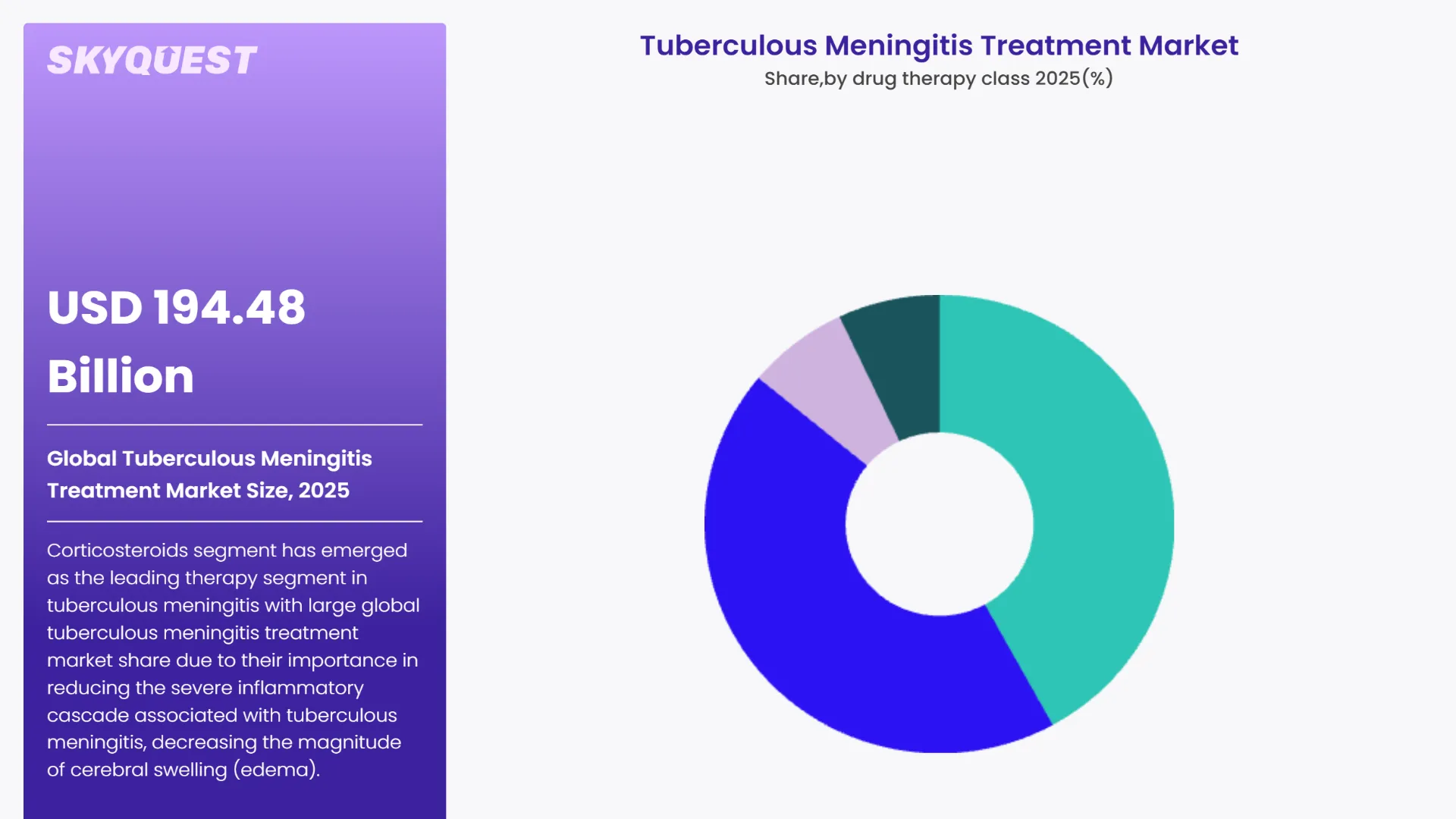
Corticosteroids segment has emerged as the leading therapy segment in tuberculous meningitis with large global tuberculous meningitis treatment market share due to their importance in reducing the severe inflammatory cascade associated with tuberculous meningitis, decreasing the magnitude of cerebral swelling (edema). Generally, clinical guidelines and clinician familiarity lead to routine use of corticosteroids as an adjunct to antimicrobial therapy, which results in a direct reduction of complications and supports the recovery process for patients.
As per global tuberculous meningitis treatment market analysis, osmotic diuretics are rapidly evolving as the fastest growth segment due to the new focus on aggressive ICP management for patients with severe disease processes. Thereby increasing the frequency of osmotic diuretic use in critical care unit (ICU) protocols, as well as the growing interest in using multiple supportive care modalities in the treatment of tuberculous meningitis. These global tuberculous meningitis treatment market trends are creating opportunities for formulation innovations within the osmotic diuretic supportive category of therapies and are placing osmotic diuretics in a high-growth supportive therapy segment within the tuberculous meningitis treatment market.
As per global tuberculous meningitis treatment market forecast, intrathecal injection segment has a very unique advantage in that by directly delivering medications through the cerebrospinal fluid (CSF), they can bypass the blood-brain barrier and attain therapeutic levels in patients who have refractory or complicated illnesses. This method provides precise drug exposure while minimizing systemic toxicity. The use of intrathecal injection also helps support the delivery of salvage therapies as well as create support for investigational therapies. The reliance on intrathecal injections by clinicians has helped to create clinical protocols that require precise methods of delivery within the tuberculous meningitis treatment market.
However, the oral tablets/liquids segment has tremendous momentum in terms of global tuberculous meningitis treatment market growth due to enhanced oral formulations, increased focus on outpatient care which increases feasibility of prolonged therapy; adherence-enhancing strategies which result in broader use and lower resource requirements for oral administration. Thus, all these components are driving market expansion by creating more access and simplifying long term treatment pathways.
To get detailed segments analysis, Request a Free Sample Report
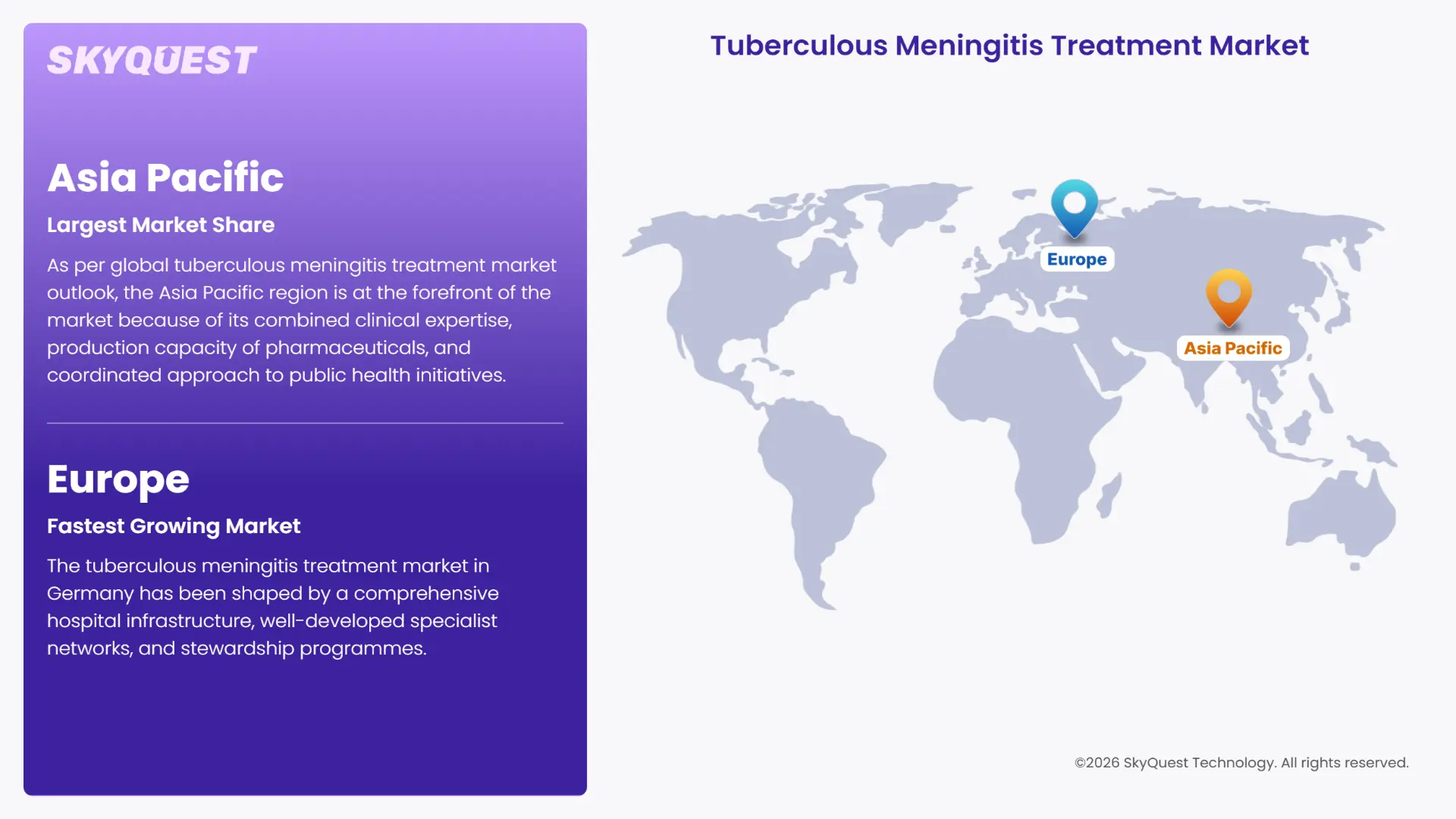
As per global tuberculous meningitis treatment market outlook, the Asia Pacific region is at the forefront of the market because of its combined clinical expertise, production capacity of pharmaceuticals, and coordinated approach to public health initiatives. The region's clinical research is being driven by centers of excellence which are encouraging the rapid implementation of new therapies into practice. The availability of local manufacturing and the strength of the supply chain are enabling access to TBM treatment in a wide variety of healthcare settings. In addition, there is an emphasis on the development and implementation of public policies that will promote integrated diagnostic and treatment programs to improve case detection and care continuity.
As per global tuberculous meningitis treatment industry analysis, Japan market benefits from a highly developed clinical infrastructure, strong regulatory oversight, and strong collaborative relationships between academic institutions and industry. TBM Diagnosis and TBM treatment can be provided quickly and effectively because of the availability of specialty neurology units and well-defined referral pathways. Japanese pharmaceutical manufacturers are providing their products locally, while health officials are encouraging integrated rehabilitation and guideline-directed care.
The South Korea market is characterized by strong hospital-based infectious disease programs, rapid clinical adoption of new diagnostics, and the implementation of targeted programs to train clinicians on these new technologies. The use of established coordination among public health officials and specialist networks will be beneficial in ensuring that patients receive the appropriate level of care and continuity of care through the referral process among practitioners of TBM treatment. The growth of the local biotechnology sector has expanded South Korea's capacity for the development and manufacture of new treatments for TBM, while the availability of integrated care delivery systems will support the overall continuum of care for TBM patients.
In Europe, the tuberculous meningitis treatment market is expanding quickly due to numerous factors including established proper healthcare infrastructure, reimbursement processes, and concentrated clinical research activity. Sophisticated healthcare providers/builders (large hospitals with reputable specialist centers) supply the required components needed for early detection and coordination through multidisciplinary medical teams. Innovative treatment options and supportive clinical pathways are further aided by progressive regulatory pathways and payer engagement. As well as being stable environments for advancing innovations into clinical practice through collaborative efforts by academia, clinical networks, and industry partners, these environments stimulate additional investment in clinical trials and harmonization of practice. Investment in advanced diagnostic technology, clinician education will facilitate identification of potential cases and will monitor their progression through the continuum of care. Health policy support of preparedness for infectious diseases, and rehabilitation continues to support pathways for patient care in addition to supporting innovative therapeutic options.
The tuberculous meningitis treatment market in Germany has been shaped by a comprehensive hospital infrastructure, well-developed specialist networks, and stewardship programmes. With a solid translational research foundation and active support by the industry through translational research methodologies, evidence-based protocols have been accepted by specialists. Reimbursement systems are designed to support providers by ensuring a consistent supply of therapy from the time of diagnosis through the continuum of care. Specialist centres provide care for complex cases and promote multidisciplinary practises among infectious disease, neurology, and rehabilitation teams to ensure optimal clinical pathways and outcomes through diversity of practice and the application of best practice guidelines.
The tuberculous meningitis treatment market in the UK has been driven by concentrated clinical expertise in hospital settings, strong academic networks, and successful public health initiatives. The focus on rapid diagnostic pathways and standardized clinical guidelines supports the delivery of care consistently. There is cross-sector collaboration between academia, clinical services and industry which accelerates the translation of research to practice. The development of training programs for clinicians and patient support services enhances the management and speed of referrals. As a result, clinicians use more of these types of treatments.
The tuberculous meningitis treatment market in France is moving forward through targeted investments in enhancing diagnostic capacity, strengthening referral systems within hospitals, and increased collaboration between clinical research groups and industry. Regional centres for specialty are developing care pathways and encouraging the use of standardised guidelines for their management. The training of clinicians and the introduction of initiatives that increase access to care are improving the ability to detect tuberculous meningitis and to ensure continuity of care once the diagnosis has been made. Continued domestic development initiatives and cross institutional partnerships are also facilitating the evolution of therapeutic options for treatment of tuberculosis meningitis, as well as integrated rehabilitation services.
The tuberculous meningitis treatment market in North America is becoming stronger than before due to investments in clinical research, advanced diagnostics, and integrated care models to better support the management of this type of disease that is very complex and involves neurology and infection. Academic and specialist referral centres in North America allow for a rapid introduction of new treatments and thorough evaluation and outcomes for these patients as well.
As per global tuberculous meningitis treatment market regional outlook, United States market also has a strong base of support in both academic hospitals and clinical research centers, as well as extensive publicly funded diagnostic capabilities. The public and private partnerships and translational ecosystems that exist in this country are very strong and allow for rapid development and commercialisation of new therapies. Specialized health systems such as acute care hospitals and rehabilitation centres for neurologists and infectious diseases provide the acute care and rehabilitation services required by patients with tuberculosis meningitis.
As per global tuberculous meningitis treatment market regional forecast, Canada market is supported by a highly integrated public health system, regional specialist treatment centres, and collaborative research networks. In Canada, there are efforts to ensure that people have equal access to care, with all hospitals in a patient’s area using the same standard management practices for these cases and being able to refer to each other on a timely basis. Funding for additional diagnostic technologies and support for educating clinicians will ensure that cases are identified early, and that patients' outcomes can be closely monitored. The partnership formed between academics, healthcare providers, and industry to better adapt to the unique treatment needs of the local population is an important part of Canada's approach to ensuring that there are sufficient services for providing rehabilitation and ongoing patient support.
To know more about the market opportunities by region and country, click here to
Buy The Complete Report
Improved Diagnostic Capabilities
Rising Research and Development Investment
Limited Clinical Awareness and Training
Cost Associated with Complex Treatment Regimens
Request Free Customization of this report to help us to meet your business objectives.
The competitive landscape for the global market for treating tuberculous meningitis is being shaped by strategic partnerships and the adoption of new technologies for drug development. Biopharmaceutical companies are forming alliances to develop innovative products. Example include the collaboration between BioVersys and GSK on providing accessories for flame retardant products and the combined research efforts of public-private partners such as UNITE4TB and various laboratories using advanced digital genomic analysis tools, including Artificial Intelligence (AI), genomics, and breathomics.
SkyQuest’s ABIRAW (Advanced Business Intelligence, Research & Analysis Wing) is our Business Information Services team that Collects, Collates, Correlates, and Analyses the Data collected by means of Primary Exploratory Research backed by robust Secondary Desk research.
As per SkyQuest analysis, the global tuberculous meningitis treatment industry is being driven by improved diagnostic capabilities as a key driver, while limited clinical awareness and training acts as a significant restraint. The market is dominated by the Asia Pacific region and corticosteroids lead as the dominating segment due to their established role in reducing inflammation and improving outcomes. A second driver is rising research and development investment that is accelerating CNS-penetrant regimens, diagnostics and formulation innovation. Together these forces encourage integrated diagnostic-treatment solutions and digital health adoption yet addressing training gaps and cost and complexity of regimens remains critical to translating clinical advances into broader, equitable access.
| Report Metric | Details |
|---|---|
| Market size value in 2024 | USD 176.00 Billion |
| Market size value in 2033 | USD 432.29 Billion |
| Growth Rate | 10.5% |
| Base year | 2024 |
| Forecast period | 2026-2033 |
| Forecast Unit (Value) | USD Billion |
| Segments covered |
|
| Regions covered | North America (US, Canada), Europe (Germany, France, United Kingdom, Italy, Spain, Rest of Europe), Asia Pacific (China, India, Japan, Rest of Asia-Pacific), Latin America (Brazil, Rest of Latin America), Middle East & Africa (South Africa, GCC Countries, Rest of MEA) |
| Companies covered |
|
| Customization scope | Free report customization with purchase. Customization includes:-
|
To get a free trial access to our platform which is a one stop solution for all your data requirements for quicker decision making. This platform allows you to compare markets, competitors who are prominent in the market, and mega trends that are influencing the dynamics in the market. Also, get access to detailed SkyQuest exclusive matrix.
Table Of Content
Executive Summary
Market overview
Parent Market Analysis
Market overview
Market size
KEY MARKET INSIGHTS
COVID IMPACT
MARKET DYNAMICS & OUTLOOK
Market Size by Region
KEY COMPANY PROFILES
Methodology
For the Tuberculous Meningitis Treatment Market, our research methodology involved a mixture of primary and secondary data sources. Key steps involved in the research process are listed below:
1. Information Procurement: This stage involved the procurement of Market data or related information via primary and secondary sources. The various secondary sources used included various company websites, annual reports, trade databases, and paid databases such as Hoover's, Bloomberg Business, Factiva, and Avention. Our team did 45 primary interactions Globally which included several stakeholders such as manufacturers, customers, key opinion leaders, etc. Overall, information procurement was one of the most extensive stages in our research process.
2. Information Analysis: This step involved triangulation of data through bottom-up and top-down approaches to estimate and validate the total size and future estimate of the Tuberculous Meningitis Treatment Market.
3. Report Formulation: The final step entailed the placement of data points in appropriate Market spaces in an attempt to deduce viable conclusions.
4. Validation & Publishing: Validation is the most important step in the process. Validation & re-validation via an intricately designed process helped us finalize data points to be used for final calculations. The final Market estimates and forecasts were then aligned and sent to our panel of industry experts for validation of data. Once the validation was done the report was sent to our Quality Assurance team to ensure adherence to style guides, consistency & design.
Analyst Support
Customization Options
With the given market data, our dedicated team of analysts can offer you the following customization options are available for the Tuberculous Meningitis Treatment Market:
Product Analysis: Product matrix, which offers a detailed comparison of the product portfolio of companies.
Regional Analysis: Further analysis of the Tuberculous Meningitis Treatment Market for additional countries.
Competitive Analysis: Detailed analysis and profiling of additional Market players & comparative analysis of competitive products.
Go to Market Strategy: Find the high-growth channels to invest your marketing efforts and increase your customer base.
Innovation Mapping: Identify racial solutions and innovation, connected to deep ecosystems of innovators, start-ups, academics, and strategic partners.
Category Intelligence: Customized intelligence that is relevant to their supply Markets will enable them to make smarter sourcing decisions and improve their category management.
Public Company Transcript Analysis: To improve the investment performance by generating new alpha and making better-informed decisions.
Social Media Listening: To analyze the conversations and trends happening not just around your brand, but around your industry as a whole, and use those insights to make better Marketing decisions.
REQUEST FOR SAMPLE
 REQUEST FREE CUSTOMIZATION
Global Tuberculos Meningitis Treatment Market size was valued at USD 176.0 Billion in 2024 and is poised to grow from USD 194.48 Billion in 2025 to USD 432.29 Billion by 2033, growing at a CAGR of 10.5% during the forecast period (2026-2033).
Competitive dynamics in the global tuberculous meningitis treatment market are shaped by strategic partnerships and translational tech adoption. Biopharma alliances such as BioVersys with GSK to advance alpibectir for TBM, public private consortia including UNITE4TB, and diagnostic innovators using AI genomics and breathomics to speed resistance detection are driving differentiated clinical positioning and faster regimen optimisation. 'Pfizer Inc.', 'Merck & Co., Inc.', 'Roche Holding AG', 'Johnson & Johnson', 'Novartis AG', 'GlaxoSmithKline plc', 'Sanofi S.A.', 'AstraZeneca PLC', 'AbbVie Inc.', 'Takeda Pharmaceutical Company Limited', 'Gilead Sciences, Inc.', 'Eli Lilly and Company', 'Amgen Inc.', 'Biogen Inc.', 'Regeneron Pharmaceuticals, Inc.', 'Vertex Pharmaceuticals Incorporated', 'Otsuka Pharmaceutical Co., Ltd.', 'Mylan N.V.', 'UCB S.A.', 'Hapoalim Pharmaceuticals Ltd.'
Improved accuracy and speed of diagnostic tools for tuberculous meningitis facilitates earlier detection and targeted treatment, encouraging clinicians to adopt standardized therapeutic regimens and increasing demand for effective drug formulations and adjunctive therapies. Enhanced diagnostic confidence reduces uncertainty in clinical decision making, supports integration of treatment protocols into care pathways, and stimulates investment in product development and distribution. As a result, healthcare systems more readily incorporate comprehensive management strategies, expanding patient access to specialized treatments and fostering market growth through broader clinical uptake and procurement.
Diagnostic And Treatment Integration: Health systems increasingly align point-of-care diagnostics with standardized treatment pathways and multidisciplinary care teams, enabling earlier clinical decision making and smoother transitions from diagnosis to therapy. Strengthened referral networks and laboratory-clinic linkages support decentralized care delivery and personalized treatment plans, improving adherence and patient experience. Manufacturers and providers collaborate on integrated solutions, while policy emphasis on care continuity fosters bundled services that reduce fragmentation and accelerate access to appropriate interventions across diverse healthcare settings.
Asia Pacific Dominate the Global Tuberculos Meningitis Treatment Market.
The First-line Antitubercular Drugs segment currently dominates the market due to its established role as the standard treatment option for most tuberculous meningitis cases and widespread clinical adoption.
Second-line Antitubercular Drugs are expected to witness the fastest growth, driven by the increasing prevalence of drug-resistant tuberculosis strains and the need for alternative treatment options.


Want to customize this report? This report can be personalized according to your needs. Our analysts and industry experts will work directly with you to understand your requirements and provide you with customized data in a short amount of time. We offer $1000 worth of FREE customization at the time of purchase.
Feedback From Our Clients


 USA (+1) 351-333-4748

