Tree Guards Market
Report ID: SQMIG15F2405
Report ID: SQMIG15F2405
[email protected]
USA +1 351-333-4748
Report ID:
SQMIG15F2405 |
Region:
Global |
Published Date: July, 2026
Pages:
157
|Tables:
152
|Figures:
78


Global Tree Guards Market size was valued at USD 312.4 Million in 2024 and is poised to grow from USD 330.52 Million in 2025 to USD 518.9 Million by 2033, growing at a CAGR of 5.8% during the forecast period (2026-2033).
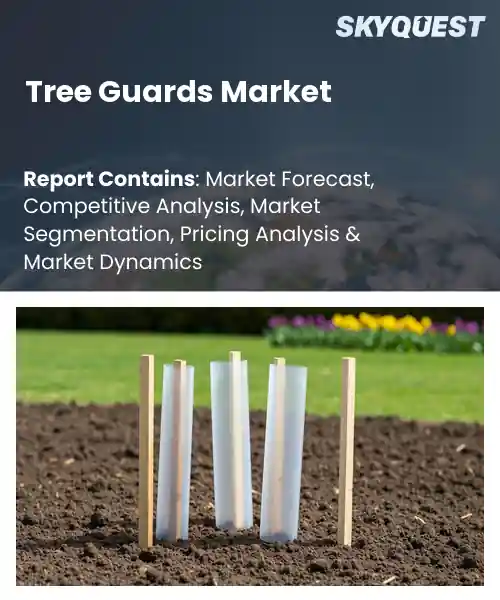
The global tree guard industry consists of devices that can be made of plastic, metals, or degradable materials which serve the purpose of protecting the young trees from herbivores, mechanical injuries, and competition. The significance of this industry is due to the importance of trees in terms of their functions in carbon capture, soil erosion prevention, and beautification of the city. The origin of this market can be dated to the 1970s when the North American landowners started looking for affordable means of protection from deer; therefore, they started using plastic guards for the first time. In the following years, its use became widespread in Europe and Asia where cities have launched the curb side tree plantation programs.
The urban greening movement becomes the major driving force behind the growth of the tree guard industry as the cities know planting trees saves money in terms of maintenance as well as enhances the public health benefits of trees. Since cities spend money on the planting of street-side trees, there will be an increase in the demand for the tree guards as they require minimal installation and are resistant to vandalism as well as adverse weather conditions; as a result, the manufacturers are compelled to manufacture tree collars having the sensors for detecting the moisture level of the soil.
How is IoT Improving Monitoring and Adoption Within the Tree Guards Market?
IoT is changing the way tree guards function, as it equips them with sensors, which constantly measure temperature, moisture, wind, pressure, and bark conditions. These measurements are then sent to the cloud, where algorithms detect anomalies and recommend measures to take. This real-time information decreases manual inspection frequency and gives growers the ability to make decisions before any harm is done. With reduced losses and increased production, more people adopt the technology and move markets forward.
Market snapshot - (2026-2033)
Global Market Size
USD 312.4 Million
Largest Segment
Steel
Fastest Growth
Bamboo
Growth Rate
5.8% CAGR
To get more insights on this market click here to Request a Free Sample Report
Global tree guards market is segmented by material, product type, application, end user, distribution channel and region. Based on material, the market is segmented into Steel, Plastic, Bamboo, Recycled Composite and Others. Based on product type, the market is segmented into Circular Tree Guards, Square Tree Guards, Mesh Tree Guards, Decorative Tree Guards and Others. Based on application, the market is segmented into Urban Landscaping, Forestry, Agriculture, Parks & Gardens and Others. Based on end user, the market is segmented into Municipal Authorities, Landscaping Companies, Agricultural Users and Others. Based on distribution channel, the market is segmented into Direct Sales, Building & Garden Supply Stores, Online Retail and Others. Based on region, the market is segmented into North America, Europe, Asia Pacific, Latin America and Middle East & Africa.
Steel segment dominates because its inherent strength and resistance to environmental wear make it the preferred choice for protecting tree trunks in demanding settings. Landscape architects and municipal planners rely on steel guards to ensure long term structural integrity, especially where heavy traffic or extreme weather is expected. This trust in durability drives consistent procurement, reinforcing steel’s leadership in the Tree Guards market for years across diverse climate zones and regions.
On the other side, the Recycled Composite segment is emerging as the fastest growing segment. Innovative bio based formulations reduce waste while delivering comparable protection, appealing to municipalities and developers. Growing environmental regulations and demand for circular products accelerate adoption, creating design opportunities and new channels that will drive market growth.
Circular Tree Guards segment dominates because their uniform geometry simplifies installation and provides consistent protection around trunks, meeting the efficiency demands of large scale planting projects. Engineers value the ease of aligning multiple units, while landscapers appreciate the aesthetic continuity it offers in streetscapes and park avenues. This practicality, combined with proven performance, sustains steady demand and reinforces its leadership across the Tree Guards market for municipal and private sectors alike.
Meanwhile, Decorative Tree Guards segment is witnessing the strongest growth momentum in the Tree Guards market. Creative designs and customizable finishes cater to aesthetic driven projects in plazas and sites, attracting developers seeking impact. Rising demand for outdoor art and design into landscaping fuel adoption, unlocking revenue streams and expanding the market’s frontier.
To get detailed segments analysis, Request a Free Sample Report
The continent has the advantage of having a well-developed construction environment along with safety standards and landscaping practices. Availability of top-notch suppliers and the efficiency of the supply chain result in constant innovation in products along with easy access. Root protection consciousness amongst consumers creates demand amongst homeowners, commercial property owners, and utility companies. Professional organizations provide institutional backing through which installation procedures become standardized. Research initiatives by universities and industry improve material standards in the region and establish it as the gold standard in the international market.
Market for Tree Guards in the United States succeeds owing to significant expansion of suburbs and increasing importance of resilience of infrastructure. Root protection is the key factor for construction firms and city planners to increase the durability of pavement and underground infrastructure. Continuous awareness campaigns by landscaping contractors increase the use of protective products, and variety of manufacturers offer products for different climatic conditions.
The Canadian Market of Tree Guards is influenced by strict environmental responsibility policies, as well as a proactive attitude towards dealing with the challenges associated with frosty soil. Urban development projects include root protection in order toavoid damaging sidewalks and drainage systems. Collaboration between regional engineering companies and local producers leads to the development of tree guards that can be easily adjusted to work in frosty environments.
Europe’s market growth is propelled by heightened regulatory focus on sustainable urban planning and a collective push toward green infrastructure. Advanced engineering standards call for precise root management to protect historic streetscapes and modern transportation grids. Cross‑border collaboration among research institutions fuels material advancements, while a strong culture of environmental compliance accelerates adoption across municipal and private projects. The region’s emphasis on aesthetic integration ensures that tree guard solutions align with architectural heritage, creating a seamless blend of functionality and visual appeal that reinforces market momentum.
Market for Tree Guards in Germany is supported by the stringent construction laws that require protection of underground utilities. The industry clusters which focus on engineering excellence provide constant improvement to the products and high performance in different soil types. The concept of sustainable construction leads to the use of tree guards in residential and commercial constructions, and the high demand from the transportation sector shows the strength of the market.
Uptake in Tree Guards Market in United Kingdom is fast due to the city planning policies that focus on pedestrian safety and heritage conservation. The infrastructure renovation plans often include root protection to protect the old utility systems. The new design companies promote modern designs of tree guards which will blend well with the historical streets and encourage their wider adoption by developers.
Tree Guards Market in France is emerging as a focal point for urban renewal projects that emphasize green space preservation. Municipal initiatives encourage the use of protective devices to maintain the integrity of historic boulevards and modern transit corridors. Partnerships between research laboratories and local manufacturers stimulate the development of lightweight, corrosion‑resistant solutions suited to coastal environments. Growing public awareness of the long‑term benefits of root protection support an expanding customer base across residential and commercial markets.
Asia Pacific enhances its market presence through fast urbanization, more investment in infrastructure, and developing environmental awareness. Asia Pacific countries are adopting tree guard systems in major construction initiatives as a way of protecting utility lines and avoiding maintenance interruptions. The new design standards emphasize the use of eco-friendly materials, and regional trade channels make it easy to access new products. The partnership between government organizations and the private sector enables the sharing of information, and the region is poised to be a vibrant hub of future root protection innovations.
Tree Guards Market in Japan aligns with meticulous urban design practices that prioritize longevity of underground networks. High population density and limited land availability create a strong incentive to protect pavement and utility lines from root intrusion. Domestic manufacturers emphasize precision engineering and compact guard profiles to suit constrained construction sites. Continuous research into seismic‑resilient materials enhances product appeal, supporting widespread adoption across residential, commercial, and transportation sectors.
Market in South Korea for Tree Guards is boosted by many smart city projects that utilize protective infrastructure within highly technological city grids. Various incentives from government agencies promote the use of robust and easy to maintain guard systems in newly built housing projects and other infrastructure projects. Innovative designs that are lightweight and resistant to corrosion emerge through collaboration between tech companies and material engineers. The growing focus on environmental responsibility drives the demand side.
To know more about the market opportunities by region and country, click here to
Buy The Complete Report
Urban Green Initiatives are Expanding
Urban municipalities have embarked on major greening campaigns that place importance on tree preservation, hence generating increased awareness about protective equipment like tree guards. This trend motivates designers to incorporate the use of tree guards from the early stage of project design, to ensure that young trees are protected from mechanical damage. This means there will be high demand for effective and easy-to-install tree guards, thereby spurring growth of the market because of increasing purchases from all sectors.
Regulatory Support is Strengthening
Governments are enacting stricter environmental regulations that mandate the use of protective measures for trees during construction, landscaping, and utility work. These policies require developers to install certified tree guards to comply with legal standards, prompting firms to source compliant products from established suppliers. Regulatory oversight also encourages innovation in guard design to meet safety and durability criteria, fostering a market environment where compliance becomes a key purchasing driver that sustains consistent growth across residential and commercial sectors globally today.
High Installation Costs are Prohibitive
The initial cost of implementing quality tree guards, comprising the cost of materials, production, and professional installation services, can be very costly to property owners and developers. Due to tight budget constraints, decision makers will choose to use cost-effective solutions, or even skip using any such measures, thus inhibiting the spread of the market. This cost concern is heightened in areas with low financial incentive policies, where organizations will have to place more importance on liquidity rather than tree health.
Complex Maintenance Requirements are Challenging
However, tree guard installation systems may have the need for regular maintenance, checking and adjustments, making their management more complex for the owner of the garden or landscape. In such cases, when maintenance facilities and knowledge about the process are insufficient, the process may not be encouraged since people tend to favor products that have low management needs. This makes the management of the product difficult and hence acts as a barrier to market penetration of the product, especially in small-scale projects.
Request Free Customization of this report to help us to meet your business objectives.
The competitive landscape is shaped by a handful of established manufacturers such as Sino Concept, IRONSMITH, Furnitubes and Broxap, which are intensifying rivalry through strategic M&A and joint‑development agreements that expand product portfolios and geographic reach; for example, IRONSMITH recently partnered with a regional distributor to introduce a new composite‑material guard line, while Broxap acquired a niche biodegradable‑product firm to broaden its eco‑friendly offerings, driving market differentiation and accelerating innovation.
SkyQuest’s ABIRAW (Advanced Business Intelligence, Research & Analysis Wing) is our Business Information Services team that Collects, Collates, Correlates, and Analyses the Data collected by means of Primary Exploratory Research backed by robust Secondary Desk research.
According to SkyQuest analysis, the driving forces behind the growth in the tree guards' market are largely due to the urban green movement which encourages cities to safeguard saplings at the early stages of project design, with the other driver being the adoption of smart sensors which makes the guards intelligent and efficient to use for owners. The high cost of installation serves as a significant constraint on the market, particularly in financially constrained projects. North America is the leading region for this market, owing to the presence of advanced construction industry and robust standards. The steel category dominates the market due to its durability and reliability.
| Report Metric | Details |
|---|---|
| Market size value in 2024 | USD 312.4 Million |
| Market size value in 2033 | USD 518.9 Million |
| Growth Rate | 5.8% |
| Base year | 2024 |
| Forecast period | (2026-2033) |
| Forecast Unit (Value) | USD Million |
| Segments covered |
|
| Regions covered | North America (US, Canada), Europe (Germany, France, United Kingdom, Italy, Spain, Rest of Europe), Asia Pacific (China, India, Japan, Rest of Asia-Pacific), Latin America (Brazil, Rest of Latin America), Middle East & Africa (South Africa, GCC Countries, Rest of MEA) |
| Companies covered |
|
| Customization scope | Free report customization with purchase. Customization includes:-
|
To get a free trial access to our platform which is a one stop solution for all your data requirements for quicker decision making. This platform allows you to compare markets, competitors who are prominent in the market, and mega trends that are influencing the dynamics in the market. Also, get access to detailed SkyQuest exclusive matrix.
Table Of Content
Executive Summary
Market overview
Parent Market Analysis
Market overview
Market size
KEY MARKET INSIGHTS
COVID IMPACT
MARKET DYNAMICS & OUTLOOK
Market Size by Region
KEY COMPANY PROFILES
Methodology
For the Tree Guards Market, our research methodology involved a mixture of primary and secondary data sources. Key steps involved in the research process are listed below:
1. Information Procurement: This stage involved the procurement of Market data or related information via primary and secondary sources. The various secondary sources used included various company websites, annual reports, trade databases, and paid databases such as Hoover's, Bloomberg Business, Factiva, and Avention. Our team did 45 primary interactions Globally which included several stakeholders such as manufacturers, customers, key opinion leaders, etc. Overall, information procurement was one of the most extensive stages in our research process.
2. Information Analysis: This step involved triangulation of data through bottom-up and top-down approaches to estimate and validate the total size and future estimate of the Tree Guards Market.
3. Report Formulation: The final step entailed the placement of data points in appropriate Market spaces in an attempt to deduce viable conclusions.
4. Validation & Publishing: Validation is the most important step in the process. Validation & re-validation via an intricately designed process helped us finalize data points to be used for final calculations. The final Market estimates and forecasts were then aligned and sent to our panel of industry experts for validation of data. Once the validation was done the report was sent to our Quality Assurance team to ensure adherence to style guides, consistency & design.
Analyst Support
Customization Options
With the given market data, our dedicated team of analysts can offer you the following customization options are available for the Tree Guards Market:
Product Analysis: Product matrix, which offers a detailed comparison of the product portfolio of companies.
Regional Analysis: Further analysis of the Tree Guards Market for additional countries.
Competitive Analysis: Detailed analysis and profiling of additional Market players & comparative analysis of competitive products.
Go to Market Strategy: Find the high-growth channels to invest your marketing efforts and increase your customer base.
Innovation Mapping: Identify racial solutions and innovation, connected to deep ecosystems of innovators, start-ups, academics, and strategic partners.
Category Intelligence: Customized intelligence that is relevant to their supply Markets will enable them to make smarter sourcing decisions and improve their category management.
Public Company Transcript Analysis: To improve the investment performance by generating new alpha and making better-informed decisions.
Social Media Listening: To analyze the conversations and trends happening not just around your brand, but around your industry as a whole, and use those insights to make better Marketing decisions.
REQUEST FOR SAMPLE
 REQUEST FREE CUSTOMIZATION
Global Tree Guards Market size was valued at USD 312.4 Million in 2024 and is poised to grow from USD 330.52 Million in 2025 to USD 518.9 Million by 2033, growing at a CAGR of 5.8% during the forecast period (2026-2033).
The competitive landscape is shaped by a handful of established manufacturers such as Sino Concept, IRONSMITH, Furnitubes and Broxap, which are intensifying rivalry through strategic M&A and joint‑development agreements that expand product portfolios and geographic reach; for example, IRONSMITH recently partnered with a regional distributor to introduce a new composite‑material guard line, while Broxap acquired a niche biodegradable‑product firm to broaden its eco‑friendly offerings, driving market differentiation and accelerating innovation. 'Tensar International Corporation', 'A.M. Leonard, Inc.', 'Tubex Ltd.', 'GreenBlue Urban Ltd.', 'Tree Pro Ltd.', 'Metsä Group', 'Suregreen Ltd.', 'Jacksons Fencing Ltd.', 'Naylor Industries plc', 'Treeguard Limited', 'Green-tech Ltd.', 'Plant & Plant Ltd.', 'Tildenet Gardenware Ltd.', 'Brett Martin Ltd.', 'Punto Verde S.r.l.', 'Premier Protective Packaging Ltd.', 'Rainbow Professional Ltd.', 'Bamboo Australia Pty Ltd.', 'Veguemat SA', 'Arborguard Tree Protection Ltd.'
Urban municipalities are launching extensive greening programs that emphasize tree preservation, creating heightened awareness of protective devices such as tree guards. These initiatives encourage planners and developers to integrate tree protection measures early in project design, ensuring that young trees receive physical barriers against mechanical injury. Consequently, demand for reliable, easy‑to‑install guards rises as cities aim to meet sustainability targets and improve urban canopy health, directly fueling market expansion through increased procurement by public, private and nonprofit organizations across regions.
Sustainable Urban Planning Drives Adoption: Sustainable urban planning initiatives are prompting municipalities to incorporate tree guard solutions into new works projects. Decision‑makers prioritize preserving mature tree canopies while expanding infrastructure, recognizing the ecological and social benefits of green corridors. As zoning regulations evolve, developers are required to embed protective barriers that blend with streetscapes, encouraging wider market penetration. This policy shift fuels demand for aesthetically adaptable guards, prompting manufacturers to innovate with eco‑friendly materials and customizable designs that satisfy both regulatory compliance and community expectations.
Why does North America Dominate the Global Tree Guards Market? |@12


Want to customize this report? This report can be personalized according to your needs. Our analysts and industry experts will work directly with you to understand your requirements and provide you with customized data in a short amount of time. We offer $1000 worth of FREE customization at the time of purchase.
Feedback From Our Clients


 USA (+1) 351-333-4748

