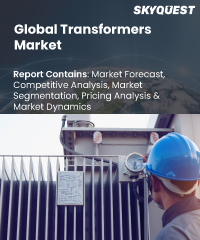
Top Transformers Companies

Skyquest Technology's expert advisors have carried out comprehensive research and identified these companies as industry leaders in the Transformers Market. This Analysis is based on comprehensive primary and secondary research on the corporate strategies, financial and operational performance, product portfolio, market share and brand analysis of all the leading Transformers industry players.

Transformers Market Competitive Landscape

In the coming years, the competition in the global transformer market is expected to intensify as new players enter the market and the number of devices compatible with transformers increases. Currently, only a few key players dominate the global market, but this is likely to change as more companies seek to enter the market and offer their services.This increasing competition can drive innovation and lead to the development of new and improved transformer technologies and solutions, benefiting customers by providing them with more options to choose from.However, it can also result in market saturation and lower profit margins for manufacturers as they compete for market share.To remain competitive, transformer manufacturers will need to stay ahead of the curve by investing in research and development, expanding their product portfolios, and improving their manufacturing processes. They may also need to explore new business models and partnerships to differentiate themselves from their competitors and capture new market opportunities.

Top Players in Transformers Market

  • ABB Group (Switzerland)
  • Siemens Energy AG (Germany) 
  • General Electric Company (USA) 
  • Hitachi Energy (Sweden) 
  • Schneider Electric (France) 
  • Hyundai Electric & Energy Systems (South Korea) 
  • Toshiba Energy Systems & Solutions Corporation (Japan) 
  • CG Power and Industrial Solutions Limited (India) 
  • EFACEC Power Solutions (Portugal) 
  • Fuji Electric Co., Ltd. (Japan) 
  • Hyosung Heavy Industries (South Korea) 
  • JSHP Transformer (China) 
  • Eaton Corporation (Ireland) 
  • Hammond Power Solutions (Canada) 
  • SGB-SMIT Group (Germany)

Transformers Market

REQUEST FOR SAMPLE

Want to customize this report? REQUEST FREE CUSTOMIZATION

FAQs

Transformers Market size was valued at USD 31.98 Billion in 2024 and is poised to grow from USD 34.28 Billion in 2025 to USD 59.79 Billion by 2033, growing at a CAGR of 7.2% during the forecast period (2026–2033).

In the coming years, the competition in the global transformer market is expected to intensify as new players enter the market and the number of devices compatible with transformers increases. Currently, only a few key players dominate the global market, but this is likely to change as more companies seek to enter the market and offer their services.This increasing competition can drive innovation and lead to the development of new and improved transformer technologies and solutions, benefiting customers by providing them with more options to choose from.However, it can also result in market saturation and lower profit margins for manufacturers as they compete for market share.To remain competitive, transformer manufacturers will need to stay ahead of the curve by investing in research and development, expanding their product portfolios, and improving their manufacturing processes. They may also need to explore new business models and partnerships to differentiate themselves from their competitors and capture new market opportunities. 'ABB Group (Switzerland)', 'Siemens Energy AG (Germany) ', 'General Electric Company (USA) ', 'Hitachi Energy (Sweden) ', 'Schneider Electric (France) ', 'Hyundai Electric & Energy Systems (South Korea) ', 'Toshiba Energy Systems & Solutions Corporation (Japan) ', 'CG Power and Industrial Solutions Limited (India) ', 'EFACEC Power Solutions (Portugal) ', 'Fuji Electric Co., Ltd. (Japan) ', 'Hyosung Heavy Industries (South Korea) ', 'JSHP Transformer (China) ', 'Eaton Corporation (Ireland) ', 'Hammond Power Solutions (Canada) ', 'SGB-SMIT Group (Germany)'

The worldwide trend towards cleaner and sustainable energy has led to a surge in the integration of renewable energy sources into power grids. This integration requires transformers to connect the intermittent power generated from sources such as wind and solar to the grid, which drives up the demand for transformers. Renewable energy integration is a crucial component of the global push towards decarbonization and reducing greenhouse gas emissions. Renewable energy sources are often located in remote areas, making it necessary to transport the electricity they generate over long distances to where it's needed. This requires a robust power transmission and distribution infrastructure, which relies on transformers to step-up or step-down the voltage to the appropriate levels. The growing demand for renewable energy integration has created opportunities for transformer manufacturers to develop new technologies and solutions that can better accommodate the unique characteristics of renewable energy sources. For example, transformers designed for wind power generation often have special features to deal with the highly variable output of wind turbines. As a result, governments and energy companies around the world are investing heavily in renewable energy integration, driving up the demand for transformers.

The adoption of smart transformer technologies is increasing, as utilities seek to improve their grid efficiency, reliability, and flexibility. These technologies are designed with features such as remote monitoring, advanced control systems, and condition-based maintenance. By using these technologies, utilities can monitor and manage transformers in real time, enabling them to detect potential issues before they become critical and optimize transformer performance. Overall, the increasing adoption of smart transformer technologies is expected to drive innovation in the transformer market, and help utilities meet the growing demand for electricity.

The Asia Pacific region accounted for the highest share of the global power transformer industry and is projected to grow at a CAGR of 7.9% by 2030. The regional growth can be attributed to the rapid economic development and an increased need for reliable and uninterrupted power supply due to the rise in population. To cater to the growing need for electricity as a result of fast industrialization and urbanization, China is expanding its existing electrical transmission and distribution system.The expansion of new transmission lines and substations to close the energy demand and supply gap is driving the power transformer industry in China. Furthermore, with growing concerns over greenhouse gas emissions and their environmental impact, the Asia Pacific region is expected to present attractive growth prospects in the power transformer industry. Increased industrialization, infrastructure development, and construction activities have led to an increased demand for power transformers in the region. Rising energy demand and a growing focus on the production of renewable electric power are the two primary factors driving the market expansion in the region. Additionally, the Asia Pacific region remains one of the world's leading energy producers, making it a lucrative market for power transformer manufacturers.

Request Free Customization

Want to customize this report? This report can be personalized according to your needs. Our analysts and industry experts will work directly with you to understand your requirements and provide you with customized data in a short amount of time. We offer $1000 worth of FREE customization at the time of purchase.

logo-images

Feedback From Our Clients

Global Transformers Market
Transformers Market

Report ID: SQMIG20E2022

sales@skyquestt.com
USA +1 351-333-4748

BUY NOW GET FREE SAMPLE


