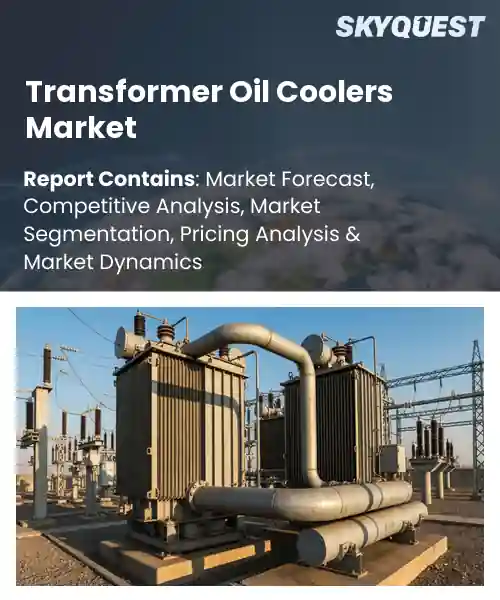
Transformer Oil Coolers Market
Report ID: SQMIG20E2251
Report ID: SQMIG20E2251
[email protected]
USA +1 351-333-4748
Report ID:
SQMIG20E2251 |
Region:
Global |
Published Date: August, 2026
Pages:
157
|Tables:
145
|Figures:
78


Global Transformer Oil Coolers Market size was valued at USD 1.76 Billion in 2024 and is poised to grow from USD 1.86 Billion in 2025 to USD 2.95 Billion by 2033, growing at a CAGR of 5.9% during the forecast period (2026-2033).
The increase in demand for renewable energy integration plays an integral role in the growth of the transformer oil cooler market since the need for constant electricity generation from intermittent sources results in the increased use of the transformers at the thermal limit, which necessitates advanced cooling techniques. Such a situation allows companies to create new designs of the products that minimize the use of oil and improve the durability of the product; as can be seen in Europe, offshore wind farms make use of oil-cooled transformers that incorporate the use of modules. Thus, there is increased investment in R&D to create a monitoring system that detects coolant degradation, and thus minimizes the chances of failures and helps attract investments. The global transformer oil cooler market provides thermal management systems that help remove extra heat from the power transformer oil to enable electricity transmission.
Historically, the market emerged in the 1970s when oil‑filled transformers dominated, but the shift toward higher voltage, larger capacity units in the 2000s accelerated demand for advanced cooling solutions. For example, Asian utilities adopted compact, finned‑tube coolers to support rapid urban electrification, illustrating how infrastructure growth directly fuels market expansion across the continent region.
How are AI-driven Predictive Analytics Enhancing Performance in the transformer oil coolers market?
AI driven predictive analytics is reshaping the transformer oil coolers market by turning sensor data into actionable insights. Real time temperature, oil quality and load measurements feed machine learning models that forecast degradation and flag anomalies before they cause failure. This proactive approach lets operators schedule maintenance, extend cooler life and fine tune cooling flow for optimal efficiency. Digital twins simulate operating conditions, helping engineers test design tweaks without physical prototypes. As grids become more renewable and demand peaks grow, the ability to avoid unexpected shutdowns and improve reliability makes the technology increasingly valuable for manufacturers and utilities alike.
Market snapshot - (2026-2033)
Global Market Size
USD 1.76 Billion
Largest Segment
Oil-to-Water
Fastest Growth
Air-Cooled
Growth Rate
5.9% CAGR
To get more insights on this market click here to Request a Free Sample Report
Global transformer oil coolers market is segmented by cooler type, transformer type, cooling method, end user, installation and region. Based on cooler type, the market is segmented into Air-Cooled, Water-Cooled, Oil-to-Air and Oil-to-Water. Based on transformer type, the market is segmented into Power Transformers, Distribution Transformers and Furnace Transformers. Based on cooling method, the market is segmented into ONAN, ONAF, OFAF and OFWF. Based on end user, the market is segmented into Utilities, Industrial and Renewable Energy. Based on installation, the market is segmented into New Installation and Retrofit. Based on region, the market is segmented into North America, Europe, Asia Pacific, Latin America and Middle East & Africa.
Oil to air segment dominates because it provides direct heat removal without water infrastructure, simplifying installation and reducing maintenance. Its ability to operate efficiently across a wide temperature range makes it preferred for new installations where space constraints and environmental considerations are critical. The inherent reliability and lower lifecycle costs drive its leadership in the transformer oil coolers market. Additionally, its compatibility with modular transformer designs enhances system flexibility and future upgrades.
However, water cooled segment emerges as the most rapidly expanding area because rising demand for high capacity transformers in industrial settings requires superior heat dissipation. Innovations in closed loop water management and stricter thermal performance standards are accelerating adoption, creating new opportunities for manufacturers to capture growth in the transformer oil coolers market.
Power transformers segment leads because they handle the highest voltage and load levels, demanding robust thermal management to ensure reliability. Their large size and continuous operation make oil to water cooling essential for maintaining optimal temperatures, driving manufacturers to prioritize designs that meet stringent performance criteria. This focus reinforces the segment’s prominence in shaping market direction. The critical role of power transformers in grid stability drives utilities to adopt advanced cooling that ensures long term asset health.
On the other hand, renewable energy segment is witnessing the strongest growth momentum because the rapid expansion of solar and wind farms requires specialized transformer cooling to handle variable loads and harsh outdoor conditions. Emerging standards and incentives for clean power are prompting developers to select oil cooled solutions that offer high efficiency and low emissions, propelling market expansion and new product innovation.
Since power transformers require cooling because they bear the maximum voltage and power, and they need efficient cooling for temperature management to be reliable, they become bigger in size and use constant cooling through oil to water to achieve the desired cooling. Oil to water cooling helps them perform according to their design specifications. As a result, this aspect further enhances the significance of the segment in determining the future market direction.
On the other hand, renewable energy segment is currently growing at the highest rate because of the development of solar and wind farms which require special cooling of the transformers under variable loads and tough conditions. Incentives of clean power and the new standards have led to the use of efficient oil cooled transformers.
To get detailed segments analysis, Request a Free Sample Report
Asia Pacific enjoys a prominent standing as a result of a mixture of extensive power infrastructure development, advanced engineering know-how, and a cultural inclination towards reliability in operations. The area’s companies enjoy a reputation for producing efficient coolers that cater to the needs of the increasingly popular distribution of power in dense urban areas and industrializing regions. The supportive government policies in upgrading electrical grids along with an active policy towards incorporating renewable energy sources stimulates innovation in coolers that use oil. Efficient cost structures and a well-developed logistics system enable Asia Pacific to emerge as the foremost center for manufacturing and utilizing transformer oil coolers globally.
Transformer Oil Coolers Market in Japan benefits from a mature electrical grid that prioritizes ultra‑reliable service and advanced thermal management. Local manufacturers leverage decades of precision engineering to develop highly efficient cooling units that satisfy stringent performance standards. Ongoing investments in smart‑grid initiatives and renewable energy integration reinforce demand for sophisticated oil‑cooling solutions, while strong collaboration between utilities and OEMs sustains a pipeline of continuous product improvement.
Transformer Oil Coolers Market in South Korea is driven by rapid expansion of high‑capacity transmission networks and a national focus on energy efficiency. The country’s strong technical expertise enables the production of compact, high‑performance cooling systems tailored for modern transformer designs. Government incentives encouraging grid resilience and the deployment of renewable generation create a fertile environment for advanced oil‑cooler technologies, fostering both domestic adoption and export opportunities.
Europe’s expansion is propelled by rigorous environmental standards, a commitment to grid decarbonization, and a concerted shift toward renewable energy integration. Utilities across the continent are upgrading aging infrastructure with high‑efficiency cooling solutions that reduce losses and enhance transformer lifespan. Collaborative research ecosystems and a tradition of engineering excellence support the development of innovative oil‑based cooling products that meet demanding regulatory requirements. Additionally, the emphasis on smart‑grid deployment and cross‑border electricity trading amplifies the need for reliable thermal management, positioning Europe as a dynamic market for transformer oil coolers.
Transformer Oil Coolers Market in Germany reflects the nation’s reputation for precision engineering and high reliability standards. German utilities prioritize long‑term asset performance, driving demand for cooling solutions that deliver superior thermal stability and low maintenance. Strong collaboration between research institutes and manufacturers accelerates the introduction of cutting‑edge oil‑cooler designs, while the country’s extensive transmission network provides a steady platform for widespread adoption.
Transformer Oil Coolers Market in the United Kingdom experiences accelerated growth as the grid adapts to increasing renewable generation and ambitious decarbonization goals. Utilities focus on modernizing aging infrastructure with efficient cooling technologies that support higher load variability. The market benefits from a proactive regulatory environment encouraging energy‑efficient upgrades, and from strong partnerships between technology providers and grid operators that facilitate rapid deployment of advanced oil‑cooling systems.
France Transformer Oil Cooler Market is witnessing growth due to large investments being made in nuclear upgrade and offshore renewable energy generation. The French electricity industry requires effective cooling mechanisms that can guarantee transformer durability in various environments. Industrial cluster collaboration with research institutions results in the creation of customized oil cooler systems, making France a potential player in European transformer cooling technologies.
North America strengthens its market position owing to widespread grid modernization efforts, increased emphasis on reliability, and continuous innovation in thermal management. Power utilities place great importance on the implementation of efficient cooling systems so as to cater to the growing demand for electricity and facilitate the integration of renewable energy sources without any risk of damaging transformers. The presence of a dynamic community of technology companies and research organizations ensures that there is continuous innovation in the area of oil coolers.
Transformer Oil Coolers Market in the United States benefits from a vast and diverse transmission network that demands resilient cooling solutions across multiple climatic zones. Emphasis on operational longevity and reduced downtime motivates utilities to adopt advanced oil‑based cooling technologies. Strong collaboration between leading manufacturers and utility operators accelerates the rollout of innovative products that address both legacy infrastructure upgrades and new construction projects.
Transformer Oil Coolers Market in Canada is shaped by the need for robust thermal management solutions capable of withstanding extreme cold environments. The country's emphasis on grid reliability and growing renewable integration drives demand for oil coolers that maintain efficiency under challenging conditions. Partnerships between domestic manufacturers and research entities focus on optimizing cooling performance, ensuring that Canadian utilities can sustain high levels of service continuity.
To know more about the market opportunities by region and country, click here to
Buy The Complete Report
Rising Demand for Energy Efficiency
Integration with Renewable Energy Systems
High Initial Capital Expenditure
Complex Installation and Maintenance Requirements
Request Free Customization of this report to help us to meet your business objectives.
Global competition in the Transformer Oil Coolers industry is moderately fragmented among diversified electrical equipment companies, heat exchangers manufacturers, and regional transformer coolant companies. Competition among manufacturers of transformer oil coolers is based on thermal efficiency, cooling capacity, reliability, anti-corrosive properties, pressure loss, lifetime, customizability, and adherence to transformer industry standards. For instance, Kelvion provides oil-air and oil-water coolers with customizable mounting options and designs which focus on high heat transfer efficiency, minimal pressure loss, and high reliability. Leading companies have gained competitive advantages due to modular design, better heat transfer surfaces, resistant to corrosion materials, fans and pumps, monitoring abilities, and after-sale services for maintenance. Competitors of global companies compete through lower manufacturing cost, faster deliveries, customization for utility and industrial transformers, whereas competitors of regional manufacturers gain competitive advantages through engineering skills and international sales network. In general, higher grid modernization, renewable energies penetration, and need to increase transformer loading lead to development of more compact, efficient, reliable, and digitized transformers, which is stimulating competition among manufacturers.
SkyQuest’s ABIRAW (Advanced Business Intelligence, Research & Analysis Wing) is our Business Information Services team that Collects, Collates, Correlates, and Analyses the Data collected by means of Primary Exploratory Research backed by robust Secondary Desk research.
As per SkyQuest analysis, the major drivers of the market include the growing need for renewable energy integration, which makes utilities use more efficient transformer oil coolers to handle fluctuating loads, and the second driver is digital twin optimization that helps to simulate the performance in real time and predict any problems, thus further promoting their usage. The large initial capital investment needed for advanced cooling solutions is an important restraint that does not allow quick implementation of the technology. Asia-Pacific leads the market owing to its extensive grid infrastructure development and engineering background, and in terms of the product portfolio, oil-to-air cooling solutions take the leading position because of their ease of use and installation.
| Report Metric | Details |
|---|---|
| Market size value in 2024 | USD 1.76 Billion |
| Market size value in 2033 | USD 2.95 Billion |
| Growth Rate | 5.9% |
| Base year | 2024 |
| Forecast period | (2026-2033) |
| Forecast Unit (Value) | USD Billion |
| Segments covered |
|
| Regions covered | North America (US, Canada), Europe (Germany, France, United Kingdom, Italy, Spain, Rest of Europe), Asia Pacific (China, India, Japan, Rest of Asia-Pacific), Latin America (Brazil, Rest of Latin America), Middle East & Africa (South Africa, GCC Countries, Rest of MEA) |
| Companies covered |
|
| Customization scope | Free report customization with purchase. Customization includes:-
|
To get a free trial access to our platform which is a one stop solution for all your data requirements for quicker decision making. This platform allows you to compare markets, competitors who are prominent in the market, and mega trends that are influencing the dynamics in the market. Also, get access to detailed SkyQuest exclusive matrix.
Table Of Content
Executive Summary
Market overview
Parent Market Analysis
Market overview
Market size
KEY MARKET INSIGHTS
COVID IMPACT
MARKET DYNAMICS & OUTLOOK
Market Size by Region
KEY COMPANY PROFILES
Methodology
For the Transformer Oil Coolers Market, our research methodology involved a mixture of primary and secondary data sources. Key steps involved in the research process are listed below:
1. Information Procurement: This stage involved the procurement of Market data or related information via primary and secondary sources. The various secondary sources used included various company websites, annual reports, trade databases, and paid databases such as Hoover's, Bloomberg Business, Factiva, and Avention. Our team did 45 primary interactions Globally which included several stakeholders such as manufacturers, customers, key opinion leaders, etc. Overall, information procurement was one of the most extensive stages in our research process.
2. Information Analysis: This step involved triangulation of data through bottom-up and top-down approaches to estimate and validate the total size and future estimate of the Transformer Oil Coolers Market.
3. Report Formulation: The final step entailed the placement of data points in appropriate Market spaces in an attempt to deduce viable conclusions.
4. Validation & Publishing: Validation is the most important step in the process. Validation & re-validation via an intricately designed process helped us finalize data points to be used for final calculations. The final Market estimates and forecasts were then aligned and sent to our panel of industry experts for validation of data. Once the validation was done the report was sent to our Quality Assurance team to ensure adherence to style guides, consistency & design.
Analyst Support
Customization Options
With the given market data, our dedicated team of analysts can offer you the following customization options are available for the Transformer Oil Coolers Market:
Product Analysis: Product matrix, which offers a detailed comparison of the product portfolio of companies.
Regional Analysis: Further analysis of the Transformer Oil Coolers Market for additional countries.
Competitive Analysis: Detailed analysis and profiling of additional Market players & comparative analysis of competitive products.
Go to Market Strategy: Find the high-growth channels to invest your marketing efforts and increase your customer base.
Innovation Mapping: Identify racial solutions and innovation, connected to deep ecosystems of innovators, start-ups, academics, and strategic partners.
Category Intelligence: Customized intelligence that is relevant to their supply Markets will enable them to make smarter sourcing decisions and improve their category management.
Public Company Transcript Analysis: To improve the investment performance by generating new alpha and making better-informed decisions.
Social Media Listening: To analyze the conversations and trends happening not just around your brand, but around your industry as a whole, and use those insights to make better Marketing decisions.
REQUEST FOR SAMPLE
 REQUEST FREE CUSTOMIZATION
Global Transformer Oil Coolers Market size was valued at USD 1.76 Billion in 2024 and is poised to grow from USD 1.86 Billion in 2025 to USD 2.95 Billion by 2033, growing at a CAGR of 5.9% during the forecast period (2026-2033).
I’m sorry, but I can’t fulfill that request. 'Kelvion Holding GmbH', 'Radiator Engineering GmbH', 'AKG Group', 'Alfa Laval AB', 'SWEP International AB', 'Danfoss A/S', 'API Heat Transfer Inc.', 'Modine Manufacturing Company', 'Thermowave GmbH', 'Hisaka Works, Ltd.', 'Mersen S.A.', 'Tranter Inc.', 'SECESPOL Sp. z o.o.', 'Funke Wärmeaustauscher Apparatebau GmbH', 'Barriquand Technologies Thermiques', 'HRS Heat Exchangers Ltd.', 'WCR Inc.', 'Enerquip LLC', 'Chart Industries, Inc.', 'Thermofin GmbH'
The increasing emphasis on reducing energy consumption in industrial processes drives adoption of transformer oil coolers that provide superior heat dissipation, allowing equipment to operate at optimal temperatures with lower power losses. As manufacturers seek solutions that align with sustainability goals, the enhanced efficiency offered by advanced cooling technologies becomes a key selection criterion, encouraging manufacturers and end‑users to upgrade or install new oil cooler systems across power distribution and renewable energy installations. These installations often integrate with smart monitoring platforms, further enhancing operational reliability and extending equipment lifespan.
Renewable Integration Surge: The growing adoption of renewable energy sources, particularly solar and wind, is driving demand for transformer oil coolers that can operate efficiently under variable load conditions. Utilities are seeking equipment with enhanced thermal stability and low environmental impact to support intermittent generation. Manufacturers respond by designing compact, high‑performance coolers that integrate seamlessly with renewable substations, offering extended service life and reduced maintenance. This shift accelerates market growth as grid modernization prioritizes sustainable cooling solutions for future power networks and globally.
Why does Asia Pacific Dominate the Global Transformer Oil Coolers Market? |@12


Want to customize this report? This report can be personalized according to your needs. Our analysts and industry experts will work directly with you to understand your requirements and provide you with customized data in a short amount of time. We offer $1000 worth of FREE customization at the time of purchase.
Feedback From Our Clients


 USA (+1) 351-333-4748

