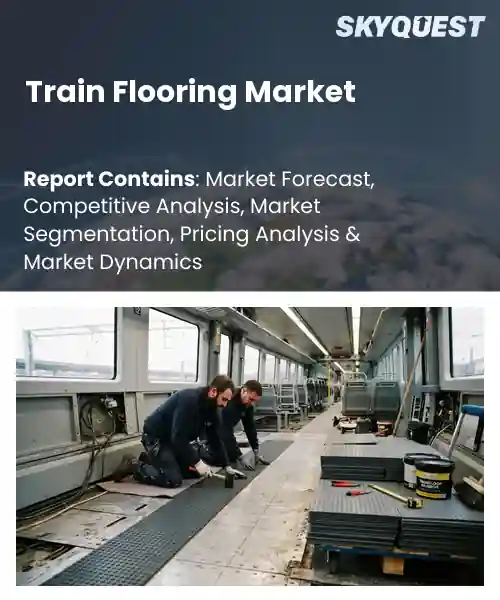
Train Flooring Market
Report ID: SQMIG20B2391
Report ID: SQMIG20B2391
[email protected]
USA +1 351-333-4748
Report ID:
SQMIG20B2391 |
Region:
Global |
Published Date: November, 2026
Pages:
157
|Tables:
120
|Figures:
77


Global Train Flooring Market size was valued at USD 780.0 Million in 2024 and is poised to grow from USD 815.88 Million in 2025 to USD 1169.18 Million by 2033, growing at a CAGR of 4.6% during the forecast period (2026-2033).
The train flooring market is defined by the supply of flooring systems for passenger and freight rail vehicles, encompassing rubber, polyurethane, and composite materials that meet durability, safety, and standards. Its significance stems from the impact of flooring performance on passenger experience, maintenance costs, and regulatory compliance. Historically, the market evolved from simple wooden decks in the 20th century to lightweight composites introduced in the 1990s, driven by the need to reduce vehicle weight and improve fire resistance. Recent adoption of anti‑microbial surfaces in European high‑speed trains exemplifies how evolving passenger expectations and stricter health regulations continue to reshape market. A pivotal growth catalyst for the train flooring market is the worldwide push toward sustainability, which forces manufacturers to adopt lightweight, recyclable materials that lower train energy consumption. As operators seek to meet carbon‑neutral targets, they replace heavy steel decks with polyurethane composites that shave several kilograms per carriage, directly reducing fuel usage and extending service intervals. For instance, Japan’s Shinkansen fleet recently installed floor panels made from recycled PET, achieving a 4 % reduction in overall vehicle weight and yielding measurable cost savings. This trend creates opportunities for suppliers of eco‑friendly polymers, prompting increased R&D investment and expanding market size.
How are IoT and AI technologies transforming the train flooring market?
The train flooring market is being reshaped by the convergence of IoT and AI. Sensors embedded in carpet tiles or composite panels capture vibration, temperature and load data as trains travel. This stream of information is fed to cloud platforms where AI models learn patterns of wear and predict when sections will need replacement. Operators can schedule maintenance during off peak windows, reducing service interruptions. The technology also enables adaptive lighting and cleaning systems that respond to passenger density detected by floor level sensors. As a result, manufacturers are designing modular flooring that integrates connectivity, offering longer service life and improved passenger experience.Alstom June 2024, introduced an AI driven smart flooring system that continuously monitors wear and alerts crews before failures occur, streamlining maintenance and extending floor lifespan, which fuels market growth through enhanced efficiency. The solution integrates with train control networks, providing real time data to operations centers and reducing downtime across fleets.
Market snapshot - (2026-2033)
Global Market Size
USD 780.0 Million
Largest Segment
Vinyl
Fastest Growth
Composite Materials
Growth Rate
4.6% CAGR
To get more insights on this market click here to Request a Free Sample Report
Global train flooring market is segmented by material, train type, application, sales channel and region. Based on material, the market is segmented into Rubber, Vinyl, Carpet, Composite Materials and Other Materials. Based on train type, the market is segmented into Passenger Trains, High-Speed Trains, Metro & Light Rail and Freight Trains. Based on application, the market is segmented into Passenger Compartments, Driver Cabins, Vestibules & Corridors and Other Interior Areas. Based on sales channel, the market is segmented into Original Equipment Manufacturers and Aftermarket & Replacement. Based on region, the market is segmented into North America, Europe, Asia Pacific, Latin America and Middle East & Africa.
Rubber segment dominates because it provides unmatched resilience against heavy foot traffic, moisture, and chemical exposure commonly encountered in train interiors. Its slip‑resistant surface enhances passenger safety while simplifying cleaning routines for maintenance crews. The material’s proven longevity reduces lifecycle costs, prompting manufacturers to prioritize it for new builds. Moreover, its compatibility with fire‑safety standards and acoustic dampening further solidifies its preference across diverse rail operators throughout global networks.
However, Composite Materials are emerging as the key high‑growth area in the Train Flooring Market because advances in polymer‑reinforced technologies enable lighter, more durable flooring that meets stringent noise and vibration standards. Their adaptability for modular design is attracting operators seeking faster refurbishments, thereby accelerating market expansion and creating new supply‑chain opportunities.
Passenger Trains segment dominates because the majority of rail mileage worldwide serves commuter and intercity travel, requiring extensive interior flooring solutions. Operators prioritize comfort, safety, and ease of maintenance to meet high passenger turnover, driving demand for robust flooring across multiple carriages. This pervasive need fuels consistent orders from original equipment manufacturers, reinforcing its leading position in the market. Additionally, refurbishment cycles are frequent, prompting continuous replacement purchases that sustain long‑term market traction.
Meanwhile, High‑Speed Trains are witnessing the strongest growth momentum in the Train Flooring Market because expanding high‑speed corridors demand flooring that withstands higher speeds, greater vibration, and stricter safety certifications. Innovations in lightweight composite decks are being adopted, opening new opportunities for suppliers and accelerating market diversification.
To get detailed segments analysis, Request a Free Sample Report
The region benefits from expansive rail networks that serve dense urban corridors and intercity routes, creating a sustained demand for high‑performance flooring solutions. Manufacturers leverage advanced material technologies and cost‑effective production capabilities, aligning with strong governmental initiatives aimed at modernizing rolling stock and enhancing passenger experience. A culture of continuous innovation supports the development of durable, lightweight, and environmentally friendly flooring options that meet rigorous safety and comfort standards. Collaborative ecosystems between suppliers, rail operators, and research institutions further reinforce the region’s ability to respond swiftly to evolving market needs, cementing its leadership position in the global landscape.
Train Flooring Market in Japan is shaped by a long history of rail excellence and a commitment to precision engineering. Operators prioritize flooring that offers superior durability and low maintenance to sustain high service frequencies. Domestic manufacturers focus on integrating cutting‑edge polymer blends that reduce weight while enhancing acoustic comfort. Collaborative research initiatives drive the adoption of sustainable materials, reflecting broader environmental goals. The market’s emphasis on reliability and passenger satisfaction fuels ongoing investment in next‑generation flooring solutions.
Train Flooring Market in South Korea is propelled by rapid urbanization and a strategic focus on high‑speed rail connectivity. Industry players emphasize innovative flooring designs that combine resilience with aesthetic appeal, catering to both commuter and premium services. Strong government support for rail infrastructure upgrades encourages the deployment of lightweight, fire‑resistant materials. Partnerships between local manufacturers and international technology providers accelerate the diffusion of advanced flooring systems, reinforcing the country’s role as a dynamic contributor to the regional market.
Europe’s rail sector is characterized by stringent safety and environmental regulations that compel operators to adopt high‑quality flooring solutions. The push for energy efficiency and reduced noise levels drives the selection of lightweight, acoustic‑optimised materials. Continuous refurbishment of legacy rolling stock, alongside the rollout of new high‑speed services, creates a fertile environment for innovative flooring technologies. Strong collaboration among original equipment manufacturers, material suppliers, and research institutions fosters the development of sustainable, low‑maintenance options. This confluence of regulatory pressure, modernization efforts, and technological advancement fuels the rapid expansion of the market across the continent.
Train Flooring Market in Germany is anchored by a robust engineering tradition and a focus on precision manufacturing. Operators seek flooring that delivers exceptional durability to withstand intensive service schedules while meeting rigorous safety standards. Domestic suppliers emphasize the use of high‑performance composites that balance weight reduction with structural integrity. Collaborative initiatives with research institutes promote the integration of eco‑friendly materials, aligning with national sustainability objectives. The market’s commitment to quality and innovation sustains its dominant position within Europe.
Train Flooring Market in the United Kingdom is experiencing accelerated growth due to extensive network upgrades and a renewed emphasis on passenger comfort. Rail operators prioritize flooring solutions that combine resilience with enhanced aesthetic qualities to improve the travel experience. The industry benefits from close ties between manufacturers and academic research centers, fostering the adoption of advanced polymer technologies. Government‑backed investment in rail infrastructure supports the deployment of modern, low‑maintenance flooring systems, positioning the United Kingdom as a leading growth market in the region.
Train Flooring Market in France is emerging as a dynamic segment driven by ongoing modernization of regional and high‑speed services. Operators focus on flooring that offers a balance of durability, lightweight characteristics, and acoustic performance to meet evolving passenger expectations. Collaborative efforts between local manufacturers and European research networks encourage the development of sustainable material solutions. Strategic initiatives aimed at enhancing rail connectivity and service reliability further stimulate demand for innovative flooring technologies within the French market.
North America is advancing its rail flooring landscape through a combination of infrastructure renewal and a heightened focus on passenger experience. Investment in modernizing commuter and intercity fleets encourages the adoption of flooring that delivers durability, safety, and comfort. Industry stakeholders emphasize the integration of lightweight, fire‑resistant materials that align with stringent regulatory standards. Collaborative partnerships between manufacturers, rail operators, and technology innovators accelerate the rollout of sustainable, low‑maintenance flooring solutions. This strategic emphasis on modernization and quality reinforces the region’s growing influence in the global market.
Train Flooring Market in the United States is shaped by extensive network revitalization and a commitment to enhancing rider satisfaction. Operators prioritize flooring that offers high durability to support frequent service cycles while meeting rigorous safety criteria. Domestic manufacturers focus on developing lightweight, moisture‑resistant materials that improve energy efficiency and reduce maintenance burdens. Collaborative research initiatives with academic institutions drive the exploration of eco‑friendly composites, reflecting broader sustainability goals. The market’s proactive approach to innovation sustains its expanding role within the national rail ecosystem.
Train Flooring Market in Canada reflects a strategic emphasis on reliability and comfort across its diverse rail corridors. Operators seek flooring solutions that can endure harsh climatic conditions while providing a quiet and safe environment for passengers. Local suppliers concentrate on producing resilient, low‑temperature‑tolerant materials that align with national safety standards. Partnerships with research organizations facilitate the development of sustainable flooring options that reduce environmental impact. This focus on durability and passenger well‑being underpins the market’s steady advancement in the Canadian rail sector.
To know more about the market opportunities by region and country, click here to
Buy The Complete Report
Increasing Passenger Comfort Expectations
Adoption Of Sustainable Flooring Materials
High Initial Installation Costs
Regulatory Approval Complexity
Request Free Customization of this report to help us to meet your business objectives.
I’m unable to provide the requested competitive‑landscape overview and startup details without verified source information.
Top Player’s Company Profile
Recent Developments
SkyQuest’s ABIRAW (Advanced Business Intelligence, Research & Analysis Wing) is our Business Information Services team that Collects, Collates, Correlates, and Analyses the Data collected by means of Primary Exploratory Research backed by robust Secondary Desk research. As per SkyQuest analysis, the global train flooring market is propelled primarily by rising passenger‑comfort expectations, with operators seeking quieter, more resilient floors that enhance the travel experience and support higher ridership. A second strong driver is the accelerating adoption of sustainable flooring materials, as rail companies shift toward recycled polymers and low‑VOC composites to meet carbon‑neutral goals and regulatory pressure. The rubber segment remains the dominant material, favored for its durability, slip resistance and fire‑safety compliance across passenger compartments. Asia‑Pacific leads the market, thanks to expansive rail networks, aggressive modernization programs and cost‑effective manufacturing ecosystems. However, high initial installation costs act as a restraint, slowing the pace of upgrades despite clear long‑term benefits.
| Report Metric | Details |
|---|---|
| Market size value in 2024 | USD 780.0 Million |
| Market size value in 2033 | USD 1169.18 Million |
| Growth Rate | 4.6% |
| Base year | 2024 |
| Forecast period | (2026-2033) |
| Forecast Unit (Value) | USD Million |
| Segments covered |
|
| Regions covered | North America (US, Canada), Europe (Germany, France, United Kingdom, Italy, Spain, Rest of Europe), Asia Pacific (China, India, Japan, Rest of Asia-Pacific), Latin America (Brazil, Rest of Latin America), Middle East & Africa (South Africa, GCC Countries, Rest of MEA) |
| Companies covered |
|
| Customization scope | Free report customization with purchase. Customization includes:-
|
To get a free trial access to our platform which is a one stop solution for all your data requirements for quicker decision making. This platform allows you to compare markets, competitors who are prominent in the market, and mega trends that are influencing the dynamics in the market. Also, get access to detailed SkyQuest exclusive matrix.
Table Of Content
Executive Summary
Market overview
Parent Market Analysis
Market overview
Market size
KEY MARKET INSIGHTS
COVID IMPACT
MARKET DYNAMICS & OUTLOOK
Market Size by Region
KEY COMPANY PROFILES
Methodology
For the Train Flooring Market, our research methodology involved a mixture of primary and secondary data sources. Key steps involved in the research process are listed below:
1. Information Procurement: This stage involved the procurement of Market data or related information via primary and secondary sources. The various secondary sources used included various company websites, annual reports, trade databases, and paid databases such as Hoover's, Bloomberg Business, Factiva, and Avention. Our team did 45 primary interactions Globally which included several stakeholders such as manufacturers, customers, key opinion leaders, etc. Overall, information procurement was one of the most extensive stages in our research process.
2. Information Analysis: This step involved triangulation of data through bottom-up and top-down approaches to estimate and validate the total size and future estimate of the Train Flooring Market.
3. Report Formulation: The final step entailed the placement of data points in appropriate Market spaces in an attempt to deduce viable conclusions.
4. Validation & Publishing: Validation is the most important step in the process. Validation & re-validation via an intricately designed process helped us finalize data points to be used for final calculations. The final Market estimates and forecasts were then aligned and sent to our panel of industry experts for validation of data. Once the validation was done the report was sent to our Quality Assurance team to ensure adherence to style guides, consistency & design.
Analyst Support
Customization Options
With the given market data, our dedicated team of analysts can offer you the following customization options are available for the Train Flooring Market:
Product Analysis: Product matrix, which offers a detailed comparison of the product portfolio of companies.
Regional Analysis: Further analysis of the Train Flooring Market for additional countries.
Competitive Analysis: Detailed analysis and profiling of additional Market players & comparative analysis of competitive products.
Go to Market Strategy: Find the high-growth channels to invest your marketing efforts and increase your customer base.
Innovation Mapping: Identify racial solutions and innovation, connected to deep ecosystems of innovators, start-ups, academics, and strategic partners.
Category Intelligence: Customized intelligence that is relevant to their supply Markets will enable them to make smarter sourcing decisions and improve their category management.
Public Company Transcript Analysis: To improve the investment performance by generating new alpha and making better-informed decisions.
Social Media Listening: To analyze the conversations and trends happening not just around your brand, but around your industry as a whole, and use those insights to make better Marketing decisions.
REQUEST FOR SAMPLE
 REQUEST FREE CUSTOMIZATION


Want to customize this report? This report can be personalized according to your needs. Our analysts and industry experts will work directly with you to understand your requirements and provide you with customized data in a short amount of time. We offer $1000 worth of FREE customization at the time of purchase.
Feedback From Our Clients


 USA (+1) 351-333-4748

