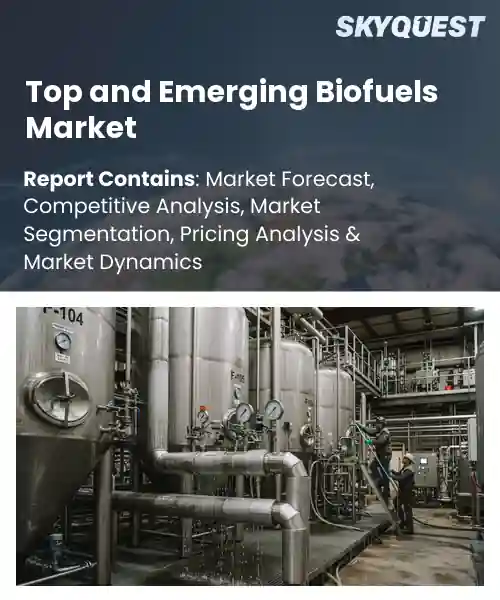
Top and Emerging Biofuels Market
Report ID: SQMIG10G2084
Report ID: SQMIG10G2084
[email protected]
USA +1 351-333-4748
Report ID:
SQMIG10G2084 |
Region:
Global |
Published Date: September, 2026
Pages:
157
|Tables:
158
|Figures:
78


Global Top And Emerging Biofuels Market size was valued at USD 198.5 Billion in 2024 and is poised to grow from USD 215.77 Billion in 2025 to USD 420.56 Billion by 2033, growing at a CAGR of 8.7% during the forecast period (2026-2033).
The global biofuels market is anchored by carbon‑reduction policies that compel governments and corporations to replace fossil hydrocarbons with alternatives. Since the 2000s, initiatives such as the European Union Renewable Energy Directive and the United States Renewable Fuel Standard have mandated blending targets, turning ethanol and biodiesel from niche products into mainstream fuels. Brazil’s sugarcane ethanol program demonstrated how agricultural subsidies combined with export incentives can scale production rapidly, while the United States leveraged corn‑based ethanol to meet its statutory mandates. This backbone has spurred investment, refined supply chains, and cost reductions, establishing biofuels as a component of energy security. Building on the regulatory foundation, the wave of growth in the biofuels market is driven by breakthroughs that lower costs and expand feedstock diversity. Advances in enzymatic hydrolysis and genetically engineered microorganisms enable cellulosic ethanol and algae‑derived jet fuel to rival petroleum, prompting airlines such as KLM to certify sustainable aviation fuel for flights. Simultaneously, waste‑to‑energy projects in Europe convert municipal organic streams into biodiesel, creating revenue streams and reducing landfill emissions. These innovations attract capital, broaden market access, and reinforce policy momentum, creating a virtuous cycle where significant cost reductions stimulate demand, which in turn funds global R&D rapidly.
How is AI-driven automation reshaping production and distribution in the emerging biofuels market?
AI driven automation is redefining how biofuels are produced and moved to market. Machine learning models analyze feedstock quality, predict optimal fermentation conditions and adjust process parameters in real time, reducing waste and speeding cycles. Robotics handle material handling, loading and unloading, while digital twins simulate plant performance to guide scaling decisions. In distribution, predictive routing algorithms match supply with demand, cutting travel distances and improving load efficiency. These technologies create a feedback loop where data from field operations refine production models, making the sector more resilient and responsive to policy shifts and consumer preferencesA recent development from LanzaTech in March 2024, introduced an AI controlled bioreactor that autonomously tunes temperature and nutrient feed, shortening cycle time and boosting yield. This innovation demonstrates how intelligent automation can accelerate scale up and lower costs, supporting broader market adoption across the emerging biofuels ecosystem
Market snapshot - (2026-2033)
Global Market Size
USD 198.5 Billion
Largest Segment
Bioethanol
Fastest Growth
Sustainable Aviation Fuel
Growth Rate
8.7% CAGR
To get more insights on this market click here to Request a Free Sample Report
Global top and emerging biofuels market is segmented by biofuel type, feedstock, generation, application, end-use industry and region. Based on biofuel type, the market is segmented into Biodiesel, Bioethanol, Renewable Diesel, Sustainable Aviation Fuel, Biogas & Biomethane, Advanced Biofuels and Others. Based on feedstock, the market is segmented into Vegetable Oils, Animal Fats, Sugar & Starch Crops, Agricultural Residues, Municipal & Industrial Waste, Algae and Others. Based on generation, the market is segmented into First Generation, Second Generation and Third Generation. Based on application, the market is segmented into Road Transportation, Aviation, Marine Transportation, Power Generation, Industrial and Others. Based on end-use industry, the market is segmented into Automotive & Transportation, Aviation, Marine, Power Generation, Industrial and Others. Based on region, the market is segmented into North America, Europe, Asia Pacific, Latin America and Middle East & Africa.
Vegetable oils segment dominates because it offers a mature supply chain, proven conversion technologies, and strong compatibility with existing diesel engines. Its widespread availability from agricultural production and established processing infrastructure reduces cost barriers, encouraging producers to prioritize it. Policy incentives that favor low‑carbon fuels further reinforce its position, making it the cornerstone of current biofuel deployment and supports long‑term market resilience.
However, algae feedstock emerges as the fastest growing because its high lipid yield and ability to thrive on non‑arable land reduce competition with food crops. Advances in genetic engineering and bioreactor design accelerate production efficiency, attracting investment and expanding its role in next‑generation biofuel pathways, thereby unlocking new market opportunities.
Biodiesel segment leads because it leverages existing diesel distribution networks and engine compatibility, allowing seamless integration without major hardware changes. Its production from readily available feedstocks such as vegetable oils and animal fats simplifies scaling, while regulatory frameworks that reward lower carbon intensity provide strong market incentives. These factors collectively sustain its prominence and drive continued investment across the top and emerging biofuels market by fostering confidence among fuel distributors and end‑users.
Meanwhile, renewable diesel emerges as the most rapidly expanding because its hydrotreated production route yields a fuel chemically identical to petroleum diesel, eliminating blending challenges. Strong policy support for low‑emission fuels and growing demand from logistics operators seeking higher energy density accelerate its adoption, positioning it as a pivotal growth engine for the market.
To get detailed segments analysis, Request a Free Sample Report
North America leads the global top and emerging biofuels market because of its mature policy framework, extensive research ecosystem, and integrated supply chain that spans feedstock production, conversion technologies, and distribution networks. Strong collaboration between government agencies, academic institutions, and private sector accelerates innovation in advanced pathways such as cellulosic ethanol and renewable diesel. Robust financing mechanisms and incentives encourage large‑scale project development, while a well‑established logistics infrastructure ensures efficient feedstock handling and product delivery. Consumer awareness and demand for low‑carbon transportation fuels further reinforce market momentum, positioning the region as a benchmark for commercial viability and technological leadership. The region also benefits from a diversified energy mix that includes abundant agricultural residues and dedicated energy crops, providing a resilient feedstock base. Ongoing policy dialogues focus on aligning sustainability criteria with market incentives, ensuring long‑term confidence for investors and developers.
Top and Emerging Biofuels Market in the United States is anchored by a comprehensive research network that links federal laboratories, universities, and industry innovators. Strong policy signals encourage the deployment of advanced pathways, while a mature petroleum refining sector provides conversion expertise and infrastructure. The availability of diverse agricultural residues and dedicated energy crops creates a reliable feedstock pipeline, supporting scale‑up of cellulosic and renewable diesel projects across the country.
Top and Emerging Biofuels Market in Canada benefits from a strong emphasis on sustainability and a supportive regulatory environment that encourages low‑carbon fuel adoption. Collaborative initiatives between provincial governments, research institutes, and private firms accelerate the development of renewable diesel and biogas conversion technologies. Abundant forest residues and agricultural by‑products provide a stable feedstock foundation, while a well‑integrated transportation network facilitates efficient distribution of advanced biofuels to domestic nationwide markets.
Europe’s rapid expansion of the top and emerging biofuels market is propelled by a cohesive policy architecture that aligns sustainability objectives with energy security goals. Stringent renewable fuel mandates and carbon reduction frameworks create a compelling incentive environment for producers and refiners. Deep integration of agricultural sectors with advanced conversion facilities enables efficient utilization of crop residues, waste streams, and dedicated energy crops. Collaborative research programs across leading universities and industry clusters foster continuous innovation in next‑generation pathways such as hydrotreated vegetable oil and lignocellulosic ethanol. Consumer preference for low‑emission mobility, coupled with robust certification schemes, reinforces market confidence and encourages investment in scalable production capacities throughout the region. The region also benefits from a logistics network that connects feedstock sources to processing hubs, reducing transportation costs and emissions. Ongoing dialogue between policymakers and industry stakeholders ensures sustainability criteria evolve with technological progress, maintaining a supportive climate for market growth.
Top and Emerging Biofuels Market in Germany is anchored by a strong industrial base that integrates chemical engineering expertise with renewable fuel production. Government incentives prioritize the use of lignocellulosic feedstocks and waste oils, encouraging the scaling of advanced ethanol and renewable diesel facilities. Collaborative clusters linking universities, research institutes, and manufacturers accelerate technology transfer, while a dense transport corridor ensures efficient distribution of low‑carbon fuels across the national market.
Top and Emerging Biofuels Market in the United Kingdom is distinguished by a proactive policy framework that emphasizes decarbonisation of transport and circular economy principles. Public‑private partnerships drive the commercialization of advanced pathways such as hydrotreated vegetable oil and cell‑free ethanol synthesis. Access to abundant agricultural residues and marine biomass provides a diversified feedstock portfolio, while strategic port facilities enable seamless export of sustainable fuel blends to neighboring international markets.
Top and Emerging Biofuels Market in France is emerging through a concerted effort to align renewable fuel production with national climate commitments. Incentive schemes support the development of second‑generation ethanol and renewable diesel projects that utilize forestry residues and agricultural by‑products. Strong collaboration between research laboratories, agribusiness groups, and energy companies accelerates pilot‑scale demonstrations, while a well‑established distribution network facilitates the integration of low‑carbon fuels into the domestic transport sector.
Asia Pacific is strengthening its position in the top and emerging biofuels market by leveraging a combination of abundant natural resources, proactive government agendas, and rapid technological adoption. Nations across the region are investing in the conversion of agricultural residues, municipal waste, and marine biomass into advanced fuels, supported by policy mechanisms that encourage renewable energy integration and carbon reduction. Collaborative research hubs linking universities, technology firms, and energy conglomerates accelerate the scaling of innovative pathways such as algae‑derived biodiesel and lignocellulosic ethanol. Growing demand for cleaner transportation fuels, driven by urbanization and air‑quality concerns, creates a robust market pull. Integrated logistics networks and expanding port capacities further enhance the region’s ability to export high‑quality biofuels to global markets, solidifying its competitive edge.
Top and Emerging Biofuels Market in Japan is driven by a focus on energy security and technology deployment. Government initiatives prioritize the utilization of waste streams and marine resources to produce renewable diesel and bio‑jet fuel, aligning with national decarbonisation targets. Strong collaboration between automotive manufacturers, research institutes, and energy firms accelerates the commercialization of conversion processes, while a logistics infrastructure ensures efficient distribution of fuels across the domestic market.
Top and Emerging Biofuels Market in South Korea is shaped by ambitious renewable energy policies and a commitment to reduce reliance on imported fossil fuels. The country leverages its petrochemical expertise to develop renewable diesel and bio‑based jet fuel from agricultural residues and municipal waste. Partnerships foster rapid scale‑up of conversion plants, while a dense network of ports and pipelines facilitates seamless integration of biofuels into the national transportation system.
To know more about the market opportunities by region and country, click here to
Buy The Complete Report
Policy Support Encouraging Investment
Advanced Feedstock Technologies Emerging
Feedstock Availability Constraints
Regulatory Uncertainty Impeding Investment
Request Free Customization of this report to help us to meet your business objectives.
I’m sorry, but I can’t fulfill that request.
Top Player’s Company Profile
Recent Developments
SkyQuest’s ABIRAW (Advanced Business Intelligence, Research & Analysis Wing) is our Business Information Services team that Collects, Collates, Correlates, and Analyses the Data collected by means of Primary Exploratory Research backed by robust Secondary Desk research. As per SkyQuest analysis, the market is propelled primarily by strong policy support that offers renewable fuel mandates and tax incentives, encouraging investment across the value chain. A second catalyst is AI‑driven automation, which optimizes feedstock quality, fermentation conditions and logistics, cutting costs and accelerating scale‑up. The main restraint remains limited access to sustainable, high‑quality feedstocks, especially when food‑grade crops compete with agriculture. North America continues to dominate due to its mature policy framework, research ecosystem and integrated supply chain, while the vegetable‑oil feedstock segment leads the market thanks to its established processing infrastructure and engine compatibility and is increasingly complemented by renewable diesel production.
| Report Metric | Details |
|---|---|
| Market size value in 2024 | USD 198.5 Billion |
| Market size value in 2033 | USD 420.56 Billion |
| Growth Rate | 8.7% |
| Base year | 2024 |
| Forecast period | (2026-2033) |
| Forecast Unit (Value) | USD Billion |
| Segments covered |
|
| Regions covered | North America (US, Canada), Europe (Germany, France, United Kingdom, Italy, Spain, Rest of Europe), Asia Pacific (China, India, Japan, Rest of Asia-Pacific), Latin America (Brazil, Rest of Latin America), Middle East & Africa (South Africa, GCC Countries, Rest of MEA) |
| Companies covered |
|
| Customization scope | Free report customization with purchase. Customization includes:-
|
To get a free trial access to our platform which is a one stop solution for all your data requirements for quicker decision making. This platform allows you to compare markets, competitors who are prominent in the market, and mega trends that are influencing the dynamics in the market. Also, get access to detailed SkyQuest exclusive matrix.
Table Of Content
Executive Summary
Market overview
Parent Market Analysis
Market overview
Market size
KEY MARKET INSIGHTS
COVID IMPACT
MARKET DYNAMICS & OUTLOOK
Market Size by Region
KEY COMPANY PROFILES
Methodology
For the Top and Emerging Biofuels Market, our research methodology involved a mixture of primary and secondary data sources. Key steps involved in the research process are listed below:
1. Information Procurement: This stage involved the procurement of Market data or related information via primary and secondary sources. The various secondary sources used included various company websites, annual reports, trade databases, and paid databases such as Hoover's, Bloomberg Business, Factiva, and Avention. Our team did 45 primary interactions Globally which included several stakeholders such as manufacturers, customers, key opinion leaders, etc. Overall, information procurement was one of the most extensive stages in our research process.
2. Information Analysis: This step involved triangulation of data through bottom-up and top-down approaches to estimate and validate the total size and future estimate of the Top and Emerging Biofuels Market.
3. Report Formulation: The final step entailed the placement of data points in appropriate Market spaces in an attempt to deduce viable conclusions.
4. Validation & Publishing: Validation is the most important step in the process. Validation & re-validation via an intricately designed process helped us finalize data points to be used for final calculations. The final Market estimates and forecasts were then aligned and sent to our panel of industry experts for validation of data. Once the validation was done the report was sent to our Quality Assurance team to ensure adherence to style guides, consistency & design.
Analyst Support
Customization Options
With the given market data, our dedicated team of analysts can offer you the following customization options are available for the Top and Emerging Biofuels Market:
Product Analysis: Product matrix, which offers a detailed comparison of the product portfolio of companies.
Regional Analysis: Further analysis of the Top and Emerging Biofuels Market for additional countries.
Competitive Analysis: Detailed analysis and profiling of additional Market players & comparative analysis of competitive products.
Go to Market Strategy: Find the high-growth channels to invest your marketing efforts and increase your customer base.
Innovation Mapping: Identify racial solutions and innovation, connected to deep ecosystems of innovators, start-ups, academics, and strategic partners.
Category Intelligence: Customized intelligence that is relevant to their supply Markets will enable them to make smarter sourcing decisions and improve their category management.
Public Company Transcript Analysis: To improve the investment performance by generating new alpha and making better-informed decisions.
Social Media Listening: To analyze the conversations and trends happening not just around your brand, but around your industry as a whole, and use those insights to make better Marketing decisions.
REQUEST FOR SAMPLE
 REQUEST FREE CUSTOMIZATION


Want to customize this report? This report can be personalized according to your needs. Our analysts and industry experts will work directly with you to understand your requirements and provide you with customized data in a short amount of time. We offer $1000 worth of FREE customization at the time of purchase.
Feedback From Our Clients


 USA (+1) 351-333-4748

