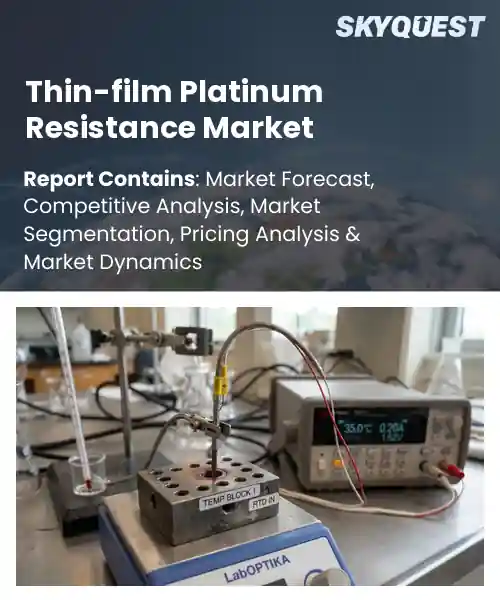
Thin-film Platinum Resistance Market
Report ID: SQMIG45K2424
Report ID: SQMIG45K2424
[email protected]
USA +1 351-333-4748
Report ID:
SQMIG45K2424 |
Region:
Global |
Published Date: August, 2026
Pages:
157
|Tables:
146
|Figures:
78


Global Thin-Film Platinum Resistance Market size was valued at USD 1.96 Billion in 2024 and is poised to grow from USD 2.1 Billion in 2025 to USD 3.58 Billion by 2033, growing at a CAGR of 6.9% during the forecast period (2026-2033).
Thin‑film platinum resistance sensors constitute a niche yet critical segment of precision temperature measurement, converting minute resistance changes into accurate thermal data for high‑end applications. Their primary driver has been the relentless demand for reliability in aerospace, semiconductor manufacturing, and medical diagnostics, where even slight temperature deviations can jeopardize safety or product yield. Historically, the market emerged in the 1970s as a response to bulky wire‑wound thermometers, then evolved through advances in sputtering technology that enabled thinner, more stable films. Today, the proliferation of miniaturized devices and the shift toward IoT‑enabled monitoring further underscore the sensor’s strategic relevance in modern industries. The next pivotal factor shaping global demand is the expanding adoption of thin‑film platinum resistance in energy‑efficient power electronics, where precise thermal control directly improves converter lifespan and reduces maintenance costs. As electric‑vehicle drivetrains and renewable‑energy inverters operate under high heat flux, manufacturers integrate these sensors to monitor junction temperatures, enabling dynamic cooling strategies that prevent premature failure. Consequently, suppliers witness heightened orders from automotive OEMs and wind‑turbine firms, translating into revenue growth and incentives for further R&D. This cause‑effect chain greater efficiency requirements prompting sensor integration, which then fuels market expansion creates a clear pathway for sustained opportunity across multiple high‑technology sectors.
How is AI-driven automation influencing the thin-film platinum resistance market?
AI‑driven automation is reshaping the thin‑film platinum resistance market by streamlining design, testing and manufacturing processes. Machine‑learning algorithms analyze material properties and predict optimal deposition parameters, reducing trial‑and‑error cycles. Automated inspection systems use computer vision to detect defects at micron scales, ensuring higher yield and consistency. Production lines equipped with robotic handling and real‑time process control can scale output while maintaining the precise resistance characteristics required for demanding applications. These technologies lower development costs and accelerate time‑to‑market, making thin‑film platinum sensors more accessible to sectors such as aerospace, medical devices and industrial automation. The result is a more competitive landscape where innovation is closely tied to data‑centric engineering.In June 2024, a leading sensor manufacturer introduced an AI‑optimized thin‑film platinum resistance sensor, improving production efficiency and product consistency, and reinforcing market growth.
Market snapshot - (2026-2033)
Global Market Size
USD 1.96 Billion
Largest Segment
Platinum Resistance Temperature Detectors
Fastest Growth
Platinum Thin-Film Sensors
Growth Rate
6.9% CAGR
To get more insights on this market click here to Request a Free Sample Report
Global thin-film platinum resistance market is segmented by product type, resistance value, application, end-use industry, configuration and region. Based on product type, the market is segmented into Platinum Resistance Temperature Detectors, Platinum Thin-Film Resistors and Platinum Thin-Film Sensors. Based on resistance value, the market is segmented into PT10, PT100, PT500 and PT1000. Based on application, the market is segmented into Temperature Measurement, Industrial Process Control, Medical Equipment and Automotive Sensing. Based on end-use industry, the market is segmented into Industrial, Automotive, Healthcare and Aerospace. Based on configuration, the market is segmented into Wire-Wound and Thin-Film. Based on region, the market is segmented into North America, Europe, Asia Pacific, Latin America and Middle East & Africa.
Platinum Thin‑Film Sensors segment dominates because they combine high accuracy with compact form factor, meeting the stringent size and precision requirements of modern electronic systems. Their intrinsic stability across wide temperature ranges reduces calibration cycles, enhancing reliability for critical applications. Manufacturers favor thin‑film deposition techniques that lower production costs while preserving performance, encouraging widespread adoption across diverse sectors and solidifying their leadership in the thin‑film platinum resistance market.
Meanwhile, Platinum Thin‑Film Resistors emerge as the most rapidly expanding area because ongoing material science advances are boosting their linearity and long‑term drift characteristics. Designers increasingly integrate these components into smart sensors and IoT devices, driving fresh demand and opening new revenue streams that accelerate overall market expansion.
Automotive Sensing segment dominates because vehicle electrification requires precise temperature monitoring for batteries and emissions, making thin‑film platinum devices essential safety components. OEMs adopt rugged, reliable sensors to meet efficiency targets and tighter regulations, securing continuous demand. These devices also support advanced driver assistance systems with fast response times, and their compatibility with new vehicle architectures encourages integration across powertrains and thermal management, further cementing their role as a backbone technology in automotive temperature control.
On the other hand, Medical Equipment emerges as the most rapidly expanding area because the push for minimally invasive diagnostics demands highly accurate, sterilizable temperature sensors. Manufacturers are integrating thin‑film platinum elements into imaging and patient monitoring devices, spurring renewed investment and unlocking new growth avenues that energize the market.
To get detailed segments analysis, Request a Free Sample Report
North America leads the global thin-film platinum resistance market due to a confluence of advanced manufacturing capabilities, deep research expertise, and a mature industrial ecosystem. The region benefits from a high concentration of semiconductor and aerospace manufacturers that demand precise temperature sensing solutions, driving continuous innovation. Strong collaboration between academic institutions and technology firms accelerates material science breakthroughs, while well‑established supply chains ensure reliable access to high‑purity platinum and specialized deposition equipment. Regulatory frameworks that emphasize reliability and safety in critical applications further reinforce market adoption. Additionally, the presence of major standards organizations and a culture of early technology adoption encourage rapid integration of thin‑film solutions across automotive, medical and energy sectors, cementing North America’s leadership position. The region’s emphasis on sustainability also fuels demand for high‑efficiency temperature control in renewable energy installations, reinforcing its competitive edge.
Thin-film Platinum Resistance Market in the United States is propelled by a robust network of research universities and a vibrant venture capital environment that nurtures start‑ups focused on advanced sensor technologies. Major aerospace and automotive manufacturers prioritize precision temperature monitoring, creating strong demand for high‑performance thin‑film devices. The regulatory emphasis on safety and reliability further drives adoption across medical imaging, industrial automation and emerging clean‑energy applications and supporting infrastructure development.
Thin-film Platinum Resistance Market in Canada benefits from close collaboration between federal research institutes and a growing cluster of precision‑instrument manufacturers. The country’s strong focus on environmental standards encourages integration of thin‑film sensors in renewable power generation and advanced manufacturing processes. Access to high‑purity platinum resources and a skilled engineering workforce further enhances product quality, while government incentives for clean‑technology adoption accelerate market penetration across transportation, healthcare and aerospace sectors.
Europe’s thin‑film platinum resistance market expands rapidly due to a deep engineering heritage, stringent quality standards and coordinated industrial policy that prioritizes high‑precision sensing. The region’s strong automotive and aerospace sectors demand reliable temperature control, prompting continuous material‑science research in leading universities and specialized research centers. Collaborative frameworks between industry consortia and standards bodies accelerate technology transfer, while a collective focus on energy efficiency drives adoption in renewable power and advanced manufacturing. Government programs that support green technology and precision instrumentation further stimulate investment, creating a fertile environment for both established manufacturers and innovative start‑ups. The collaborative culture also encourages cross‑border projects that leverage complementary strengths across member states.
Thin-film Platinum Resistance Market in Germany is anchored by engineering firms and a network of research institutes that specialize in sensor technology. The country’s automotive and industrial machinery sectors require ultra‑reliable temperature monitoring, fostering demand for high‑performance thin‑film devices. Strong intellectual‑property protection and a tradition of precision manufacturing support product refinement, while collaborative industry clusters accelerate the translation of laboratory breakthroughs into commercial solutions across energy, healthcare and aerospace applications.
Thin-film Platinum Resistance Market in the United Kingdom is driven by an ecosystem of university research and start‑up ventures that focus on sensing solutions. The nation’s strong aerospace and renewable‑energy sectors demand compact, high‑accuracy temperature sensors, encouraging rapid adoption of thin‑film technologies. Government incentives for innovation and a standards framework further accelerate market uptake, while collaborations foster the development of customized applications for medical devices, automotive testing and smart‑grid infrastructure.
Thin-film Platinum Resistance Market in France is emerging through collaboration between research laboratories and manufacturers specializing in precision instrumentation. The country’s focus on sustainable transportation and medical imaging creates a growing need for reliable temperature sensors that can operate in demanding environments. Access to a skilled workforce and innovation grants encourages development of thin‑film solutions, while involvement in European research consortia accelerates technology diffusion across automotive, aerospace and energy sectors.
Asia Pacific is strengthening its position in the thin‑film platinum resistance market by leveraging a combination of high‑volume electronics manufacturing, advanced materials research and proactive government policies that promote sensor innovation. Japan’s long‑standing expertise in precision engineering and its deep integration of thin‑film technologies into automotive and semiconductor production create a solid foundation for market growth. South Korea’s rapid adoption of smart‑factory concepts and its strong semiconductor ecosystem drive demand for reliable temperature sensing, encouraging local firms to invest in thin‑film development. Regional collaboration through technology parks and cross‑border research initiatives accelerates knowledge transfer, while a focus on energy‑efficient solutions aligns with broader sustainability goals. This synergistic environment enables Asia Pacific to expand its influence and capture emerging opportunities across automotive, renewable energy and high‑tech industries.
Thin-film Platinum Resistance Market in Japan is driven by a legacy of precision manufacturing and a strong focus on automotive and semiconductor applications. The country’s network of research universities collaborates closely with equipment suppliers to refine deposition processes, ensuring high reliability and performance. Government initiatives that support sensor technologies and a culture of improvement encourage adoption of thin‑film solutions across medical and industrial sectors, reinforcing Japan’s leadership in the field.
Thin-film Platinum Resistance Market in South Korea benefits from an electronics sector and strong government backing for smart‑factory and IoT initiatives. The country’s leading semiconductor manufacturers require precise temperature control, prompting investment in thin‑film sensor development and integration. Collaboration between universities and conglomerates accelerates material‑science research, while incentives for energy‑efficient technologies drive adoption in automotive, renewable‑energy and computing applications, positioning South Korea as a key innovator in the thin‑film arena.
To know more about the market opportunities by region and country, click here to
Buy The Complete Report
Advanced Automotive Electrification
Smart Energy Grid Integration
High Material Cost Sensitivity
Complex Manufacturing Process Requirements
Request Free Customization of this report to help us to meet your business objectives.
The thin‑film platinum resistance market is shaped by intense rivalry among specialty sensor manufacturers, each leveraging advanced deposition technologies to improve temperature stability and reduce size. Recent competitive moves include a strategic partnership between a leading sensor firm and a semiconductor equipment supplier to co‑develop ultra‑thin platinum films, and the acquisition of a niche thin‑film coating company by a global industrial conglomerate to broaden its high‑precision resistance product portfolio.
Top Player’s Company Profile
Recent Developments
SkyQuest’s ABIRAW (Advanced Business Intelligence, Research & Analysis Wing) is our Business Information Services team that Collects, Collates, Correlates, and Analyses the Data collected by means of Primary Exploratory Research backed by robust Secondary Desk research. As per SkyQuest analysis the global thin‑film platinum resistance market is being propelled primarily by advanced automotive electrification, where the need for precise temperature monitoring in batteries and power electronics drives strong demand, while a second catalyst comes from sustainable energy integration as smart grids and renewable‑energy converters require reliable thermal sensing to boost efficiency. The high cost of platinum remains a notable restraint, limiting adoption in price‑sensitive projects. North America continues to dominate the market thanks to its deep manufacturing base and intensive R&D activity, and within the product landscape the platinum‑thin‑film sensors segment holds the largest share due to its compact accuracy and wide‑range stability.
| Report Metric | Details |
|---|---|
| Market size value in 2024 | USD 1.96 Billion |
| Market size value in 2033 | USD 3.58 Billion |
| Growth Rate | 6.9% |
| Base year | 2024 |
| Forecast period | (2026-2033) |
| Forecast Unit (Value) | USD Billion |
| Segments covered |
|
| Regions covered | North America (US, Canada), Europe (Germany, France, United Kingdom, Italy, Spain, Rest of Europe), Asia Pacific (China, India, Japan, Rest of Asia-Pacific), Latin America (Brazil, Rest of Latin America), Middle East & Africa (South Africa, GCC Countries, Rest of MEA) |
| Companies covered |
|
| Customization scope | Free report customization with purchase. Customization includes:-
|
To get a free trial access to our platform which is a one stop solution for all your data requirements for quicker decision making. This platform allows you to compare markets, competitors who are prominent in the market, and mega trends that are influencing the dynamics in the market. Also, get access to detailed SkyQuest exclusive matrix.
Table Of Content
Executive Summary
Market overview
Parent Market Analysis
Market overview
Market size
KEY MARKET INSIGHTS
COVID IMPACT
MARKET DYNAMICS & OUTLOOK
Market Size by Region
KEY COMPANY PROFILES
Methodology
For the Thin-film Platinum Resistance Market, our research methodology involved a mixture of primary and secondary data sources. Key steps involved in the research process are listed below:
1. Information Procurement: This stage involved the procurement of Market data or related information via primary and secondary sources. The various secondary sources used included various company websites, annual reports, trade databases, and paid databases such as Hoover's, Bloomberg Business, Factiva, and Avention. Our team did 45 primary interactions Globally which included several stakeholders such as manufacturers, customers, key opinion leaders, etc. Overall, information procurement was one of the most extensive stages in our research process.
2. Information Analysis: This step involved triangulation of data through bottom-up and top-down approaches to estimate and validate the total size and future estimate of the Thin-film Platinum Resistance Market.
3. Report Formulation: The final step entailed the placement of data points in appropriate Market spaces in an attempt to deduce viable conclusions.
4. Validation & Publishing: Validation is the most important step in the process. Validation & re-validation via an intricately designed process helped us finalize data points to be used for final calculations. The final Market estimates and forecasts were then aligned and sent to our panel of industry experts for validation of data. Once the validation was done the report was sent to our Quality Assurance team to ensure adherence to style guides, consistency & design.
Analyst Support
Customization Options
With the given market data, our dedicated team of analysts can offer you the following customization options are available for the Thin-film Platinum Resistance Market:
Product Analysis: Product matrix, which offers a detailed comparison of the product portfolio of companies.
Regional Analysis: Further analysis of the Thin-film Platinum Resistance Market for additional countries.
Competitive Analysis: Detailed analysis and profiling of additional Market players & comparative analysis of competitive products.
Go to Market Strategy: Find the high-growth channels to invest your marketing efforts and increase your customer base.
Innovation Mapping: Identify racial solutions and innovation, connected to deep ecosystems of innovators, start-ups, academics, and strategic partners.
Category Intelligence: Customized intelligence that is relevant to their supply Markets will enable them to make smarter sourcing decisions and improve their category management.
Public Company Transcript Analysis: To improve the investment performance by generating new alpha and making better-informed decisions.
Social Media Listening: To analyze the conversations and trends happening not just around your brand, but around your industry as a whole, and use those insights to make better Marketing decisions.
REQUEST FOR SAMPLE
 REQUEST FREE CUSTOMIZATION


Want to customize this report? This report can be personalized according to your needs. Our analysts and industry experts will work directly with you to understand your requirements and provide you with customized data in a short amount of time. We offer $1000 worth of FREE customization at the time of purchase.
Feedback From Our Clients


 USA (+1) 351-333-4748

