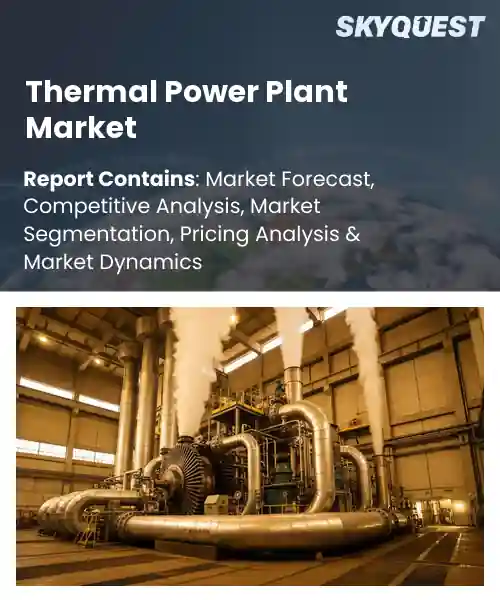
Thermal Power Plant Market
Report ID: SQMIG55F2100
Report ID: SQMIG55F2100
[email protected]
USA +1 351-333-4748
Report ID:
SQMIG55F2100 |
Region:
Global |
Published Date: June, 2026
Pages:
157
|Tables:
143
|Figures:
78


Global Thermal Power Plant Market size was valued at USD 1.55 Trillion in 2024 and is poised to grow from USD 1.6 Trillion in 2025 to USD 2.11 Trillion by 2033, growing at a CAGR of 3.5% during the forecast period (2026-2033).
As energy demand grows in developing regions, reliable baseload generation remains the primary driver of the thermal power plant market. Most thermal generating sources like coal, natural gas, oil, and biomass/waste-to-energy produce dispatchable power and grid reliability that renewables alone don’t offer. The market plays a critical role as it forms the basis for all economic activity, it provides support to load profiles, and it helps to establish a country’s energy security and emissions pathway. Historically, the sector has grown from coal generating plants being built in China and/or India to combined cycle gas turbines adopted in the USA, to ultra-supercritical technologies being adopted in Europe as a result of regulations and market signals moving toward higher efficiency.
Stricter emissions regulations combined with rapid growth of wind and solar drive a key trend driving the global thermal power plant sector by pushing operators toward cleaner and more flexible assets. Plant owners will take action more quickly on retroffiting carbon capture equipment or replacing their old coal power plants with combined cycle gas or hydrogen-ready turbine units when regulators implement stricter limits on carbon emissions. This can be observed through examples like the Boundary Dam CCS demonstration in Canada and European pilot projects for producing Hydrogen. In addition, with increased amounts of renewables connecting to the grid, thermal units are forced to ramp up their output very often.
How is Ai Improving Operational Efficiency in Thermal Power Plants?
Thermal power plants use AI to improve their operating efficiency through predictive maintenance, process optimization, emissions management and digital twins. Technology allows operators to enter sensor readings into physics aware models of their plant history and tells them when there are anomalies and allows them to optimize combustion and steam conditions. As plants work with more unpredictability and less reliability due to climate change and variable renewables, they are increasing their use of AI. Vendors and utilities deploy AI platforms for real time control, asset health forecasting and fuel optimization, which helps extend asset life and keep thermal fleets competitive while supporting grid stability.
Tata Power April 2026, announced an enterprise wide collaboration with Databricks to build a data and AI platform that centralizes plant telemetry and analytics, enabling predictive maintenance and real time optimization that supports operational efficiency and market competitiveness for thermal fleets.
Market snapshot - (2026-2033)
Global Market Size
USD 1.55 Trillion
Largest Segment
Coal
Fastest Growth
Natural Gas
Growth Rate
3.5% CAGR
To get more insights on this market click here to Request a Free Sample Report
Global thermal power plant market is segmented by fuel type, technology, capacity, application, end-user and region. Based on fuel type, the market is segmented into coal, natural gas and oil. Based on technology, the market is segmented into steam turbine, combined cycle and gas turbine. Based on capacity, the market is segmented into <500 MW, 500–1000 MW and >1000 MW. Based on application, the market is segmented into base load power generation and peak load power generation. Based on end-user, the market is segmented into utilities, industrial and independent power producers (IPPs). Based on region, the market is segmented into North America, Europe, Asia Pacific, Latin America and Middle East & Africa.
Based on the global thermal power plant market growth, combined cycle segment dominates because its configuration captures waste heat from gas turbine exhaust to produce additional steam power, delivering substantially higher overall thermal efficiency and lower specific fuel consumption than simpler setups. This increased efficiency reduces operational fuel costs and emissions intensity, motivating both electric utilities and developers to select combined cycle options when replacing aging plants or upgrading existing plants. The reliability and compatibility of combined cycle with integrated control systems only serve to solidify their position as the premier option for power generation in performance-oriented fleet upgrades.
However, gas turbine is witnessing the strongest growth momentum as manufacturers improve simple-cycle ramp rates and fuel flexibility, making these units ideal for rapid-response roles and decentralized generation. The increase in demand for rapid-start industrial (peak) generation, as well as hybrid (multiple fuel types) including energy storage and modular plant designs, allows for rapid deployment of new generation technologies.
Natural gas segment dominates because its fuel characteristics and mature turbine technologies enable rapid start up, precise load following, and comparatively lower emissions, making it the preferred choice to balance intermittent renewable generation and meet fluctuating demand. These operational benefits reduce regulatory and operational risk, support conversions of older fleets, and incentivize investments that preserve dispatchable capacity while facilitating a transition toward lower-carbon system architectures.
Conversely, oil is emerging as the key high-growth area for niche peaking and remote applications where fuel logistics, on-site storage resilience, or industrial reliability requirements favor simple, robust units. This creates further demand through back up and industrial markets due to the availability of fast-track deployments that satisfy the constraints of reliability and project timing.
To get detailed segments analysis, Request a Free Sample Report
Based on the global thermal power plant market share, Asia Pacific dominance reflects a combination of strong industrial energy demand, established thermal portfolios, and deep engineering and manufacturing capabilities that lower project delivery time and lifecycle costs. Regional priorities address fast-tracked renewable growth and the necessary reliability of firming capacity, resulting in increased investment into operational improvements, flexible operating schedules, and alternative fuels. Government and utility collaboration will also support modernizing and trial projects to reduce emissions, with technology hubs supporting innovations, which can be exported, in the areas of turbines, control systems, and retrofit solutions. Affordable and accessible financing, as well as fully integrated global supply chains, will help to facilitate large-scale roll-outs and continued maintenance activities, thus reinforcing the market-leading positions of the top global markets, namely Japan and Korea.
Thermal power plant market in Japan emphasizes technological modernization, high efficiency retrofits, and integration with advanced grid support systems. The government’s focus on reliable policies and the high demand for power from businesses drive investment into flexible thermal assets and various paths toward decarbonization of the economy. Collaborating with utilities and research organizations allows for innovative strategies to improve the efficiency of equipment, switch fuel sources, and design resilient systems that can withstand diverse operating conditions, thereby contributing to improved performance over time.
Thermal power plant market in South Korea focuses on efficient generation, strategic fuel diversity, and advanced retrofit programs that enhance flexibility for peak demand management. The implementation of advanced turbine and control systems is fueled by a robust industrial base and manufacturing infrastructure. The efficient collaboration of electric service providers with technological development agencies and government research institutions enables rapid implementation of pilot programs for low-emission combustion technologies integrated into an overall effort to modernize the energy system in a manner that increases stability and improves environmental performance.
Based on global thermal power plant regional forecast, rapid expansion in North America is underpinned by a strategic focus on grid resilience, market mechanisms that value flexibility, and substantial private investment in modern thermal capacity. Flexibility, efficiency and targeted retrofitting are important to meet the needs of blending variable generating resource. Similarly, strong service and manufacturing systems create opportunities for fast commissioning and optimizing operations within an ever-changing environment. Regulatory frameworks and regional plans foster emissions reductions, integrating distributed generation, and hybrid solutions with both fixed and mobile thermal generation, as well as storage and digital control systems, that can continue to meet new developments in system performance.
Thermal power plant market in United States is shaped by focus on flexibility, deployment of advanced flexible assets, and emphasis on grid resilience. Technology providers and manufacturers of equipment are focused on modular designs, digital control technology and emissions reduction and regulatory framework and market structure provide incentives for the development of both consistent, reliable generating capacity and increasingly flexible, responsive generating capacity to address the complexities of system needs in a reliable manner.
Thermal power plant market in Canada reflects emphasis on reliable generation for remote and industrial regions, integration with hydro and renewables, and a focus on low emission technologies. Cooperation between equipment manufacturers and research agencies will promote the development of modular solutions and create strategies to reduce greenhouse gases, which will improve the resiliency of their systems and allow for compliance with regional policy requirements and stakeholder expectations.
As per global thermal power plant regional outlook, Europe is strengthening its role through coordinated policy, innovation in low emission technologies, and strategic retrofits that increase efficiency and operational flexibility. Utilities are pursuing fuel diversity, integrated combined heat & power and the implementation of carbon management schemes due to regulatory pressure and aggressive environmental goals. The ability to develop advanced turbines, digital controls, and emissions reduction systems is a result of the strong research and engineering network. Investments in hybridizing thermal assets with storage and other renewable sources through cross-border market cooperation are improving grid balance and supporting a sustainable transition for thermal generation.
Thermal power plant market in Germany prioritizes efficiency upgrades, emissions reduction, and fuel flexibility to support transition of energy mix. The strong engineering base of the company along with partnerships with universities helps in the deployment of heat recovery systems, advanced control systems and the development of the operational strategies and methodologies necessary to improve the level of flexibility. This reduces emissions and increase environmental performance while maintaining compliance with rigorous compliance regulatory requirements.
Thermal power plant market in United Kingdom emphasizes system flexibility, emissions control, and integration with distributed generation. Close coordination between regulatory agencies, network managers, and technology suppliers supports the implementation of distributed digital management systems, advanced control systems for combustion equipment, and piloting programs for alternative fuels with low greenhouse gas emissions. Strategic investments will focus on achieving reliable, flexible operations and supporting the goals associated with the broader energy transition.
Thermal power plant market in France centers on balancing high renewable penetration with reliable thermal support and decarbonization pathways. They work collaboratively with equipment manufacturers; research organizations; and the system operators to create new solutions for reducing emissions, developing ways of digitally monitoring, and to making their facilities more flexible. While at the same time ensuring the stability of the grid and ensuring compliance with both national energy policy goals and environmental commitments.
To know more about the market opportunities by region and country, click here to
Buy The Complete Report
Rising Global Energy Demand
Advancements In Emission Control Technologies
Stringent Environmental Regulations
Competition From Renewable Sources
Request Free Customization of this report to help us to meet your business objectives.
Competition in the global thermal power plant market outlook centers on decarbonization and flexible dispatchable capacity, driving M&A, strategic partnerships and technology bets. Major incumbents deploy targeted acquisitions and capture or control software, exemplified by Siemens Energy's recent Camlin purchase, GE Vernova's carbon capture collaboration with Svante, and Mitsubishi Power's equipment deliveries for the ACES Delta Hub hydrogen project.
Top Player’s Company Profile
Recent Developments
SkyQuest’s ABIRAW (Advanced Business Intelligence, Research & Analysis Wing) is our Business Information Services team that Collects, Collates, Correlates, and Analyses the Data collected by means of Primary Exploratory Research backed by robust Secondary Desk research.
As per SkyQuest analysis, a key driver behind the global thermal power plant industry is rising global energy demand, which sustains investment in dispatchable thermal capacity to support industrial growth and grid stability, while a second driver is advancements in emission control technologies that enable cost-effective retrofits and lifecycle extensions. A restraint is stringent environmental regulations that increase compliance costs and can prompt premature retirements of older, high-emitting units. Asia Pacific remains the dominating region because of deep engineering capabilities, large industrial load and ongoing modernization programs, and the combined cycle segment is the dominating technology as its superior thermal efficiency and lower emissions intensity make it the preferred choice for replacements and new flexible builds.
| Report Metric | Details |
|---|---|
| Market size value in 2024 | USD 1.55 Trillion |
| Market size value in 2033 | USD 2.11 Trillion |
| Growth Rate | 3.5% |
| Base year | 2024 |
| Forecast period | (2026-2033) |
| Forecast Unit (Value) | USD Trillion |
| Segments covered |
|
| Regions covered | North America (US, Canada), Europe (Germany, France, United Kingdom, Italy, Spain, Rest of Europe), Asia Pacific (China, India, Japan, Rest of Asia-Pacific), Latin America (Brazil, Rest of Latin America), Middle East & Africa (South Africa, GCC Countries, Rest of MEA) |
| Companies covered |
|
| Customization scope | Free report customization with purchase. Customization includes:-
|
To get a free trial access to our platform which is a one stop solution for all your data requirements for quicker decision making. This platform allows you to compare markets, competitors who are prominent in the market, and mega trends that are influencing the dynamics in the market. Also, get access to detailed SkyQuest exclusive matrix.
Table Of Content
Executive Summary
Market overview
Parent Market Analysis
Market overview
Market size
KEY MARKET INSIGHTS
COVID IMPACT
MARKET DYNAMICS & OUTLOOK
Market Size by Region
KEY COMPANY PROFILES
Methodology
For the Thermal Power Plant Market, our research methodology involved a mixture of primary and secondary data sources. Key steps involved in the research process are listed below:
1. Information Procurement: This stage involved the procurement of Market data or related information via primary and secondary sources. The various secondary sources used included various company websites, annual reports, trade databases, and paid databases such as Hoover's, Bloomberg Business, Factiva, and Avention. Our team did 45 primary interactions Globally which included several stakeholders such as manufacturers, customers, key opinion leaders, etc. Overall, information procurement was one of the most extensive stages in our research process.
2. Information Analysis: This step involved triangulation of data through bottom-up and top-down approaches to estimate and validate the total size and future estimate of the Thermal Power Plant Market.
3. Report Formulation: The final step entailed the placement of data points in appropriate Market spaces in an attempt to deduce viable conclusions.
4. Validation & Publishing: Validation is the most important step in the process. Validation & re-validation via an intricately designed process helped us finalize data points to be used for final calculations. The final Market estimates and forecasts were then aligned and sent to our panel of industry experts for validation of data. Once the validation was done the report was sent to our Quality Assurance team to ensure adherence to style guides, consistency & design.
Analyst Support
Customization Options
With the given market data, our dedicated team of analysts can offer you the following customization options are available for the Thermal Power Plant Market:
Product Analysis: Product matrix, which offers a detailed comparison of the product portfolio of companies.
Regional Analysis: Further analysis of the Thermal Power Plant Market for additional countries.
Competitive Analysis: Detailed analysis and profiling of additional Market players & comparative analysis of competitive products.
Go to Market Strategy: Find the high-growth channels to invest your marketing efforts and increase your customer base.
Innovation Mapping: Identify racial solutions and innovation, connected to deep ecosystems of innovators, start-ups, academics, and strategic partners.
Category Intelligence: Customized intelligence that is relevant to their supply Markets will enable them to make smarter sourcing decisions and improve their category management.
Public Company Transcript Analysis: To improve the investment performance by generating new alpha and making better-informed decisions.
Social Media Listening: To analyze the conversations and trends happening not just around your brand, but around your industry as a whole, and use those insights to make better Marketing decisions.
REQUEST FOR SAMPLE
 REQUEST FREE CUSTOMIZATION
Global Thermal Power Plant Market size was valued at USD 1.55 Trillion in 2024 and is poised to grow from USD 1.6 Trillion in 2025 to USD 2.11 Trillion by 2033, growing at a CAGR of 3.5% during the forecast period (2026-2033).
Competition in the global thermal power plant market centers on decarbonization and flexible dispatchable capacity, driving M&A, strategic partnerships and technology bets. Major incumbents deploy targeted acquisitions and capture or control software, exemplified by Siemens Energy's recent Camlin purchase, GE Vernova's carbon capture collaboration with Svante, and Mitsubishi Power's equipment deliveries for the ACES Delta Hub hydrogen project. 'General Electric', 'Siemens Energy', 'Mitsubishi Power', 'Toshiba Energy Systems', 'Hitachi Energy', 'Bechtel Corporation', 'Fluor Corporation', 'Larsen & Toubro', 'Hyundai Engineering & Construction', 'Doosan Enerbility', 'NTPC Limited', 'China Energy Investment Corporation', 'EDF (Électricité de France)', 'Duke Energy', 'Enel', 'Babcock & Wilcox Enterprises', 'Bharat Heavy Electricals Limited (BHEL)', 'Harbin Electric Corporation', 'Dongfang Electric Corporation', 'Alstom'
Rising global energy demand is increasing the need for reliable and continuous electricity generation, which enhances the appeal of thermal power plants as dependable baseload resources. As industrialization and urbanization progress, utilities prioritize capacity additions that can deliver sustained output and integrate with existing grids. Thermal plants provide operational flexibility to complement intermittent renewable sources and meet peak and off peak loads through proven fuel supply chains. This demand driven preference encourages investment in refurbishment and new builds, supporting market expansion through predictable operational characteristics and established technology.
Digitalization And Predictive Maintenance: Adoption of digital platforms, artificial intelligence, and real time condition monitoring enables predictive maintenance, performance optimization, and remote operations that reduce unplanned outages and extend asset life. Integrated data analytics and standardized protocols improve decision making across operations, procurement, and maintenance teams. Cloud based lifecycle management and digital twins support retrofit prioritization and efficiency upgrades, while enhanced cybersecurity and interoperability with grid management systems facilitate flexible dispatch and coordinated plant performance, increasing reliability and operational transparency for stakeholders and investors.
Why does Asia Pacific Dominate the Global Thermal Power Plant Market? |@12


Want to customize this report? This report can be personalized according to your needs. Our analysts and industry experts will work directly with you to understand your requirements and provide you with customized data in a short amount of time. We offer $1000 worth of FREE customization at the time of purchase.
Feedback From Our Clients


 USA (+1) 351-333-4748

