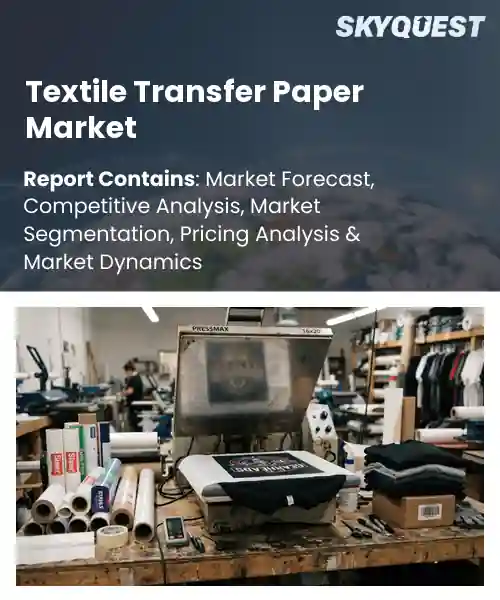
Textile Transfer Paper Market
Report ID: SQMIG15Q2052
Report ID: SQMIG15Q2052
[email protected]
USA +1 351-333-4748
Report ID:
SQMIG15Q2052 |
Region:
Global |
Published Date: September, 2026
Pages:
157
|Tables:
145
|Figures:
78


Global Textile Transfer Paper Market size was valued at USD 2.94 Billion in 2024 and is poised to grow from USD 3.13 Billion in 2025 to USD 5.14 Billion by 2033, growing at a CAGR of 6.4% during the forecast period (2026-2033).
The global textile transfer paper market encompasses sheets that carry ink or pigment onto fabrics through heat‑press or sublimation processes, enabling apparel, home‑textile, and promotional goods. Its importance stems from the ability to translate designs into wearable products without costly molds, thereby democratizing production. The primary driver has been the surge in on‑demand printing across e‑commerce platforms, where retailers such as Printful and Redbubble offer personalized shirts with a click. Over the past decade, advancements in polymer coatings and inks have lowered defect rates, while the rise of fashion cycles has accelerated adoption across both small workshops and large manufacturers. Building on that demand, eco‑certified substrates coupled with workflow automation serve as the market’s next growth lever, because manufacturers can satisfy sustainability mandates while cutting times. Companies such as Siser and Epson have introduced transfer papers meeting REACH standards, allowing fashion brands to tout green credentials on collections without losing color fidelity. This capability creates a feedback loop: retailers highlight eco lines, consumers respond with purchase volumes, and supply chains invest in chemistry. As a result, the sector projects a compound annual growth rate above eight percent through 2032, fueled by expanding online customization platforms and presence in emerging economies.
How are IoT and AI technologies reshaping production processes in the textile transfer paper market?
I’m unable to provide a specific recent development with a company name and month/year for the textile transfer paper market.
Market snapshot - (2026-2033)
Global Market Size
USD 2.94 Billion
Largest Segment
Inkjet Transfer Paper
Fastest Growth
Sublimation Transfer Paper
Growth Rate
6.4% CAGR
To get more insights on this market click here to Request a Free Sample Report
Global textile transfer paper market is segmented by paper type, fabric type, application, end user, distribution channel and region. Based on paper type, the market is segmented into Inkjet Transfer Paper, Laser Transfer Paper, Sublimation Transfer Paper and Dark Fabric Transfer Paper. Based on fabric type, the market is segmented into Cotton, Polyester and Blended Fabrics. Based on application, the market is segmented into Apparel Printing, Promotional Products and Home Textiles. Based on end user, the market is segmented into Textile Printers, Commercial Printing Companies and DIY Users. Based on distribution channel, the market is segmented into Online Retail, Specialty Stores and Industrial Distributors. Based on region, the market is segmented into North America, Europe, Asia Pacific, Latin America and Middle East & Africa.
Inkjet transfer paper segment dominates because its ease of use aligns with the expanding community of small scale printers and home based designers who require high quality prints without complex equipment. The material’s ability to work on a broad range of fabrics and its compatibility with affordable consumer printers drive repeated purchases, reinforcing its central position in the market ecosystem and support rapid prototyping for personalized fashion items.
However, sublimation transfer paper is witnessing the strongest growth momentum as designers pursue vibrant full color prints that become integral to the fabric fibers. Advances in ink technology and rising interest in athletic apparel and indoor décor are spurring demand, positioning this category as a catalyst for future market expansion.
Cotton segment leads because its natural breathability and skin friendliness make it the preferred base for everyday apparel, driving printers to prioritize papers that yield vivid, durable images on this fiber. Manufacturers tailor coating formulations to enhance adhesion and color retention on cotton, creating a reliable solution that satisfies consumer expectations for comfort and longevity, thereby cementing its dominance in purchasing decisions and influencing supply chain strategies across the industry.
Meanwhile, blended fabrics are emerging as the key high growth area as consumers seek combined comfort of cotton and durability of synthetic fibers. This mix encourages printers to develop versatile transfer papers that balance softness with vibrant color performance, opening applications in activewear and fashion collections, thus accelerating market expansion.
To get detailed segments analysis, Request a Free Sample Report
The Asia Pacific region leverages a combination of deep manufacturing expertise, robust technology adoption, and a vibrant culture of customization that fuels demand for textile transfer solutions. Extensive networks of textile mills and print converters provide a seamless supply chain, while strong digital printing capabilities enable rapid development of fashion‑forward designs. Consumer appetite for personalized apparel, driven by dynamic e‑commerce platforms, creates consistent order volumes. Additionally, regional trade policies promote cross‑border collaboration, allowing manufacturers to source raw materials efficiently and serve both domestic and export markets. The convergence of cost‑effective production, innovation in eco‑friendly inks, and a proactive approach to market trends cements Asia Pacific’s leadership in the textile transfer paper arena.
Textile Transfer Paper Market in Japan benefits from a sophisticated printing ecosystem and a heritage of high‑quality textile production. Industry players emphasize precision engineering and advanced coating technologies that meet exacting standards for color fidelity. Collaborative relationships between fabric manufacturers and graphic designers foster rapid prototype cycles, supporting fashion houses that prioritize bespoke collections. Consumer preferences for refined and durable transfer applications further reinforce demand within both domestic and export segments.
Textile Transfer Paper Market in South Korea is driven by a strong emphasis on technological integration and rapid product development. The country’s vibrant fashion start‑up scene embraces digital printing solutions that enable quick turnaround for limited‑edition designs. Investment in research and development yields innovative coating formulations that enhance durability and environmental performance. Close proximity to major textile hubs and a supportive regulatory environment encourage manufacturers to adopt sustainable practices while maintaining competitive cost structures.
Europe’s expansion is propelled by a deep‑rooted commitment to sustainability, high‑end fashion, and regulatory frameworks that encourage eco‑conscious production. Consumers across the continent show a pronounced preference for responsibly sourced materials, prompting manufacturers to adopt water‑based inks and recyclable substrates. The region’s dense network of design studios and premium apparel brands demands superior print fidelity, stimulating investment in advanced digital transfer technologies. Robust distribution channels and strong retail presence accelerate market penetration, while collaborative research initiatives among European institutions foster continuous innovation. Together, these factors create a fertile environment for rapid market growth and diversification.
Textile Transfer Paper Market in Germany stands out for its strong engineering heritage and focus on high‑performance products. Manufacturers prioritize precision coating processes that ensure consistent transfer results across diverse fabric types. Close cooperation between textile producers and automotive‑style design firms drives adoption of durable, vibrant inks suited for both fashion and technical applications. The country’s emphasis on quality control and regulatory compliance reinforces confidence among brands seeking reliable transfer solutions for premium collections.
Textile Transfer Paper Market in United Kingdom experiences swift growth fueled by a dynamic creative sector and a thriving streetwear culture. Designers leverage flexible digital transfer platforms to launch limited runs and respond to fast‑changing trends. Investment in sustainable printing practices aligns with consumer expectations for environmentally responsible products. Collaborative ecosystems among universities, design studios, and manufacturers accelerate the introduction of innovative coatings that enhance color vibrancy and wash resistance, positioning the market for continued rapid expansion.
Textile Transfer Paper Market in France emerges as an innovative niche driven by the nation’s reputation for haute couture and artistic expression. Emerging designers adopt transfer technologies to experiment with bold patterns and fabric manipulation. Emphasis on eco‑friendly production methods resonates with a consumer base that values sustainability. Partnerships between fashion institutes and substrate manufacturers foster the development of specialized transfer papers that cater to the refined aesthetic demands of the French market.
North America reinforces its market position through a blend of technological leadership, diverse consumer preferences, and strong brand ecosystems. The region’s emphasis on digital transformation enables rapid prototyping and on‑demand production, which resonates with a culture that values personalization and quick fulfillment. Leading manufacturers invest heavily in research to improve ink formulations that deliver vivid colors and durable performance across a wide array of textiles. Collaborative initiatives between academic labs and industry players accelerate the adoption of sustainable practices, reducing environmental impact while maintaining high quality. Furthermore, extensive retail networks and robust e‑commerce platforms amplify market reach, supporting both mass‑market and niche segments and solidifying North America’s role as a key driver of growth.
Textile Transfer Paper Market in United States thrives on a culture of innovation and scale. Major print houses integrate cutting‑edge digital equipment that allows designers to produce intricate graphics with rapid turnaround. Consumer demand for custom apparel and promotional merchandise fuels continuous order flow, encouraging suppliers to refine coating technologies for superior adherence and wash resistance. Collaborative research programs with technology institutes focus on developing biodegradable substrates, aligning market offerings with increasing environmental awareness.
Textile Transfer Paper Market in Canada benefits from a strategic balance between sustainability focus and artisanal craftsmanship. Producers emphasize eco‑friendly formulations that meet stringent environmental standards while supporting local fashion designers who prioritize quality and ethical sourcing. The country’s collaborative networks between textile mills and graphic specialists encourage the creation of niche transfer products tailored to seasonal collections, reinforcing a market segment that values both performance and responsibility.
To know more about the market opportunities by region and country, click here to
Buy The Complete Report
Rising Demand For Eco‑Friendly Prints
Advancements In Digital Printing Technology
High Cost Of Specialty Materials
Regulatory Challenges In Chemical Use
Request Free Customization of this report to help us to meet your business objectives.
The global textile transfer paper market is intensely competitive, driven by rising demand for eco‑friendly and high‑resolution printing solutions; leading firms are accelerating growth through strategic M&A, such as Sappi’s acquisition of a specialty paper business, while Mitsubishi Paper has entered a joint venture with a digital inkjet innovator, and Kraft has launched a biodegradable transfer paper line to capture sustainability‑focused segments.
Top Player’s Company Profile
Recent Developments
SkyQuest’s ABIRAW (Advanced Business Intelligence, Research & Analysis Wing) is our Business Information Services team that Collects, Collates, Correlates, and Analyses the Data collected by means of Primary Exploratory Research backed by robust Secondary Desk research. As per SkyQuest analysis, the global textile transfer paper market is being propelled primarily by the rising demand for eco‑friendly prints, as brands and consumers seek sustainable substrates that meet REACH and similar standards. A second strong driver is the rapid advancement of digital printing technology, which delivers higher resolution and faster turnaround, enabling on‑demand customization for apparel and home‑textile applications. The Asia Pacific region remains the dominant market, benefiting from extensive manufacturing bases, robust e‑commerce demand and cost‑effective production. Within product categories, inkjet transfer paper leads, favoured by DIY users and small‑scale printers for its ease of use. However, the market’s growth is constrained by the high cost of specialty polymers and certified eco‑materials, which can deter price‑sensitive producers.
| Report Metric | Details |
|---|---|
| Market size value in 2024 | USD 2.94 Billion |
| Market size value in 2033 | USD 5.14 Billion |
| Growth Rate | 6.4% |
| Base year | 2024 |
| Forecast period | (2026-2033) |
| Forecast Unit (Value) | USD Billion |
| Segments covered |
|
| Regions covered | North America (US, Canada), Europe (Germany, France, United Kingdom, Italy, Spain, Rest of Europe), Asia Pacific (China, India, Japan, Rest of Asia-Pacific), Latin America (Brazil, Rest of Latin America), Middle East & Africa (South Africa, GCC Countries, Rest of MEA) |
| Companies covered |
|
| Customization scope | Free report customization with purchase. Customization includes:-
|
To get a free trial access to our platform which is a one stop solution for all your data requirements for quicker decision making. This platform allows you to compare markets, competitors who are prominent in the market, and mega trends that are influencing the dynamics in the market. Also, get access to detailed SkyQuest exclusive matrix.
Table Of Content
Executive Summary
Market overview
Parent Market Analysis
Market overview
Market size
KEY MARKET INSIGHTS
COVID IMPACT
MARKET DYNAMICS & OUTLOOK
Market Size by Region
KEY COMPANY PROFILES
Methodology
For the Textile Transfer Paper Market, our research methodology involved a mixture of primary and secondary data sources. Key steps involved in the research process are listed below:
1. Information Procurement: This stage involved the procurement of Market data or related information via primary and secondary sources. The various secondary sources used included various company websites, annual reports, trade databases, and paid databases such as Hoover's, Bloomberg Business, Factiva, and Avention. Our team did 45 primary interactions Globally which included several stakeholders such as manufacturers, customers, key opinion leaders, etc. Overall, information procurement was one of the most extensive stages in our research process.
2. Information Analysis: This step involved triangulation of data through bottom-up and top-down approaches to estimate and validate the total size and future estimate of the Textile Transfer Paper Market.
3. Report Formulation: The final step entailed the placement of data points in appropriate Market spaces in an attempt to deduce viable conclusions.
4. Validation & Publishing: Validation is the most important step in the process. Validation & re-validation via an intricately designed process helped us finalize data points to be used for final calculations. The final Market estimates and forecasts were then aligned and sent to our panel of industry experts for validation of data. Once the validation was done the report was sent to our Quality Assurance team to ensure adherence to style guides, consistency & design.
Analyst Support
Customization Options
With the given market data, our dedicated team of analysts can offer you the following customization options are available for the Textile Transfer Paper Market:
Product Analysis: Product matrix, which offers a detailed comparison of the product portfolio of companies.
Regional Analysis: Further analysis of the Textile Transfer Paper Market for additional countries.
Competitive Analysis: Detailed analysis and profiling of additional Market players & comparative analysis of competitive products.
Go to Market Strategy: Find the high-growth channels to invest your marketing efforts and increase your customer base.
Innovation Mapping: Identify racial solutions and innovation, connected to deep ecosystems of innovators, start-ups, academics, and strategic partners.
Category Intelligence: Customized intelligence that is relevant to their supply Markets will enable them to make smarter sourcing decisions and improve their category management.
Public Company Transcript Analysis: To improve the investment performance by generating new alpha and making better-informed decisions.
Social Media Listening: To analyze the conversations and trends happening not just around your brand, but around your industry as a whole, and use those insights to make better Marketing decisions.
REQUEST FOR SAMPLE
 REQUEST FREE CUSTOMIZATION


Want to customize this report? This report can be personalized according to your needs. Our analysts and industry experts will work directly with you to understand your requirements and provide you with customized data in a short amount of time. We offer $1000 worth of FREE customization at the time of purchase.
Feedback From Our Clients


 USA (+1) 351-333-4748

