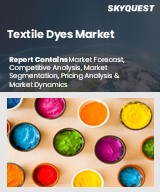
Top Textile Dyes Companies

Skyquest Technology's expert advisors have carried out comprehensive research and identified these companies as industry leaders in the Textile Dyes Market. This Analysis is based on comprehensive primary and secondary research on the corporate strategies, financial and operational performance, product portfolio, market share and brand analysis of all the leading Textile Dyes industry players.

Textile Dyes Market Competitive Landscape

The global textile dyes industry is highly competitive, with key players focusing on innovation, sustainability, and strategic partnerships to gain a competitive edge. Companies such as Archroma and Huntsman Corporation are leading the charge by investing in eco-friendly dyeing technologies to align with global sustainability goals. In April 2024, DyStar Group collaborated with a leading fashion retailer to develop bio-based reactive dyes, reducing environmental impact. Meanwhile, DyeCoo, a pioneer in waterless dyeing technology, expanded its CO₂ dyeing facilities in China, reinforcing the industry's shift towards resource-efficient solutions.

Top Player’s Company Profile

  • Archroma
  • Huntsman Corporation
  • DyStar Group
  • Kiri Industries
  • Zhejiang Runtu Co., Ltd.
  • Sumitomo Chemical Co., Ltd.
  • Atul Ltd.
  • DyeCoo
  • Lonsen
  • Everlight Chemical
  • BASF SE
  • Colorant Limited

REQUEST FOR SAMPLE

Want to customize this report? REQUEST FREE CUSTOMIZATION

FAQs

Global Textile Dyes Market size was valued at USD 13.42 Billion in 2024 and is poised to grow from USD 14.19 Billion in 2025 to USD 22.11 Billion by 2033, growing at a CAGR of 5.7% during the forecast period (2026–2033).

The global textile dyes industry is highly competitive, with key players focusing on innovation, sustainability, and strategic partnerships to gain a competitive edge. Companies such as Archroma and Huntsman Corporation are leading the charge by investing in eco-friendly dyeing technologies to align with global sustainability goals. In April 2024, DyStar Group collaborated with a leading fashion retailer to develop bio-based reactive dyes, reducing environmental impact. Meanwhile, DyeCoo, a pioneer in waterless dyeing technology, expanded its CO₂ dyeing facilities in China, reinforcing the industry's shift towards resource-efficient solutions. 'BASF SE (Germany) ', 'Huntsman Corporation (USA) ', 'DyStar Group (Singapore/Germany) ', 'Clariant AG (Switzerland) ', 'LANXESS AG (Germany) ', 'Tosoh Corporation (Japan) ', 'Kiri Industries Ltd. (India) ', 'Archroma (Switzerland) ', 'Atul Ltd. (India) ', 'Zhejiang Longsheng Group Co. Ltd (China) ', 'Zhejiang Jihua Group (China) ', 'Zhejiang Runtu Co. Ltd. (China) ', 'Jay Chemicals (India) ', 'Sudarshan Chemical Industries Ltd. (India) ', 'Vidhi Specialty Food Ingredients Ltd. (India) ', 'Bodal Chemicals Ltd. (India) ', 'Shree Pushkar Chemicals & Fertilisers Ltd. (India) ', 'Asahi Songwon Colors Ltd. (India)'

As global concerns over environmental pollution intensify, there is a significant shift toward eco-friendly and bio-based textile dyes. Governments and regulatory bodies are enforcing stringent laws to curb water pollution caused by synthetic dyes, pushing manufacturers to adopt plant-based or microbial dyes. In 2024, major textile brands like H&M and Adidas expanded their partnerships with bio-dyeing startups such as Colorifix and Pili, accelerating the adoption of sustainable dyeing technologies in mainstream fashion.

Rising AI-Powered Efficiency in Textile Dyeing: Artificial intelligence is playing a transformative role in optimizing dyeing processes by reducing excess dye and water consumption. AI-powered dye matching and process automation ensure more precise color application with minimal waste. In 2024, global fashion brand Zara integrated AI-driven dyeing technology in its supply chain, reducing dye wastage by 25% and cutting water usage by 30% in its textile manufacturing units.

Asia Pacific is the dominant region in the global textile dyes market, contributing over 45% of total market revenue in 2024. The region is the largest producer and consumer of textile dyes, driven by low-cost manufacturing, growing apparel exports, and increasing investments in sustainable dyeing technologies. Countries like China, India, and Bangladesh are key players, supplying a major portion of dyes used worldwide.

Request Free Customization

Want to customize this report? This report can be personalized according to your needs. Our analysts and industry experts will work directly with you to understand your requirements and provide you with customized data in a short amount of time. We offer $1000 worth of FREE customization at the time of purchase.

logo-images

Feedback From Our Clients

Global Textile Dyes Market
Textile Dyes Market

Report ID: SQMIG15A2563

sales@skyquestt.com
USA +1 351-333-4748

BUY NOW GET FREE SAMPLE


