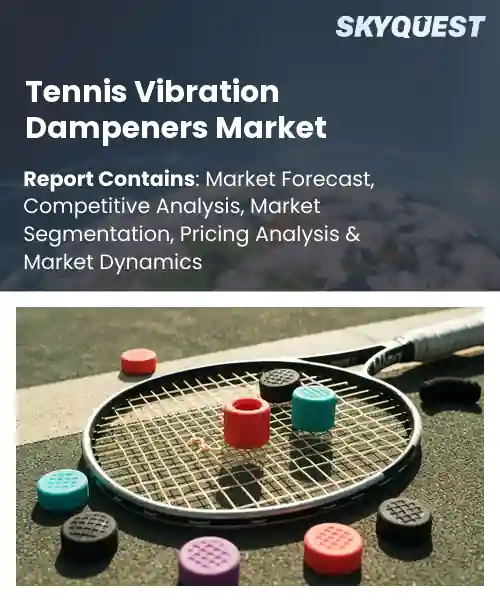
Tennis Vibration Dampeners Market
Report ID: SQMIG25J2163
Report ID: SQMIG25J2163
[email protected]
USA +1 351-333-4748
Report ID:
SQMIG25J2163 |
Region:
Global |
Published Date: February, 2026
Pages:
157
|Tables:
151
|Figures:
78


Global Tennis Vibration Dampeners Market size was valued at USD 96.0 Million in 2024 and is poised to grow from USD 100.51 Million in 2025 to USD 145.14 Million by 2033, growing at a CAGR of 4.7% during the forecast period (2026-2033).
With the increasing interest in recreational as well as professional tennis, the focus on the comfort of the players, the demand for accessories that can improve the performance of the players, the use of innovative materials for the production of the dampener, as well as the increasing availability of the product, are contributing to the sales of tennis vibration dampeners.
High demand for improved comfort and perceived reduction in racket shock is promoting the adoption of tennis vibration dampeners. As an accessory that shapes the player experience, dampeners influence performance, injury prevention, and personal expression among both amateur and professional players. Market expansion is being driven forward through ongoing product advancements which enhance both material properties and design functionalities because the combination of softer silicones and bio-based polymers and optimized geometric designs leads to reduced vibration and improved playing comfort. These advancements encourage longer practice sessions, strengthen brand loyalty, and create opportunities for eco-friendly product lines, athlete-branded editions, and sensor-enabled dampeners that provide vibration data through connected sports apps. Growing interest in tennis and rising emphasis on player comfort and performance are expected to primarily drive tennis vibration dampeners market growth.
On the contrary, limited functional impact compared to other racket upgrades, low product differentiation in basic models, availability of inexpensive alternatives, and price sensitivity among recreational players are slated to hamper tennis vibration dampeners market penetration over the coming years.
AI is transforming product innovation in the tennis vibration dampeners market by combining sensors, machine learning, and automated design tools. AI is also used to optimize materials and product geometry to assist companies in designing dampeners that perform better. This is done using machine learning to test different shapes and materials quickly, as well as 3D printing to create prototypes for specific functions. Sensor-based systems can also be used to sense the vibrations of the racket and distinguish between shock and vibration while playing.
Market snapshot - (2026-2033)
Global Market Size
USD 96.0 Million
Largest Segment
Rubber Dampeners
Fastest Growth
Silicone Dampeners
Growth Rate
4.7% CAGR
To get more insights on this market click here to Request a Free Sample Report
Global tennis vibration dampeners market is segmented by product type, material type, price range, end user, distribution channel, and region. Based on product type, the market is segmented into rubber dampeners, silicone dampeners, foam dampeners, custom molded dampeners, and weighted dampeners. Based on material type, the market is segmented into natural rubber, artificial rubber, polyurethane, and thermoplastic elastomer (TPE). Based on price range, the market is segmented into economical (< $10), mid-range ($10 - $30), premium ($30 - $60), and luxury (> $60). Based on end user, the market is segmented into professional players, amateur players, junior players, and coaches and trainers. Based on distribution channel, the market is segmented into online retail, specialty sports stores, department stores, direct sales, and sports equipment retailers. Based on region, the market is segmented into North America, Europe, Asia Pacific, Latin America, and Middle East & Africa.
The rubber dampeners segment is estimated to lead the global tennis vibration dampeners market revenue generation in the future. Proven shock absorption with broad availability and low manufacturing complexity, helps this segment hold sway over others. It is able to sustain its own weight and fasten well, which gives a consistent feel and performance, further enhancing trust among players and retailers in stocking the product, resulting in consistent demand with ease of supply, cost-effective production, and compatibility with different racket designs, further enhancing its preference in the market.
However, silicone dampeners are the fastest growing segment as per this tennis vibration dampeners market forecast. The softer feel, versatile designs, and superior attenuation that attract comfort focused players create new business scope via this segment. Advanced molding and broad online visibility support rapid innovation and customization, fueling adoption across premium and niche offerings and creating new product opportunities for retailers and manufacturers.
The natural rubber segment is slated to account for the highest global tennis vibration dampeners market share in the future. Intrinsic elasticity and proven acoustic properties deliver a tactile response and damping that players and coaches trust for consistent feedback during play thereby helping cement the dominance of this segment. The fact that it is derived from a renewable source and has well-established processing routes helps to minimize perceived risk for manufacturers and retailers, hence increasing the popularity of the material. The familiarity of the material with equipment manufacturers helps to ensure that it remains dominant.
On the other hand, thermoplastic elastomer (TPE) is proving to be the fastest-growing segment, driven by its design flexibility, its recyclability, and its exceptional damping properties, which can be tailored for customization. The emulsifiers in this material provide formulation stability and flexibility in processing to ensure premium product positioning for manufacturers.
To get detailed segments analysis, Request a Free Sample Report
North America leads the global market for tennis vibration dampeners because it has developed sports facilities and retail systems which require mature consumers. The longstanding tradition of both competitive and recreational tennis has created ongoing demand for performance-improving accessories which meet professional standards. Existing manufacturers along with leading global brands continue to develop new products which use superior materials. The extensive selection of retail stores allows customers to locate and buy these items without difficulty. Additionally, numerous coaching programs, club networks, and sponsorship of events provide significant credibility for these items, while recent heightened awareness of the importance of injury prevention and provide even greater incentive for consumers to use engineered dampeners. These factors work in concert to form a deep, resilient marketplace that creates a strong brand identity and provides high barriers to entry for any potential new market entrants. This will continue to allow North America to maintain its dominant role within the industry.
Deep culture of competitive recreational tennis, extensive retail networks, and a strong appetite for performance driven accessories are helping boost tennis vibration dampeners sales in the United States. Established brands, both domestic and international, are highly engaged with consumers through athlete endorsements and event sponsorships, with a high level of product awareness due to the wide range of retailers. There is a good level of education with regards to the benefits of vibration reduction, which is helping the market grow.
Active recreational play and strong club networks and wellness and injury prevention programs create the conditions for tennis players in Canada to adopt vibration dampeners. The majority of tennis vibration dampener sales will come from specialty sports stores and independent clubs and developing online platforms that display various product options. Manufacturers are focusing on comfort, durability, and eco-friendliness, which are important for local preferences, and demonstration events and coaching are helping build awareness about the benefits of accessories.
Rising recreational tennis participation, elevated consumer expectations, and diversified retail channels are helping boost the sales of tennis vibration dampeners across European countries. Clubs and regional federations are focused on educating their members on how to use equipment and participating in activities to help create awareness around performance/benefits of equipment, as well as providing incentives for trying equipment and purchasing again. Retail stores are increasing the number of different items they carry, whether it be through a traditional sport retail or using a more sophisticated e-commerce site. Many major retail chains offer a variety of styles of products from different manufacturers to give their customers access to a wider range of unique designs. Brands are using local marketing efforts, sponsoring events, and partnering with coaches to develop credibility with the urban and suburban communities in which they are located. While there is a growing trend within the marketplace toward personalized equipment purchases by consumers, some manufacturers are taking advantage of this trend to update their product offerings to target both premium and conscious consumers within the region as well as those seeking environmentally-friendly and ergonomically-designed dampeners.
Presence of established manufacturers, strong technical expertise, and widespread club networks help boost sales of tennis vibration dampeners across Germany. Consumers are looking for quality and performance-oriented accessories, which puts pressure on the supplier to ensure the quality of the materials used and the precision of the product. Distribution networks range from specialist sporting goods retailers to pro shops, as well as online retailers, which serve the more discerning athlete. Working with coaches and product testers can add to the reputation for excellence that Germany is known for.
Rapid consumer adoption facilitated by strong online retail penetration, active grassroots programs, and vibrant club scenes help augment tennis vibration dampeners sales in the country. Brands are leveraging digital campaigns to drive consumer awareness among players. The market is also driven by consumer demand for products that are easy to use and have a certain design appeal. The United Kingdom is an attractive market for tennis vibration dampeners companies who are embracing the latest products.
Rising interest in wellness-oriented equipment and sustainable product options are shaping the demand for tennis vibration dampeners in France. Boutique sporting stores, pro shops, and online stores cater to the high-quality requirements of discerning players. Tie-ups with coaching academies and demo events promote the products, reaching the enthusiast segment of recreational players. Comfort, ergonomic fit, and eco-friendly materials are now important factors for consumers and clubs alike, making manufacturers differentiate their products on these aspects
Growing tennis participation, enhanced local manufacturing, and improved distribution infrastructures are predicted to augment the sales of tennis vibration dampeners in this region. With targeted investments into coaching and youth development programs there is greater awareness of equipment; regional brand manufacturers are focusing on developing new ways to use materials to better accommodate local playing styles and climate conditions. In addition, continued growth of e-commerce and modern retail formats lead to access being provided to urban and non-urban centres alike, and partnerships with regional tournaments bolster the credibility of each brand, and provide consumers the opportunity to try out products. Manufacturers are trying to balance cost-efficient production with production that meets the ergonomic needs of various consumers, while also working together with designers, coaches, and retailers to produce products at an accelerated rate.
High emphasis on precision engineering, premium materials, and product aesthetics are shaping tennis vibration dampeners procurement in Japan. tennis vibration dampeners sales are mostly made through specialist sporting stores, high-end e-commerce, as well as pro shops, which often carry carefully curated selections. Working with coaching academies, as well as player feedback, ensures a continued focus on quality, as well as innovative accessories, which are synonymous with Japan.
Presence of trend conscious consumers, tech based product innovation, and active urban club participation are helping boost the demand for tennis vibration dampeners across the study period. Manufacturers are focusing on lightweight design, sensitive materials, and modern design aesthetics, targeting younger players in South Korea. E-commerce platforms and social media are helping in product awareness, and associations with coaches are helping build trust among buyers.
To know more about the market opportunities by region and country, click here to
Buy The Complete Report
Rising Demand For Player Comfort
Personal preferences toward comfortable and absorbing products have allowed players of all skill levels to seek dampeners that provide the most shock-absorbing properties. Recreational and competitive players are looking for products that provide the most comfort without compromising the quality of the strings. This has led to an increase in the variety of dampener materials used to provide the most comfort to the players. This shows how the products are being marketed to provide the most comfort to the players, thus increasing the appeal of the products.
Increased Awareness About Injury Prevention
The increased focus on preventing over-use injuries and managing repetitive strain injuries has prompted many coaches and physiotherapists to recommend vibration dampeners as part of an overall injury mitigation strategy. The awareness drive and endorsements from professionals emphasize the importance of appropriate dampening in reducing shock transmitted to the arm and wrist. Such endorsements from professionals influence the purchase decision for vibration dampeners by positioning them as a preventive measure rather than a cosmetic add-on. Hence, the increased consumer confidence in the benefits of vibration dampeners contributes to a strong market demand and prompts retailers to offer a greater variety of dampeners for players.
Price Sensitivity Among Recreational Players
The casual segment focuses more on the costs associated with equipment and may view vibration dampeners as an unnecessary component. This limits their willingness to pay for premium and specialty products. The retailer caters to a price-conscious consumer and offers lower-cost products. This limits their exposure to premium and specialty products and reduces the incentive for manufacturers to innovate in these areas. The cycle limits segmental growth in premium segments and overall revenue growth as the market remains focused on basic products that meet minimal requirements rather than driving segmental growth through upgrade sales from price-conscious consumers.
Limited Product Differentiation In Market
Similarity in many dampener design and material options diminishes unique value proposition opportunities, making it difficult for brands to establish lasting competitive differentiators that can sustain premium price points and optimal retailer positioning. When options are perceived as relatively equivalent, brand recognition and price are driving factors, leading to a lack of brand loyalty and diminishing interest in investing in innovation and unique features. This results in a crowded low-margin marketplace, preventing innovation and limiting the global tennis vibration dampeners market outlook along the way.
Request Free Customization of this report to help us to meet your business objectives.
The competitive landscape for tennis vibration dampeners is driven by tournament and club level specification demands and pro endorsements, prompting partnerships and M&A activity and product co-branding and new materials innovation. Startups such as Additive Appliances have introduced metamaterial 3D printed dampeners, while established brands use event co-branding and sensor partnerships to differentiate offerings and secure retail and tournament visibility.
SkyQuest’s ABIRAW (Advanced Business Intelligence, Research & Analysis Wing) is our Business Information Services team that Collects, Collates, Correlates, and Analyses the Data collected by means of Primary Exploratory Research backed by robust Secondary Desk research.
As per SkyQuest analysis, rising participation in recreational and professional tennis and growing demand for accessories that improve playing comfort are anticipated to drive the demand for tennis vibration dampeners going forward. However, limited functional differentiation among basic products and availability of low-cost alternatives are slated to slow down the adoption of tennis vibration dampeners in the future. North America is slated to spearhead the demand for tennis vibration dampeners owing to high tennis participation rates, strong presence of leading sports equipment brands, and well-established sports retail infrastructure. Continuous innovation in materials, customized dampener designs, and integration of sensor-based analytics are anticipated to be key trends driving the tennis vibration dampeners sector across the forecast period.
| Report Metric | Details |
|---|---|
| Market size value in 2024 | USD 96.0 Million |
| Market size value in 2033 | USD 145.14 Million |
| Growth Rate | 4.7% |
| Base year | 2024 |
| Forecast period | (2026-2033) |
| Forecast Unit (Value) | USD Million |
| Segments covered |
|
| Regions covered | North America (US, Canada), Europe (Germany, France, United Kingdom, Italy, Spain, Rest of Europe), Asia Pacific (China, India, Japan, Rest of Asia-Pacific), Latin America (Brazil, Rest of Latin America), Middle East & Africa (South Africa, GCC Countries, Rest of MEA) |
| Companies covered |
|
| Customization scope | Free report customization with purchase. Customization includes:-
|
To get a free trial access to our platform which is a one stop solution for all your data requirements for quicker decision making. This platform allows you to compare markets, competitors who are prominent in the market, and mega trends that are influencing the dynamics in the market. Also, get access to detailed SkyQuest exclusive matrix.
Table Of Content
Executive Summary
Market overview
Parent Market Analysis
Market overview
Market size
KEY MARKET INSIGHTS
COVID IMPACT
MARKET DYNAMICS & OUTLOOK
Market Size by Region
KEY COMPANY PROFILES
Methodology
For the Tennis Vibration Dampeners Market, our research methodology involved a mixture of primary and secondary data sources. Key steps involved in the research process are listed below:
1. Information Procurement: This stage involved the procurement of Market data or related information via primary and secondary sources. The various secondary sources used included various company websites, annual reports, trade databases, and paid databases such as Hoover's, Bloomberg Business, Factiva, and Avention. Our team did 45 primary interactions Globally which included several stakeholders such as manufacturers, customers, key opinion leaders, etc. Overall, information procurement was one of the most extensive stages in our research process.
2. Information Analysis: This step involved triangulation of data through bottom-up and top-down approaches to estimate and validate the total size and future estimate of the Tennis Vibration Dampeners Market.
3. Report Formulation: The final step entailed the placement of data points in appropriate Market spaces in an attempt to deduce viable conclusions.
4. Validation & Publishing: Validation is the most important step in the process. Validation & re-validation via an intricately designed process helped us finalize data points to be used for final calculations. The final Market estimates and forecasts were then aligned and sent to our panel of industry experts for validation of data. Once the validation was done the report was sent to our Quality Assurance team to ensure adherence to style guides, consistency & design.
Analyst Support
Customization Options
With the given market data, our dedicated team of analysts can offer you the following customization options are available for the Tennis Vibration Dampeners Market:
Product Analysis: Product matrix, which offers a detailed comparison of the product portfolio of companies.
Regional Analysis: Further analysis of the Tennis Vibration Dampeners Market for additional countries.
Competitive Analysis: Detailed analysis and profiling of additional Market players & comparative analysis of competitive products.
Go to Market Strategy: Find the high-growth channels to invest your marketing efforts and increase your customer base.
Innovation Mapping: Identify racial solutions and innovation, connected to deep ecosystems of innovators, start-ups, academics, and strategic partners.
Category Intelligence: Customized intelligence that is relevant to their supply Markets will enable them to make smarter sourcing decisions and improve their category management.
Public Company Transcript Analysis: To improve the investment performance by generating new alpha and making better-informed decisions.
Social Media Listening: To analyze the conversations and trends happening not just around your brand, but around your industry as a whole, and use those insights to make better Marketing decisions.
REQUEST FOR SAMPLE
 REQUEST FREE CUSTOMIZATION
Global Tennis Vibration Dampeners Market size was valued at USD 96.0 Million in 2024 and is poised to grow from USD 100.51 Million in 2025 to USD 145.14 Million by 2033, growing at a CAGR of 4.7% during the forecast period (2026-2033).
The competitive landscape for tennis vibration dampeners is driven by tournament and club level specification demands and pro endorsements, prompting partnerships and M&A activity and product co-branding and new materials innovation. Startups such as Additive Appliances have introduced metamaterial 3D printed dampeners, while established brands use event co-branding and sensor partnerships to differentiate offerings and secure retail and tournament visibility. 'Babolat', 'Wilson Sporting Goods', 'HEAD', 'Gamma Sports', 'Solinco', 'Luxilon', 'Tecnifibre', 'Prince', 'Yonex', 'Dunlop Sports', 'ProKennex', 'Taka Tennis', 'Asics', 'Tennis Warehouse', 'Adidas', 'Nike', 'Tenex', 'Tourna', 'Stringers Paradise', 'Ektelon'
Personal preference for comfortable, vibration absorbing equipment has encouraged players across skill levels to choose dampeners that reduce perceived shock and improve feel. As recreational and competitive players seek gear that enhances comfort without altering string performance, demand for varied dampener materials and designs has grown. Manufacturers respond by offering softer compounds and ergonomic shapes that fit diverse rackets, strengthening product appeal. Retailers promote comfort focused options through demonstrations and recommendations, reinforcing consumer willingness to adopt dampeners as part of routine equipment upgrades and contributing to steady market expansion.
Advanced Material Innovation: Manufacturers are embracing novel polymer formulations and engineered composite blends to optimize vibration absorption while preserving feel and control. These material advances enable tailored damping characteristics across player segments, improving perceived comfort and stroke feedback without compromising durability. Closer collaboration between material scientists and racket designers accelerates bespoke solutions that integrate seamlessly into frames, creating opportunities for premium positioning and differentiated product ranges. Emphasis on lightweight construction and refined tactile response supports stronger brand narratives and deeper consumer engagement overall.
Why does North America Dominate the Global Tennis Vibration Dampeners Market? |@12


Want to customize this report? This report can be personalized according to your needs. Our analysts and industry experts will work directly with you to understand your requirements and provide you with customized data in a short amount of time. We offer $1000 worth of FREE customization at the time of purchase.
Feedback From Our Clients


 USA (+1) 351-333-4748

