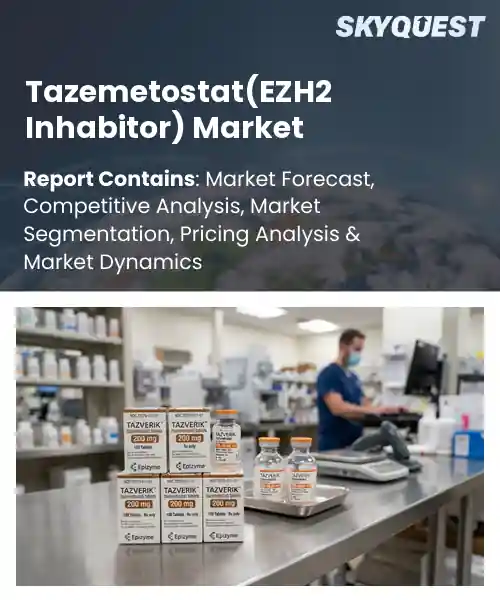
Tazemetostat(EZH2 Inhabitor) Market
Report ID: SQMIG35I3711
Report ID: SQMIG35I3711
[email protected]
USA +1 351-333-4748
Report ID:
SQMIG35I3711 |
Region:
Global |
Published Date: August, 2026
Pages:
157
|Tables:
90
|Figures:
76


Global Tazemetostat(Ezh2 Inhabitor) Market size was valued at USD 694.0 Million in 2024 and is poised to grow from USD 825.17 Million in 2025 to USD 3296.07 Million by 2033, growing at a CAGR of 18.9% during the forecast period (2026-2033).
Building on that momentum, the foremost growth catalyst for the tazemetostat market is the expanding indication landscape driven by emerging data in solid tumors and rare hematologic malignancies. Experience with follicular lymphoma patients who achieve complete responses has encouraged investigators to launch Phase III trials in DLBCL and metastatic sarcoma, creating a pipeline that could double the patient pool. This pipeline effect triggers heightened reimbursement negotiations, as payers recognize cost‑effectiveness tied to reduced hospitalizations, thereby unlocking formulary inclusion. Consequently, pharmaceutical partners are allocating R&D budgets and pursuing regimens with immune checkpoint inhibitors, a strategy that promises antitumor activity and market acceleration.
How is AI-driven drug discovery shaping the Tazemetostat (EZH2 inhibitor) market?
AI driven drug discovery is reshaping the Tazemetostat EZH2 inhibitor market by shortening the path from target identification to clinical candidate. Machine learning platforms can scan large chemical libraries to flag molecules with the right EZH2 binding profile while predictive models anticipate resistance mechanisms and optimal dosing. This accelerates the design of next generation inhibitors that could complement or replace Tazemetostat. Companies such as Epizyme and Eisai are leveraging these tools to refine their pipelines and to select patients more precisely which improves trial outcomes and reduces development cost. The resulting agility helps the market stay responsive despite recent product challenges.
Eisai in March 2026, withdrew Tazverik after a data driven safety review, a step that highlights how AI driven analytics can speed decision making and preserve resources thereby enhancing overall market efficiency and supporting continued future investment in EZH2 inhibitor research across the industry.
Market snapshot - (2026-2033)
Global Market Size
USD 694.0 Million
Largest Segment
Follicular Lymphoma
Fastest Growth
Epithelioid Sarcoma
Growth Rate
18.9% CAGR
To get more insights on this market click here to Request a Free Sample Report
Global tazemetostat(ezh2 inhabitor) market is segmented by indication, distribution channel, end user and region. Based on indication, the market is segmented into Epithelioid Sarcoma, Follicular Lymphoma and Other Oncology Indications. Based on distribution channel, the market is segmented into Hospital Pharmacies, Retail Pharmacies and Online Pharmacies. Based on end user, the market is segmented into Hospitals, Specialty Cancer Centers and Oncology Clinics. Based on region, the market is segmented into North America, Europe, Asia Pacific, Latin America and Middle East & Africa.
Follicular lymphoma segment dominates because it represents the most clinically validated indication for tazemetostat, with a well established regulatory pathway and robust outcome data that reassure prescribers. The disease’s molecular profile aligns closely with EZH2 inhibition, driving consistent adoption across treatment protocols. Clinicians favor this indication due to predictable response patterns, streamlined reimbursement, and integrated guideline recommendations, reinforcing its central role in market traction and sustained patient advocacy efforts through education.
However, other oncology indications segment is witnessing the strongest growth momentum because emerging clinical trials are expanding the drug’s label to rare sarcomas and solid tumors with EZH2 mutations. These applications spark heightened investigator interest, increase off label use, and attract funding, accelerating market expansion and creating new therapeutic opportunities.
Hospital pharmacies segment dominates because they serve as the primary procurement hub for specialty agents like tazemetostat, integrating the drug directly into inpatient formulary and oncology infusion services. Their established relationships with clinicians facilitate streamlined ordering, compounding, and inventory control, while institutional budgeting mechanisms favor purchasing. This environment ensures consistent product availability, compliance with institutional protocols, and rapid uptake across therapeutic lines, cementing hospital pharmacies as the core distribution channel.
Meanwhile, online pharmacies segment emerges as the key high growth area because digital platforms simplify credentialing, enable direct to patient shipping, and attract oncologists seeking flexible dispensing models. Accelerated telehealth adoption and evolving reimbursement policies lower barriers, prompting rapid expansion of e commerce channels and creating new pathways for tazemetostat access beyond hospital settings.
To get detailed segments analysis, Request a Free Sample Report
North America leads the global Tazemetostat market due to a confluence of advanced research ecosystems, robust funding mechanisms, and a mature regulatory framework that accelerates drug approval. The presence of leading pharmaceutical innovators and academic institutions fosters continuous pipeline development and rapid translation of epigenetic discoveries into clinical applications. Strong reimbursement structures and well‑established oncology networks ensure broad patient access, while collaborative partnerships between biotech firms and large manufacturers amplify commercialization capabilities. Additionally, a high prevalence of specialized cancer centers creates a concentrated demand for targeted therapies, reinforcing the region’s market leadership. The region also benefits from a supportive policy environment that encourages orphan drug incentives and expedited review pathways, further enhancing the attractiveness of Tazemetostat for investors and developers. Moreover, extensive real‑world evidence generation through integrated health‑system databases provides valuable insights that refine treatment protocols and reinforce clinical confidence.
Tazemetostat(EZH2 Inhabitor) Market in United States is propelled by a dense network of research hospitals and biotech clusters that drive trials and studies. Strong payer frameworks facilitate reimbursement, while patient advocacy groups raise awareness and support enrollment. Collaborative initiatives between academic centers and pharmaceutical firms accelerate innovation, and an efficient supply chain ensures distribution to oncology clinics across the country. Regulatory guidance from the Food and Drug Administration streamlines pathway for label expansions, reinforcing market depth.
Tazemetostat(EZH2 Inhabitor) Market in Canada benefits from a collaborative health‑care system that integrates research institutions with provincial reimbursement programs, facilitating patient access to novel therapies. Strong governmental support for precision oncology drives funding for clinical trials and real‑world evidence generation. Partnerships between Canadian biotech firms and multinational sponsors accelerate development pipelines, while a well‑coordinated distribution network ensures availability across major oncology centers. Regulatory alignment with North American standards further streamlines market entry.
Europe experiences rapid expansion of the Tazemetostat market driven by integrated research frameworks, strong public‑private partnerships, and a regulatory environment that encourages accelerated approvals for targeted oncology agents. The presence of leading academic cancer centers across the continent fosters robust clinical trial networks and facilitates cross‑border collaborations. Health‑technology assessment bodies increasingly recognize the value of epigenetic therapies, leading to favorable reimbursement decisions that broaden patient access. Additionally, strategic investments by multinational pharmaceutical companies in European biotech hubs accelerate pipeline development and commercialization. The region’s emphasis on personalized medicine, combined with well‑established oncology care pathways, creates a fertile landscape for the adoption of Tazemetostat across multiple tumor indications. Collaborative policy initiatives that harmonize clinical guidelines across member states further streamline physician adoption, while patient advocacy networks raise disease awareness and support trial enrollment. These combined forces reinforce Europe’s position as a leading market for innovative epigenetic treatments.
Tazemetostat(EZH2 Inhabitor) Market in Germany is anchored by a strong network of university hospitals and research institutes that drive early‑phase investigations and post‑marketing surveillance. Reimbursement frameworks prioritize innovative therapies, enabling swift integration into standard oncology protocols. Collaborative ventures between German biotech firms and global pharmaceutical players accelerate development pipelines, while national health agencies provide clear guidance for regulatory submissions. This ecosystem sustains the dominant role of Germany in the European market.
Tazemetostat(EZH2 Inhabitor) Market in United Kingdom is experiencing the fastest growth due to proactive NHS adoption pathways and a vibrant clinical trial environment. The emphasis on precision oncology in the United Kingdom encourages early access schemes that bring novel agents to patients swiftly. Strong collaborations between UK academic centers and international pharma accelerate data generation, while health‑technology assessment bodies increasingly endorse cost‑effective targeted treatments. This dynamic landscape fuels rapid market expansion.
Tazemetostat(EZH2 Inhabitor) Market in France is emerging as a key growth area, supported by national initiatives that promote oncology innovation and patient access. French research hospitals actively participate in multicenter trials, generating valuable efficacy data for the therapy. Reimbursement policies are evolving to incorporate high‑value targeted drugs, facilitating broader coverage. Partnerships between French biotech startups and multinational firms enhance pipeline development, positioning France as an important contributor to the European market.
Asia Pacific is strengthening its position in the Tazemetostat market through accelerated clinical development, expanding regulatory harmonization, and growing investment in precision oncology infrastructure. Leading research institutions in Japan and South Korea are conducting pivotal trials that generate robust efficacy data, while regional regulatory agencies adopt expedited review pathways for targeted therapies. Governmental health programs increasingly prioritize reimbursement for high‑impact cancer treatments, enhancing patient access. Strategic collaborations between local biotech firms and global pharmaceutical companies foster technology transfer and accelerate commercialization. Moreover, rising awareness of epigenetic mechanisms among clinicians drives adoption across diverse tumor types, positioning the region as a burgeoning hub for innovative oncology solutions. Regional conferences and professional societies are actively disseminating clinical guidelines, which further standardizes treatment protocols and encourages physician uptake. Investment funds focused on biotech innovation are also allocating capital to early‑stage companies developing epigenetic drugs, reinforcing the pipeline and market momentum.
Tazemetostat(EZH2 Inhabitor) Market in Japan is driven by a sophisticated oncology ecosystem that integrates cutting‑edge research with a national health insurance system supportive of innovative therapies. Japanese academic hospitals lead multicenter trials, providing high‑quality data that inform clinical practice. Collaborative agreements between domestic biotech firms and global pharmaceutical leaders accelerate development and regulatory filing. Efficient distribution channels and strong physician education programs ensure rapid adoption across major cancer centers.
Tazemetostat(EZH2 Inhabitor) Market in South Korea benefits from strong government incentives for biotech research and a rapidly expanding cancer care network. Korean research institutions are actively engaged in early‑phase trials, generating pivotal efficacy evidence. Partnerships with multinational drug developers facilitate technology exchange and streamline regulatory approval processes. The national health insurance scheme increasingly covers high‑value targeted treatments, improving patient access and supporting market growth. Robust physician training programs further promote confidence in prescribing the therapy, accelerating its integration into standard treatment pathways.
To know more about the market opportunities by region and country, click here to
Buy The Complete Report
Increasing Approval of Targeted Therapies
Growing Awareness of Epigenetic Cancer Therapies
High Cost Limiting Access
Regulatory Uncertainty Across Regions
Request Free Customization of this report to help us to meet your business objectives.
The competitive landscape is shaped by Eisai’s joint development and commercialization partnership with Ipsen, which accelerated Tazemetostat’s market entry and later coordinated a voluntary worldwide withdrawal in 2026, prompting rivals to diversify pipelines. Competitors are intensifying R&D on next‑generation EZH2 inhibitors and pursuing strategic M&A, such as biotech acquisitions targeting epigenetic platforms, to capture market share amid shifting regulatory dynamics.
Top Player’s Company Profile
SkyQuest’s ABIRAW (Advanced Business Intelligence, Research & Analysis Wing) is our Business Information Services team that Collects, Collates, Correlates, and Analyses the Data collected by means of Primary Exploratory Research backed by robust Secondary Desk research.
As per SkyQuest analysis, the global Tazemetostat market is propelled primarily by the expanding indication landscape, especially the strong clinical validation in follicular lymphoma which drives physician adoption and reimbursement support. A second driver is the increasing integration of genomic profiling and combination regimens with immune‑checkpoint inhibitors that broaden the addressable patient pool. The market’s dominant segment is the hospital pharmacy channel, where institutional formularies ensure consistent availability. North America remains the leading region due to its advanced research ecosystem, robust payer frameworks and concentrated specialist centers. However, high drug pricing acts as a restraint, limiting access in price‑sensitive markets and slowing broader uptake.
| Report Metric | Details |
|---|---|
| Market size value in 2024 | USD 694.0 Million |
| Market size value in 2033 | USD 3296.07 Million |
| Growth Rate | 18.9% |
| Base year | 2024 |
| Forecast period | (2026-2033) |
| Forecast Unit (Value) | USD Million |
| Segments covered |
|
| Regions covered | North America (US, Canada), Europe (Germany, France, United Kingdom, Italy, Spain, Rest of Europe), Asia Pacific (China, India, Japan, Rest of Asia-Pacific), Latin America (Brazil, Rest of Latin America), Middle East & Africa (South Africa, GCC Countries, Rest of MEA) |
| Companies covered |
|
| Customization scope | Free report customization with purchase. Customization includes:-
|
To get a free trial access to our platform which is a one stop solution for all your data requirements for quicker decision making. This platform allows you to compare markets, competitors who are prominent in the market, and mega trends that are influencing the dynamics in the market. Also, get access to detailed SkyQuest exclusive matrix.
Table Of Content
Executive Summary
Market overview
Parent Market Analysis
Market overview
Market size
KEY MARKET INSIGHTS
COVID IMPACT
MARKET DYNAMICS & OUTLOOK
Market Size by Region
KEY COMPANY PROFILES
Methodology
For the Tazemetostat(EZH2 Inhabitor) Market, our research methodology involved a mixture of primary and secondary data sources. Key steps involved in the research process are listed below:
1. Information Procurement: This stage involved the procurement of Market data or related information via primary and secondary sources. The various secondary sources used included various company websites, annual reports, trade databases, and paid databases such as Hoover's, Bloomberg Business, Factiva, and Avention. Our team did 45 primary interactions Globally which included several stakeholders such as manufacturers, customers, key opinion leaders, etc. Overall, information procurement was one of the most extensive stages in our research process.
2. Information Analysis: This step involved triangulation of data through bottom-up and top-down approaches to estimate and validate the total size and future estimate of the Tazemetostat(EZH2 Inhabitor) Market.
3. Report Formulation: The final step entailed the placement of data points in appropriate Market spaces in an attempt to deduce viable conclusions.
4. Validation & Publishing: Validation is the most important step in the process. Validation & re-validation via an intricately designed process helped us finalize data points to be used for final calculations. The final Market estimates and forecasts were then aligned and sent to our panel of industry experts for validation of data. Once the validation was done the report was sent to our Quality Assurance team to ensure adherence to style guides, consistency & design.
Analyst Support
Customization Options
With the given market data, our dedicated team of analysts can offer you the following customization options are available for the Tazemetostat(EZH2 Inhabitor) Market:
Product Analysis: Product matrix, which offers a detailed comparison of the product portfolio of companies.
Regional Analysis: Further analysis of the Tazemetostat(EZH2 Inhabitor) Market for additional countries.
Competitive Analysis: Detailed analysis and profiling of additional Market players & comparative analysis of competitive products.
Go to Market Strategy: Find the high-growth channels to invest your marketing efforts and increase your customer base.
Innovation Mapping: Identify racial solutions and innovation, connected to deep ecosystems of innovators, start-ups, academics, and strategic partners.
Category Intelligence: Customized intelligence that is relevant to their supply Markets will enable them to make smarter sourcing decisions and improve their category management.
Public Company Transcript Analysis: To improve the investment performance by generating new alpha and making better-informed decisions.
Social Media Listening: To analyze the conversations and trends happening not just around your brand, but around your industry as a whole, and use those insights to make better Marketing decisions.
REQUEST FOR SAMPLE
 REQUEST FREE CUSTOMIZATION
Global Tazemetostat(Ezh2 Inhabitor) Market size was valued at USD 694.0 Million in 2024 and is poised to grow from USD 825.17 Million in 2025 to USD 3296.07 Million by 2033, growing at a CAGR of 18.9% during the forecast period (2026-2033).
The competitive landscape is shaped by Eisai’s joint development and commercialization partnership with Ipsen, which accelerated Tazemetostat’s market entry and later coordinated a voluntary worldwide withdrawal in 2026, prompting rivals to diversify pipelines. Competitors are intensifying R&D on next‑generation EZH2 inhibitors and pursuing strategic M&A, such as biotech acquisitions targeting epigenetic platforms, to capture market share amid shifting regulatory dynamics. 'Ipsen S.A.', 'F. Hoffmann-La Roche Ltd.', 'Merck KGaA', 'Bristol-Myers Squibb Company', 'AstraZeneca PLC', 'Pfizer Inc.', 'Novartis AG', 'Johnson & Johnson', 'AbbVie Inc.', 'BeiGene, Ltd.', 'HUTCHMED (China) Limited', 'Chipscreen Biosciences Co., Ltd.', 'Taiho Pharmaceutical Co., Ltd.', 'Eisai Co., Ltd.', 'Genentech, Inc.', 'Regeneron Pharmaceuticals, Inc.', 'Exelixis, Inc.', 'Amgen Inc.', 'Blueprint Medicines Corporation', 'Sumitomo Pharma Co., Ltd.'
The expanding regulatory acceptance of EZH2 inhibitors fuels market growth as clinicians gain confidence in prescribing tazemetostat for approved indications. This acceptance encourages pharmaceutical companies to invest in further development and promotional activities, creating a positive feedback loop that broadens patient access. Moreover, alignment with accelerated approval pathways reduces time to market, allowing earlier revenue generation and reinforcing stakeholder commitment to the therapy’s commercial success. It also supports stronger collaborations with research institutions, enhancing evidence generation and fostering long‑term market sustainability.
Personalized Oncology Expansion: The increasing integration of genomic profiling into routine oncology practice is driving demand for selective EZH2 inhibition. Clinicians are leveraging Tazemetostat alongside companion diagnostic tests to identify patients with specific epigenetic alterations, enabling tailored treatment pathways. This precision medicine approach expands the drug’s addressable population beyond rare sarcomas into broader lymphoma and solid tumor subsets, fostering market penetration and encouraging pharmaceutical partners to pursue co‑development strategies that reinforce its role in personalized cancer care and long term clinical outcomes globally.
Why does North America Dominate the Global Tazemetostat(EZH2 Inhabitor) Market? |@12


Want to customize this report? This report can be personalized according to your needs. Our analysts and industry experts will work directly with you to understand your requirements and provide you with customized data in a short amount of time. We offer $1000 worth of FREE customization at the time of purchase.
Feedback From Our Clients


 USA (+1) 351-333-4748

