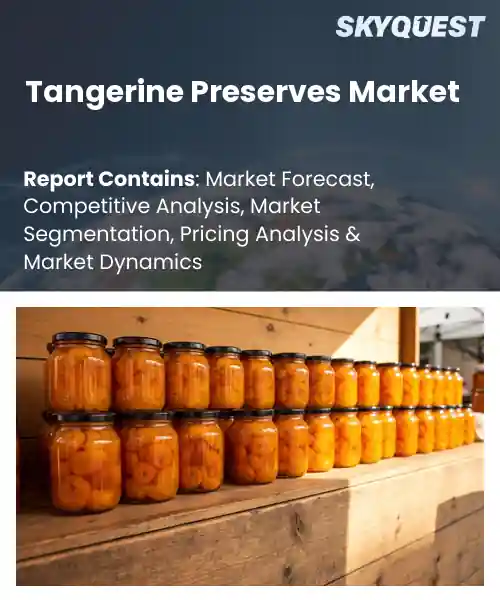
Tangerine Preserves Market
Report ID: SQMIG30I3113
Report ID: SQMIG30I3113
[email protected]
USA +1 351-333-4748
Report ID:
SQMIG30I3113 |
Region:
Global |
Published Date: August, 2026
Pages:
157
|Tables:
146
|Figures:
78


Global Tangerine Preserves Market size was valued at USD 286.4 Million in 2024 and is poised to grow from USD 302.44 Million in 2025 to USD 467.68 Million by 2033, growing at a CAGR of 5.6% during the forecast period (2026-2033).
Supply‑chain integration acts as the decisive growth catalyst for the global tangerine preserves market because reliable sourcing reduces cost and stabilizes price. Advances in cold‑chain logistics let producers in Brazil and Morocco ship fresh pulp to European factories within 48 hours, preserving aroma and vitamins. Consequently, manufacturers label products as high‑vitamin and secure premium shelf space in health‑focused retailers. This positioning opens opportunities in the expanding middle‑class segments of India and China, where functional‑food demand rises swiftly. Firms that invest in resilient logistics and transparent sourcing across global distribution networks, enhancing brand trust and consumer loyalty, thus capture disproportionate market share.
How is AI-driven automation influencing product quality in the Tangerine preserves market?
AI-driven automation is influencing product quality in the tangerine preserves market by improving consistency from raw-fruit selection through processing and final quality inspection. Computer-vision systems can automatically evaluate citrus for defects, colour, size, surface damage and other quality attributes before processing, reducing dependence on subjective manual inspection. Research published in 2023 demonstrated a real-time citrus grading and sorting system using adaptive deep learning and computer vision, showing how AI can automate citrus-quality classification.
For tangerine preserves specifically, this can improve raw-material consistency, which is important because differences in fruit maturity, colour, quality and defect levels can affect the flavour, appearance and processing performance of the final preserve. AI-based inspection can identify unsuitable or damaged fruit before it enters the production line, helping manufacturers maintain more consistent batches. Recent research shows that AI and computer vision are increasingly being used for rapid, non-destructive fruit-quality assessment, including defect detection and freshness evaluation.
Market snapshot - (2026-2033)
Global Market Size
USD 286.4 Million
Largest Segment
Jam
Fastest Growth
Fruit Spread
Growth Rate
5.6% CAGR
To get more insights on this market click here to Request a Free Sample Report
Global tangerine preserves market is segmented by product type, sweetener type, distribution channel, end user, packaging type and region. Based on product type, the market is segmented into Jam, Marmalade, Fruit Spread and Preserved Tangerine Segments. Based on sweetener type, the market is segmented into Sugar-Based, Low-Sugar and Sugar-Free. Based on distribution channel, the market is segmented into Supermarkets & Hypermarkets, Specialty Stores, Online Retail and Convenience Stores. Based on end user, the market is segmented into Household, Foodservice and Bakery & Confectionery. Based on packaging type, the market is segmented into Glass Jars, Plastic Containers and Pouches. Based on region, the market is segmented into North America, Europe, Asia Pacific, Latin America and Middle East & Africa.
Sugar-based segment dominates with large tangerine preserves market share because consumers continue to favor traditional taste profiles that sugar imparts, reinforcing brand loyalty and repeat purchases. Established supply chains ensure consistent quality, while marketing emphasizes heritage and authenticity. This combination of sensory preference, reliable sourcing, and strong brand narratives sustains its leadership in the Tangerine Preserves market. Additionally, the familiar sweetness aligns with household cooking routines, making it the default choice for jams and baked goods.
As per tangerine preserves market outlook, low-sugar option emerges as the most rapidly expanding area because health-conscious consumers seek reduced sugar content without sacrificing flavor. Innovative sweetener blends and clean-label positioning drive trial, while regulatory encouragement for lower sugar diets accelerates adoption. This momentum creates new growth pathways and broadens the market’s appeal to younger demographics.
As per tangerine preserves market forecast, supermarkets & hypermarkets segment leads because they provide extensive shelf space, trusted brand presence, and convenient access for everyday shoppers, reinforcing high volume sales. Their promotional power and loyalty programs drive repeat purchases, while strong logistics ensure product freshness. Retailers also benefit from category management that places preserves alongside complementary breakfast items, encouraging impulse buys and seasonal promotions, which further solidifies their commanding position.
Meanwhile, online retail option emerges as the fastest growing channel because digital shoppers value doorstep convenience and easy product comparison. Subscription models and personalized recommendation algorithms expand reach, while social media influencers amplify brand visibility. This rapid adoption accelerates market penetration beyond traditional outlets, unlocking new consumer segments and fostering innovative promotional strategies.
To get detailed segments analysis, Request a Free Sample Report
North America leads the tangerine preserves market due to a combination of mature consumer preference for premium fruit spreads, well‑established distribution networks, and strong culinary traditions that incorporate citrus flavours into both sweet and savory applications. The region benefits from abundant domestic production of high‑quality tangerines, supported by advanced agricultural practices and robust supply‑chain logistics that ensure consistent product availability. In addition, sophisticated retail formats and a culture of health‑conscious snacking drive demand for natural, fruit‑based preserves. Innovation in packaging and a focus on clean‑label formulations further reinforce the market position, while extensive marketing efforts highlight the heritage and versatility of tangerine preserves, sustaining consumer loyalty across a wide demographic. The presence of influential culinary schools and a growing interest in artisanal food experiences also contribute to a dynamic market environment, encouraging product differentiation and premium pricing strategies.
As per tangerine preserves market regional outlook, United States reflects strong consumer inclination toward natural breakfast spreads and gourmet snack options, supported by a diverse retail landscape that ranges from upscale specialty shops to mass‑market supermarkets. Producers leverage the country's extensive tangerine growing regions to promote locally sourced ingredients, while branding emphasizes authenticity and health benefits. Collaborative initiatives between growers and food‑service operators further embed the product into contemporary culinary trends for consumers.
As per tangerine preserves market regional forecast, Canada benefits from a sophisticated consumer base that values high‑quality fruit products and embraces flavor influences. The nation’s cold‑climate orchards produce tangerines with distinct sweetness, which manufacturers highlight in premium positioning. Retail channels emphasize organic and sustainably sourced attributes, aligning with national preferences for responsible choices. Partnerships with culinary institutes and hospitality venues drive innovative applications, reinforcing the product’s appeal across seasonal and everyday consumption occasions.
As European consumers increasingly seek authentic, fruit‑forward flavor experiences, the Tangerine Preserves market experiences rapid expansion across the continent. A resurgence of interest in traditional pantry staples combined with modern health‑conscious trends fuels demand for natural, minimally processed spreads. The presence of strong culinary heritage in countries such as Germany, the United Kingdom and France encourages experimentation with citrus‑based applications in both home cooking and gourmet dining. Retail environments ranging from boutique specialty stores to expansive supermarket chains provide ample shelf space, while sustainability narratives and clean‑label positioning resonate with environmentally aware shoppers. Collaborative innovation between growers, processors and food‑service operators further diversifies product formats, reinforcing Europe’s reputation as a dynamic hub for premium fruit preserve offerings.
Germany reflects an appreciation for high‑quality fruit accompaniments that complement the country’s robust bread culture and artisanal cheese selections. Domestic growers emphasize freshness, while manufacturers focus on clean‑label formulations that align with German consumers’ preference for transparency. Distribution channels prioritize delicatessen outlets and grocery formats, ensuring broad accessibility. Culinary events and food festivals showcase uses, reinforcing the product’s role in everyday meals and festive occasions year‑round.
United Kingdom is propelled by a food scene that embraces classic spreads and inventive flavor pairings. Consumer enthusiasm for natural ingredients and artisanal products drives demand for tangerine preserves, especially in boutique retailers and food shops. Marketing narratives highlight the fruit’s British heritage and healthful qualities, resonating with shoppers seeking experiences. Efforts with chefs and pâtisserie artisans expand usage in desserts, breakfast dishes and British cuisine.
France is emerging as consumers gravitate toward natural spreads that complement the nation’s tradition of pastries and charcuterie. Producers stress the preserve’s terroir‑linked flavor profile and clean‑label credentials, appealing to French shoppers who prioritize provenance and authenticity. Placement in both gourmet delicatessen counters and supermarkets broadens reach, while collaborations with pastry chefs showcase applications in desserts, breakfast toasts and cheese platters, reinforcing the fruit’s significant relevance.
Asia Pacific is increasingly assertive in the tangerine preserves market as rising consumer curiosity for exotic fruit flavors intersects with expanding middle‑class purchasing power. Japan and South Korea showcase sophisticated taste preferences that value premium quality, delicate textures and clean‑label authenticity, encouraging local producers to refine processing techniques and introduce innovative packaging. Regional trade initiatives facilitate sourcing of high‑grade tangerines from neighboring growers, while culinary traditions that incorporate citrus into both sweet and savory dishes create natural demand. Growing popularity of health‑focused snacking and gourmet home‑cooking further drives adoption, and collaborative efforts between ingredient suppliers and food‑service operators unlock new product formats for retail and hospitality channels. These dynamics collectively reinforce Asia Pacific’s evolving role as a vibrant hub for premium fruit preserves.
Japan combines craftsmanship with a reverence for seasonal ingredients, positioning the spread as a refined accompaniment to rice dishes and toast. Manufacturers emphasize processing and subtle sweetness that aligns with Japanese palate preferences for balance. Distribution spans grocers, department store food halls and convenience outlets, ensuring visibility across dining occasions. Partnerships with chefs and artisans expand use in desserts, pastries and snack concepts, reinforcing the image.
South Korea thrives on a blend of flavor appreciation and snack culture, where citrus‑infused spreads are valued for bright taste and health benefits. Manufacturers focus on processing that delivers texture and sweetness, meeting expectations for taste. Distribution includes retail chains, online platforms and convenience stores, giving exposure. Partnerships with dessert chefs and street‑food innovators bring the preserve into desserts, layered pastries and snack packs, expanding relevance.
To know more about the market opportunities by region and country, click here to
Buy The Complete Report
Increasing Consumer Preference For Natural Sweeteners
Expansion Of Premium Foodservice Offerings
Seasonal Availability Of Fresh Tangerines
High Production Costs For Small‑Scale Processors
Request Free Customization of this report to help us to meet your business objectives.
The global tangerine preserves industry remains relatively fragmented, with competition spanning established fruit-preserve manufacturers, specialty jam producers, artisanal brands and private-label food companies. Large players such as Bonne Maman, Smucker’s, Hero Group, Wilkin & Sons, Andros, Chivers, St. Dalfour and Duerr’s benefit from established retail distribution, broad preserve portfolios and strong brand recognition, while smaller producers differentiate through premium fruit content, organic positioning, traditional preparation methods and distinctive citrus flavour combinations.
In January 2024, Smucker's announced a partnership with a local farm in California to source organic tangerines for its preserves, enhancing its sustainability efforts and supporting local agriculture.
In February 2025, Tiptree introduced a limited-edition tangerine preserve infused with ginger, targeting the gourmet market and appealing to consumers seeking unique flavor combinations.
SkyQuest’s ABIRAW (Advanced Business Intelligence, Research & Analysis Wing) is our Business Information Services team that Collects, Collates, Correlates, and Analyses the Data collected by means of Primary Exploratory Research backed by robust Secondary Desk research.
As per SkyQuest analysis the global tangerine preserves market growth is being propelled by an increasing consumer preference for natural sweeteners, which fuels demand for clean‑label, fruit‑derived spreads and encourages manufacturers to launch low‑sugar and fortified variants. A second driver is the expansion of premium foodservice offerings, where chefs seek artisanal citrus spreads to enhance brunch and pastry menus, prompting bulk‑format production and higher procurement volumes. The market’s growth is tempered by the seasonal availability of fresh tangerines, which creates supply‑chain volatility and cost pressures. North America remains the dominant region due to mature retail networks and strong health‑conscious snacking habits, while the sugar‑based sweetener segment continues to command the largest share. The global tangerine preserves market trend is moving toward premium, fruit-forward and differentiated citrus spreads, supported by demand for natural ingredients, artisanal products and more versatile fruit preparations.
| Report Metric | Details |
|---|---|
| Market size value in 2024 | USD 286.4 Million |
| Market size value in 2033 | USD 467.68 Million |
| Growth Rate | 5.6% |
| Base year | 2024 |
| Forecast period | (2026-2033) |
| Forecast Unit (Value) | USD Million |
| Segments covered |
|
| Regions covered | North America (US, Canada), Europe (Germany, France, United Kingdom, Italy, Spain, Rest of Europe), Asia Pacific (China, India, Japan, Rest of Asia-Pacific), Latin America (Brazil, Rest of Latin America), Middle East & Africa (South Africa, GCC Countries, Rest of MEA) |
| Companies covered |
|
| Customization scope | Free report customization with purchase. Customization includes:-
|
To get a free trial access to our platform which is a one stop solution for all your data requirements for quicker decision making. This platform allows you to compare markets, competitors who are prominent in the market, and mega trends that are influencing the dynamics in the market. Also, get access to detailed SkyQuest exclusive matrix.
Table Of Content
Executive Summary
Market overview
Parent Market Analysis
Market overview
Market size
KEY MARKET INSIGHTS
COVID IMPACT
MARKET DYNAMICS & OUTLOOK
Market Size by Region
KEY COMPANY PROFILES
Methodology
For the Tangerine Preserves Market, our research methodology involved a mixture of primary and secondary data sources. Key steps involved in the research process are listed below:
1. Information Procurement: This stage involved the procurement of Market data or related information via primary and secondary sources. The various secondary sources used included various company websites, annual reports, trade databases, and paid databases such as Hoover's, Bloomberg Business, Factiva, and Avention. Our team did 45 primary interactions Globally which included several stakeholders such as manufacturers, customers, key opinion leaders, etc. Overall, information procurement was one of the most extensive stages in our research process.
2. Information Analysis: This step involved triangulation of data through bottom-up and top-down approaches to estimate and validate the total size and future estimate of the Tangerine Preserves Market.
3. Report Formulation: The final step entailed the placement of data points in appropriate Market spaces in an attempt to deduce viable conclusions.
4. Validation & Publishing: Validation is the most important step in the process. Validation & re-validation via an intricately designed process helped us finalize data points to be used for final calculations. The final Market estimates and forecasts were then aligned and sent to our panel of industry experts for validation of data. Once the validation was done the report was sent to our Quality Assurance team to ensure adherence to style guides, consistency & design.
Analyst Support
Customization Options
With the given market data, our dedicated team of analysts can offer you the following customization options are available for the Tangerine Preserves Market:
Product Analysis: Product matrix, which offers a detailed comparison of the product portfolio of companies.
Regional Analysis: Further analysis of the Tangerine Preserves Market for additional countries.
Competitive Analysis: Detailed analysis and profiling of additional Market players & comparative analysis of competitive products.
Go to Market Strategy: Find the high-growth channels to invest your marketing efforts and increase your customer base.
Innovation Mapping: Identify racial solutions and innovation, connected to deep ecosystems of innovators, start-ups, academics, and strategic partners.
Category Intelligence: Customized intelligence that is relevant to their supply Markets will enable them to make smarter sourcing decisions and improve their category management.
Public Company Transcript Analysis: To improve the investment performance by generating new alpha and making better-informed decisions.
Social Media Listening: To analyze the conversations and trends happening not just around your brand, but around your industry as a whole, and use those insights to make better Marketing decisions.
REQUEST FOR SAMPLE
 REQUEST FREE CUSTOMIZATION
Global Tangerine Preserves Market size was valued at USD 286.4 Million in 2024 and is poised to grow from USD 302.44 Million in 2025 to USD 467.68 Million by 2033, growing at a CAGR of 5.6% during the forecast period (2026-2033).
I’m unable to provide the requested competitive‑landscape overview and startup details due to insufficient information. 'Bonne Maman', 'Hero Group', 'Andros Group', 'Smucker Company', 'Wilkin & Sons Ltd.', 'Darbo AG', 'Mackays Ltd.', 'St. Dalfour SAS', 'F. Duerr & Sons Ltd.', 'Baxters Food Group', 'Rigoni di Asiago S.r.l.', 'Ferris Coffee & Nut Co.', 'Crofters Organic', 'Sarabeth's Kitchen', 'Robert Lambert', 'Mrs. Bridges', 'Biona Organic', 'Streamline Foods Ltd.', 'Stonewall Kitchen', 'Bonne Maman USA'
Consumers are increasingly seeking products with clean labels, natural ingredients, and authentic flavors, and tangerine preserves align with these expectations through their vibrant color and distinct citrus profile. This preference drives manufacturers to incorporate the preserve into breakfast spreads, desserts, and confectionery, expanding distribution channels and encouraging brand innovation. As health‑conscious shoppers prioritize fruit‑derived sweetness over artificial additives, demand for tangerine preserves grows, reinforcing market momentum and supporting sustained expansion across retail and foodservice segments through continuous product differentiation and seasonal marketing initiatives.
Health‑Driven Flavor Innovation: The rising consumer interest in functional foods is leading manufacturers to fortify tangerine preserves with added vitamins, antioxidants, and natural botanicals. Companies now offer low‑sugar, probiotic‑infused and fortified options that claim immunity support and digestive health. Retailers create dedicated shelf space and run sampling events, while influencers share recipes emphasizing these benefits. This shift encourages premium pricing, drives collaborations with nutraceutical experts, and positions tangerine preserves as a wholesome, indulgent snack alternative for modern families seeking convenient nutrition everyday meals.
Why does North America Dominate the Global Tangerine Preserves Market? |@12


Want to customize this report? This report can be personalized according to your needs. Our analysts and industry experts will work directly with you to understand your requirements and provide you with customized data in a short amount of time. We offer $1000 worth of FREE customization at the time of purchase.
Feedback From Our Clients


 USA (+1) 351-333-4748

