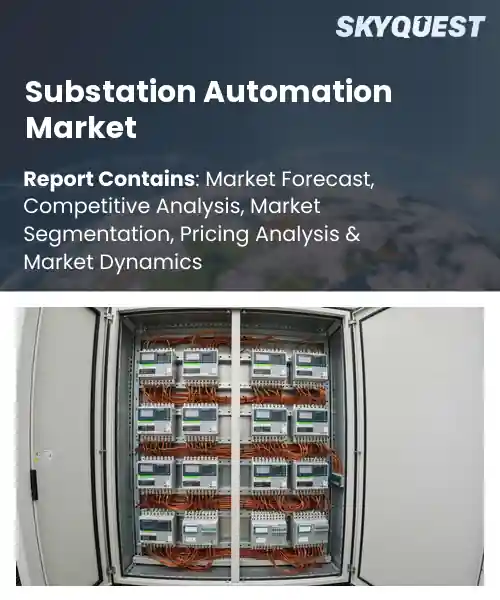
Substation Automation Market
Report ID: SQMIG55A2070
Report ID: SQMIG55A2070
[email protected]
USA +1 351-333-4748
Report ID:
SQMIG55A2070 |
Region:
Global |
Published Date: February, 2026
Pages:
157
|Tables:
146
|Figures:
78


Global Substation Automation Market size was valued at USD 31.2 Billion in 2024 and is poised to grow from USD 33.1 Billion in 2025 to USD 52.7 Billion by 2033, growing at a CAGR of 6.3% during the forecast period (2026-2033).
The global substation automation market growth is mainly driven because power grids need real‑time control functions to manage their integration of variable renewable resources and distributed energy systems. Substation automation systems use intelligent electronic devices together with supervisory control and data acquisition systems and IEC 61850 standardized communication protocols to perform protection functions and monitoring tasks and asset optimization activities. The market exists because automation systems improve reliability while reducing outage durations and increasing operational efficiency and enabling microgrid and prosumer systems to operate at two-way power exchange capability. The industry evolved from electromechanical relays to digital IEDs and protocols during several decades while utilities in Europe North America and Asia initiated their system deployments which Siemens ABB and Schneider used to develop their operational capabilities.
Moreover, the global substation automation system depends on automation to function because digital communications and analytics together with cybersecurity solutions decrease integration challenges which enable organizations to achieve advanced digital operational capabilities. Utilities use interoperable protocols with edge analytics to gather high‑resolution telemetry data and perform predictive maintenance while they automate fault isolation and control voltage dynamically which results in fewer outages and delayed need for capital expenditures. The operators use IEC 61850‑based IEDs with analytics to determine the right time for transformer replacement after detecting early signs of transformer degradation, which leads to lower lifecycle expenses. The rising demand for EV charging stations together with resilience program implementations develops retrofit markets while modern security requirements for automation products and services increase security product demand.
How is AI Improving Reliability in the Substation Automation Market?
The AI system enhances substation automation reliability through its ability to analyze sensor data and perform edge analytics and machine learning to create systems that detect anomalies and forecast equipment failures and execute automatic operations. Digital twins function as the main elements which digital twins use to deliver condition monitoring and adaptive protection logic and historic and current data. The global substation automation market outlook is transitioning from manual operations that follow established rules to data-centric platforms which focus on maintaining asset performance and operational durability. The application of AI in real world settings includes three specific functions which AI uses to diagnose faults and automate alarm prioritization and create maintenance workflows that prevent unplanned downtime while making operations more efficient.
Market snapshot - 2026-2033
Global Market Size
USD 44.8 Billion
Largest Segment
Hardware
Fastest Growth
Software
Growth Rate
7.7% CAGR
To get more insights on this market click here to Request a Free Sample Report
The global substation automation market is segmented by components, substation types, installation type, technologies, end users, and region. By components, the market includes hardware, software, and services. By substation type, it is categorized into transmission substations and distribution substations. By installation type, the market is divided into new installations and retrofit installations. With technology, it covers control systems and communication infrastructure. By end users, the market serves utilities, oil & gas, mining, steel, transportation, commercial, renewable energy, and data centers & cloud campuses. Regionally, the market spans North America, Europe, Asia Pacific, Latin America, and the Middle East & Africa.
According to the global substation automation market analysis, the hardware segment dominated the market because automated substations needed protective relays circuit breakers and IEDs as their essential components. ABB raised its digital switchgear consumption which resulted in hardware becoming the main revenue stream for the company.
Whereas the software category will experience its highest growth as utilities and industrial operators start using SCADA systems together with advanced analytics and digital twin platforms for predictive maintenance. For example, GE Digital employs cloud-based monitoring tools in power grids to improve substation efficiency and provide real-time operational data. The usage of automation software increased because more people started using it.
As per the global substation automation market share, the transmission substations segment became the dominant substation type because of the expanding high-voltage grid which needed reliable power delivery across extensive distances. The electrical utilities developed transmission automation systems which became the top revenue generating substation type because they wanted to reduce both grid losses and system interruptions. Schneider Electric supplied new 220 kV and 400 kV transmission substations with automated control and protection systems.
However, the smart grid initiatives, renewable energy integration, and urban electrification will cause the distribution of substations to have the highest substation automation market forecast. Companies constructed automated low- and medium-voltage distribution substations with remote monitoring functions to help their customers achieve demand-response and energy efficiency initiatives. Distribution of substation automation experienced rapid adoption across both mature markets and developing markets.
To get detailed segments analysis, Request a Free Sample Report
As per the substation automation market regional forecast, Asia Pacific achieves its leading position through extensive infrastructure spending and quick grid modernization efforts and industrial centers which require advanced protection and control and communication systems. The current policy direction which prioritizes energy security together with renewable energy integration for utilities mandates the implementation of automated substation systems. The presence of numerous equipment manufacturers along with system integrators and nearby engineering professionals creates progress in both development and execution. The partnerships between vendors and utilities enable both pilot testing and the wider implementation of their solutions. The process of completing projects becomes quicker through the creation of interoperability standards which allow local teams to customize global platforms according to their requirements. The utility strategies focus on digitalization and cybersecurity.
Japan Substation Automation Market
The Japanese substation automation industry gains from utility programs which operate at high efficiency and the country's robust electronics manufacturing capabilities and its commitment to maintaining system reliability. The equipment providers in the area provide compact equipment which meets high quality standards while they also deliver digital control system integration services. The testbeds which utilities and suppliers develop together establish a framework for developing protection standards which also helps create cybersecurity defense mechanisms. The grid modernization needs together with the engineering workforce availability to create high demand for automated substation solutions, which can be deployed in both city and countryside areas.
South Korea Substation Automation Market
The substation automation market trends in South Korea benefits from advanced electronics sectors, targeted utility modernization and strong domestic engineering. The local system integrators deliver complete solutions which include protection systems and control systems and communication platforms designed for both small urban areas and large transmission networks. The foundation of system reliability depends on three key elements which include interoperability and cybersecurity protection and service delivery that follows customer requirements. Through research partnerships between vendors and utilities, digital substation technology development accelerates while intelligent substation architecture implementation occurs across various network structures.
The expanding market in North America develops three essential elements which include grid modernization requirements and reliability needs and rising distributed energy resource adoption. Utilities together with system operators focus on automation improvements to achieve better fault detection results and faster restoration times and optimized asset performance within their complicated transmission networks. The technology vendors actively promote intelligent protection systems together with advanced control solutions through their strong commitment to cybersecurity and their provision of modern communication infrastructure. The combination of regulatory requirements together with utility funding initiatives leads to the removal of outdated systems in favor of flexible and adaptable systems which meet modern standards.
United States Substation Automation Market
The United States substation automation market regional outlook receives its advantages from the extensive utility system modernization efforts which focus on enhancing grid resilience. The major operators seek to implement complete protection systems which include control systems and communication systems according to their requirements for improved performance and shorter outages. The vendors provide interoperable system designs which establish strong cybersecurity protections together with local customer support systems. The joint pilot projects which utilities and technology providers conduct together lead to a faster technology adoption rate. The engineering professionals together with the existing maintenance systems create a supportive environment for automated substation solution installation and continuous maintenance.
Canada Substation Automation Market
The Canada substation automation market regional forecast operates under two main priorities, which include maintaining reliable service through distributed networks and supporting the implementation of renewable energy sources. Utilities use their intelligent protection systems together with control systems and communications functions to enhance monitoring capabilities and asset management throughout their long-distance transmission lines. The system enables flexible deployment options through its three core features which provide interoperability and cybersecurity protection and supplier engagement with local vendors. The utilities together with vendors and research organizations establish collaborative partnerships which help them implement pilot testing projects. The engineering experts, together with the service providers, enable automated substations to continue running and performing their maintenance work.
Europeans strengthen their regional status through joint policy efforts which target grid modernization and development of robust standards and partnership with industry stakeholders. Utilities need flexible substation automation solutions because they require their systems to work with existing equipment while they protect their networks through cybersecurity measures and their systems to work with distributed power generation and energy storage and demand response solutions. The regional network requirements of advanced solutions become possible through the industrial foundation which provides equipment manufacturers and systems integrators with operational capabilities. The research institutions and consortia together with public private partnerships operate pilot programs which confirm the effectiveness of digital protection and communication protocols and asset management solutions.
Germany Substation Automation Market
The substation automation market regional analysis in Germany operates through its solid electrotechnical industry and its strict engineering standards and its specific utility digitalization initiatives. Manufacturers supply protection, control, and communication systems engineered for industrial and transmission environments. Procurement processes depend on three main criteria which include interoperability and safety and cybersecurity requirements. Research collaborations and test facilities validate new technologies. Skilled engineering teams and established service networks enable retrofits and systematic deployment of automated substation solutions across diverse grid configurations and operational support.
United Kingdom Substation Automation Market
The substation automation industry trends in United Kingdom reflects focus on grid resilience, decarbonization and flexible network operation. Utilities use intelligent protection and control and communication platforms to enhance their ability to respond to faults while they integrate distributed generation resources. Collaborative efforts between vendors and utilities and research centers lead to faster pilot testing and knowledge sharing between the three parties. Local engineering expertise and service providers enable phased upgrades and lifecycle management of automated substation assets plus maintenance.
France Substation Automation Market
The substation automation market revenue in France operates through utility modernization efforts which benefit from strong engineering capacities and the implementation of renewable energy solutions. The utility industry achieves operational efficiency using automated protection and control systems which enhance grid monitoring and system control capabilities. The establishment of interoperability standards together with cybersecurity protection mechanisms enables organizations to deploy their systems safely. The manufacturing sector collaborates with utilities and academic institutions to conduct testing and develop proof of concept technologies. Local service companies and technicians provide complete installation and commissioning and maintenance services for automated substation systems.
To know more about the market opportunities by region and country, click here to
Buy The Complete Report
Integration Of Renewable Energy Sources
Demand For Grid Reliability and Resilience
High Initial Capital Expenditure
Complex Regulatory and Cybersecurity Requirements
Request Free Customization of this report to help us to meet your business objectives.
The global substation automation market strategies now face intensified competition because existing OEMs and software-based companies, and specialized digital solution providers all deliver competing products which include digitalization and cybersecurity and interoperability. IEC 61850 and secure software defined substations drive utilities to pursue mergers with other companies, create partnerships, and develop new products at a rapid pace. ABB has pursued software and AI acquisitions while LF Energy has created the DSAS initiative to help new companies enter the market, and Hitachi Energy has formed a partnership to develop completely digital substations.
Distributed Energy Integration
AI-Enabled Operational Intelligence
SkyQuest’s ABIRAW (Advanced Business Intelligence, Research & Analysis Wing) is our Business Information Services team that Collects, Collates, Correlates, and Analyses the Data collected by means of Primary Exploratory Research backed by robust Secondary Desk research.
As per SkyQuest analysis, the global substation automation market expansion originates from grid operators requiring instantaneous control to manage their renewable energy input together with their distributed energy resources and their digital communication and analytic and cyber defense systems. The high upfront expenses restrict full-scale implementations, which make phased system upgrades more financially viable. The Asia Pacific region leads the market because of its extensive infrastructure development and fast grid modernization, while control systems serve as the main market segment which utilities use to safeguard their systems through centralized and decentralized intelligence systems. The market will experience consistent growth which centers on three main elements that include extra system functions, operational monitoring and performance testing services, which help maintain system efficiency while managing operational expenses and performance hazards.
| Report Metric | Details |
|---|---|
| Market size value in 2024 | USD 31.2 Billion |
| Market size value in 2033 | USD 52.7 Billion |
| Growth Rate | 6.3% |
| Base year | 2024 |
| Forecast period | 2026-2033 |
| Forecast Unit (Value) | USD Billion |
| Segments covered |
|
| Regions covered | North America (US, Canada), Europe (Germany, France, United Kingdom, Italy, Spain, Rest of Europe), Asia Pacific (China, India, Japan, Rest of Asia-Pacific), Latin America (Brazil, Rest of Latin America), Middle East & Africa (South Africa, GCC Countries, Rest of MEA) |
| Companies covered |
|
| Customization scope | Free report customization with purchase. Customization includes:-
|
To get a free trial access to our platform which is a one stop solution for all your data requirements for quicker decision making. This platform allows you to compare markets, competitors who are prominent in the market, and mega trends that are influencing the dynamics in the market. Also, get access to detailed SkyQuest exclusive matrix.
Table Of Content
Executive Summary
Market overview
Parent Market Analysis
Market overview
Market size
KEY MARKET INSIGHTS
COVID IMPACT
MARKET DYNAMICS & OUTLOOK
Market Size by Region
KEY COMPANY PROFILES
Methodology
For the Substation Automation Market, our research methodology involved a mixture of primary and secondary data sources. Key steps involved in the research process are listed below:
1. Information Procurement: This stage involved the procurement of Market data or related information via primary and secondary sources. The various secondary sources used included various company websites, annual reports, trade databases, and paid databases such as Hoover's, Bloomberg Business, Factiva, and Avention. Our team did 45 primary interactions Globally which included several stakeholders such as manufacturers, customers, key opinion leaders, etc. Overall, information procurement was one of the most extensive stages in our research process.
2. Information Analysis: This step involved triangulation of data through bottom-up and top-down approaches to estimate and validate the total size and future estimate of the Substation Automation Market.
3. Report Formulation: The final step entailed the placement of data points in appropriate Market spaces in an attempt to deduce viable conclusions.
4. Validation & Publishing: Validation is the most important step in the process. Validation & re-validation via an intricately designed process helped us finalize data points to be used for final calculations. The final Market estimates and forecasts were then aligned and sent to our panel of industry experts for validation of data. Once the validation was done the report was sent to our Quality Assurance team to ensure adherence to style guides, consistency & design.
Analyst Support
Customization Options
With the given market data, our dedicated team of analysts can offer you the following customization options are available for the Substation Automation Market:
Product Analysis: Product matrix, which offers a detailed comparison of the product portfolio of companies.
Regional Analysis: Further analysis of the Substation Automation Market for additional countries.
Competitive Analysis: Detailed analysis and profiling of additional Market players & comparative analysis of competitive products.
Go to Market Strategy: Find the high-growth channels to invest your marketing efforts and increase your customer base.
Innovation Mapping: Identify racial solutions and innovation, connected to deep ecosystems of innovators, start-ups, academics, and strategic partners.
Category Intelligence: Customized intelligence that is relevant to their supply Markets will enable them to make smarter sourcing decisions and improve their category management.
Public Company Transcript Analysis: To improve the investment performance by generating new alpha and making better-informed decisions.
Social Media Listening: To analyze the conversations and trends happening not just around your brand, but around your industry as a whole, and use those insights to make better Marketing decisions.
REQUEST FOR SAMPLE
 REQUEST FREE CUSTOMIZATION
Global Substation Automation Market size was valued at USD 44.8 Billion in 2024 and is poised to grow from USD 48.25 Billion in 2025 to USD 87.34 Billion by 2033, growing at a CAGR of 7.7% during the forecast period (2026-2033).
GridBeyond, Cisco Systems, Inc., Hitachi Energy, General Electric Company, ABB, Eaton, Honeywell International Inc., Emerson Electric Co., Schweitzer Engineering Laboratories, Inc., Rockwell Automation, Itron, Omicron Electronics GmbH, Toshiba Energy Systems
The key driver of the Substation Automation Market is the growing need for grid modernization and smart grid integration. Increasing electricity demand, renewable energy integration, aging power infrastructure upgrades, and the push for real-time monitoring, reliability, and operational efficiency are accelerating adoption globally.
Key trends in the Substation Automation Market include the adoption of digital substations and IoT-enabled devices, integration of advanced communication protocols like IEC 61850, growing use of AI and predictive analytics for maintenance, expansion of smart grids, and increasing deployment of renewable energy-compatible automation solutions.
Asia-Pacific held the largest share in the Substation Automation Market, driven by rapid urbanization, growing electricity demand, massive investments in power infrastructure, expansion of renewable energy projects, and government initiatives supporting smart grid and digital substation adoption.


Want to customize this report? This report can be personalized according to your needs. Our analysts and industry experts will work directly with you to understand your requirements and provide you with customized data in a short amount of time. We offer $1000 worth of FREE customization at the time of purchase.
Feedback From Our Clients


 USA (+1) 351-333-4748

