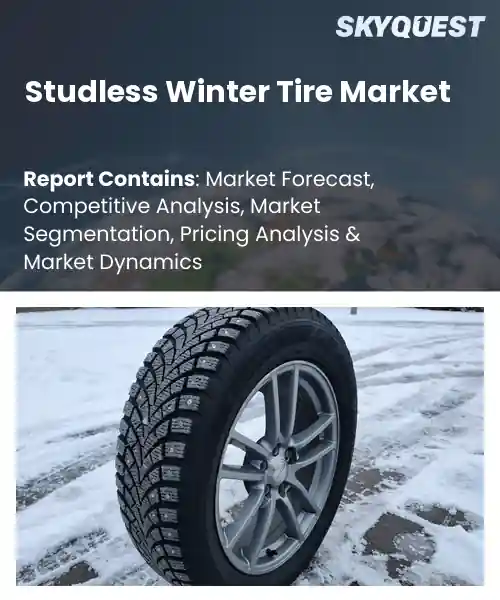
Studless Winter Tire Market
Report ID: SQMIG25B2044
Report ID: SQMIG25B2044
[email protected]
USA +1 351-333-4748
Report ID:
SQMIG25B2044 |
Region:
Global |
Published Date: July, 2026
Pages:
157
|Tables:
141
|Figures:
78


Global Studless Winter Tire Market size was valued at USD 2.63 Billion in 2024 and is poised to grow from USD 2.76 Billion in 2025 to USD 4.05 Billion by 2033, growing at a CAGR of 4.9% during the forecast period (2026-2033).
The studless winter tire market growth is driven by many people wanting safer driving in areas that are, yknow, snow and ice prone where bad winter weather forces better traction, and tighter vehicle control. At the same time vehicle ownership keeps climbing, especially with SUVs and passenger cars, which is pushing up the demand for winter tires that can actually perform well. Stuff like newer rubber compounds, different tread designs, and silica-based materials have made a big difference, because they improve grip, durability, and even braking performance, all without using metal studs.
Moreover, there are stricter government rules around studded tires due to road damage plus environmental concerns, so companies and drivers are turning toward studless alternatives more often. On top of that, people are paying more attention to road safety, winter tourism keeps expanding, and electric vehicles are getting more popular, and those EVs often need quieter, more energy efficient tires. So, overall, the market keeps growing across North America, Europe, and some parts of Asia-Pacific.
AI is helping tread wear prediction for studless winter tires by mixing sensor data with machine learning models, and then the system tries to spot repeating patterns across temperature, road surface conditions and even driving habits. Embedded pressure and temperature sensors send real time telemetry into the algorithms, and the algorithms then estimate how fast the rubber will wear down when it’s dealing with snow and ice. The models keep getting smarter over time because they absorb new field data, which helps manufacturers adjust compound formulations and tread designs for longer service life. This forecast makes it easier for fleets to plan maintenance sooner, so it offers fewer surprise tire replacements, and it also fits the bigger trend toward safer, more dependable winter mobility where studless demand is rising.
Market snapshot - (2026-2033)
Global Market Size
USD 2.63 Billion
Largest Segment
Passenger Cars
Fastest Growth
Light Commercial Vehicles
Growth Rate
4.9% CAGR
To get more insights on this market click here to Request a Free Sample Report
The global studless winter tire market is segmented by vehicle type, tire type, rim size, distribution channel, end user and region. Based on vehicle type, the market is segmented into Passenger Cars, Light Commercial Vehicles and Heavy Commercial Vehicles. Based on tire type, the market is segmented into Nordic Winter Tires and Performance Winter Tires. Based on rim size, the market is segmented into Below 16 Inches, 16–18 Inches and Above 18 Inches. Based on distribution channel, the market is segmented into OEM and Aftermarket. Based on end user, the market is segmented into Individual Consumers and Fleet Operators. Based on region, the market is segmented into North America, Europe, Asia Pacific, Latin America and Middle East & Africa.
As per the studless winter tire market analysis, the passenger cars segment seems to dominate since a lot of manufacturers actually lean toward studless winter tires for it mostly because this category sells a huge number of units and customers expect a very strict safety level in chilly climates. Engineers therefore concentrate on tread concepts that balance road grip with fuel efficiency; it’s for everyday drivers who want dependable results without that typical stud noise. And this match with what people buy in real life keeps feeding ongoing product upgrades , which then supports brand loyalty too, so the segment stays in front across the whole market.
At the same time, the light commercial vehicles segment is showing up as the fastest growing, largely because logistics routes need traction even when roads are coated with ice. Fleet managers switch to studless styles for reduced upkeep , plus to meet road noise rules, and that pushes manufacturers to tune rubber compounds for heavier loads. This whole acceleration also widens market coverage and it basically creates new revenue streams.
According to the studless winter tire market forecast, the nordic winter Tires segment leads because the specialized compound formulas deliver noticeably stronger grip on snow, plus slush, and they hit the main expectations for safety minded buyers. Companies push studless tread patterns that keep braking behavior steady, while at the same time cutting down wear. It also fits with the regulatory direction that discourages metal studs, so demand remains resilient. Because the tires are proven reliable, and they also satisfy environmental compliance, manufacturers get solid justification to keep investing, which supports the segment’s key role in driving product development and shaping brand perception.
Conversely, the performance winter tires category is predicted to have the largest studless winter tire market share, since drivers want sharper handling even in cold conditions. Improvements in silica-based compounds, together with directional tread geometry, help vehicles stay agile without risking safety. Enthusiast drivers, plus targeted marketing efforts, encourage manufacturers to broaden their lineups, which then increases market variety and opens extra profit channels.
To get detailed segments analysis, Request a Free Sample Report
As per the studless winter tire market regional forecast, Asia Pacific is leading the market, not just because it’s cold a lot but also because makers there are serious about automotive safety, plus they have advanced manufacturing know how. The whole region gets helped by a thick web of tire producers, they put money into R and D for tread compounds that work on icy, snowy roads even when conditions get rough. People are more aware of traction performance now, so they tend to want studless solutions that still pass strict regulatory rules, but they also like that it runs quieter. Supply chains are solid too, and many companies run export minded strategies so they can hit both local and overseas demand, with less friction. There’s also a lot of cooperation happening between automotive OEMs and tire companies, which speeds up the launch of newer designs, and that momentum keeps the region in front. On top of that, there are a lot of skilled engineers who can tune products for different climate zones across the continent. Environmental rules pushing low noise and low emission solutions also seem to match well with what studless tires offer.
Japan Studless Winter Tire Market
The Studless Winter Tire sector in Japan is helped by tough safety regulations that focus on road grip while avoiding the noise, and the wear that comes with old school studs. Local manufacturers use strong know-how in high performance rubber compounds and design tread patterns that fit mountain roads and heavy snowfall, which is common in a lot of areas. When they collaborate with domestic vehicle brands, it helps the tires match up with vehicle dynamics in a smoother way, and that boosts consumer confidence, keeping demand for advanced winter traction solutions stable.
South Korea Studless Winter Tire Market
The Studless Winter Tire industry in South Korea is moving fast due to a culture of engineering that leans heavily into precision and reliable cold weather output. Producers here dial in inventive tread design that manages snow evacuation while still holding durable contact, for different terrain types and the icy conditions that show up often. Partnerships with automakers support better integration of tire tech into vehicle safety systems, and this enhances driver confidence, which then keeps the market momentum building for studless winter solutions across the country.
Europe sees rapid studless winter tire market penetration because several things are lining up at the same time: strict environmental directives, stronger consumer pull for quieter and low maintenance traction, and winter weather that shows up across many places. The legal frameworks encourage moving away from noisy metal stud tires toward quieter choices, but still staying within safety benchmarks. Because of that, manufacturers try to expand their product lines more quickly. Car brands across Europe also push integrated safety systems, so OEM demand grows for tires that support stability and anti skidding systems. Buyers are also thinking about long term durability and reduced road wear, which tends to appeal to both fleet operators and private drivers. Plus, collaborative research hubs in key countries keep fueling ongoing innovation, so European product offerings stay at the top in performance and sustainability.
Germany Studless Winter Tire Market
The Studless Winter Tire Market in Germany is supported by a mature automotive ecosystem where safety and environmental responsibility sit at the center of development. German tire manufacturers use testing facilities to fine tune tread compounds that deliver dependable grip on icy surfaces, while still obeying tough noise requirements. When vehicle makers collaborate with tire companies, the end result is tire performance that integrates neatly with electronic stability controls, and that raises consumer trust. So demand for studless winter solutions stays strong throughout the country.
United Kingdom Studless Winter Tire Market
The Studless Winter Tire Market in the United Kingdom is expanding quickly because drivers want a quieter, low maintenance option versus traditional studded tires, especially with the varied winter conditions around the islands. Local manufacturers build lightweight tread structures that help fuel efficiency, while still giving dependable traction on snow covered roads. Close relationships with British automotive firms help with the integration of tire data into driver assistance systems, and that tends to increase confidence, which speeds up adoption of studless winter solutions.
France Studless Winter Tire Market
The Studless Winter Tire Market in France is getting more traction, mainly since regulatory incentives push the move toward environmentally friendly tire tech. French producers use polymer know-how to shape tread patterns that balance snow grip with less road noise, which fits what consumers expect for both comfort and sustainability. Partnerships with vehicle manufacturers also support the inclusion of tire performance metrics inside broader safety platforms. Over time this makes more people aware of studless winter solutions, for both private customers and commercial drivers, and adoption grows in steps.
North America is slowly, well more seriously, strengthening its position in the studless winter tire market by putting money into innovation, widening the distribution networks, and riding the growing habit of consumers who seem to want quieter, lower effort traction solutions. The United States benefits from a wide mix of winter weather, it ends up pushing OEMs to demand dependable performance across lots of regions, so they start leaning toward studless designs that work alongside advanced vehicle stability technologies. In Canada, tough cold seasons, plus regulatory backing, are basically nudging manufacturers to put studless options first, these should keep grip steady while also cutting down road wear, which everyone likes to mention. Tire producers partnering with automotive research institutions makes it faster to refine new rubber compounds and tread architectures, so North American options stay competitive internationally, even when global pressure is there. Plus, the increased attention on environmental advantages keeps the market moving for both passenger and commercial categories, without much pause.
United States Studless Winter Tire Market
The Studless Winter Tire Market outlook in the United States is influenced by a broad range of winter climates, and that pushes the need for adaptable traction solutions. U.S. manufacturers tend to stress durability and overall performance, so their tread designs can deal with deep snow and that “sometimes ice, sometimes not” reality. When these tires integrate with electronic stability systems in vehicles, safety gets a boost, while the push toward lower noise levels matches what many drivers want. Dealer networks, plus marketing campaigns, also help normalize studless winter tires across passenger vehicles and light‑truck segments.
Canada Studless Winter Tire Market
The Studless Winter Tire Market in Canada is shaped by very severe winter conditions, where grip and durability are non negotiable. Canadian manufacturers focus on advanced rubber blends that remain pliable in very low temperatures, delivering reliable traction on packed snow and ice. Some collaboration with government agencies supports compliance with safety expectations while also highlighting the environmental upsides of studless designs. Distribution channels that lean into winter ready retail outlets, along with strong brand loyalty, help grow adoption among private motorists as well as commercial fleets.
To know more about the market opportunities by region and country, click here to
Buy The Complete Report
Growing Demand for Winter Safety
Adoption Of Eco Friendly Materials
Higher Production Costs
Limited Cold Weather Infrastructure
Request Free Customization of this report to help us to meet your business objectives.
The studless winter tire market feels super competitive, because the big global tire manufacturers are pushing product innovation , new rubber compound technologies, and they keep stretching into other regions, to hold their spots. In practice, companies go after customers by putting forward tires that have stronger ice and snow bite, better stopping power , less rolling drag , and longer life. A lot of R and D money is flowing into silica - rich compounds, multi cell tread designs, and winter tires that also work well with EVs, which becomes a differentiator , not just a nice-to-have. On top of that, manufacturers are boosting production capacities and tightening distribution channels so they can keep up with seasonal demand across North America, Europe, and Asia Pacific. And then there are more moves too, like deals with auto OEMs, mergers acquisitions and new premium winter tire lines , all of which keeps the pressure high. The main names you’ll usually see are Bridgestone Corporation, Michelin, Continental AG, Nokian Tyres plc, Goodyear Tire & Rubber Company, Pirelli & C. S.p.A., Yokohama Rubber Co., Ltd., Hankook Tire & Technology, Sumitomo Rubber Industries, and Toyo Tire Corporation, all leaning on ongoing technical upgrades and a strong global brand footprint.
Top Player’s Company Profile
Recent Developments in the Studless Winter Tire Market
SkyQuest’s ABIRAW (Advanced Business Intelligence, Research & Analysis Wing) is our Business Information Services team that Collects, Collates, Correlates, and Analyses the Data collected by means of Primary Exploratory Research backed by robust Secondary Desk research.
As per SkyQuest analysis, the global studless winter tire market is being pushed mainly by the rising need for winter safety, where consumers plus fleet operators keep focusing on traction over snow and ice . A second contributing factor is the shift toward eco‑friendly materials, which tends to attract environmentally conscious buyers and regulators alike. On top of that, the passenger‑car segment stays in the lead, mostly because it represents high volume sales and also because safety expectations there are especially strict. Asia Pacific is leading too , due to strong manufacturing capacity, tough winter weather, and supportive regulatory direction. Still , higher production costs tied to advanced compounds and more specialized tread designs act as a restraint, so price sensitive adoption slows in a few regions.
| Report Metric | Details |
|---|---|
| Market size value in 2024 | USD 2.63 Billion |
| Market size value in 2033 | USD 4.05 Billion |
| Growth Rate | 4.9% |
| Base year | 2024 |
| Forecast period | (2026-2033) |
| Forecast Unit (Value) | USD Billion |
| Segments covered |
|
| Regions covered | North America (US, Canada), Europe (Germany, France, United Kingdom, Italy, Spain, Rest of Europe), Asia Pacific (China, India, Japan, Rest of Asia-Pacific), Latin America (Brazil, Rest of Latin America), Middle East & Africa (South Africa, GCC Countries, Rest of MEA) |
| Companies covered |
|
| Customization scope | Free report customization with purchase. Customization includes:-
|
To get a free trial access to our platform which is a one stop solution for all your data requirements for quicker decision making. This platform allows you to compare markets, competitors who are prominent in the market, and mega trends that are influencing the dynamics in the market. Also, get access to detailed SkyQuest exclusive matrix.
Table Of Content
Executive Summary
Market overview
Parent Market Analysis
Market overview
Market size
KEY MARKET INSIGHTS
COVID IMPACT
MARKET DYNAMICS & OUTLOOK
Market Size by Region
KEY COMPANY PROFILES
Methodology
For the Studless Winter Tire Market, our research methodology involved a mixture of primary and secondary data sources. Key steps involved in the research process are listed below:
1. Information Procurement: This stage involved the procurement of Market data or related information via primary and secondary sources. The various secondary sources used included various company websites, annual reports, trade databases, and paid databases such as Hoover's, Bloomberg Business, Factiva, and Avention. Our team did 45 primary interactions Globally which included several stakeholders such as manufacturers, customers, key opinion leaders, etc. Overall, information procurement was one of the most extensive stages in our research process.
2. Information Analysis: This step involved triangulation of data through bottom-up and top-down approaches to estimate and validate the total size and future estimate of the Studless Winter Tire Market.
3. Report Formulation: The final step entailed the placement of data points in appropriate Market spaces in an attempt to deduce viable conclusions.
4. Validation & Publishing: Validation is the most important step in the process. Validation & re-validation via an intricately designed process helped us finalize data points to be used for final calculations. The final Market estimates and forecasts were then aligned and sent to our panel of industry experts for validation of data. Once the validation was done the report was sent to our Quality Assurance team to ensure adherence to style guides, consistency & design.
Analyst Support
Customization Options
With the given market data, our dedicated team of analysts can offer you the following customization options are available for the Studless Winter Tire Market:
Product Analysis: Product matrix, which offers a detailed comparison of the product portfolio of companies.
Regional Analysis: Further analysis of the Studless Winter Tire Market for additional countries.
Competitive Analysis: Detailed analysis and profiling of additional Market players & comparative analysis of competitive products.
Go to Market Strategy: Find the high-growth channels to invest your marketing efforts and increase your customer base.
Innovation Mapping: Identify racial solutions and innovation, connected to deep ecosystems of innovators, start-ups, academics, and strategic partners.
Category Intelligence: Customized intelligence that is relevant to their supply Markets will enable them to make smarter sourcing decisions and improve their category management.
Public Company Transcript Analysis: To improve the investment performance by generating new alpha and making better-informed decisions.
Social Media Listening: To analyze the conversations and trends happening not just around your brand, but around your industry as a whole, and use those insights to make better Marketing decisions.
REQUEST FOR SAMPLE
 REQUEST FREE CUSTOMIZATION
Global Studless Winter Tire Market size was valued at USD 2.63 Billion in 2024 and is poised to grow from USD 2.76 Billion in 2025 to USD 4.05 Billion by 2033, growing at a CAGR of 4.9% during the forecast period (2026-2033).
Top Player’s Company Profile 'Bridgestone Corporation', 'Michelin Group', 'Goodyear Tire & Rubber Company', 'Continental AG', 'Pirelli & C. S.p.A.', 'Sumitomo Rubber Industries, Ltd.', 'Yokohama Rubber Co., Ltd.', 'Hankook Tire & Technology Co., Ltd.', 'Nexen Tire Corporation', 'Kumho Tire Co., Inc.', 'Toyo Tire Corporation', 'Nokian Tyres plc', 'Apollo Tyres Ltd.', 'JK Tyre & Industries Ltd.', 'CEAT Limited', 'Giti Tire Pte. Ltd.', 'Zhongce Rubber Group Co., Ltd.', 'Linglong Tire Co., Ltd.', 'Sailun Group Co., Ltd.', 'Double Coin Holdings Ltd.'
The increasing awareness of road hazards during snow and ice conditions drives consumers and fleet operators to prioritize vehicles equipped with studless winter tires. This heightened focus on safety encourages manufacturers to expand product lines and invest in advanced tread designs, thereby stimulating market growth. As regulatory bodies impose stricter winter tire mandates in several regions, the demand for reliable, high‑performance studless solutions further amplifies, creating sustained upward momentum for the sector. Consequently, automotive dealers are increasingly recommending these tires as standard equipment, reinforcing consumer confidence and expanding overall market penetration.
Digital Connectivity Enhances Safety: Sensors and telematics are being integrated into studless winter tires to provide data on temperature, pressure, and tread wear, enabling drivers and fleet managers to optimize performance under icy conditions. This connectivity supports predictive maintenance, reduces unexpected failures, and improves road safety by alerting users to deteriorating grip before accidents occur. As automotive platforms become more software‑centric, tire manufacturers are partnering with tech firms to deliver seamless data streams that enhance driver confidence and operational efficiency across winter global markets.
Why does Asia Pacific Dominate the Global Studless Winter Tire Market? |@12


Want to customize this report? This report can be personalized according to your needs. Our analysts and industry experts will work directly with you to understand your requirements and provide you with customized data in a short amount of time. We offer $1000 worth of FREE customization at the time of purchase.
Feedback From Our Clients


 USA (+1) 351-333-4748

