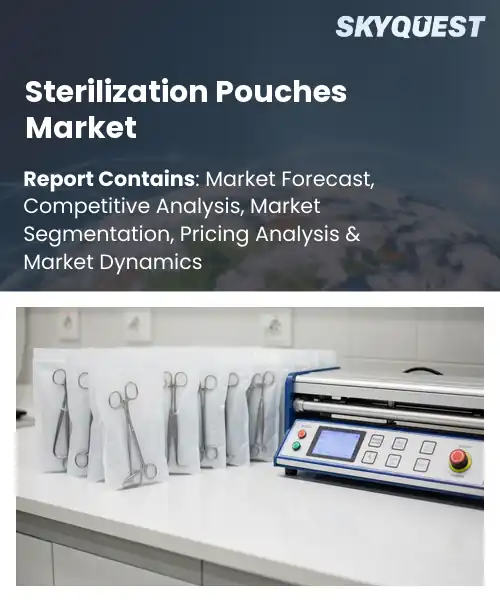
Sterilization Pouches Market
Report ID: SQMIG35B2367
Report ID: SQMIG35B2367
[email protected]
USA +1 351-333-4748
Report ID:
SQMIG35B2367 |
Region:
Global |
Published Date: June, 2026
Pages:
157
|Tables:
121
|Figures:
76


Global Sterilization Pouches Market size was valued at USD 37.75 Billion in 2024 and is poised to grow from USD 40.35 Billion in 2025 to USD 68.82 Billion by 2033, growing at a CAGR of 6.9% during the forecast period (2026-2033).
Sterilization pouches are flexible packaging devices used to maintain sterility of medical instruments until point of use, and the primary driver of their market is the global emphasis on infection prevention and regulatory compliance. This market matters because breaches in sterilization carry patient safety risks and financial penalties, prompting hospitals, dental practices and outpatient surgery centers to standardize single-use sterile packaging. Historically the sector evolved from simple cloth wraps to validated peel pouches with chemical and biological indicators compatible with steam, ethylene oxide and low-temperature hydrogen peroxide sterilizers. The COVID-19 pandemic accelerated procurement, expanding manufacturers’ portfolios and distribution channels rapidly.
Building on infection-control pressure, a key factor driving global sterilization pouch growth is rising procedural volume across ambulatory surgery centers, dental clinics and minimally invasive specialties, which increases single-use instrument turnover and disposable packaging demand. As facilities face tighter accreditation and reimbursement rules, procurement shifts toward validated pouches with integrated chemical indicators, causing manufacturers to invest in higher-barrier films and sterilizer-compatible laminates. Technological advances in biodegradable substrates and printed indicators create market differentiation and open packaging-as-a-service opportunities for sterilization suppliers. Consequently, expansion into emerging economies and veterinary and dental markets represents growth pathways supported by demonstrable cost and safety benefits.
How is IoT-enabled tracking improving sterilization pouches market efficiency?
IoT enabled tracking improves sterilization pouches market efficiency by combining digital identity, condition sensing, and cloud driven logistics. Key aspects include RFID tags and battery free BLE sensors that record location, temperature, and sterilization cycle signals. The market is shifting from small pilots to practical deployments as manufacturers and hospitals adopt inlays and smart labels that survive steam and gas sterilization. This change reduces manual counts, prevents misplaced instruments, speeds tray turnover, and strengthens documentation for compliance. Real world examples include sterilization compatible RFID products and ambient IoT partnerships that bring low cost sensing to disposable packaging and make workflows more predictable and auditable.
Avery Dennison March 2026, the company launched RFID inlays compatible with major sterilization methods, enabling reliable reads after sterilization and seamless IoT tracking which supports faster tray turnaround and reduces manual auditing.
Market snapshot - (2026-2033)
Global Market Size
USD 37.75 Billion
Largest Segment
Self-Seal Pouches
Fastest Growth
Self-Seal Pouches
Growth Rate
6.9% CAGR
To get more insights on this market click here to Request a Free Sample Report
Global sterilization pouches market is segmented by product type, material type, application, end-use industry and region. Based on product type, the market is segmented into Self-Seal Pouches, Heat-Seal Pouches, Flat Pouches, Foil Pouches and Others. Based on material type, the market is segmented into Paper and Plastic, Tyvek and Others. Based on application, the market is segmented into Medical Device Packaging, Pharmaceutical Products, Laboratory Supplies, Dental Instruments and Others. Based on end-use industry, the market is segmented into Healthcare, Food and Beverages and Others. Based on region, the market is segmented into North America, Europe, Asia Pacific, Latin America and Middle East & Africa.
Self-Seal Pouches segment dominates because they deliver operational simplicity and rapid turnaround for routine sterilization workflows, reducing reliance on additional equipment and training. Their convenience drives adoption across outpatient clinics and smaller healthcare providers where ease of use and consistent performance matter, while compatibility with common sterilization methods and predictable barrier properties encourage procurement preference and supplier focus in the Sterilization Pouches Market.
However, Heat-Seal Pouches are the most rapidly expanding area as hospitals and larger facilities prioritize superior seal integrity and traceable process control. Increased investment in automated sealing equipment, stricter sterilization assurance protocols, and demand for longer sterile shelf life propel Heat-Seal Pouches growth, creating opportunities for manufacturers to offer higher-value solutions and services that address critical procedure requirements.
Tyvek segment dominates because its unique fibrous structure balances breathability and microbial barrier performance, meeting stringent sterilization validation needs and earning preference for critical device packaging. Its mechanical strength and resistance to puncture reduce product failures during handling, while industry recognition and regulatory acceptance encourage device manufacturers and hospitals to specify Tyvek for high-risk instruments in the Sterilization Pouches Market.
On the other hand, Paper and Plastic pouches are witnessing the strongest growth momentum as manufacturers innovate with multilayer films and recyclable paper laminates to meet cost and sustainability demands. Rising interest in eco-friendlier packaging, adaptable printing and sealing options, and expanding use in dental and laboratory supplies accelerate adoption, opening new routes for product differentiation and market expansion.
To get detailed segments analysis, Request a Free Sample Report
North America dominates the global sterilization pouches market due to a convergence of advanced healthcare infrastructure, stringent sterilization standards, and a strong culture of patient safety that elevates demand for reliable sterile packaging. The region benefits from a concentration of leading manufacturers and material science expertise that drive continual product refinement, along with well established distribution channels that ensure timely supply to diverse care settings. Robust regulatory and accreditation frameworks encourage adoption of validated sterilization solutions, while significant investment in hospital upgrades and outpatient procedural growth sustains steady requirements. Collaborative programs between providers and suppliers foster innovation in pouch design and usability, positioning the region as a benchmark for best practice and quality assurance in sterile processing. Ongoing training programs for sterile processing personnel and resilient supply chain strategies further reinforce market leadership, supporting both routine and specialized sterilization needs.
Sterilization Pouches Market in United States is characterized by a mature ecosystem of hospitals, clinics, and specialty care centers that prioritize sterile processing and infection prevention. Manufacturers collaborate with end users to tailor pouch materials and sealing technology to clinical workflows. Procurement practices emphasize compliance and traceability, while private and public healthcare stakeholders drive adoption of advanced disposables. Distribution networks and service support underpin market accessibility across diverse care settings.
Sterilization Pouches Market in Canada reflects a balanced mix of centralized sterilization units and smaller facility needs, with an emphasis on quality and regulatory alignment. Healthcare institutions often seek pouches that support efficient sterilization cycles and clear indications of package integrity. Local distributors and suppliers play a key role in educating procurement teams. Partnerships between manufacturers and infection prevention professionals reinforce adoption and support product improvements tailored to practice patterns.
Europe is experiencing rapid expansion in the sterilization pouches market driven by harmonized regulatory standards, heightened emphasis on infection prevention, and concerted efforts to modernize sterile processing across public and private healthcare facilities. Procurement practices increasingly favor validated, user friendly packaging that supports traceability and efficient workflows. Manufacturers respond with innovations in barrier films, indicator technologies, and recyclable materials to meet both clinical and environmental expectations. Cross border collaboration among medical device companies and service providers accelerates technology transfer and best practice dissemination. Additionally, growing procedural volumes in outpatient and specialty care settings, combined with training initiatives for sterile processing personnel, are broadening adoption and stimulating demand across established and emerging national markets. Public procurement frameworks and accreditation bodies further incentivize compliance, while sustainability commitments among purchasers encourage recyclable and lower waste options, reinforcing market traction.
Sterilization Pouches Market in Germany is anchored by rigorous quality standards and an established medical manufacturing base that supports product innovation and supply. Hospitals and specialized clinics demand validated packaging that integrates with sterilization workflows and traceability systems. Relationships between manufacturers, testing laboratories, and procurement bodies facilitate uptake of advanced materials and indicator solutions. Emphasis on sustainability and resilient supply chains shapes procurement preferences across clinical settings and ambulatory care.
Sterilization Pouches Market in United Kingdom is marked by dynamic procurement policies and investment in outpatient and community care sterilization capabilities. Suppliers focus on adaptable pouch designs that support varied sterilization modalities and clinician workflows. Close engagement with infection prevention networks and regulatory advisors accelerates product acceptance. Preferences for lower waste solutions and enhanced indicator technologies influence purchasing decisions, while distribution partners enable nationwide deployment across hospital trusts and clinics.
Sterilization Pouches Market in France is shaped by a strong public hospital system and private providers seeking standardized sterile processing. Procurement decisions balance clinical performance with environmental considerations, driving attention to recyclable materials and compact packaging formats. Professional societies influence practice norms and advise on indicator selection. Manufacturers engage in pilot programs with hospital networks to demonstrate compatibility with common sterilization cycles and to improve workflow efficiencies across care settings.
Asia Pacific is strengthening its position in the sterilization pouches market through a mix of healthcare modernization, local manufacturing capability enhancement, and closer alignment with international sterilization standards. Regional producers are investing in material science and indicator technologies to meet clinical expectations while offering competitive supply options for both domestic and export markets. Increasing focus on infection prevention across hospitals and ambulatory centers drives demand for validated packaging solutions. Improvements in regulatory oversight and certification processes, combined with expanding distribution networks and training programs for sterile processing staff, facilitate broader adoption. Strategic partnerships between multinational suppliers and regional manufacturers accelerate technology transfer and market penetration across diverse national healthcare systems. Innovation hubs in major markets focus on advanced barrier films and quality control processes, while service providers expand sterilization validation and post sale support, strengthening regional competitiveness.
Sterilization Pouches Market in Japan benefits from strong material science capabilities and a focus on product precision that aligns with demanding clinical requirements. Healthcare providers prioritize pouches that offer consistent barrier performance and reliable indicator systems compatible with established sterilization protocols. Collaboration between manufacturers and laboratories supports rigorous testing and quality assurance. Distribution channels emphasize technical support and training, enabling integration of new pouch technologies across hospital systems and clinics.
Sterilization Pouches Market in South Korea is driven by a strong manufacturing sector and emphasis on advanced materials and indicator technology. Hospitals and clinics value pouches that align with efficient sterilization cycles and support throughput settings. Local producers collaborate with research institutions to refine barrier properties and usability. Distribution networks with technical service teams ensure introduction and field support for new offerings, enhancing acceptance across urban care providers nationwide reach.
To know more about the market opportunities by region and country, click here to
Buy The Complete Report
Growing Hospital Safety Standards
Rising Surgical Procedure Volumes
High Material And Production Costs
Stringent Regulatory Compliance Requirements
Request Free Customization of this report to help us to meet your business objectives.
The competitive landscape in the global sterilization pouches market is shaped by consolidation, supplier partnerships, and material innovation that directly affect pricing and supply security. Large packaging M&A and integrations such as Amcor’s acquisition of Bemis and Sonoco’s purchase of TEQ expanded scale and sterile barrier capabilities. Meanwhile material and sustainability efforts led by Tyvek and packaging OEMs are pushing product differentiation and partner-led co‑development.
SkyQuest’s ABIRAW (Advanced Business Intelligence, Research & Analysis Wing) is our Business Information Services team that Collects, Collates, Correlates, and Analyses the Data collected by means of Primary Exploratory Research backed by robust Secondary Desk research.
As per SkyQuest analysis, the global sterilization pouches market is propelled by growing hospital safety standards, which drive demand for validated single use sterile packaging, and further accelerated by rising surgical and outpatient procedural volumes that increase disposable instrument turnover. Market expansion is concentrated in North America where advanced healthcare infrastructure and strict sterilization norms support adoption, and self‑seal pouches remain the dominant product type due to ease of use in routine workflows. However high material and production costs constrain uptake in price sensitive settings and slow adoption of premium or novel pouch formats. Manufacturers focusing on sustainable materials and workflow integration stand to capture new opportunities.
| Report Metric | Details |
|---|---|
| Market size value in 2024 | USD 37.75 Billion |
| Market size value in 2033 | USD 68.82 Billion |
| Growth Rate | 6.9% |
| Base year | 2024 |
| Forecast period | (2026-2033) |
| Forecast Unit (Value) | USD Billion |
| Segments covered |
|
| Regions covered | North America (US, Canada), Europe (Germany, France, United Kingdom, Italy, Spain, Rest of Europe), Asia Pacific (China, India, Japan, Rest of Asia-Pacific), Latin America (Brazil, Rest of Latin America), Middle East & Africa (South Africa, GCC Countries, Rest of MEA) |
| Companies covered |
|
| Customization scope | Free report customization with purchase. Customization includes:-
|
To get a free trial access to our platform which is a one stop solution for all your data requirements for quicker decision making. This platform allows you to compare markets, competitors who are prominent in the market, and mega trends that are influencing the dynamics in the market. Also, get access to detailed SkyQuest exclusive matrix.
Table Of Content
Executive Summary
Market overview
Parent Market Analysis
Market overview
Market size
KEY MARKET INSIGHTS
COVID IMPACT
MARKET DYNAMICS & OUTLOOK
Market Size by Region
KEY COMPANY PROFILES
Methodology
For the Sterilization Pouches Market, our research methodology involved a mixture of primary and secondary data sources. Key steps involved in the research process are listed below:
1. Information Procurement: This stage involved the procurement of Market data or related information via primary and secondary sources. The various secondary sources used included various company websites, annual reports, trade databases, and paid databases such as Hoover's, Bloomberg Business, Factiva, and Avention. Our team did 45 primary interactions Globally which included several stakeholders such as manufacturers, customers, key opinion leaders, etc. Overall, information procurement was one of the most extensive stages in our research process.
2. Information Analysis: This step involved triangulation of data through bottom-up and top-down approaches to estimate and validate the total size and future estimate of the Sterilization Pouches Market.
3. Report Formulation: The final step entailed the placement of data points in appropriate Market spaces in an attempt to deduce viable conclusions.
4. Validation & Publishing: Validation is the most important step in the process. Validation & re-validation via an intricately designed process helped us finalize data points to be used for final calculations. The final Market estimates and forecasts were then aligned and sent to our panel of industry experts for validation of data. Once the validation was done the report was sent to our Quality Assurance team to ensure adherence to style guides, consistency & design.
Analyst Support
Customization Options
With the given market data, our dedicated team of analysts can offer you the following customization options are available for the Sterilization Pouches Market:
Product Analysis: Product matrix, which offers a detailed comparison of the product portfolio of companies.
Regional Analysis: Further analysis of the Sterilization Pouches Market for additional countries.
Competitive Analysis: Detailed analysis and profiling of additional Market players & comparative analysis of competitive products.
Go to Market Strategy: Find the high-growth channels to invest your marketing efforts and increase your customer base.
Innovation Mapping: Identify racial solutions and innovation, connected to deep ecosystems of innovators, start-ups, academics, and strategic partners.
Category Intelligence: Customized intelligence that is relevant to their supply Markets will enable them to make smarter sourcing decisions and improve their category management.
Public Company Transcript Analysis: To improve the investment performance by generating new alpha and making better-informed decisions.
Social Media Listening: To analyze the conversations and trends happening not just around your brand, but around your industry as a whole, and use those insights to make better Marketing decisions.
REQUEST FOR SAMPLE
 REQUEST FREE CUSTOMIZATION
Global Sterilization Pouches Market size was valued at USD 37.75 Billion in 2024 and is poised to grow from USD 40.35 Billion in 2025 to USD 68.82 Billion by 2033, growing at a CAGR of 6.9% during the forecast period (2026-2033).
The competitive landscape in the global sterilization pouches market is shaped by consolidation, supplier partnerships, and material innovation that directly affect pricing and supply security. Large packaging M&A and integrations such as Amcor’s acquisition of Bemis and Sonoco’s purchase of TEQ expanded scale and sterile barrier capabilities. Meanwhile material and sustainability efforts led by Tyvek and packaging OEMs are pushing product differentiation and partner-led co‑development. 'Amcor', 'Berry Global', 'Mondi', 'Steris', 'Cantel Medical', 'Oliver Healthcare Packaging', 'Wipak', 'DuPont', 'Cardinal Health', 'Proampac', 'Huhtamaki', 'Dynarex', 'Crosstex International', 'PMS Healthcare Technologies', 'Surgicot', 'PMS Medikal', 'KMN Pack', 'Westfield Medical', 'Sigma Medical'
The growing emphasis on hospital safety and infection prevention protocols has led healthcare providers to prioritize validated sterilization processes and packaging, thereby increasing demand for reliable sterilization pouches. As hospitals and clinics seek to reduce infections associated with healthcare and meet accreditation expectations, procurement focuses on single use, barrier effective solutions that support sterilization efficacy and instrument integrity. This prioritization encourages suppliers to expand offerings and promotes adoption of certified pouches across perioperative and central sterile departments, supporting overall market expansion.
Sustainable Materials Adoption: Healthcare purchasers and manufacturers are prioritizing pouches made from recyclable and biodegradable substrates that maintain sterilization performance while reducing environmental impact. Suppliers are exploring renewable polymers and responsible sourcing to meet procurement policies emphasizing lifecycle considerations. Emphasis on maintaining barrier properties and sterilization compatibility drives material innovation and collaboration across supply chains. Sustainability credentials are becoming a differentiator for suppliers seeking long-term contracts with hospitals and central sterilization units that are increasingly evaluated on ecological footprint and waste reduction commitments.
Why does North America Dominate the Global Sterilization Pouches Market? |@12


Want to customize this report? This report can be personalized according to your needs. Our analysts and industry experts will work directly with you to understand your requirements and provide you with customized data in a short amount of time. We offer $1000 worth of FREE customization at the time of purchase.
Feedback From Our Clients


 USA (+1) 351-333-4748

