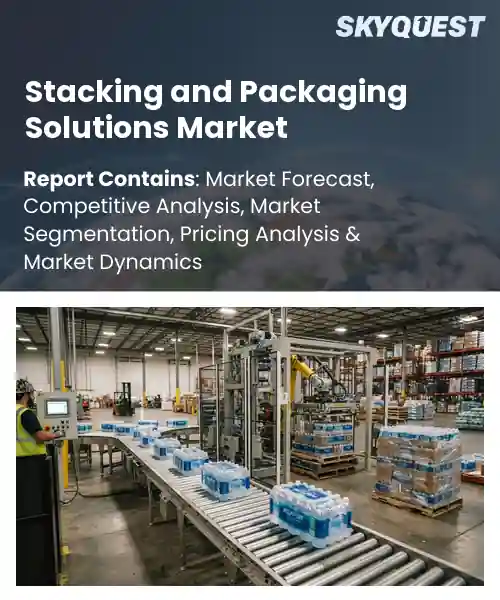
Stacking and Packaging Solutions Market
Report ID: SQMIG20I3894
Report ID: SQMIG20I3894
[email protected]
USA +1 351-333-4748
Report ID:
SQMIG20I3894 |
Region:
Global |
Published Date: September, 2026
Pages:
157
|Tables:
148
|Figures:
78


Global Stacking And Packaging Solutions Market size was valued at USD 17.12 Billion in 2024 and is poised to grow from USD 19.21 Billion in 2025 to USD 48.36 Billion by 2033, growing at a CAGR of 12.23% during the forecast period (2026-2033).
The global stacking and packaging solutions market comprises systems and materials that enable efficient arrangement, protection, and transport of goods across supply chains, ranging from automated palletizers to reusable plastic crates. Its importance stems from the need to reduce handling costs, minimize product damage, and meet sustainability mandates. The primary driver has been the expansion of e‑commerce, which forces manufacturers to ship higher volumes at faster speeds while maintaining low defect rates. Over the past decade, companies such as Amazon and Walmart have adopted robotic stacking lines and collapsible packaging, illustrating how fulfillment centers have reshaped demand for integrated solutions. Another decisive factor shaping the market is the tightening regulatory environment around waste reduction and circular economy practices, which compels firms to replace single‑use cardboard with reusable or recyclable stacking systems. This pressure creates opportunities for manufacturers of lightweight aluminum frames and polyethylene crates that can be returned, cleaned, and redeployed, thereby lowering total cost of ownership. For instance, a beverage distributor reported a 15 % reduction in packaging expenses after switching to a crate program, while simultaneously meeting EU packaging directives. Such cost savings, combined with enhanced brand perception for sustainability, drive broader adoption across food, pharmaceuticals, and automotive sectors.
How is AI-driven automation influencing the stacking and packaging solutions market?
AI-driven automation is reshaping the stacking and packaging solutions market by integrating machine‑learning algorithms with robotic hardware to optimize load patterns, reduce cycle times, and improve material handling accuracy. Vendors are embedding vision systems that detect product dimensions in real time, allowing dynamic adjustment of pallet configurations without human intervention. This shift enables factories to respond swiftly to demand fluctuations, lower labor costs, and maintain higher throughput while preserving product integrity. The technology also supports predictive maintenance, alerting operators to potential equipment failures before downtime occurs, thereby sustaining continuous operation across diverse supply‑chain environments.In April 2024, Swisslog launched an AI‑enhanced robotic palletizer, demonstrating how intelligent automation can streamline stacking processes, boost operational efficiency, and drive growth in the packaging sector.
Market snapshot - (2026-2033)
Global Market Size
USD 17.12 Billion
Largest Segment
Palletizing Systems
Fastest Growth
Bundling Systems
Growth Rate
12.23% CAGR
To get more insights on this market click here to Request a Free Sample Report
Global stacking and packaging solutions market is segmented by solution type, automation level, packaging type, application, end-use industry and region. Based on solution type, the market is segmented into Stacking Systems, Palletizing Systems, Case Packing Systems and Bundling Systems. Based on automation level, the market is segmented into Manual, Semi-Automatic and Automatic. Based on packaging type, the market is segmented into Cases & Cartons, Bags & Pouches, Trays and Bottles & Containers. Based on application, the market is segmented into Product Stacking, Palletizing and Secondary Packaging. Based on end-use industry, the market is segmented into Food & Beverage, Consumer Goods, Pharmaceuticals, E-Commerce & Logistics and Industrial Manufacturing. Based on region, the market is segmented into North America, Europe, Asia Pacific, Latin America and Middle East & Africa.
Automatic segment dominates because it eliminates manual handling, delivering consistent speed and precision across diverse product lines. The reliability of fully automated systems reduces downtime, aligns with lean manufacturing principles, and meets the high throughput expectations of modern supply chains. Manufacturers favor this capability to lower labor costs and improve traceability, creating a clear preference for fully automated solutions in the market globally today across operations.
However, Semi Automatic segment is witnessing the strongest growth momentum as manufacturers seek flexible solutions that balance cost and adaptability. The ability to integrate with existing lines while offering programmable features attracts mid size producers, driving rapid adoption and expanding the market’s opportunity base for incremental automation.
Cases & Cartons segment leads because it provides a versatile, reusable format that aligns with standardized handling equipment and protects a wide range of products during transport. The structural integrity of rigid containers supports high stacking density, reduces product damage, and simplifies inventory management. These attributes satisfy the expectations of retailers and distributors, reinforcing the preference for case and carton solutions across the market.
Meanwhile, Bags & Pouches segment is emerging as the key high growth area due to rising demand for lightweight, sustainable packaging that adapts to irregular product shapes. Innovations in barrier films and resealable designs enable extended shelf life, while the reduced material footprint meets environmental regulations, accelerating adoption across food, beverage, and e commerce channels.
To get detailed segments analysis, Request a Free Sample Report
North America maintains a leading position through a blend of mature supply chains, advanced automation capabilities, and a strong emphasis on sustainability within logistics operations. The presence of globally recognised equipment manufacturers and a deep pool of engineering expertise enable rapid adoption of innovative stacking and packaging technologies. Clients benefit from integrated service models that combine design, installation, and ongoing support, fostering high levels of operational efficiency. Additionally, robust regulatory frameworks promote safety and environmental compliance, reinforcing market confidence. The region’s focus on collaborative research initiatives further accelerates the development of lightweight and reusable packaging solutions, cementing its dominance in the global landscape. The convergence of digital inventory management with real‑time monitoring tools also enhances traceability, allowing producers to optimise load planning and reduce waste.
United States Stacking and Packaging Solutions Market
Stacking and Packaging Solutions Market in the United States reflects a deep integration of high‑tech manufacturing and sophisticated distribution networks. Leading providers leverage extensive research collaborations with academic institutions to introduce modular designs that address diverse cargo requirements. Emphasis on end‑to‑end service delivery ensures that clients receive tailored engineering, installation, and after‑sales support. Sustainability considerations drive the adoption of recyclable materials and energy‑efficient equipment, reinforcing the market’s reputation for innovation and reliability.
Canada Stacking and Packaging Solutions Market
Stacking and Packaging Solutions Market in Canada benefits from a collaborative ecosystem that links regional manufacturers with logistics firms focused on cross‑border trade. Emphasis on green initiatives encourages the use of biodegradable cushioning and reusable pallet systems. Technical expertise in cold‑chain handling supports specialized solutions for perishable goods, while strong government incentives for advanced manufacturing stimulate continuous improvement. The result is a resilient market characterized by adaptability and a commitment to reducing environmental impact.
Europe experiences swift expansion of stacking and packaging solutions driven by stringent sustainability regulations, a strong tradition of engineering excellence, and the accelerating pace of e‑commerce distribution. Manufacturers respond to circular‑economy mandates by developing reusable and lightweight systems that minimize material waste. Integration of advanced robotics with precision handling technology enhances throughput while reducing manual labor burdens. Cross‑border supply chains within the continent benefit from harmonised standards, facilitating seamless adoption of interoperable equipment. Collaborative research programmes among universities, industry clusters, and governmental bodies foster continuous innovation, particularly in smart sensors and data‑driven optimization. Consumer expectations for rapid, damage‑free delivery further motivate companies to invest in adaptable packaging architectures, solidifying Europe’s position as a hub of progressive packaging solutions. These combined forces create a resilient ecosystem that continually pushes the boundaries of efficiency and environmental stewardship.
Germany Stacking and Packaging Solutions Market
Stacking and Packaging Solutions Market in Germany benefits from a robust engineering heritage and a network of precision equipment suppliers. Companies prioritize modular designs that align with strict environmental standards, encouraging reuse and recyclability. Close collaboration between automotive manufacturers and packaging innovators drives the development of high‑strength, lightweight materials. Governmental support for technology transfer accelerates adoption of digital twins and predictive maintenance, ensuring operational excellence across diverse logistics sectors.
United Kingdom Stacking and Packaging Solutions Market
Stacking and Packaging Solutions Market in the United Kingdom is shaped by a dynamic e‑commerce landscape and progressive waste‑reduction policies. Service providers emphasize flexible, plug‑and‑play systems that can be quickly reconfigured for varying shipment volumes. Strong collaboration with research institutions fuels advancements in smart packaging that integrates IoT connectivity for real‑time condition monitoring. The focus on circular‑economy principles drives the adoption of returnable containers and closed‑loop packaging programmes, enhancing both efficiency and sustainability.
France Stacking and Packaging Solutions Market
Stacking and Packaging Solutions Market in France reflects a growing commitment to eco‑design and collaborative logistics networks. Industry players focus on lightweight, biodegradable materials that meet both consumer expectations and regulatory demands. Integration of AI‑driven load‑optimization tools enables carriers to maximize space utilization while minimizing handling incidents. Partnerships between packaging firms and agricultural producers support the development of bio‑based cushioning solutions, reinforcing France’s emerging reputation for innovative and environmentally conscious packaging practices.
Asia Pacific is rapidly strengthening its stance in stacking and packaging solutions through a combination of high‑volume manufacturing capacity, swift adoption of automation, and a burgeoning focus on sustainability across diverse economies. The region leverages its extensive supply chain networks to deliver cost‑effective yet technologically advanced equipment that serves both domestic markets and export corridors. Investment in smart factory initiatives encourages integration of sensors and data analytics, enabling real‑time optimization of load configurations. Growing consumer demand for fast, hassle‑free delivery spurs innovation in protective packaging that balances strength with lightweight attributes. Collaborative platforms that connect manufacturers, logistics providers, and research institutions foster continual refinement of recyclable materials and modular designs, positioning Asia Pacific as a forward‑looking hub for next‑generation packaging solutions.
Japan Stacking and Packaging Solutions Market
Stacking and Packaging Solutions Market in Japan is characterized by precision engineering and a cultural emphasis on reliability. Leading firms integrate robotic handling with advanced sensor technology to achieve meticulous load stability. Efforts to reduce material consumption drive the creation of ultra‑light, high‑strength packaging components derived from innovative polymer blends. Close ties between automotive manufacturers and packaging specialists promote the transfer of lightweight design concepts, while government‑backed initiatives support research into reusable container ecosystems, reinforcing Japan’s reputation for high‑quality, sustainable packaging solutions.
South Korea Stacking and Packaging Solutions Market
Stacking and Packaging Solutions Market in South Korea reflects aggressive investment in digital manufacturing and a strong export orientation. Companies combine high‑speed automation with AI‑driven analytics to fine‑tune pallet configurations for diverse product lines. Emphasis on eco‑friendly materials leads to the adoption of biodegradable foams and recyclable corrugated systems that meet stringent global standards. Collaboration between technology parks and logistics firms accelerates the rollout of smart packaging that offers real‑time tracking and condition monitoring, positioning South Korea as a dynamic contributor to the evolving global packaging landscape.
To know more about the market opportunities by region and country, click here to
Buy The Complete Report
Leveraging Robotics Improves Throughput
Sustainable Materials Increase Market Appeal
High Initial Investment Limits Adoption
Regulatory Compliance Increases Complexity
Request Free Customization of this report to help us to meet your business objectives.
The global stacking and packaging solutions market is shaped by intense competition among established players such as Sealed Air, Berry Global and DS Smith, each leveraging strategic M&A, partnerships and technology innovation to secure market share; Sealed Air’s acquisition of Cryovac expanded its cold‑chain capabilities, Berry Global’s purchase of Bostik broadened its adhesive portfolio, while DS Smith’s collaboration with Amazon accelerates development of automated pallet‑stacking systems, driving differentiation and accelerating adoption of smart packaging technologies.
Top Player’s Company Profile
Recent Developments
SkyQuest’s ABIRAW (Advanced Business Intelligence, Research & Analysis Wing) is our Business Information Services team that Collects, Collates, Correlates, and Analyses the Data collected by means of Primary Exploratory Research backed by robust Secondary Desk research. As per SkyQuest analysis, the global stacking and packaging solutions market is being propelled by the widespread adoption of robotics and AI‑driven automation, which markedly boost throughput and reduce labor costs. A second strong driver is the shift toward sustainable materials, as customers and regulators push for recyclable or biodegradable components that enhance brand value. The automatic segment currently dominates, delivering consistent speed and precision that outweigh manual alternatives. North America remains the leading region, benefiting from mature supply chains, advanced engineering talent, and stringent sustainability standards. However, high upfront capital requirements act as a restraint, limiting slower adoption among small‑and medium‑size enterprises.
| Report Metric | Details |
|---|---|
| Market size value in 2024 | USD 17.12 Billion |
| Market size value in 2033 | USD 48.36 Billion |
| Growth Rate | 12.23% |
| Base year | 2024 |
| Forecast period | (2026-2033) |
| Forecast Unit (Value) | USD Billion |
| Segments covered |
|
| Regions covered | North America (US, Canada), Europe (Germany, France, United Kingdom, Italy, Spain, Rest of Europe), Asia Pacific (China, India, Japan, Rest of Asia-Pacific), Latin America (Brazil, Rest of Latin America), Middle East & Africa (South Africa, GCC Countries, Rest of MEA) |
| Companies covered |
|
| Customization scope | Free report customization with purchase. Customization includes:-
|
To get a free trial access to our platform which is a one stop solution for all your data requirements for quicker decision making. This platform allows you to compare markets, competitors who are prominent in the market, and mega trends that are influencing the dynamics in the market. Also, get access to detailed SkyQuest exclusive matrix.
Table Of Content
Executive Summary
Market overview
Parent Market Analysis
Market overview
Market size
KEY MARKET INSIGHTS
COVID IMPACT
MARKET DYNAMICS & OUTLOOK
Market Size by Region
KEY COMPANY PROFILES
Methodology
For the Stacking and Packaging Solutions Market, our research methodology involved a mixture of primary and secondary data sources. Key steps involved in the research process are listed below:
1. Information Procurement: This stage involved the procurement of Market data or related information via primary and secondary sources. The various secondary sources used included various company websites, annual reports, trade databases, and paid databases such as Hoover's, Bloomberg Business, Factiva, and Avention. Our team did 45 primary interactions Globally which included several stakeholders such as manufacturers, customers, key opinion leaders, etc. Overall, information procurement was one of the most extensive stages in our research process.
2. Information Analysis: This step involved triangulation of data through bottom-up and top-down approaches to estimate and validate the total size and future estimate of the Stacking and Packaging Solutions Market.
3. Report Formulation: The final step entailed the placement of data points in appropriate Market spaces in an attempt to deduce viable conclusions.
4. Validation & Publishing: Validation is the most important step in the process. Validation & re-validation via an intricately designed process helped us finalize data points to be used for final calculations. The final Market estimates and forecasts were then aligned and sent to our panel of industry experts for validation of data. Once the validation was done the report was sent to our Quality Assurance team to ensure adherence to style guides, consistency & design.
Analyst Support
Customization Options
With the given market data, our dedicated team of analysts can offer you the following customization options are available for the Stacking and Packaging Solutions Market:
Product Analysis: Product matrix, which offers a detailed comparison of the product portfolio of companies.
Regional Analysis: Further analysis of the Stacking and Packaging Solutions Market for additional countries.
Competitive Analysis: Detailed analysis and profiling of additional Market players & comparative analysis of competitive products.
Go to Market Strategy: Find the high-growth channels to invest your marketing efforts and increase your customer base.
Innovation Mapping: Identify racial solutions and innovation, connected to deep ecosystems of innovators, start-ups, academics, and strategic partners.
Category Intelligence: Customized intelligence that is relevant to their supply Markets will enable them to make smarter sourcing decisions and improve their category management.
Public Company Transcript Analysis: To improve the investment performance by generating new alpha and making better-informed decisions.
Social Media Listening: To analyze the conversations and trends happening not just around your brand, but around your industry as a whole, and use those insights to make better Marketing decisions.
REQUEST FOR SAMPLE
 REQUEST FREE CUSTOMIZATION


Want to customize this report? This report can be personalized according to your needs. Our analysts and industry experts will work directly with you to understand your requirements and provide you with customized data in a short amount of time. We offer $1000 worth of FREE customization at the time of purchase.
Feedback From Our Clients


 USA (+1) 351-333-4748

